As you explore the future of robotic inspection robots, you’ll find that 2025 brings a host of innovative solutions designed to tackle challenging environments. These advanced machines will not only enhance safety but also improve efficiency in inspections. With features like AI navigation and waterproof designs, the options are more versatile than ever. Curious about which models stand out and what factors you should consider in your choice? Let’s take a closer look.
Moorebot Scout Model E Mobile Camera Robot

If you’re looking for a versatile solution for monitoring your space, the Moorebot Scout Model E Mobile Camera Robot is a top choice in 2025. This waterproof robot’s perfect for indoor and outdoor use, whether you’re checking on pets, exploring crawlspaces, or seeking entertainment. You can easily control it through your mobile phone, and it supports Scratch programming and ROS for advanced users. Its pre-programmed path guarantees that your privacy remains intact with a secure Peer-to-Peer protocol. Compact and lightweight, it’s recommended for ages 10 and up, making it a great addition to family fun or tech-savvy explorations.
Best For: The Moorebot Scout Model E is best for tech-savvy families and pet owners looking for a versatile monitoring solution for both indoor and outdoor environments.
Pros:
- Waterproof design allows for use in various environments, including crawlspaces and outdoor settings.
- Mobile phone control provides ease of use, making it accessible for users of different skill levels.
- Supports advanced programming with Scratch and ROS, appealing to those interested in robotics and coding.
Cons:
- Limited age recommendation of 10 years and up may restrict use for younger children.
- Moderate customer ratings (3.9 out of 5 stars) suggest some users may have experienced issues or dissatisfaction.
- Best Sellers Rank indicates it may not be the most popular option in the market, potentially affecting availability and support.
ACEBOTT Smart Robot Car Kit for Kids (Ages 8–12)

The ACEBOTT Smart Robot Car Kit is the perfect choice for kids ages 8 to 12 who are enthusiastic to plunge into the world of robotics and programming. This STEM toy features a 3MP camera that streams real-time video, helping you explore your surroundings while enhancing your image processing skills. With 16 story-based tutorials, you’ll learn to assemble and code your robot effortlessly. The kit’s modular design allows for future upgrades, like a robotic arm or solar panel. Plus, the 4WD car’s omnidirectional movement and control via app or remote promote independent exploration and problem-solving in various environments.
Best For: Kids ages 8 to 12 who are eager to learn about robotics and programming through hands-on experience.
Pros:
- Engaging STEM toy that combines robotics, coding, and image processing.
- Includes 16 story-based tutorials for easy assembly and coding guidance.
- Modular design allows for future upgrades and continued learning opportunities.
Cons:
- Some additional components (like the robotic arm and solar panel) are sold separately, increasing overall cost.
- May require adult supervision for younger users during assembly and programming.
- The complexity of coding may be challenging for some kids without prior experience.
TurboPi Robot Car Kit for Raspberry Pi

For educators and hobbyists looking to immerse themselves in the world of robotics, the TurboPi Robot Car Kit for Raspberry Pi stands out with its programmable features and AI capabilities. Powered by Raspberry Pi 5/4B, this kit supports Python programming and boasts an HD camera for advanced image processing using the OpenCV library. You’ll love how it recognizes objects for tasks like color sorting and gesture recognition. With its omnidirectional Mecanum wheels, TurboPi moves seamlessly in all directions. Plus, the wireless app control adds an interactive touch, making it perfect for educational projects and experimentation in automation and machine learning.
Best For: Educators and hobbyists interested in hands-on robotics and AI programming.
Pros:
- Supports Python programming, making it accessible for learners and developers.
- Equipped with advanced image processing capabilities, allowing for innovative applications like gesture recognition and face detection.
- Omnidirectional movement with Mecanum wheels enables versatile navigation and maneuverability.
Cons:
- Requires a Raspberry Pi 5/4B, which adds to the overall cost if not already owned.
- May have a learning curve for beginners unfamiliar with programming and robotics concepts.
- Limited battery life could restrict prolonged use without recharging.
TurboPi Robot Car Kit for RaspberryPi
Designed for tech enthusiasts and aspiring programmers, the TurboPi Robot Car Kit for Raspberry Pi stands out with its advanced AI vision capabilities. This programmable smart robot car excels in color sorting, line tracking, and obstacle avoidance. Its 2-DOF HD camera enhances target recognition, while the Mecanum wheels allow 360° movement. You’ll appreciate the multimodal AI interaction for engaging conversations and environmental awareness. Included learning resources, like Python source code and tutorials, make mastering AI concepts easy. Weighing just 2.44 pounds, it’s perfect for ages 16 and up. With Hiwonder’s support, you’ll be set for an exciting programming journey!
Best For: Tech enthusiasts and aspiring programmers looking to explore AI and robotics.
Pros:
- Advanced AI Vision: The 2-DOF HD camera enables impressive target recognition and environmental interaction.
- Versatile Movement: Mecanum wheels provide 360° omnidirectional movement for enhanced maneuverability.
- Comprehensive Learning Resources: Includes Python source code and tutorials to facilitate understanding of AI concepts.
Cons:
- Raspberry Pi Not Included: The standard kit requires a separate purchase of the Raspberry Pi for full functionality.
- Age Restriction: Recommended for ages 16 and up, which may limit accessibility for younger users.
- Weight Consideration: At 2.44 pounds, it may be less portable compared to lighter robot kits.
Energize Lab Eilik Interactive Robot Pet

Eilik captivates both kids and adults with its interactive charm, making it an ideal companion for anyone seeking a blend of fun and emotional engagement. You can interact with Eilik by touching its head, belly, or back, triggering a range of emotions that shape its unique personality. Plus, Eilik connects with other Eiliks for social play, creating lively group activities. No WiFi or Bluetooth is needed, so you can enjoy spontaneous fun anytime. With regular firmware updates, Eilik continually evolves, introducing new features and games that keep the experience fresh and exciting. It’s a delightful addition to your home or workspace!
Best For: Eilik is best for children and adults who seek a fun and interactive companion that fosters emotional engagement and social interaction.
Pros:
- Offers a wide range of emotions and interactions, making it engaging for users.
- No internet connection is required, allowing for spontaneous play anywhere.
- Regular firmware updates introduce new features, ensuring ongoing entertainment.
Cons:
- Limited functionality compared to traditional pets, as it cannot perform physical actions.
- May require time to fully explore all interaction features and mini-games.
- Social interaction is limited to other Eiliks, which may not appeal to everyone.
AiNova AI Vision Robot Car for Scratch & Python Programming

The AiNova AI Vision Robot Car is the perfect choice for students and beginners enthusiastic to immerse themselves in the world of coding and robotics. This open-source coding robot kit supports Scratch and Python, making it accessible for all skill levels. With its WonderCam AI vision module, you can explore color recognition and target tracking. The compact design features a high-precision line follower, ultrasonic sensor, and RGB lights, perfect for diverse projects. Plus, thorough learning tutorials cover electronics, programming, and AI, providing a solid foundation for your future in technology and automation. Immerse yourself in coding and release your creativity with AiNova!
Best For: Students and beginners eager to learn coding and robotics through hands-on experience.
Pros:
- Supports both Scratch and Python programming, catering to various skill levels.
- Equipped with an advanced AI vision module, enabling exciting projects like color recognition and target tracking.
- Comes with comprehensive learning tutorials, providing essential knowledge in electronics, programming, and AI.
Cons:
- May require additional components for more advanced projects beyond the basic kit.
- Learning curve for complete beginners, especially those unfamiliar with coding concepts.
- Limited functionality without programming knowledge, which may deter some users.
ACEBOTT 5DOF Smart Robot Arm Car Kit

For those enthusiastic to plunge into the world of robotics, the ACEBOTT 5DOF Smart Robot Arm Car Kit stands out as an excellent choice. Designed for beginners aged 12 and up, this STEM kit features a 4WD remote control car compatible with Arduino, Python, and Blockly. Its flexible 5 DOF robotic arm can perform various tasks, like grabbing and lifting objects, thanks to its impressive rotation capabilities. With advanced Mecanum wheels, it navigates effortlessly in any direction. Detailed assembly instructions and programming tutorials help you build and code your robot, making it a fantastic gift for aspiring tech enthusiasts.
Best For: Beginners aged 12 and above who are interested in robotics and programming.
Pros:
- Offers a hands-on learning experience in STEM education through assembly and coding.
- Features advanced mobility with Mecanum wheels, allowing for 360° movement and obstacle avoidance.
- Includes comprehensive assembly instructions and programming tutorials for easy setup and coding.
Cons:
- May require supervision for younger users due to small parts and complexity.
- Programming may be challenging for absolute beginners without prior experience.
- Limited to the functionalities provided by the kit, which may restrict advanced projects.
Robotic Arm Kit 6DOF with PC Software APP Control
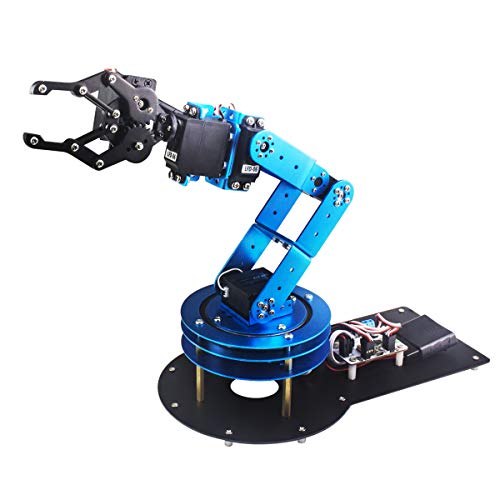
Designed with versatility in mind, the Robotic Arm Kit 6DOF is perfect for students and robotics enthusiasts enthusiastic to immerse themselves in the world of automation. With six high-quality digital servos, this desktop robot arm allows you to grasp objects, transport them, and perform custom actions. Its robust design features a metal bracket and fortified base for stability. You can control it via PC, app, mouse, or wireless handle, making operations convenient. Plus, the assembly process is fun, helping you learn about robotics through hands-on experience. LeArm is an excellent platform for anyone eager to explore innovative robotic solutions.
Best For: Students, engineers, and robotics enthusiasts looking to enhance their understanding of automation through a hands-on, versatile robotic arm experience.
Pros:
- High-quality construction with metal bracket and fortified base ensures stability and durability.
- Multiple control methods (PC, app, mouse, wireless) provide user-friendly operation.
- Engaging assembly process promotes creativity and hands-on learning in robotics.
Cons:
- May require a learning curve for beginners unfamiliar with programming or robotics concepts.
- Limited payload capacity due to the design and size of the arm.
- Some users may find the need for additional accessories or components for advanced projects.
DIY Robot Model Kit for Raspberry Pi 4/3 Model B

A smart choice for both beginners and seasoned enthusiasts, the DIY Robot Model Kit for Raspberry Pi 4/3 Model B+ offers an engaging way to plunge into robotics and programming. This multifunctional robot car features a 4-DOF robotic arm, OpenCV target tracking, and real-time video transmission. With its focus on STEAM education, you’ll explore AI, robotics, and coding effortlessly. The kit includes a detailed 73-page manual and easy-to-understand Python code for both Windows and Linux. Plus, you’ll benefit from professional support and a warranty. Get ready to bring your robotic ideas to life with this innovative kit!
Best For: This product is best for beginners and seasoned enthusiasts interested in robotics, programming, and STEAM education.
Pros:
- Supports learning in AI, robotics, programming, and electronics.
- Includes a comprehensive 73-page manual and easy-to-understand Python code.
- Offers professional technical support and warranty for peace of mind.
Cons:
- Raspberry Pi is not included, requiring an additional purchase.
- Customer rating of 3.3 out of 5 stars may indicate some user dissatisfaction.
- Assembly may be complex for complete beginners despite the detailed manual.
Robot Car Kit 2 in 1 Smart Robotics Arm Building Toy

The Robot Car Kit 2 in 1 Smart Robotics Arm Building Toy stands out as an excellent choice for young tech enthusiasts keen to plunge into the world of robotics and coding. This kit supports Raspberry Pi models and features a versatile robot arm for grabbing, an HD camera for real-time displays, and advanced functions like line tracing and obstacle avoidance. You’ll appreciate the assembly experience with various components, including off-road tires. Control it easily via your phone, tablet, or computer, allowing you to customize programming. It’s a perfect gift for birthdays or Christmas, sparking creativity and learning in robotics.
Best For: Young tech enthusiasts and kids interested in robotics and coding.
Pros:
- Supports multiple Raspberry Pi models for versatile programming.
- Engaging assembly experience with various components for hands-on learning.
- Allows control via phone, tablet, or computer, enhancing accessibility and customization.
Cons:
- Requires additional batteries (not included) for remote control functionality.
- Assembly may be challenging for younger kids without adult supervision.
- Raspberry Pi board is not included, adding to the total cost.
Factors to Consider When Choosing a Robotic Inspection Robot
When you’re choosing a robotic inspection robot, consider its intended purpose to guarantee it meets your specific needs. You’ll also want to evaluate terrain compatibility, control options, and camera quality, as these factors can greatly impact performance. Don’t overlook durability and waterproofing, especially if the robot will operate in challenging environments.
Purpose of Inspection Robot
Choosing the right inspection robot hinges on understanding its purpose and the specific requirements of your inspection tasks. These robots are designed to monitor and inspect hard-to-reach or hazardous areas, like crawlspaces and industrial sites. They can operate in various environments, both indoors and outdoors, often featuring waterproof designs for versatility. With mobility features, inspection robots navigate complex terrains, allowing for thorough inspections without human intervention. Many models include advanced camera systems for real-time video streaming and image capture, enhancing your ability to assess conditions and identify potential issues. Additionally, advanced programming capabilities, such as support for Scratch or ROS, enable you to customize and automate inspection processes tailored to your needs.
Terrain Compatibility and Design
Understanding terrain compatibility and design is essential for selecting the right robotic inspection robot. You’ll want to evaluate the robot’s ability to navigate rugged or uneven surfaces, especially for outdoor or industrial inspections. Look for models with waterproofing and durable materials, ensuring they’ll withstand harsh conditions. The robot’s weight and dimensions matter too; a compact design is often better for tight spaces like crawlspaces. Features like omnidirectional Mecanum wheels enhance maneuverability, allowing the robot to traverse obstacles effectively. Finally, prioritize autonomous navigation capabilities such as line tracking or obstacle avoidance. These features enable efficient inspections in challenging environments without constant human intervention, ultimately improving safety and productivity during your inspections.
Control and Programming Options
After confirming that your robotic inspection robot can navigate challenging terrains, it’s time to focus on control and programming options. First, consider whether the robot supports mobile phone control, making it easier for you to drive and navigate in various environments. Look for compatibility with programming languages like Scratch or Python, which can enhance your learning experience and provide flexibility in coding. Evaluate the availability of pre-programmed paths and secured communication protocols to guarantee privacy during operation. Check if the robot offers extensive tutorials and resources for assembly and coding, aiding your understanding of robotics. Finally, determine if it supports modular add-ons or expansions, allowing you to upgrade and adapt to more complex tasks in the future.
Camera Quality and Features
Camera quality plays an essential role in the effectiveness of robotic inspection robots. Higher megapixels, like 3MP, deliver clearer, more detailed images, which are vital for effective monitoring and analysis. Real-time video streaming allows you to observe the surroundings and make timely decisions during inspections. Advanced features, such as AI vision modules, enhance the robot’s ability to recognize objects and navigate autonomously, ensuring thorough inspections. Additionally, integrating image processing software like OpenCV greatly improves the robot’s capability to identify and track targets or detect anomalies. Features like pan-tilt mechanisms provide greater flexibility in camera positioning, allowing for extensive coverage of the inspected areas. These elements together create a powerful tool for efficient inspections.
Durability and Waterproofing
When selecting a robotic inspection robot, durability and waterproofing are key factors that can greatly influence its performance and longevity. You want a robot that can handle harsh environments and rough handling without faltering. Waterproofing is especially vital if you plan to use the robot outdoors or in damp locations, as it protects internal components from potential damage. Look for robots made from high-quality materials like durable plastics or metals, which will resist wear and tear over time. A robust design featuring sealed components and protective casings can enhance the robot’s lifespan and reliability. Don’t forget to schedule regular maintenance checks to guarantee that waterproof seals and protective features remain effective, keeping your robot in top condition for every inspection.
Age Appropriateness and Usability
Choosing the right robotic inspection robot involves considering age appropriateness and usability to confirm effective operation. Start by checking the manufacturer’s recommended age, ensuring the user can effectively operate and understand the robot’s features. Look for intuitive controls, like mobile apps or remote controls, making it easier for different age groups to engage with the robot. Evaluate programming complexity; simpler coding interfaces suit younger users, while older users may enjoy advanced options. Assembly requirements also matter—robots with minimal assembly are better for younger users or those with limited technical skills. Finally, verify the robot’s features, like camera quality and mobility, align with your inspection tasks and are user-friendly for the intended age group.
Expandability and Customization Options
As you explore robotic inspection robots, consider how expandability and customization options can greatly enhance your inspection capabilities. Expandability allows you to add modular components like cameras and sensors, tailoring your robot for specific tasks or environments. Customization options empower you to modify both software and hardware features, adapting your robot to unique inspection requirements. Many kits support open-source programming, letting you create custom applications and automate processes efficiently. Integrating additional technologies, such as AI vision or remote control, can considerably boost inspection effectiveness. Furthermore, strong community support fosters innovation and collaborative problem-solving, improving inspection methodologies. Choosing a robot with robust expandability and customization will guarantee it meets your evolving needs over time.