Choosing the right microscope for school isn’t just about magnification. For students, the best pick is easy to focus, bright enough for real specimens, and durable enough for repeated use.
Below, we’ve narrowed the field to 10 options that balance learning value, build quality, and student-friendly features for home labs, classroom use, and STEM projects.
Best 10 Electronics Microscopes for Students Picks for 2026
Pro-Grade All-Rounder

- 40X-2500X magnification range
- Dual LED lighting for multiple sample types
- Includes phone holder and accessory set
Best For: Students needing a higher-power compound scope for home or school
Starter Science Kit

- 100X-1200X beginner magnification
- 58-piece kit with slides and tools
- LED light and durable metal body
Best For: Young beginners and first-time microscope users
High-Power Biology Pick

- 100X-2000X optical magnification
- Dual LED lights for different specimens
- Includes slides, phone clip, and remote
Best For: Middle and high school biology study
Screen-View Explorer
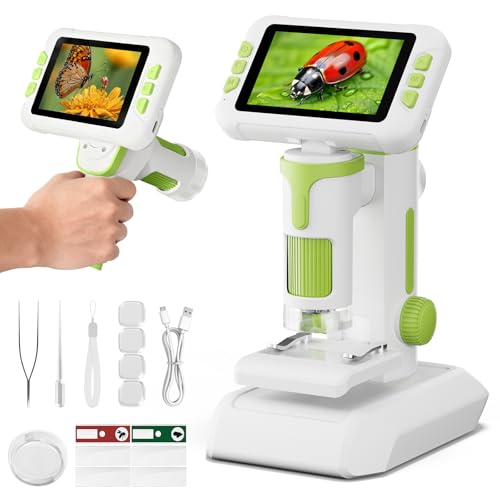
- 100X-1600X digital zoom
- 4.0-inch IPS screen with 1080P camera
- 3-in-1 desktop, handheld, and portable design
Best For: Students who want a screen-based microscope for easy sharing
Home-School Compound Microscope
AmScope M150C 40X-1000X Cordless LED

- 40X to 1000X magnification for student slide work
- All-metal body built for regular home or school use
- LED light runs on outlet power or AA batteries
Best For: Home school and elementary-to-high school science lessons
All-in-One Student Kit
PALOBIL Kids Microscope 100X-2000X

- 100X to 2000X magnification for beginner biology viewing
- Includes slides, tools, and a phone adapter
- Dual LED lighting handles opaque and translucent samples
Best For: Students and families who want a complete starter kit
Binocular Lab Microscope

- Binocular viewing is easier for longer sessions
- Dual LED lights support top and bottom illumination
- Fine and coarse focus with mechanical stage improve control
Best For: Students and beginners who want a more lab-like microscope
Portable 7" Screen STEM Scope

- 7" IPS screen with adjustable viewing angle
- Wireless app support for iOS and Android
- 1200X magnification with dual LED lighting
Best For: students, teachers, and families who want a digital microscope for shared viewing
High-Power Binocular Biology Kit
PalliPartners Compound Binocular Microscope

- 100X to 2000X magnification with glass optics
- Top and bottom LED lighting for multiple specimen types
- Includes slides, tools, phone clip, and remote shutter
Best For: students and beginners building a complete biology microscope kit
Metal STEM Lab Microscope
100X-2000X Metal STEM Microscope Kit

- 100X to 2000X magnification with glass optics
- Solid all-metal frame with coarse and fine focus
- Dual LED lighting and ergonomic 360° head
Best For: older students and hobbyists who want a sturdy lab-style microscope kit
Pro-Grade All-Rounder – 40X-2500X Compound Microscope
If you’re comparing electronics microscopes for students, this compound microscope stands out for its wide magnification range and practical classroom-friendly features. It is built for viewing both slides and opaque objects, making it a flexible choice for home schooling, science projects, and early lab work.
Best For: Students who want a higher-power compound microscope with dual lighting and phone-capture support.
Pros:
- 40X-2500X magnification with WF25X/10X eyepieces and 4X/10X/100X objectives
- Dual LED illumination for translucent slides and opaque samples
- Coarse/fine focusing helps sharpen details more precisely
- Includes a phone holder plus specimen slides and basic tools
Cons:
- More advanced than a basic beginner toy microscope
- Likely better suited to guided use for younger students
This is a strong pick when you want a student microscope that feels more like a serious learning tool than a starter gadget. The added filters, dual lighting, and included accessories make it a versatile setup for repeated use.
Starter Science Kit – 58-Piece Kids Microscope
For families looking at electronics microscopes for students, this 58-piece kit is designed as an easy entry point into microscopy. It combines a beginner-friendly optical microscope with prepared slides, blank slides, and lab tools, so kids can start exploring specimens right away.
Best For: Younger beginners who need a complete, ready-to-use STEM microscope kit.
Pros:
- 100X-1200X magnification for basic discovery learning
- Includes 13 prepared specimens, 31 blank slides, and tools
- Colorful guide helps teach microscope parts and skills
- Metal body and LED light add durability and usability
Cons:
- Requires 2 AA batteries, which are not included
- Built for beginners rather than advanced microscopy
This kit makes sense if you want a simple classroom or home option that encourages hands-on STEM learning without extra shopping. Its all-in-one layout is especially useful for parents and teachers who want a complete starter set.
High-Power Biology Pick – 100X-2000X Student Microscope
If you’re shopping electronics microscopes for students and want a step up for biology work, this compound microscope offers strong optical power and a complete slide set. It is aimed at home learning, school labs, and students who need clearer views of cells, microorganisms, and plant tissue.
Best For: Middle school, high school, and homeschool students who need a more serious biology microscope.
Pros:
- 100X-2000X magnification with WF25X eyepiece and 2X lens
- Top and bottom LED lighting for opaque and translucent samples
- Includes 10 prepared slides, 18 blank slides, phone clip, and remote shutter
- SGS-certified materials and electrical safety
Cons:
- More complex than a basic beginner microscope
- Heavier and larger than compact kids models
This model is a practical bridge between toy microscopes and more advanced lab equipment. With dual illumination, good optics, and included accessories, it fits well in a student science setup that will be used beyond the first few experiments.
Screen-View Explorer – 1600X Digital Kids Microscope
Among electronics microscopes for students, this digital model is a strong choice if you want easy viewing without peering through eyepieces. Its 4.0-inch IPS screen and built-in camera make it simple to observe, capture, and share findings during hands-on science time.
Best For: Kids and students who prefer a screen-based microscope with photo and video capture.
Pros:
- 100X-1600X zoom covers plants, insects, fibers, and sand
- 4.0-inch IPS screen gives real-time viewing
- Built-in 1080P camera captures photos and videos
- 3-in-1 design supports desktop, handheld, and portable use
Cons:
- More of a digital learning tool than a traditional compound microscope
- Built-in battery is non-removable
This is a good fit for younger learners who respond better to a screen than an eyepiece. The portable design and adjustable LED lighting make it especially useful for casual exploration, quick projects, and gift-giving.
Home-School Compound Microscope – AmScope M150C 40X-1000X Cordless LED
If you’re comparing electronics microscopes for students, this AmScope model is a practical all-metal compound microscope for home school, elementary through high school science, and general biology learning. It offers 40X to 1000X magnification, optical glass lenses, and cordless LED illumination, so students can inspect prepared slides with a simple, sturdy setup.
Best For: Home school and student science work that needs a durable, easy-to-power compound microscope.
Pros:
- 40X, 100X, 250X, 400X, and 1000X magnification settings cover common student observations.
- All-metal construction adds durability for regular classroom or home use.
- LED lighting works from an outlet or three AA batteries for flexible setup.
- Rotatable monocular head and optical glass elements support basic learning use.
Cons:
- Monocular design is less immersive than binocular models.
- It is a compound biological microscope, so it is best suited to slides rather than larger specimens.
This is a straightforward student microscope with the durability and magnification range many families want for science lessons. Its cordless option and simple construction make it especially useful when portability matters.
All-in-One Student Kit – PALOBIL Kids Microscope 100X-2000X
For buyers looking at electronics microscopes for students, this PALOBIL kit stands out because it combines a compound microscope, accessories, and prepared slides in one package. It includes 100X to 2000X viewing options, dual LED lighting, a metal frame, and a phone adapter, making it a versatile starter kit for biology observation and classroom-style experiments.
Best For: Students, beginners, and families who want a complete microscope kit with accessories included.
Pros:
- 100X to 2000X magnification supports a wide range of beginner observations.
- Dual LED lighting helps illuminate both opaque and translucent specimens.
- Includes a phone adapter plus slides, droppers, tweezers, and other starter tools.
- Metal-frame construction and shockproof packaging add durability for storage and transport.
Cons:
- Requires 3 AA batteries or the included AC adapter for power.
- It is a larger kit, so it may be more than some users need for simple viewing only.
This is a good choice if you want a single purchase that covers both microscope use and basic experiment setup. The included accessories make it easier for students to start observing right away.
Binocular Lab Microscope – Herwicm 40X-2500X Dual LED
If you need electronics microscopes for students that lean more toward a lab-style setup, this Herwicm binocular compound microscope offers a wide magnification range and a more comfortable viewing experience. The binocular head, dual LED lighting, and mechanical stage make it a solid option for children, students, and beginner hobbyists working through biology observations.
Best For: Students and beginner users who want a binocular microscope with a more advanced classroom feel.
Pros:
- Binocular eyepiece design is more comfortable for longer viewing sessions.
- Dual LED lighting supports both top and bottom illumination.
- WF10x and WF25x eyepieces plus 4X, 10X, and 40X objectives provide flexible viewing.
- Mechanical stage and fine/coarse focus knobs help with precise adjustment.
Cons:
- Corded electric power makes it less portable than battery-powered models.
- It is a larger lab-style microscope, so it may be more than casual users need.
This model is a strong fit if you want a more traditional biology-lab experience with student-friendly features. Its binocular layout and adjustable lighting make it practical for focused observation at a desk or workstation.
Portable 7" Screen STEM Scope – TOMLOV DM301 Pro
If you want electronics microscopes for students that are easy to share in class or at home, the TOMLOV DM301 Pro is built around a 7" IPS screen and wireless app control. It adds 1200X magnification, dual LED lighting, and a built-in measurement scale, so it works well for viewing slides, small specimens, and other close-up science activities.
Best For: students, families, and teachers who want a screen-based digital microscope for lessons, demos, and STEM projects.
Pros:
- 7" full-color IPS display with adjustable viewing angle for comfortable group viewing
- Wireless app support for real-time viewing, zooming, and media capture on iOS and Android
- 1200X magnification with 8MP photos and 1080P video recording
- Dual top and bottom LED lighting plus a built-in measurement scale
Cons:
- Digital viewing format may be less traditional than an optical classroom microscope
- Up to 3 hours of working time may require planning for longer sessions
- Best suited to STEM observation and slide work rather than advanced lab use
The DM301 Pro stands out if screen viewing and simple sharing matter most. It combines student-friendly features with enough detail for hands-on learning, making it a practical pick for home education and classroom experiments.
High-Power Binocular Biology Kit – PalliPartners Compound Binocular Microscope
For shoppers comparing electronics microscopes for students who want more of a traditional biology setup, the PalliPartners compound binocular microscope offers 100X to 2000X magnification and crystal-clear glass optics. Its top and bottom LED illumination, fine focus controls, and included slides and tools make it a strong fit for hands-on study of cells, microorganisms, and plant tissue.
Best For: students and beginners who want a complete binocular microscope kit for biology study and home or school labs.
Pros:
- 100X to 2000X magnification with WF25X eyepiece and 2X Barlow lens
- Top and bottom LED lighting for opaque and translucent specimens
- Includes 10 prepared slides, 18 blank slides, and dissecting tools
- Phone clip adapter and Bluetooth remote shutter add convenience for capturing views
Cons:
- Requires more setup than a screen-based digital microscope
- Corded electric power limits portability compared with battery-powered options
- Higher magnification is best for biology samples, not casual tabletop viewing
This model is a good step up for students who want a real compound microscope kit rather than a simplified toy scope. It balances high magnification, useful accessories, and safety-focused design for structured learning.
Metal STEM Lab Microscope – 100X-2000X Metal STEM Microscope Kit
This metal student microscope is a straightforward option for electronics microscopes for students who want a rugged, hands-on lab tool. It delivers 100X to 2000X magnification, dual LED illumination, and a solid all-metal frame, making it suitable for observing translucent and opaque specimens in home or STEM learning settings.
Best For: older students, beginners, and hobbyists who want a sturdy microscope kit for lab-style observation.
Pros:
- 100X to 2000X magnification using WF25X eyepiece and 2X Barlow lens
- Adjustable dual LED lighting for both translucent and opaque specimens
- Solid all-metal frame with coarse and fine focus controls
- 360° rotatable head and 38° tilting eyepieces improve comfort
Cons:
- 3 AA batteries are not included if you want to use battery power
- Designed for students over 12, adults, and beginner hobbyists rather than younger kids
- Color filter disc and lighting setup may take some learning for new users
This kit emphasizes durability and practical lab features over flashy extras. It is a sensible choice for learners who want a dependable microscope that supports detailed observation and comfortable extended use.
How We Picked the Best Electronics Microscopes for Students
We focused on factors that matter most in Electronics Microscopes for Students: usable magnification, optical clarity, lighting quality, stage stability, ease of setup, and overall durability. We also considered whether each model is practical for beginners, whether it includes useful accessories, and how well it fits common school and home-learning tasks.
Quick Comparison
For most students, a compound microscope with adjustable LED lighting and a mechanical stage is the most versatile choice for slides, biology samples, and general science work. Digital-screen models are better for shared viewing, classroom demonstrations, and younger students who benefit from a larger display. Binocular models can improve comfort during longer sessions, while all-metal builds tend to hold up better over time.
Key Buying Factors for Electronics Microscopes for Students
Optics and Magnification
Look for practical magnification rather than the highest number on the box. Moderate-to-high ranges are useful, but image sharpness matters more than extreme zoom. Clear glass lenses and reliable eyepieces usually produce better results than inflated specs.
Lighting and Focus Control
LED lighting with adjustable brightness helps students view transparent specimens more easily. Coarse and fine focus controls are important because they make learning easier and reduce frustration when trying to sharpen an image.
Stage and Stability
A stable base and a mechanical stage improve control when moving slides. This is especially helpful for older students working on lab assignments and for younger users learning how to position a specimen.
Accessories and Learning Value
Prepared slides, blank slides, specimen tools, and carrying cases can add real value, especially for first-time buyers. Kits are often the best option when you want an all-in-one setup for science projects and at-home exploration.
Digital Vs. Optical
Digital microscopes are convenient for screen viewing and sharing, but traditional optical models usually deliver a more direct learning experience. If you want one device for family use, demonstrations, or recording images, a digital model may be worth it.
Who Should Buy Which Electronics Microscopes for Students?
Elementary and middle school students usually do best with simple, durable kits that are easy to use and include slides or basic accessories. High school students and serious hobbyists often benefit more from compound microscopes with stronger optics, better stages, and finer focus control. If the goal is group learning or presentations, a screen-based model may be the smartest choice. If you want the most flexible long-term setup, choose a sturdy optical microscope with reliable lighting and room to grow with the student’s skills.