Wireless video receivers can simplify a home studio by sending a camera feed to a monitor, capture device, or streaming computer without adding another long cable run. The right choice depends on resolution, latency, range, connection type, and how many displays you need to support.
We selected 10 options ranging from affordable 1080p HDMI kits to professional wireless systems with 4K, SDI, UVC output, loop-through, and multi-receiver support. Use the guide below to narrow the list to the best fit for your cameras and workflow.
Best 10 Wireless Video Receivers for Home Studios Picks for 2026
Best for Multi-Device Monitoring

- Dual-band 2.4GHz/5GHz transmission
- UVC output for direct computer streaming
- Supports up to four monitoring devices
Best For: Home studios, live streaming, and shared on-set monitoring
Best Plug-and-Play Value

- No Wi-Fi, app, or Bluetooth required
- 1080p60 output with 4K decoding
- Up to 165 feet indoors in suitable conditions
Best For: Simple HDMI links for studios, presentations, and home theaters
Best for 4K and SDI Monitoring

- Supports UHD 4K at 30fps
- Includes HDMI and SDI outputs
- 450-foot stated line-of-sight range
Best For: 4K cameras and mixed HDMI/SDI studio monitoring
Best for Long-Range 1080p Workflows

- 1080p60 video with 50ms stated delay
- Up to 656 feet in open spaces
- HDMI loop-out and NP-F/USB-C power
Best For: Long-range camera monitoring and flexible 1080p studio setups
Flexible Streaming Hub
Vrriis 1080p Wireless Video System
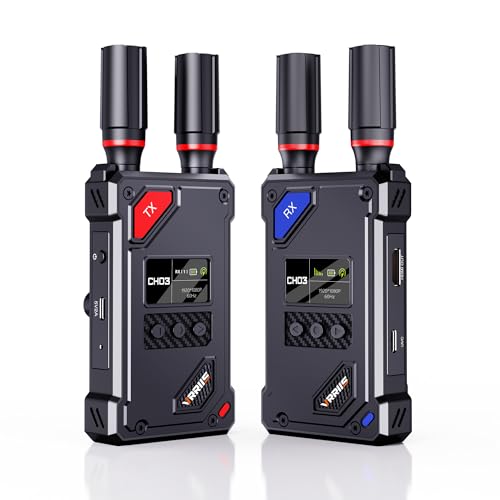
- UVC output for OBS and computer streaming
- 1080p at 60Hz with 0.05-second latency
- 20 channels, HDMI loop-out, and flexible power
Best For: Home-studio streaming and camera monitoring
On-Set Monitoring Choice
Wireless HDMI System with 7-Inch Screen
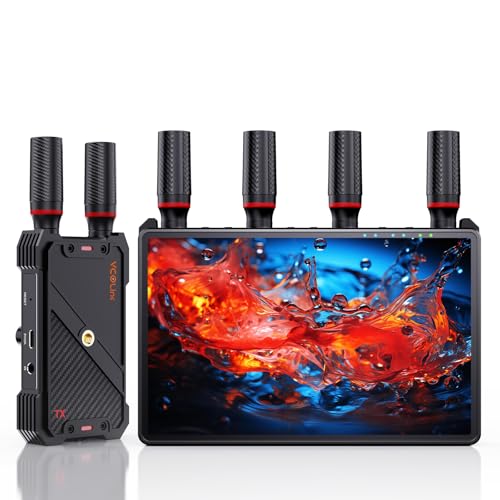
- Built-in 7-inch receiver monitor
- 1080p60 transmission with under 0.05-second latency
- Supports up to five receivers and HDMI loop-out
Best For: Studios needing built-in and shared monitoring
Premium 4K Upgrade
Teradek Ace 750 Wireless HDMI Set

- 4Kp30 10-bit HDR over HDMI
- 6GHz transmission with auto channel selection
- Less than 0.01-second latency and 750-foot range
Best For: 4K camera monitoring and low-latency studio workflows
Best Streaming Receiver
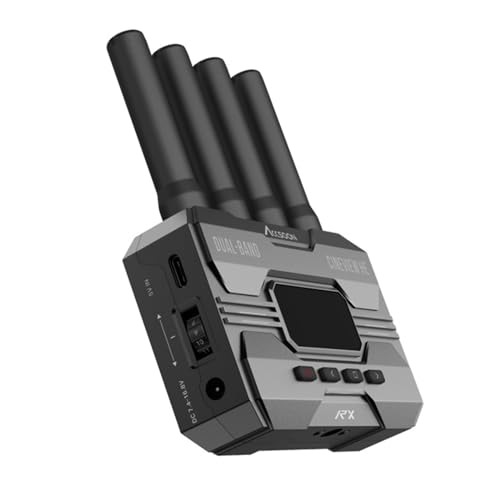
- Dual-band 2.4GHz and 5GHz transmission
- UVC output for computer streaming
- 1080p/60fps with under 0.06s latency
Best For: Home-studio livestreaming with a computer
Best Complete HDMI Kit

- Transmitter and receiver included
- 1080p/60Hz with 0.05s delay
- Loop-out and dual HDMI outputs
Best For: Flexible HDMI studio monitoring
Best HDMI/SDI Receiver

- HDMI and SDI support
- Dual-band interference management
- Compact OLED-equipped aluminum design
Best For: Professional HDMI/SDI home studios
Best for Multi-Device Monitoring – Accsoon CineView HE
For home studios that need flexible wireless video receivers for home studios, the Accsoon CineView HE combines dual-band transmission, low latency, and direct UVC output for computer-based streaming. It supports 1080p60 workflows and can send one transmitter’s feed to up to four receivers or mobile devices.
Best For: Home studios, live streaming, and productions where several people need to monitor the same camera feed.
Pros:
- Dual-band 2.4GHz and 5GHz transmission helps support stable connections.
- UVC output allows direct computer streaming without a separate capture device.
- Supports up to four receivers or mobile devices for shared monitoring.
- HDMI input and zero-latency HDMI loop-out support local monitoring.
Cons:
- Battery and charging cables are not included.
- Designed around HDMI connectivity rather than SDI input.
The CineView HE is a strong choice when streaming convenience and multi-person monitoring matter more than a simple point-to-point setup. Its UVC output is especially useful for OBS and other computer-based platforms.
Best Plug-and-Play Value – Wireless HDMI Extender
This wireless HDMI system is a practical option for home studios seeking wireless video receivers for home studios without Wi-Fi, apps, or Bluetooth setup. It provides 1080p output at 60Hz, supports duplicate and extended display modes, and is designed for straightforward source-to-display connections.
Best For: Presentations, home theaters, classrooms, and studio setups that need an uncomplicated HDMI link.
Pros:
- Plug-and-play operation requires no Wi-Fi, app, or Bluetooth pairing.
- Supports 1080p at 60Hz and 4K decoding.
- Claims up to 165 feet indoors and 328 feet outdoors under suitable conditions.
- Compact design includes Micro HDMI and Mini HDMI adapters.
Cons:
- Both transmitter and receiver require a power supply.
- Walls and other obstacles can reduce range and transmission speed.
- It is positioned more as a general HDMI extender than a specialized production receiver.
Choose this model when easy installation and broad everyday compatibility are priorities. It fits a home studio or presentation space well, provided the setup has convenient power access at both ends.
Best for 4K and SDI Monitoring – Hollyland Mars 4K
The Hollyland Mars 4K is aimed at creators who need higher-resolution wireless video receivers for home studios and professional monitoring setups. It supports UHD 4K at 30fps and 1080p at 60fps, with both HDMI and SDI outputs for compatibility with a wider range of displays and production equipment.
Best For: Home studios and small production environments using 4K cameras, HDMI monitors, or SDI equipment.
Pros:
- Supports UHD 4K at 30fps and 1080p at 60fps.
- Provides both HDMI and SDI outputs.
- Offers a stated 450-foot line-of-sight wireless range.
- Includes smart channel scanning and multiple power supply options.
Cons:
- Its 4K support is specified at 30fps rather than 60fps.
- Wireless range depends on line-of-sight conditions.
- The supplied information identifies this as a receiver, so a compatible transmitter is needed.
The Mars 4K stands out when output flexibility and 4K monitoring are more important than the lowest-cost setup. HDMI and SDI connectivity make it easier to integrate into mixed studio systems.
Best for Long-Range 1080p Workflows – Lemorele R5000
The Lemorele R5000 offers a useful balance of range and setup flexibility for wireless video receivers for home studios. Its 5GHz connection supports 1080p60 video, while the transmitter’s HDMI loop-out lets you monitor locally as the signal is sent wirelessly to another display.
Best For: 1080p camera monitoring, live events, home theaters, and studios that want both local and remote viewing.
Pros:
- Supports 1080p at 60Hz with a stated 50ms delay.
- Claims up to 656 feet in open, unobstructed spaces.
- Transmitter HDMI loop-out supports simultaneous local monitoring.
- Works with NP-F batteries or USB-C power and supports TUTUPlay app preview.
Cons:
- Batteries are not included.
- The listed 656-foot range applies to open, unobstructed spaces.
- The package includes one transmitter and one receiver, despite support for up to four receivers.
The R5000 is a sensible pick for users who want long-range 1080p transmission without giving up a local monitor feed. Its dual power options also make it practical for either mobile shoots or fixed indoor installations.
Flexible Streaming Hub – Vrriis 1080p Wireless Video System
For creators comparing wireless video receivers for home studios, the Vrriis system is a practical 1080p option with UVC output for computer-based streaming. It supports manual channel selection, HDMI loop-out monitoring, and several power methods, though its stated range depends heavily on a clear line of sight.
Best For: Home-studio streaming, camera monitoring, and HDMI feeds into OBS without a separate capture device.
Pros:
- UVC output can send received video directly to a computer and compatible streaming platforms such as OBS.
- Supports Full HD 1080p at 60Hz with listed latency of 0.05 seconds.
- Twenty manually adjustable channels help address interference.
- Includes HDMI loop-out and support for NP-F batteries, USB-C power, or adapters.
Cons:
- Walls, metal, brick, and glass can significantly reduce coverage.
- It does not include NP-F batteries.
- Adding receivers can reduce the wireless transmission distance.
This is a versatile choice when your home studio workflow centers on 1080p cameras and live streaming. Its UVC connection is especially useful for simplifying computer capture, while the channel controls and loop-out add flexibility for monitoring.
On-Set Monitoring Choice – Wireless HDMI System with 7-Inch Screen
Among wireless video receivers for home studios, this system stands out by building a 7-inch HD monitor into the receiver. It can also feed an external display, making it useful when you want an all-in-one preview screen for filming, streaming, or client viewing.
Best For: Small production setups that need built-in monitoring, external HDMI output, and multi-viewer expansion.
Pros:
- The receiver includes a built-in 7-inch screen with brightness, volume, headphone, and sleep controls.
- Supports 1080p at 60Hz with claimed latency below 0.05 seconds and a 1,312-foot line-of-sight range.
- One transmitter can broadcast to up to five receivers.
- Offers HDMI loop-out, IR remote control, NP-F, power-bank, and USB-C power options.
Cons:
- The external HDMI cable needed for a larger display is not included.
- Smartphone and tablet compatibility requires a Type-C-to-HDMI cable.
- The listed range is specified for line-of-sight use.
The integrated screen makes this a convenient monitoring solution when desk or rig space is limited. Its expandable receiver design is also helpful for collaborative workflows, although users planning mobile-device connections should budget for the required cable.
Premium 4K Upgrade – Teradek Ace 750 Wireless HDMI Set
For home studios that prioritize image quality and minimal delay, the Teradek Ace 750 is a premium wireless video receiver system with 4Kp30 10-bit HDR support. Its 6GHz transmission, app control, and camera-focused power options make it suited to higher-end HDMI monitoring workflows.
Best For: 4K camera monitoring, HDR production, and studio users who need near-zero-delay wireless video.
Pros:
- Supports up to 4Kp30 10-bit HDR over HDMI.
- Uses 6GHz transmission with 12 frequency options and automatic channel selection.
- Claims less than 0.01 seconds of latency and up to 750 feet of range.
- Includes camera-friendly D-Tap power, AC power, mounting adapters, and HDMI cables.
Cons:
- A second AC adapter for studio or AV setups is sold separately.
- Its 4K output is limited to 30 frames per second.
- The system is a higher-end option than basic 1080p wireless kits.
The Ace 750 is the strongest fit here for a color-critical or 4K-oriented studio. It combines a high-resolution signal with extremely low claimed latency, while the included mounting and power accessories support camera and fixed-studio installations.
Best Streaming Receiver – Accsoon CineView HE
The Accsoon CineView HE is a receiver-focused option for wireless video receivers for home studios, especially when you want to send camera footage to a computer for streaming. Its dual-band 2.4GHz and 5GHz design, UVC output, and 1080p/60fps support suit live production setups that need a direct computer connection.
Best For: Home-studio livestreaming with OBS, YouTube, or other computer-based platforms.
Pros:
- Dual-band transmission is designed to improve stability and resistance to interference.
- UVC output can send received footage to a computer over USB-C without a separate capture device.
- Supports 1080p/60fps transmission with latency listed below 0.06 seconds.
- One transmitter can send video and audio to up to four receivers or supported mobile devices.
Cons:
- This listing includes only the receiver, so a compatible transmitter is required.
- The USB-C cable for UVC computer connection is user-provided.
Choose the CineView HE when streamlined computer streaming matters most. Its UVC output is particularly useful for reducing equipment in a home studio, while the dual-band link adds flexibility for multi-device monitoring.
Best Complete HDMI Kit – Vrriis Wireless HDMI System
The Vrriis Wireless HDMI Transmitter and Receiver kit is a practical choice among wireless video receivers for home studios when you need a transmitter and receiver together. It supports 1080p/60Hz video, local loop-out monitoring, dual HDMI output, and several power options for cameras, displays, and streaming equipment.
Best For: HDMI-based studio setups that need flexible monitoring and long-range point-to-point transmission.
Pros:
- Includes one transmitter and one receiver for a complete wireless HDMI connection.
- Supports up to 1080p/60Hz with a listed 0.05-second delay.
- Transmitter loop-out and receiver dual HDMI outputs support multiple displays.
- Can use NP-F batteries, USB-C power, adapters, or compatible portable power supplies.
Cons:
- Walls, metal, brick, and glass can reduce signal coverage or cause signal loss.
- Batteries are not included.
- Adding more receivers can reduce the transmission distance.
This kit stands out for convenience because it supplies both sides of the wireless link and adds useful monitoring connections. It is a strong fit for a home studio that values display flexibility, though the advertised range is most realistic in an open, unobstructed area.
Best HDMI/SDI Receiver – Accsoon CineView SE
The Accsoon CineView SE receiver is designed for creators who use professional HDMI and SDI equipment. For wireless video receivers for home studios, it combines dual-band transmission, 1080p/60fps support, a compact aluminum body, and app-based preview sharing for production monitoring.
Best For: Home studios using cameras or monitors with HDMI and SDI connectivity.
Pros:
- Supports HDMI and SDI connections for compatible 1080p video workflows.
- Dual-band transmission combines 2.4GHz and 5GHz streams to address interference.
- Offers listed latency of 0.05 seconds and transmission distances up to 1200 feet.
- Compact aluminum construction includes a 1.3-inch OLED display and silent cooling.
Cons:
- This listing is for the receiver only and requires a compatible transmitter.
- Its feature set may be more than needed for a basic HDMI-only studio setup.
The CineView SE is the more connectivity-focused pick of these receiver-only options. Select it when SDI compatibility, quiet operation, and compact monitoring are more important than having a complete transmitter-and-receiver kit in the box.
How We Picked the Best Wireless Video Receivers for Home Studios
We compared these wireless video systems by looking at the features that matter most in a working studio: supported resolution and frame rates, measured or stated transmission range, latency, input and output formats, wireless-band flexibility, reliability, and setup complexity. We also considered whether a system is designed for a single monitor, live streaming, camera monitoring, or distribution to several screens.
Claims such as “long range” can vary with walls, interference, antenna placement, and local radio conditions. Treat the advertised distance as an open-space maximum rather than a guaranteed indoor result.
Quick Comparison
- Best for professional 4K monitoring: Teradek Ace 750.
- Best for live streaming: Accsoon CineView HE models with UVC output.
- Best for HDMI-only 1080p setups: The basic wireless HDMI transmitter-and-receiver kits.
- Best for multi-display distribution: The system supporting one transmitter and up to five receivers with monitor options.
- Best for HDMI and SDI flexibility: Accsoon CineView SE.
Key Buying Factors for Wireless Video Receivers for Home Studios
Resolution, Frame Rate, and Color Support
Choose a receiver that matches your camera and display. A 1080p60 system is usually sufficient for streaming, tutorials, video calls, and most home productions. Choose a 4K system if you monitor 4K footage, need extra image detail for focus, or want HDR and higher-end production support. Confirm whether the quoted resolution applies to the transmitter input, receiver output, or both.
Latency and Signal Stability
Low latency matters when you are framing a shot, pulling focus, presenting, or monitoring audio and video together. A small delay may be acceptable for casual viewing but distracting for interactive work. Dual-band systems can help manage congestion, while clear line of sight and sensible antenna placement often matter as much as the headline range.
Connections and Workflow Compatibility
Check whether you need HDMI, SDI, USB UVC output, loop-out, or support for multiple receivers. UVC output is especially useful when the receiver must connect directly to a computer or streaming application. Loop-out allows a local monitor and another device to use the same feed. Also verify connector sizes, power requirements, and whether cables are included.
Range, Channels, and Expansion
For a small studio, a shorter reliable range is often more useful than an impressive maximum distance. Manual channel selection can help avoid interference. If you plan to feed several displays, select a platform designed for multiple receivers instead of trying to split a single point-to-point kit.
Who Should Buy Which Wireless Video Receivers for Home Studios?
Buy an affordable 1080p HDMI kit if you need a straightforward camera-to-monitor connection and do not require advanced control or professional formats. Choose an Accsoon CineView HE when live streaming, UVC connectivity, and compact wireless monitoring are priorities. Select the CineView SE if your cameras or production equipment use SDI as well as HDMI.
The Teradek Ace 750 is the stronger choice for demanding 4K workflows, HDR monitoring, and users willing to pay for a more professional system. A multi-receiver package makes more sense for teaching spaces, interview studios, and productions that need several displays. Before ordering, confirm every device’s input and output standards, expected indoor distance, and power arrangement so the receiver fits your complete studio chain.