The best RC soldering irons make it easier to build, repair, and upgrade model vehicles without overheating delicate wires or creating unreliable joints. The right tool should heat quickly, hold a stable temperature, and fit the type of connectors and components you work with most.
We compared 10 options ranging from compact cordless irons and basic kits to higher-powered digital stations from established brands. This guide focuses on temperature control, heating performance, included accessories, ergonomics, and overall usefulness for RC hobby work.
Best 10 Rc Soldering Irons Picks for 2026
Best All-in-One Kit
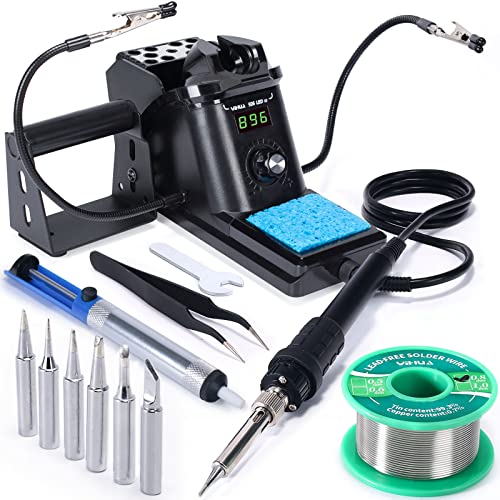
- 60W station with 194°F–896°F adjustment
- Includes six tips and essential soldering tools
- Digital display, calibration, and sleep mode
Best For: Hobbyists wanting a complete, organized RC soldering setup
Best for Precision Control

- 120W station with 392°F–896°F control
- Temperature compensation in 20 milliseconds
- ESD-safe design with built-in transformer
Best For: Frequent users needing stable heat for bench work
Best Cordless Option

- Seven-second heating with four C210 tips
- Cordless use or USB-C wired operation
- Six settings from 390°F to 840°F
Best For: Mobile RC repairs and compact precision work
Best Digital Station
Weller WE1010NA 70W Soldering Station
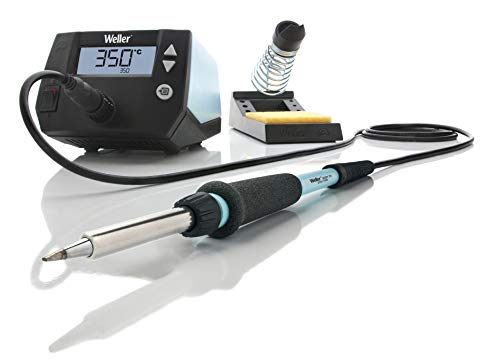
- 70W output with stable, repeatable heating
- LCD controls with temperature lock
- Includes safety rest, sponge, and tip
Best For: RC hobbyists wanting precise, station-based soldering
Best Portable Starter Kit
60W Adjustable Soldering Iron Kit

- Adjustable 392°F–842°F temperature range
- Heats up in about 15 seconds
- Includes five tips, solder, flux, and stand
Best For: Beginners and DIY users needing a complete portable kit
Best Heavy-Duty Grip
Weller WLIRPK8012A 80W Soldering Iron Kit

- 80W power for heavy-duty soldering
- Ergonomic grip for continuous work
- Includes two 10 mm tips and solder
Best For: Large-joint repairs and users prioritizing grip and power
Most Complete Station
100W Digital Soldering Station Kit

- LED display with calibration and °C/°F conversion
- Helping hands and broad accessory set included
- Auto-sleep timer and 180°C–480°C range
Best For: Beginners and DIY electronics work
Best Basic Pen Kit
80W LCD Digital Soldering Iron

- Heats in about 20 seconds
- LCD display with 180°C–480°C adjustment
- Includes five tips, stand, solder, sponge, and flux
Best For: Portable beginner repairs and DIY projects
Best Fast-Heating Iron
100W LED Digital Soldering Kit

- Heats in about 15 seconds
- Adjusts from 180°C to 500°C
- Child lock and calibration included
Best For: Portable, quick-start electronics and repair work
Best All-in-One Kit – YIHUA 926 III
For buyers who want rc soldering irons with accessories included, the YIHUA 926 III combines a 60W digitally controlled station with useful workshop tools. Its adjustable 194°F–896°F range, PID temperature stabilization, and compact layout make it practical for electronics work and RC repairs.
Best For: Hobbyists who want a complete, space-conscious soldering setup with digital controls and starter accessories.
Pros:
- Fast heating with a broad adjustable temperature range and PID stabilization.
- Includes two helping hands, six tips, lead-free solder, a solder sucker, tweezers, and cleaning accessories.
- Digital display, Celsius/Fahrenheit conversion, calibration support, and adjustable sleep mode.
- Integrated holder and rear tip-storage slots help conserve workspace.
Cons:
- Designed for 110–127V and a US-standard power plug.
- The kit is larger and less portable than a cordless pencil-style iron.
This is a strong value choice when convenience matters as much as soldering control. The bundled accessories reduce the need for additional purchases, while the digital station offers useful precision for repeated RC and electronics jobs.
Best Simple Pencil Iron – Hakko FX600
The Hakko FX600 is a straightforward option among rc soldering irons for buyers who prefer a portable corded pencil design. Its dial adjusts from 200°C to 500°C, making it suitable for soldering ICs, LEDs, PWBs, and similar small electronics tasks.
Best For: Users who want a compact, no-frills soldering iron with manual temperature adjustment.
Pros:
- Wide 200°C–500°C adjustable temperature range.
- Lightweight 61g pencil-style design for portable use.
- 50W corded power and a rubber or silicone handle.
- Designed for electronics applications such as IC, LED, and PWB soldering.
Cons:
- Does not include a full station, digital display, or broader accessory kit in the supplied details.
- International product terms may differ from local versions, including labeling or instructions.
The FX600 suits buyers who already have a stand and basic accessories or who want a lighter tool for occasional electronics work. Its appeal is simplicity, though it offers fewer built-in features than station-based alternatives.
Best for Precision Control – YIHUA 939D+
For demanding RC soldering irons users, the YIHUA 939D+ provides a powerful station with precise digital temperature control. Its 392°F–896°F range, 20-millisecond temperature compensation, built-in transformer, and ESD-safe design are suited to regular electronics work.
Best For: Frequent hobbyists, repair users, and makers who prioritize stable heat and a durable station setup.
Pros:
- Powerful 120W system with fast heating and enhanced temperature stabilization.
- Digital Celsius/Fahrenheit display and easy knob-based temperature adjustment.
- Built-in transformer provides contact-safe voltage while retaining high power.
- Includes a detachable iron, metal holder, cleaning sponge, and brass tip cleaner.
Cons:
- Designed for 110–127V and a US-standard power plug.
- Its station format is less convenient for field repairs than a cordless iron.
The 939D+ is the better fit when a stable, repeatable soldering temperature is more important than portability. Its strong output and metal construction make it well suited to regular bench use, including RC electronics repair and assembly.
Best Cordless Option – Fanttik T1 Max
The Fanttik T1 Max stands out among rc soldering irons for its cordless design and quick seven-second heating. Its built-in 2600mAh battery supports up to 60 minutes at 840°F in wireless mode, while USB-C-powered wired operation adds flexibility for repairs away from the workbench.
Best For: Mobile RC repairs, precision electronics work, and users who need a compact iron for tight spaces.
Pros:
- Heats in approximately seven seconds and includes four C210-series tips.
- Cordless battery operation or wired USB-C power for flexible use.
- Six temperature levels from 390°F to 840°F.
- Automatic sleep after 30 seconds with gravity-sensing wake-up.
Cons:
- Lower 16W maximum output than the listed full-size soldering stations.
- Battery operation is rated for up to 60 minutes at 840°F, so extended jobs may require wired power or recharging.
- Temperature adjustment uses six levels rather than a continuously adjustable digital control.
The T1 Max is especially appealing when portability and fast startup outweigh maximum station power. Its included accessories, automatic sleep function, and dual power modes make it a practical choice for on-the-go RC maintenance and precision repairs.
Best Digital Station – Weller WE1010NA 70W Soldering Station
For buyers comparing rc soldering irons, the Weller WE1010NA is a feature-rich digital station designed for consistent, repeatable work. Its 70W output, LCD, temperature stability, and ergonomic iron make it a strong choice for more controlled soldering tasks.
Best For: RC hobbyists and electronics users who want precise temperature control and a complete soldering station.
Pros:
- 70W power helps complete soldering jobs faster.
- Temperature stability of ±4°F/2°C supports consistent results.
- LCD navigation, standby mode, auto setback, and password protection add convenience and control.
- Includes an iron, safety rest, sponge, and ETA screwdriver tip.
Cons:
- Its 5.5-pound station setup is less portable than a pencil-style iron.
- The upper temperature rating is listed as 400°F.
The WE1010NA is the most controlled option here for users who value stable heat and station-based workflow over maximum portability.
Best Portable Starter Kit – 60W Adjustable Soldering Iron Kit
This 60W kit is a practical entry point for shoppers seeking rc soldering irons with the basic accessories included. It reaches the desired temperature in about 15 seconds and offers an adjustable 392°F–842°F range for general repair and DIY work.
Best For: Beginners and RC users who need an affordable, portable iron with multiple tips and starter supplies.
Pros:
- Adjustable 392°F–842°F temperature range with thermostatic control.
- Ceramic heating core reaches temperature in approximately 15 seconds.
- Includes five interchangeable tips, stand, sponge, solder wire, and flux paste.
- Portable pencil-style design with an on/off switch.
Cons:
- It lacks the digital display and station-style controls of the Weller WE1010NA.
- The supplied stand is described as simple.
With its broad temperature range and generous accessory bundle, this kit makes sense when convenience and low-cost versatility matter more than advanced station features.
Best Heavy-Duty Grip – Weller WLIRPK8012A 80W Soldering Iron Kit
For heavier soldering jobs, the Weller WLIRPK8012A brings 80W of power and an ergonomic power grip to the rc soldering irons category. Its interchangeable large tips and included accessories suit applications that need a firm hold and substantial heat.
Best For: Heavy-duty RC, home repair, stained-glass, and other projects requiring a strong grip and large tip options.
Pros:
- 80W output is suited to heavy-duty soldering applications.
- Ergonomic power grip supports comfortable, continuous soldering.
- Quick tip changes and included chisel and screwdriver tips provide flexibility.
- Includes an iron stand, solder aid, and lead-free rosin solder.
Cons:
- The listed 10 mm tips are oriented toward larger, heavier-duty work rather than fine detail.
- It does not include a digital temperature display or adjustable temperature control in the supplied specifications.
This Weller kit is a compelling pick when grip, power, and large interchangeable tips are more important than fine temperature adjustment.
Most Complete Station – 100W Digital Soldering Station Kit
For shoppers comparing rc soldering irons, this 100W station stands out as a more complete workspace setup. It combines a 356°F–896°F adjustable range with an LED display, calibration, auto-sleep timing, and two helping hands for steadier work.
Best For: Beginners and DIY users who want an organized station for circuit boards, electronics, crafts, and repair projects.
Pros:
- Includes two helping hands, five tips, solder wire, a pump, tweezers, and cleaning tools.
- Offers LED temperature display, °C/°F conversion, and calibration.
- Auto-hibernate timer can be set from 0 to 600 seconds, with an on/off switch.
- 100W power and a 180°C–480°C temperature range suit varied soldering tasks.
Cons:
- The station setup is less portable than a pen-style iron.
- Its single channel is suited to one iron at a time.
This is the strongest all-in-one choice of the three if you value hands-free positioning and built-in safety features more than minimal size.
Best Basic Pen Kit – 80W LCD Digital Soldering Iron
This 80W pen-style option is a straightforward pick among rc soldering irons for users who want a compact kit with digital temperature control. It heats in about 20 seconds and includes the basic supplies needed for common repairs and DIY work.
Best For: Beginners, household repairs, circuit-board projects, and users who prefer a portable iron over a full station.
Pros:
- 80W ceramic heater reaches working temperature in approximately 20 seconds.
- LCD display and adjustable 180°C–480°C range make temperature selection easier.
- Four ventilation holes and a heat-resistant handle support longer sessions.
- Kit includes five tips, stand, sponge, solder wire, and flux paste.
Cons:
- Includes a simple stand rather than helping hands.
- It has lower wattage than the two 100W alternatives.
Choose this kit when you want the essentials in a portable format and do not need the expanded positioning or sleep features of a station.
Best Fast-Heating Iron – 100W LED Digital Soldering Kit
For fast starts and a portable design, this 100W model is a compelling choice among rc soldering irons. Its ceramic heating core reaches temperature in about 15 seconds, while the LED display supports adjustment up to 932°F and includes a password-based child-lock setting.
Best For: Users who prioritize quick heat-up, portability, and a higher maximum temperature for electronics, PCB, appliance, and phone repair.
Pros:
- 100W ceramic heater heats in approximately 15 seconds.
- LED display supports 180°C–500°C adjustment and °C/°F switching.
- Includes temperature calibration and a password child-lock setting.
- Accessory set includes tips, stand, wick braid, solder wire, sponge, and flux paste.
Cons:
- It is a pen-style kit without the two helping hands included with the station model.
- The child-lock operation requires referring to the manual.
This is the best fit if quick heat-up and the highest stated temperature range matter more to you than a larger, more structured workstation.
How We Picked the Best Rc Soldering Irons
We selected tools suited to common RC tasks such as soldering battery leads, motor wires, switches, connectors, circuit boards, and replacement components. The lineup includes standalone irons, complete kits, and bench-style stations so you can match the tool to your workspace and experience level.
Our comparison emphasizes adjustable temperature range, power output, heat recovery, tip availability, handling comfort, safety features, and included essentials. Digital displays and preset controls can improve consistency, while simple dial models may be easier to operate and maintain.
Quick Comparison
| Type | Best For | Main Advantage |
|---|---|---|
| Digital soldering station | Frequent bench work | Stable control and fast recovery |
| Basic adjustable kit | Occasional repairs | Low cost and useful accessories |
| High-wattage iron | Large wires and connectors | More heat reserve |
| Cordless iron | Field repairs | Portability and convenience |
Key Buying Factors for Rc Soldering Irons
Temperature Control
Adjustable temperature is important because different solder, wire sizes, and components require different heat levels. A digital display makes settings easier to repeat, while a reliable dial can work well for straightforward jobs. Avoid applying excessive heat to small circuit boards or insulation.
Power and Heat Recovery
For battery connectors and thick motor leads, choose an iron with enough wattage to recover quickly when the tip contacts a large joint. Lower-powered models can handle light wiring and electronics but may struggle with heavy-gauge wire.
Tips and Accessories
Check whether replacement tips are easy to find and whether the kit includes useful shapes, a stand, solder, flux, a desoldering pump, or helping hands. Chisel tips generally transfer heat more effectively than extremely fine tips for RC wiring.
Safety and Workspace Features
Look for a stable stand, heat-resistant handle, insulated power cord, ESD-safe design when working on sensitive electronics, and auto-sleep or automatic shutoff features. A clear display and accessible controls also reduce mistakes during longer sessions.
Who Should Buy Which Rc Soldering Irons?
Choose a digital station if you solder regularly, want repeatable settings, or work on a variety of RC connectors and electronics. A complete 60W to 80W kit is a practical starting point for general hobby repairs and home workshops. Higher-output models are better for large-gauge battery leads and connectors that pull heat away from the joint.
A cordless model is the most convenient choice for trackside fixes, field boxes, and repairs where an outlet is unavailable. Beginners may benefit from a kit with multiple tips and accessories, while experienced users should prioritize tip compatibility, temperature stability, and long-term parts availability.