If you want more consistent results with engineering materials, a 3d printer with heated chamber can make a major difference. Active chamber heating helps reduce warping, improve layer bonding, and keep large prints more stable.
Below, we focus on the best options for buyers who care about temperature control, build volume, speed, and material compatibility in 2026.
Best 10 3d Printer with Heated Chamber Picks for 2026
First-Timer Pro Pick
QIDI Q2 65℃ Heated Chamber 370℃ Nozzle
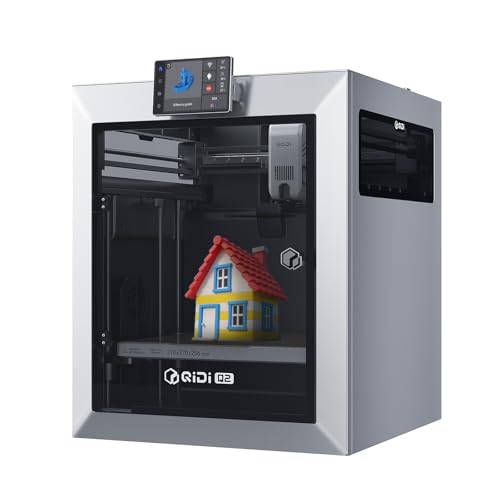
- 65℃ heated chamber for better adhesion and less warping.
- 370℃ nozzle unlocks advanced materials and composites.
- CoreXY, linear rails, and 600mm/s speed for stable output.
Best For: Beginners and makers who want one printer that covers entry-level and advanced work.
Reliability Leader
Original Prusa CORE One+ Enclosed CoreXY

- Actively heated chamber supports a wide range of materials.
- CoreXY motion and auto calibration focus on accuracy and speed.
- Fully assembled with a rigid all-steel frame for durability.
Best For: Reliable everyday printing with minimal setup and broad material support.
Large-Format Powerhouse
QIDI Max4 Combo 390×390×340mm, 65℃ Chamber
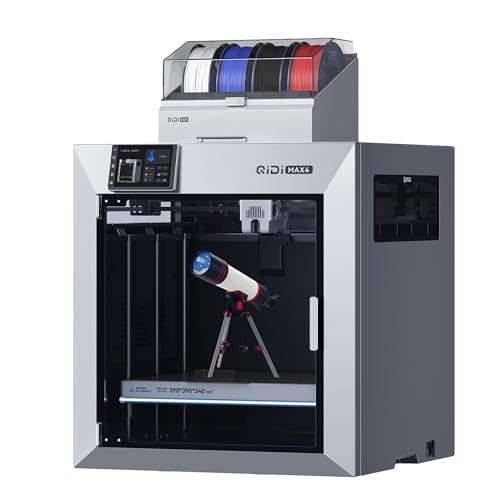
- Huge 390×390×340mm build volume for large parts.
- 65℃ heated chamber supports advanced and abrasive materials.
- 800mm/s speed plus AI monitoring for demanding workflows.
Best For: Large industrial parts, molds, and big prototypes that need an enclosed chamber.
Big Build Enclosed Pick
Original Prusa CORE One L Large-Format CoreXY

- 11.8×11.8×12.99 in build volume for large one-piece prints.
- 60℃ heated chamber supports ASA, ABS, PC, and Nylon.
- Enclosed CoreXY frame with easy setup and strong rigidity.
Best For: Large-format enclosed printing for models, helmets, and engineering parts.
Flagship Large-Format Performance
QIDI Plus5, 320×320×300mm Build

- 320×320×300mm build volume
- 65°C heated chamber for warping control
- 370°C nozzle for engineering filaments
Best For: large engineering parts and batch production
Industrial Multi-Tool Precision

- 65°C active heated chamber
- Four independent extruders for color separation
- HEPA13 filtration in sealed enclosure
Best For: professional multi-color and engineering material printing
Balanced Heated-Chamber Workhorse

- 400W active chamber heating
- 370°C nozzle for high-temp filaments
- Remote monitoring with HD camera
Best For: versatile high-temp printing with easy operation
Multi-Tool Enclosed Power

- 65°C active heated chamber for warping-prone materials
- 4 independent toolheads reduce flushing and color bleed
- HEPA13 filtration and remote management for indoor use
Best For: Heated, enclosed multi-material printing with engineering filaments
High-Temp Multi-Color Pro
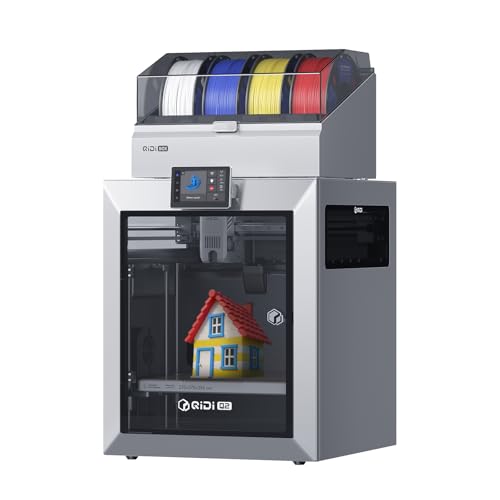
- 65°C heated chamber reduces warping on advanced materials
- 370°C nozzle supports engineering plastics and composites
- Up to 16-color printing with the QIDI BOX
Best For: High-temp enclosed printing with multicolor and composite support
Large-Format Chamber Printer

- 60°C active chamber heating helps with ASA and PPA
- 300×300×300 mm build volume for larger jobs
- Dual AI cameras and auto leveling add control
Best For: Large-format enclosed printing with heating and smart monitoring
First-Timer Pro Pick – QIDI Q2 65℃ Heated Chamber 370℃ Nozzle
If you want a 3d printer with heated chamber that can grow with your skills, the QIDI Q2 is built to bridge beginner-friendly setup with advanced material support. Its 65℃ chamber, 370℃ nozzle, and CoreXY platform are aimed at users who want reliable results on everything from everyday prints to stronger engineering parts.
Best For: Beginners, makers, educators, and engineers who want one machine for entry-level and advanced projects.
Pros:
- 65℃ PTC heated chamber helps reduce warping and improve layer adhesion.
- 370℃ nozzle supports advanced materials and carbon/glass-fiber composites.
- CoreXY frame, linear rails, and up to 600mm/s speed focus on stable, high-quality printing.
- Triple filtration and closed-loop temperature controls add a safer indoor printing experience.
Cons:
- Multi-color and filament detection features depend on the QIDI BOX accessory.
- Advanced capability may be more than a basic hobby-only user needs.
The Q2 stands out as a practical all-rounder for users who want speed, precision, and room to expand into tougher materials. If you need a heated-chamber printer that still feels approachable, this one is a strong fit.
Reliability Leader – Original Prusa CORE One+ Enclosed CoreXY
The Original Prusa CORE One+ is a strong choice if you want a 3d printer with heated chamber that prioritizes consistency over gimmicks. Its fully enclosed, actively heated chamber is designed to help with warping and layer adhesion, while the CoreXY motion system and automatic calibration support dependable day-to-day printing.
Best For: Users who want a ready-to-print enclosed machine for reliable performance across common and advanced materials.
Pros:
- Fully enclosed active-heated chamber supports PLA, PETG, ASA, PC, and Nylon.
- CoreXY system is built for fast, precise printing with good dimensional accuracy.
- Fully assembled, tested, and ready to print with one-click setup.
- Rigid all-steel exoskeleton is designed for long-term durability and low maintenance.
Cons:
- Build volume is smaller than large-format enclosed printers.
- Geared more toward reliable production than maximum print size.
CORE One+ is the kind of printer that makes sense if you want a dependable enclosed platform with a proven workflow. It balances heat control, speed, and usability in a way that should appeal to serious hobbyists and small workshops.
Large-Format Powerhouse – QIDI Max4 Combo 390×390×340mm, 65℃ Chamber
If your priority is a 3d printer with heated chamber that can handle big jobs, the QIDI Max4 Combo is built around scale and performance. With a huge 390×390×340mm build area, a 65℃ active heated chamber, and high-flow hardware, it targets users printing industrial parts, molds, and large prototypes in fewer pieces.
Best For: Professionals and advanced enthusiasts who need a large enclosed printer for big, technical prints.
Pros:
- Massive 390×390×340mm build volume for oversized parts and prototypes.
- 65℃ active heated chamber and Polar Cooler support high-temp materials like ABS-CF, PC, and PPS-CF.
- Up to 800mm/s speed with closed-loop motors for high-speed output.
- AI camera monitoring and QIDI BOX compatibility add smarter workflow options.
Cons:
- Polar Cooler is not included and must be purchased separately.
- Large size and weight make it less suited to tight workspaces.
The Max4 Combo is aimed at users who need volume first, then speed and material capability. If your prints are getting too big for standard enclosed machines, this model offers a serious step up.
Big Build Enclosed Pick – Original Prusa CORE One L Large-Format CoreXY
The Original Prusa CORE One L is a compelling 3d printer with heated chamber if you want a bigger enclosed machine without giving up precision. Its actively heated 60℃ chamber, large-format build volume, and CoreXY frame are aimed at users printing engineering materials, cosplay pieces, and full-size models.
Best For: Makers and professionals who need a large enclosed printer for advanced materials and full-scale prints.
Pros:
- 11.8×11.8×12.99 in build space handles large one-piece prints.
- 60℃ actively heated chamber helps reduce warping and improve adhesion.
- Rigid CoreXY steel frame supports high-speed, accurate printing.
- Unpack-and-print setup with automated sensors makes startup easier.
Cons:
- Large-format design takes more desk or shop space.
- Best suited to users who need the extra chamber size and volume.
CORE One L is the strongest fit when you want Prusa reliability in a larger enclosed format. It combines chamber heat, speed, and a practical setup process for serious long-form printing.
Flagship Large-Format Performance – QIDI Plus5, 320×320×300mm Build
If you want a 3d printer with heated chamber for large parts and engineering materials, the QIDI Plus5 is built around speed, size, and temperature control. Its 65°C actively heated chamber and 370°C nozzle are aimed at reducing warping while handling tougher filaments like PPS-CF, PPA-CF, PC, and nylon.
Best For: Makers and engineers who need a large-format enclosed printer for high-temperature functional parts.
Pros:
- 320×320×300mm build volume supports oversized prints and batch production.
- 65°C active chamber heating helps improve layer adhesion and reduce warping.
- 370°C nozzle expands compatibility with engineering-grade materials.
- CoreXY motion system targets high-speed printing up to 600mm/s.
Cons:
- Large footprint and 83-pound weight make it less portable.
- Advanced material support may be more than casual hobby users need.
The Plus5 stands out as a production-oriented option when you need both volume and heated-chamber stability. It combines enclosure heating, smart monitoring, and high-temp extrusion in a single machine designed for demanding jobs.
Industrial Multi-Tool Precision – FLASHFORGE Creator 5 Pro
The FLASHFORGE Creator 5 Pro is a strong choice if you need a 3d printer with heated chamber for professional materials and multi-color work. Its 65°C active heated chamber is paired with a sealed enclosure, HEPA13 filtration, and four independent extruders for cleaner, more controlled printing.
Best For: Users who want industrial-style enclosed printing with true multi-color and multi-material flexibility.
Pros:
- 65°C active chamber heating supports ABS, ASA, PC, and Nylon.
- Four independent extruders enable multi-color printing without nozzle color mixing.
- HEPA13 filtration and sealed enclosure help capture particles and odors.
- 600mm/s speed and CoreXY frame support high-throughput printing.
Cons:
- 256mm³ build volume is smaller than some large-format competitors.
- Independent extruder setup may be more complex than a single-toolhead machine.
Overall, the Creator 5 Pro is geared toward controlled, repeatable results rather than sheer build size. Its heated chamber and four-toolhead design make it especially appealing for professional users balancing material performance and color separation.
Balanced Heated-Chamber Workhorse – QIDI PLUS4, 370°C Nozzle
If you’re shopping for a 3d printer with heated chamber that can handle high-temp materials without a complicated setup, the QIDI PLUS4 is a practical middle ground. It adds second-generation active chamber heating with 400W power, dual-layer insulation, and air circulation to help reduce warping and cracking during tougher prints.
Best For: Users who want a versatile enclosed printer for high-temperature filaments and everyday reliability.
Pros:
- Second-generation active chamber heating uses 400W for more balanced chamber temperatures.
- 370°C integrated nozzle supports PPS-CF, PPA-CF/GF, ABS, ASA, PC, PA, PET, and more.
- HD camera, remote monitoring, and app/slicer control add convenience.
- Large 12 x 12 x 11 inch build size supports bigger or multiple models.
Cons:
- Multi-color printing depends on a future QIDI BOX accessory.
- It is still a sizable enclosed printer, so desk space matters.
The PLUS4 focuses on consistency, high-temperature capability, and easy remote control. It is a strong fit if you want heated-chamber performance without moving into the most specialized industrial tier.
Multi-Tool Enclosed Power – Flashforge Creator 5 Pro
If you want a 3d printer with heated chamber support for tougher materials and faster production-style workflows, the Flashforge Creator 5 Pro is built around that use case. Its active chamber heating to 65°C helps reduce warping on ABS, ASA, and PA, while the enclosed design and HEPA13 filtration make it easier to run indoors. The four independent toolheads also make multicolor or multi-material printing more practical because each material has its own dedicated hotend.
Best For: Users who need enclosed, heated printing with multi-tool flexibility for ABS, ASA, PA, and mixed-material jobs.
Pros:
- Active chamber heating up to 65°C supports better adhesion and less warping on engineering materials.
- Four independent toolheads avoid flushing and color bleed, with tool changes in 7 seconds.
- HEPA13 filtration captures 99.97% of particles for safer indoor use.
- CoreXY frame, vibration compensation, and 600mm/s speed suit higher-throughput printing.
Cons:
- Large and heavy compared with smaller desktop printers.
- Multi-tool capability is useful, but may be more than casual users need.
The Creator 5 Pro stands out when enclosure control and tool independence matter more than basic entry-level simplicity. It is a strong fit for users who want heated-chamber reliability plus clean multi-material output in one machine.
High-Temp Multi-Color Pro – QIDI Q2 Combo
The QIDI Q2 Combo is a compelling 3d printer with heated chamber features if you want stronger layer bonding and more stable results from demanding filaments. Its 65°C heated chamber is designed to minimize warping, while the 370°C nozzle expands material compatibility for engineering plastics and composites. Add in the QIDI BOX for up to 16-color printing, and it becomes a practical option for users who want both material flexibility and temperature control.
Best For: Makers who want a heated enclosed printer for engineering materials plus multi-color printing capability.
Pros:
- 2nd-generation 65°C heated chamber helps reduce warping and improve layer adhesion.
- 370°C nozzle supports engineering plastics and composites.
- QIDI BOX enables up to 16-color printing with dry-while-print handling.
- Triple filtration, AI camera monitoring, and power-loss recovery add convenience and safety.
Cons:
- The full feature set may be more printer than a basic hobbyist needs.
- Large, heavy machine with a substantial footprint.
Overall, the Q2 Combo blends heat, speed, and advanced filament handling in a way that suits ambitious projects. If you want an enclosed printer that can handle high-temp materials and multicolor output, it deserves a close look.
Large-Format Chamber Printer – Creality K2 Pro
The Creality K2 Pro is aimed at buyers searching for a 3d printer with heated chamber capability plus a larger build area for ambitious parts. Its active chamber heating reaches up to 60°C, which helps reduce warping and cracking when printing ASA and PPA-based materials. Combined with 300×300×300 mm volume, 600mm/s speeds, and CFS compatibility for multicolor workflows, it is built for demanding but flexible printing.
Best For: Users who want a large-build enclosed printer with chamber heating and multicolor expansion options.
Pros:
- Active chamber heating up to 60°C improves stability on ASA and PPA-class materials.
- Large 300×300×300 mm build volume handles bigger models or multiple parts.
- 600mm/s speed and 20,000 mm/s² acceleration support fast turnaround.
- Dual AI cameras, auto leveling, and remote control improve monitoring and setup.
Cons:
- CFS multicolor printing requires compatible expansion hardware.
- Maximum chamber temperature is lower than some competing heated-chamber models.
The K2 Pro is a strong option if size matters as much as enclosure control. It balances a heated chamber, high-speed motion, and smart monitoring in a package suited to larger projects and more technical materials.
How We Picked the Best 3d Printer with Heated Chamber
We prioritized printers with true heated or actively controlled chambers, practical nozzle temperatures for advanced filaments, and a strong balance of print volume, speed, and enclosure quality. We also looked at ease of setup, ecosystem maturity, and whether each machine suits hobbyists, prosumers, or production-minded users.
Quick Comparison
Not every heated-chamber printer solves the same problem. Smaller enclosed machines are often best for precision parts and advanced filaments, while larger-format models are better for functional prototypes, jigs, and bigger end-use pieces. Multi-material systems add flexibility, but they can also increase cost and complexity.
Key Buying Factors for a 3d Printer with Heated Chamber
Chamber Temperature
Look for a chamber that can hold a stable elevated temperature rather than just trap ambient heat. This is especially important for nylon, ABS, ASA, PPS-based materials, and other warp-prone engineering filaments.
Nozzle and Hotend Capability
A heated chamber works best when paired with a hotend that can reliably reach the temperatures your materials need. If you plan to print filled or high-performance filaments, confirm both maximum nozzle temperature and wear-resistant hardware support.
Build Volume
Choose the smallest build area that still fits your real projects. Larger chambers are useful for big parts, but they also take longer to heat and can cost more to operate.
Enclosure, Filtration, and Workflow
A sealed or well-controlled enclosure improves consistency. If you print frequently, consider airflow management, filtration, automated leveling, and multi-material support to reduce downtime and post-processing.
Who Should Buy Which 3d Printer with Heated Chamber?
If you want a compact all-rounder for advanced materials, choose a smaller enclosed machine with strong chamber heating and a high-temp nozzle. If you need bigger parts or batch production, a larger-format 3d Printer with Heated Chamber is the better fit. If color changes or material mixing matter more than raw enclosure performance, prioritize multi-color or multi-toolhead systems. For industrial-style throughput, speed, filtration, and chamber stability should carry the most weight.
In short, match the printer to the materials you use most, the size of your parts, and how much automation you want in your workflow.