Choosing the right mount can make or break your astrophotography. A stable tracker or equatorial mount keeps stars sharp longer, reduces trailing, and makes post-processing far easier.
Below, we focus on practical options for different rigs, budgets, and travel needs so you can match the right mount to your camera, lens, and imaging goals.
Best 10 Astrophotography Mounts for Long Exposure Photography Picks for 2026
Portable Wide-Field Tracker
Sky-Watcher Star Adventurer 2i Pro Pack
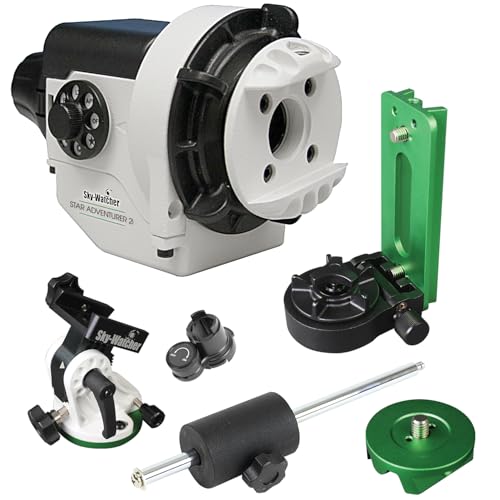
- Motorized portable tracking platform
- Wi-Fi app control with SAM Console
- Works with existing photographic tripods
Best For: Traveling photographers doing wide-field nightscape and Milky Way shots
Equatorial Wedge Upgrade
Celestron Wedge for NexStar Evolution & SE

- Turns compatible Alt-Az telescopes into an equatorial platform
- Supports long exposure astrophotography and autoguiding
- Tool-less operation with bubble level and latitude scale
Best For: Celestron telescope owners upgrading for longer exposure imaging
All-In-One Camera Tracker
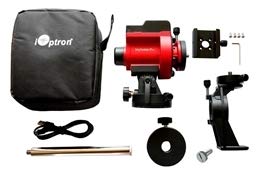
- Full package includes bag, DEC kit, and counterweight kit
- Multiple tracking speeds for sky, solar, and lunar use
- Works in both northern and southern hemispheres
Best For: DSLR and mirrorless shooters wanting a portable tracker package
Portable GoTo EQ Mount
Sky-Watcher Star Adventurer GTi Kit

- GoTo mount with built-in Wi-Fi
- Includes tripod, pier extension, and counterweight hardware
- Polar scope with illuminator for alignment
Best For: Portable imagers who want a complete GoTo tracking kit
Portable Polar-Alignment Pick
iOptron SkyGuider Pro Camera Mount Full Package

- All-metal build helps reduce vibration
- 2.2 lb design is easy to travel with
- Illuminated polar scope simplifies alignment
Best For: Traveling photographers using camera and lens rigs
App-Controlled GOTO Tracker
iEXOS-100-2 PMC-Eight Equatorial Tracker System

- Eight-CPU PMC-Eight system boosts responsiveness
- ExploreStars app supports Apple, Android, and Windows
- Polar alignment sight hole speeds setup
Best For: Users who want connected GOTO control
Strainwave Imaging Mount
Sky-Watcher Wave 150i Pro Mount

- Strain wave drive delivers smooth, precise tracking
- 33 lb payload without counterweights; 55 lb with kit
- Wi-Fi and Bluetooth add flexible control options
Best For: Advanced imagers needing compact, high-capacity tracking
Portable Open-Source Tracker

- Stellar, moon, and custom speed modes
- Northern and southern hemisphere support
- Runs from USB power bank, no app required
Best For: Portable long-exposure and time-lapse shooters who prefer simple manual control
GoTo Portable Tracking Kit
Sky Watcher Star Adventurer GTI

- Full GoTo EQ tracking in a compact package
- Built-in Wi‑Fi and illuminated polar scope
- Includes counterweight bar and counterweight
Best For: Portable astrophotographers who want guided tracking and built-in alignment tools
Low-Latitude Alignment Base

- Low-latitude version for SkyGuider Pro
- CNC aluminum for rigid support
- Helps improve polar alignment and reduce vibration
Best For: SkyGuider Pro owners near the equator or in southern regions
Portable Wide-Field Tracker – Sky-Watcher Star Adventurer 2i Pro Pack
If you want an entry-friendly option for astrophotography mounts for long exposure photography, the Sky-Watcher Star Adventurer 2i Pro Pack is built around portability and wide-field tracking. It pairs a motorized tracker with a modular design that works with existing photographic tripods, making it a practical pick for Milky Way shots, eclipses, time-lapse video, and even telescopic use.
Best For: Travelling photographers who want a compact tracking platform for wide-field nightscape work.
Pros:
- Motorized portable tracking platform for capturing detail in the Milky Way and other astronomical objects
- Modular design integrates with existing photographic tripods
- Supports wide-field astrophotography, time-lapse video, and telescopic use
- Wi-Fi control through Sky-Watcher’s free SAM Console app
Cons:
- Designed for portable wide-field work rather than heavier telescope setups
- Requires polar alignment using the deluxe equatorial base
This is a strong choice if your priority is convenience without giving up tracking support. The included Wi-Fi control and equatorial base make it easier to set up for long exposures, especially when you need a lightweight system that travels well.
Equatorial Wedge Upgrade – Celestron Wedge for NexStar Evolution & SE
For owners of compatible Alt-Az Celestron telescopes, this equatorial wedge is a straightforward way to make astrophotography mounts for long exposure photography more practical. By tilting the telescope into an equatorial platform, it enables long exposure imaging and autoguiding while keeping setup adjustments tool-less and easier to manage under load.
Best For: Celestron NexStar 6/8SE and Evolution users who want to do longer exposures with their existing telescope.
Pros:
- Enables long exposure astrophotography and autoguiding by converting Alt-Az tracking to equatorial-style motion
- Compatible with Celestron NexStar 6/8SE and Evolution telescopes
- Captive hardware and tool-less operation simplify setup
- Latitude adjustment screw, bubble level, and sturdy portable construction
Cons:
- Only works with supported Celestron telescope models
- Weighs 15 pounds, so it is less lightweight than a camera tracker
This wedge makes the most sense if you already own one of the compatible telescopes and want to push into longer exposures. It is less of a standalone mount and more of an upgrade path for observers who want better imaging performance from an existing setup.
All-In-One Camera Tracker – iOptron SkyGuider Pro
The iOptron SkyGuider Pro is a camera mount built for photographers who want a compact solution for astrophotography mounts for long exposure photography. The full package includes the bag, DEC and counterweight kit, and USB cable, while the tracker itself offers multiple tracking speeds and support for both northern and southern hemispheres.
Best For: DSLR and mirrorless shooters who want a portable equatorial tracker with the key accessories included.
Pros:
- Full package includes padded bag, DEC kit, counterweight kit, and USB cable
- Supports 1X, 1/2X, solar, and lunar tracking speeds
- Fast RA slew up to 144X sidereal speed
- Works in both northern and southern hemispheres
Cons:
- Designed for camera use, not a full telescope mount system
- One-year manufacturer warranty is shorter than some competing options
As a camera-focused tracker, this model is a good fit for portable long-exposure work where simplicity matters. The included accessories and multiple tracking rates make it especially appealing if you want a ready-to-use setup without building a system piece by piece.
Portable GoTo EQ Mount – Sky-Watcher Star Adventurer GTi Kit
If you want astrophotography mounts for long exposure photography with more automation, the Sky-Watcher Star Adventurer GTi kit adds GoTo functionality to a portable equatorial tracking setup. It includes the mount head, tripod, pier extension, counterweight bar, and a built-in polar scope with illuminator, making it a more complete solution for lightweight imaging.
Best For: Portable imagers who want GoTo convenience plus a complete mount kit with tripod and polar alignment tools.
Pros:
- Full kit includes mount head, tripod, pier extension, counterweight bar, and counterweight
- Built-in polar scope with illuminator helps alignment
- Built-in Wi-Fi and GoTo functionality add convenience
- Multiple tracking rates and portable design suit lightweight astrophotography
Cons:
- Maximum shutter speed listed is 30 seconds in the supplied details
- Heavier than a simple camera tracker at 26 pounds
This kit is the most feature-rich option in the group if you want a portable mount with more automation built in. It is best for users who value a complete package and GoTo support rather than the lightest possible tracking setup.
Portable Polar-Alignment Pick – iOptron SkyGuider Pro Camera Mount Full Package
If you want one of the more travel-friendly astrophotography mounts for long exposure photography, the iOptron SkyGuider Pro focuses on the essentials: stable tracking, easy polar alignment, and a compact body you can actually carry to dark-sky locations. Its all-metal construction, illuminated polar scope, and internal battery make it a practical choice for camera-and-lens setups where portability matters.
Best For: Mobile astrophotographers who want a lightweight tracker with straightforward polar alignment and long battery life.
Pros:
- All-metal construction is designed for minimal vibration and sharper long exposures.
- Very portable at 2.2 lbs, so it fits easily in a camera bag or backpack.
- Supports up to 11 lbs when balanced, giving room for different camera and lens combinations.
- AccuAlign illuminated polar scope helps make alignment easier in low light.
Cons:
- Maximum payload is best suited to camera-based rigs rather than heavier telescope setups.
- Polar alignment and tracking remain manual-style workflow elements, so setup still takes attention.
This is a strong option if you value portability without giving up the stability needed for clean long-exposure results. The built-in battery and compact footprint make it especially appealing for field sessions away from power.
App-Controlled GOTO Tracker – iEXOS-100-2 PMC-Eight Equatorial Tracker System
For astrophotography mounts for long exposure photography that lean toward app-based control and responsive tracking, the iEXOS-100-2 PMC-Eight stands out. Its eight-CPU PMC-Eight system, dual-axis worm gears, and ExploreStars app support make it a feature-rich equatorial tracker for users who want a more connected and precise setup.
Best For: Astrophotographers who want a WiFi- and Bluetooth-capable equatorial mount with app-driven alignment and GOTO control.
Pros:
- PMC-Eight system uses eight independent CPUs for responsive operation and timing.
- ExploreStars app works on Apple, Android, and Windows tablets for GOTO control.
- Clutched RA and declination axes help with smooth balancing and repositioning.
- Polar alignment sight hole and altitude control support fast alignment without a polar scope.
Cons:
- Tablet/app-based operation may not suit users who prefer a simple manual tracker.
- Best results depend on comfortable use of the alignment and GOTO workflow.
This mount is a good fit if you want a tech-forward equatorial platform for long exposures and object navigation. It combines modern connectivity with alignment tools that can streamline setup in the field.
Strainwave Imaging Mount – Sky-Watcher Wave 150i Pro Mount
The Sky-Watcher Wave 150i Pro is aimed at astrophotography mounts for long exposure photography where smooth tracking, modern controls, and a compact form factor matter. Its strain wave drive, dual EQ/AZ modes, built-in cable management, and Wi-Fi/Bluetooth connectivity make it a strong imaging-focused mount for streamlined setups.
Best For: Imaging users who want a compact, high-capacity mount with wireless control and flexible EQ/AZ operation.
Pros:
- Strain wave drive technology is designed for smooth and precise tracking.
- Supports 33 lbs without counterweights, or up to 55 lbs with the optional counterweight kit.
- Dual EQ and AZ modes add flexibility for different imaging workflows.
- Built-in cable management helps keep the setup organized during operation.
Cons:
- Heavier payloads require the optional counterweight kit.
- Wireless/app-based control may be more than casual users need for simple camera tracking.
If you want a mount that balances portability, payload capacity, and modern connectivity, this one is well positioned for advanced imaging. The combination of strainwave tracking and cable management is especially useful for clean, efficient long-session setups.
Portable Open-Source Tracker – Equatorial Mount Star Tracker
If you’re comparing astrophotography mounts for long exposure photography, this equatorial star tracker is a compact, power-bank-friendly option built for manual setup and simple operation. It supports stellar, moon, and custom rotation speeds, plus hemisphere switching, so you can adapt it to different shooting conditions without relying on an app.
Best For: Shooters who want a portable, ready-to-use tracker for time-lapse work and long-exposure sky photos with basic manual control.
Pros:
- Supports stellar speed, moon speed, and custom rotation speed
- Can switch between northern and southern hemispheres
- Ready to use at power-on and can run from a power bank
- Can also work as a gimbal head for time-lapse photography
Cons:
- No built-in battery included
- Camera connection needs a ball head, which is not included
- Bottom quick-release setup may require separate adapter parts for some rigs
Overall, this mount is a practical pick if you want a lightweight tracker with useful speed options and straightforward power requirements. It is best suited to users comfortable assembling a compatible camera setup around its 1/4-inch output shaft.
GoTo Portable Tracking Kit – Sky Watcher Star Adventurer GTI
For astrophotography mounts for long exposure photography, this Star Adventurer GTi kit stands out as a full GoTo equatorial solution in a compact package. It includes the mount head, counterweight bar, built-in Wi‑Fi, and an illuminated polar scope, making it a strong choice when you want tracking convenience in a portable setup.
Best For: Users who want a compact, feature-rich GoTo mount head kit for portable astrophotography sessions.
Pros:
- Full GoTo tracking in a compact mount head
- Built-in Wi‑Fi for easier control options
- Built-in polar scope with illuminator for alignment
- Includes counterweight bar and 5 lb counterweight
Cons:
- DSLR or mirrorless camera dovetail is not included
- Requires battery or external power
- Heavier than ultra-minimal star trackers at 6.9 kg
This is the most complete tracking option in this group if you want GoTo features without moving to a larger observatory-style mount. It makes sense for portable imaging setups where alignment tools and included support hardware matter.
Low-Latitude Alignment Base – SkyGuider Pro Base Mount
If your astrophotography mounts for long exposure photography need a more location-specific alignment platform, this low-latitude base is designed to give SkyGuider Pro users a better adjustment range. It focuses on stable polar alignment, vibration reduction, and a rigid CNC-machined aluminum build for tracking sessions where setup precision matters.
Best For: SkyGuider Pro owners in low-latitude regions who need a steadier polar alignment base for long exposures.
Pros:
- Engineered specifically for low-latitude star tracking
- Designed to improve polar alignment accuracy and reduce drift
- CNC-machined aluminum construction for rigid support
- Built to reduce vibration during long-exposure sessions
Cons:
- Made for SkyGuider Pro systems, so compatibility is limited
- It is a base mount, not a complete tracking system
- Best suited to users who need the low-latitude version specifically
This is a focused upgrade part rather than a standalone mount, so its value depends on your existing tracker and location. For the right SkyGuider Pro setup, it should help create a more stable foundation for longer exposures and cleaner tracking.
How We Picked These Astrophotography Mounts for Long Exposure Photography
We prioritized tracking accuracy, payload comfort, polar alignment ease, portability, power flexibility, and overall value. For Astrophotography Mounts for Long Exposure Photography, the best choice is not always the heaviest mount; it is the one that matches your imaging setup and travel style.
We also looked for mounts and accessories that support real-world use: quick setup, dependable tracking for multi-minute exposures, and compatibility with cameras, small telescopes, and common astrophotography accessories.
Quick Comparison: Which Type Fits Your Setup?
- Star trackers: Best for DSLR/mirrorless cameras and telephoto lenses.
- GoTo tracking mounts: Better if you want easier target finding and room to grow into small telescopes.
- Equatorial wedges, bases, and tripods: Important support gear that improves alignment, stability, and usability.
- Premium mounts: Worth considering if you need higher payload capacity, smoother tracking, or a more permanent setup.
Key Buying Factors for Astrophotography Mounts for Long Exposure Photography
Tracking Accuracy
Smooth, consistent tracking is the core requirement. For longer exposures, pay attention to periodic error behavior, guiding compatibility, and how well the mount performs at your focal length.
Payload and Rig Weight
Always leave headroom. A mount near its limit is harder to balance and may track less reliably. Camera-and-lens users can often go lighter, while telescope setups need more capacity.
Polar Alignment and Setup Speed
Fast, repeatable polar alignment matters, especially for travel. Built-in alignment aids, adjustable bases, and sturdy tripods can save a lot of time in the field.
Portability Vs. Stability
Portable trackers are ideal for dark-sky trips and wide-field imaging. Heavier equatorial mounts generally offer more stability and flexibility, but they take longer to carry and assemble.
Controls and Connectivity
App control, GoTo features, WiFi, and Bluetooth can make framing and tracking easier. If you prefer a simple workflow, a straightforward manual tracker may be enough.
Who Should Buy Which Astrophotography Mounts for Long Exposure Photography?
Beginners and travel shooters should look first at compact star trackers and complete kits. They are the easiest entry point for long exposures with a camera and lens.
Intermediate users who want better automation and more versatility should consider GoTo tracking mounts or tracker systems with stronger accessories.
Advanced imagers planning to use heavier lenses or small telescopes should focus on sturdier equatorial mounts, stable tripods, and alignment-friendly accessories that support consistent results.
If you are building your first setup, start with the lightest mount that can safely handle your gear. If you already know you will grow into larger optics, it is usually smarter to buy a mount with extra capacity now.