Brake-line checks demand a camera that can slip into cramped, dirty, and awkward spaces without sacrificing image clarity. The right tool can make corrosion, leaks, and routing issues easier to spot before they become costly repairs.
Below, we focus on the features that matter most for an automotive inspection camera for brake lines, so you can choose a model that fits your shop, garage, or roadside diagnostic needs.
Best 10 Automotive Inspection Camera for Brake Lines Picks for 2026
Workshop-Ready Auto Scope
Teslong 4.3'' Screen Borescope

- 4.3-inch display for stand-alone viewing
- 16.5 ft semi-rigid cable reaches tight spots
- 8 LEDs and IP67 waterproofing for dark areas
Best For: Shop users who want a screen-based borescope for brake-line and engine inspections
Phone-Friendly Inspect Scope

- 1920x1440 HD imaging with photo/video capture
- 7.9 mm probe fits narrow access points
- 16.4 ft semi-rigid cable with 8 LEDs
Best For: Phone-based inspections of brake lines, pipes, and other tight spaces
Articulating Detail Scope
Teslong USB-C Two-Way Borescope

- 180° articulating probe for angled access
- USB-C compatibility for newer phones
- 8 LEDs and one-hand joystick control
Best For: Users who need precise aiming for brake-line and engine inspections
Dual-Lens Access Scope
1920P HD Borescope with Lights

- Dual-lens probe for added viewing flexibility
- 16.4 ft semi-rigid cable reaches deep areas
- 1920P HD with IP67 waterproofing and 8 LEDs
Best For: Vehicle inspections where dual-lens viewing and long reach are useful
Articulating Precision Pick

- 220° two-way articulation for tight turns
- 1080P image on a 4.3" IPS screen
- Includes case, accessories, and 32GB card
Best For: handheld close-up automotive inspections in cramped spaces
Phone-Friendly Dual Lens

- 2K phone-based view with front and side cameras
- 7.9mm probe and 16.5 ft cable for narrow routes
- 8+1 LEDs plus IP67 waterproofing
Best For: phone users needing dual-view inspections in narrow automotive areas
Tight-Space Mechanic Tool
Anykit 210° Articulating Borescope

- 0.22-inch slim probe fits very tight spaces
- 210° articulation with thumb-slider control
- Overheat alarm plus battery and TF card included
Best For: mechanics who need a slim standalone scope for confined inspections
Dual-Lens Versatility
5" 1080P Dual-Lens Borescope for Automotive

- Dual front/side viewing for tighter inspection angles
- 1080P screen shows close-up detail clearly
- 16.4ft waterproof semi-rigid cable for tough access
Best For: Mechanics who want a simple dual-lens scope for tight automotive checks
Long-Run Shop Tool
5" IPS Dual Lens Borescope with 16.5ft Cable

- 5" IPS screen with dual front/side cameras
- 16.5ft semi-rigid cable reaches deep inspection points
- 5000mAh battery lasts about 4.5 hours
Best For: Home mechanics and shop users needing long reach and a built-in display
Recording-Ready Detail
4.3" IPS Split-Screen Borescope for Automotive
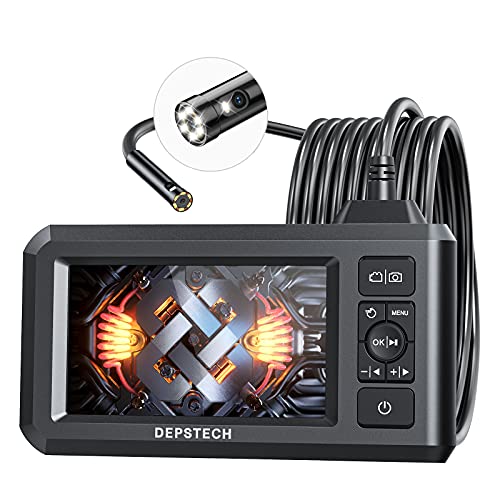
- Dual lenses with split-screen and multiple viewing modes
- Records photos and 1080P video for documentation
- 16.5ft IP67 waterproof cable for tight, wet spaces
Best For: Users who want to inspect and record detailed automotive findings
Workshop-Ready Auto Scope – Teslong 4.3'' Screen Borescope
If you need an automotive inspection camera for brake lines that can get into dark, cramped spaces, this Teslong borescope is built for practical shop use. The 16.5 ft semi-rigid cable, 8 LED lights, IP67 waterproofing, and 4.3-inch live screen make it easier to inspect tight areas without relying on a phone.
Best For: Mechanics and DIYers who want a self-contained inspection camera for brake lines, engine bays, and other hard-to-reach vehicle areas.
Pros:
- 8 adjustable LED lights help illuminate dark inspection areas.
- 16.5 ft semi-rigid cable holds its shape for precise positioning.
- 4.3-inch screen gives you real-time viewing without a phone.
- Includes hook, magnet, and side mirror for added inspection flexibility.
Cons:
- Uses a fixed-focus camera with a 30-80 mm optimal range.
- Video capture is listed at 720p rather than full 1080p.
- SD card is not included for saving media.
For brake-line checks, this model stands out for convenience and reach, especially if you prefer a dedicated screen over a phone-based setup. It’s a solid choice when you want a simple tool for routine undercarriage and vehicle inspections.
Phone-Friendly Inspect Scope – 1920P HD Endoscope Camera
For an automotive inspection camera for brake lines that works through your phone, this 1920P borescope focuses on portability and image detail. The 7.9 mm probe, 16.4 ft semi-rigid cord, IP67 waterproof rating, and 8 adjustable LEDs make it suitable for tracing hidden vehicle areas and other tight spaces.
Best For: iPhone users and mechanics who want a phone-connected inspection camera for brake lines, pipes, and other narrow access points.
Pros:
- 1920×1440 HD resolution with photo and video recording.
- 7.9 mm probe is sized for narrow openings.
- 16.4 ft semi-rigid cable reaches deep into tight areas.
- Works directly with iPhone, iPad, and phone apps.
Cons:
- Requires app setup before use.
- Water use is limited; it notes not to stay too long above three meters depth.
- Depends on a connected phone rather than having its own built-in screen.
This is a practical pick if you want detailed images and don’t mind using a mobile device for display. It fits well for brake-line inspections where a slimmer probe and long cable matter more than a standalone monitor.
Articulating Detail Scope – Teslong USB-C Two-Way Borescope
If your priority is steering the camera into awkward angles, this automotive inspection camera for brake lines offers a two-way articulating probe that can bend around corners and behind components. The USB-C connection works with newer iPhones and Android phones, and the 8 LEDs plus 1.0MP HD camera support quick inspections in dim vehicle areas.
Best For: Mechanics and DIYers who need a phone-connected articulating borescope for brake lines, engine bays, and other difficult angles.
Pros:
- 180° articulating probe helps aim around corners and behind parts.
- USB-C plug works with iPhone 15+ and Android phones.
- 8 adjustable LEDs with 3 brightness levels improve visibility.
- Joystick and photo button support one-hand operation.
Cons:
- 5 ft cable is shorter than some other inspection cameras.
- Requires the SmartEndoscope app for capture features.
- No built-in display, so you must use a compatible phone.
This model is the best fit when positioning matters more than maximum cable length. For brake-line work in tight automotive spaces, the articulating tip can make a bigger difference than raw reach.
Dual-Lens Access Scope – 1920P HD Borescope with Lights
This automotive inspection camera for brake lines combines a dual-lens setup with a 16.4 ft semi-rigid cable, which can be helpful when you want broader visibility inside a vehicle. The 1920P HD resolution, IP67 waterproof probe, and adjustable LED lighting make it suited to inspecting hard-to-reach areas around the car, engine, and underbody.
Best For: Users who want a dual-lens borescope for brake-line, engine, and general vehicle inspections.
Pros:
- Dual-lens design offers more viewing flexibility.
- 1920×1440 HD resolution captures clear stills and video.
- 16.4 ft semi-rigid cable is long enough for deeper access.
- Includes Android, Lightning, and Type-C connectors for broad device support.
Cons:
- Fixed-focus design may be less flexible than adjustable-focus options.
- Some Android devices may show slightly blurrier images, per the notes.
- Uses a phone app instead of a built-in screen.
For brake-line inspections, the dual-lens format is the standout feature, especially when you want more context in tight spaces. It’s a versatile option for drivers and technicians who inspect multiple vehicle areas, not just one spot.
Articulating Precision Pick – DXZtoz 220° Two-Way Borescope
If you need an automotive inspection camera for brake lines that can actually look around bends, this DXZtoz borescope is built for that kind of reach. The 220° two-way articulating probe, 8.5mm camera head, and 1–15cm focal range make it useful when you need a close-up view inside cramped automotive spaces, with no app required.
Best For: Mechanics and DIYers who want a handheld, screen-based scope for tight engine and brake-line inspection jobs.
Pros:
- 220° two-way articulation helps the camera look past obstacles and around tight turns.
- 4.3″ IPS display with 1080P capture makes it easy to review close-up details on the tool itself.
- 8 LED lights with 4 brightness levels help in dark automotive spaces.
- Includes helpful accessories like hook, magnet, side mirror, a 32GB card, and a protective case.
Cons:
- At 8.5mm, the probe is not the slimmest option for the tightest channels.
- 5.5 ft cable may feel short for some larger vehicle or shop applications.
This is a practical choice if you want a self-contained inspection tool for close-range automotive work rather than a phone-based setup. Its articulation and included accessories make it especially convenient for working around hidden routing and compact components.
Phone-Friendly Dual Lens – DEPSTECH 2K Dual Lens Scope
For shoppers comparing an automotive inspection camera for brake lines, this DEPSTECH model stands out if you want phone-based viewing and dual-lens flexibility. The 2K 2560x1440P image, front-and-side cameras, and slim 7.9mm probe are designed to help you inspect narrow spaces with more context and fewer blind spots.
Best For: Phone users who want a higher-resolution inspection camera for narrow automotive passages and general shop work.
Pros:
- 2K resolution and dual lenses provide sharper images and side-view coverage.
- 7.9mm slim scope and 16.5 ft semi-rigid cable help reach narrow, curved areas.
- Works with iPhone and Android via USB or Lightning connection.
- 8+1 adjustable LEDs and IP67 waterproof rating support dark, damp inspection jobs.
Cons:
- Requires the DEPSTECHCAM app to operate.
- Android devices must support OTG, so compatibility needs checking first.
This is a strong pick if your workflow already revolves around a phone or tablet. The dual-lens setup adds flexibility for identifying what is around a bend, which is especially useful when you need more than a straight-ahead view.
Tight-Space Mechanic Tool – Anykit 210° Articulating Borescope
If you want an automotive inspection camera for brake lines that feels purpose-built for cramped mechanical work, this Anykit scope is a compelling option. Its 210° two-way articulation, very slim 0.22-inch probe, and built-in 4.3″ IPS screen make it practical for checking hidden areas without relying on a phone app.
Best For: Mechanics and DIY users who need a slim, standalone borescope for tight automotive and industrial inspections.
Pros:
- 0.22-inch probe is smaller than many competitors, helping it fit into tight spaces.
- 210° two-way articulation and thumb-slider control make aiming more manageable.
- 1920x1080P imaging, adjustable LEDs, and 3-level zoom help with close inspection.
- Includes a 3000mAh battery, 8GB TF card, and IP67 waterproof construction.
Cons:
- 4 ft cable is shorter than some other inspection cameras.
- Resolution is listed as 1920P HD, so it is not the highest-resolution option in this roundup.
This model makes sense when probe size and control matter more than long cable reach. The overheating alert is a useful extra for hotter automotive or industrial environments, adding confidence during repeated inspections.
Dual-Lens Versatility – 5" 1080P Dual-Lens Borescope for Automotive
If you need an automotive inspection camera for brake lines that can also double for plumbing and HVAC work, this dual-lens borescope is built around flexibility and fast visibility. The front-and-side camera switching helps you inspect tight, awkward spaces, while the 16.4ft semi-rigid probe and IP67 waterproofing make it practical for harsh areas where brake-line routing, corrosion, and hidden wear may be hard to reach.
Best For: Mechanics and DIYers who want a dual-lens, self-contained scope for tight automotive and industrial inspections.
Pros:
- Dual-lens design lets you switch between front and side views for better angle coverage.
- 5″ screen with 1080P clarity helps reveal small cracks and corrosion.
- 16.4ft semi-rigid cable is easier to guide through narrow routes and holds its shape.
- IP67 waterproof probe and adjustable LEDs support work in wet or dark areas.
Cons:
- Cannot take pictures or videos.
- Focus range is limited to close-up inspection distances.
- Battery life is about 3 to 4 hours, so very long sessions may need planning.
Overall, this model makes sense if your priority is a simple, screen-based inspection tool with dual viewpoints and solid reach. It is especially appealing for brake-line inspections where maneuverability and close detail matter more than app-based features.
Long-Run Shop Tool – 5" IPS Dual Lens Borescope with 16.5ft Cable
For an automotive inspection camera for brake lines, this Teslong unit stands out when you need a long, steady cable and a larger screen to inspect hidden runs without guessing. The dual-lens design, 16.5ft semi-rigid cable, and adjustable LEDs make it useful for tracing lines, checking nearby engine spaces, and working in wet or dark areas without relying on a phone or app.
Best For: Home mechanics and shop users who want a dependable long-cable borescope for automotive and engine inspections.
Pros:
- Dual lenses with independent LEDs help you switch viewing angles quickly.
- 5″ IPS screen provides a clear self-contained display for straightforward use.
- 16.5ft semi-rigid cable reaches deep into tight automotive spaces.
- 5000mAh battery delivers about 4.5 hours of runtime and the probe is IP67 waterproof.
Cons:
- Bulkier than simpler handheld probes because it includes a larger screen and case.
- Designed for close inspection work, not broad-area viewing.
- Needs about 5 hours to recharge.
This is a practical pick if you value reach, battery life, and a clear built-in display over extra smart features. It fits well for brake-line inspection where getting the probe deep into place matters more than recording bells and whistles.
Recording-Ready Detail – 4.3" IPS Split-Screen Borescope for Automotive
If you want an automotive inspection camera for brake lines that can also document what you find, this DEPSTECH model brings photo and video support along with dual-lens viewing. The split-screen 4.3″ IPS display, 16.5ft semi-rigid cable, and adjustable LEDs make it a strong fit for checking tight vehicle spaces, especially when you want to compare angles and capture evidence of corrosion or damage.
Best For: Users who want to inspect and record tight automotive spaces with dual-lens flexibility.
Pros:
- Dual-lens system with split-screen viewing offers multiple observation modes.
- Supports photo and 1080P video recording for documenting findings.
- 4.3″ IPS screen and 170° viewing angle improve visibility in narrow spaces.
- IP67 waterproof probe and 16.5ft semi-rigid cable suit dark or wet inspection areas.
Cons:
- Smaller screen than 5-inch alternatives.
- Front and side focus ranges are designed for close-up use only.
- Battery life is about 4 hours, so longer jobs may require a recharge.
As a brake-line inspection tool, this one is strongest when recording matters as much as seeing. It balances dual-lens flexibility with capture features, making it a sensible option for buyers who want a more complete inspection record.
How We Picked the Best Automotive Inspection Camera for Brake Lines
For brake-line work, we favored slim probes, enough cable length to reach underbody runs, strong LED lighting, and dependable image quality in close quarters. We also looked for flexible or articulating designs, waterproofing, and screens or phone compatibility that make inspections easier in real-world shop conditions.
Quick Comparison
The best options here split into a few practical groups: compact screen-based scopes for fast standalone use, articulating models for steering around brackets and bends, and dual-lens cameras for switching between forward and side views. If you want a straightforward Automotive Inspection Camera for Brake Lines, prioritize access first, then clarity.
Key Buying Factors for an Automotive Inspection Camera for Brake Lines
Probe Size and Flexibility
Brake lines often run close to suspension parts, shields, and frame rails. A slimmer probe and a cable that holds shape help you navigate those areas without constant repositioning. Articulating heads are especially useful when you need to look around fittings or clip points.
Image Quality and Lighting
Look for at least solid HD resolution and adjustable LEDs. Brightness control matters because reflective metal, wet surfaces, and rust can wash out detail if the light is too harsh. A good camera should show pitting, seepage, and damaged coating clearly.
Reach and Durability
Longer cables are helpful for full undercarriage inspections, while waterproof or dust-resistant construction adds confidence in dirty environments. Semi-rigid cables can be easier to guide, but fully flexible or articulated probes may be better when routing changes frequently.
Display and Compatibility
Standalone screens offer quick setup and simple use. Phone-connected models can be convenient if you want easier storage, sharing, or app-based viewing. Choose whichever fits your workflow and the spaces where you inspect most often.
Who Should Buy Which Automotive Inspection Camera for Brake Lines?
DIY owners who want occasional checks should lean toward simple screen models with good lighting and enough cable to reach common brake-line routes. Mobile mechanics and pros may prefer articulating or dual-lens units for better control in tight underbody areas.
If your inspections often involve rust, hidden fittings, or complex routing, spend more on flexibility and image clarity. If you mainly need basic confirmation of condition, a simpler Automotive Inspection Camera for Brake Lines will usually be the better value.