If you’re serious about wildlife photography, you’ll want to know which bridge cameras stand out in 2026. These cameras combine powerful zoom capabilities with advanced technology, making it easier to capture stunning images of animals in their natural habitats. With options like the Nikon COOLPIX P950 and Kodak PIXPRO series, there’s something for everyone, whether you’re a beginner or a seasoned pro. But what factors should you consider to guarantee you make the right choice?
Kodak PIXPRO AZ405 Digital Camera

The Kodak PIXPRO AZ405 Digital Camera is an excellent choice for wildlife photography enthusiasts who need versatility and power in a compact form. With its 20 MP CMOS sensor, you’ll capture stunning, high-resolution photos filled with vibrant colors. The impressive 40x optical zoom lets you get up close to your subjects while the Optical Image Stabilization guarantees your images remain sharp, even at full zoom. Its intuitive controls and automatic scene detection make it user-friendly, perfect for both beginners and seasoned photographers. Plus, lightweight and portable, it’s ideal for those on-the-go wildlife adventures. You won’t be disappointed!
Best For: Wildlife photography enthusiasts looking for a compact camera with powerful zoom capabilities and user-friendly features.
Pros:
- High-resolution 20 MP sensor delivers vibrant and detailed images.
- 40x optical zoom allows for close-up shots of distant subjects without loss of quality.
- Optical Image Stabilization ensures sharp images even at full zoom, reducing the effects of camera shake.
Cons:
- Limited battery life due to standard AA batteries compared to proprietary battery options.
- 3-inch LCD screen may not be as high-resolution as some competitors, affecting live view performance.
- No advanced manual controls, which may limit experienced photographers seeking full creative control.
Kodak PIXPRO Astro Zoom AZ528-BK Digital Camera

For wildlife enthusiasts who need versatility and power in their photography gear, the Kodak PIXPRO Astro Zoom AZ528-BK Digital Camera stands out with its impressive 52x optical zoom. You’ll appreciate its 16 MP BSI CMOS sensor and f/2.8 maximum aperture, allowing for stunning shots in various lighting conditions. Capture rapid action with six frames per second burst shooting and rely on the optical image stabilization for sharp images at maximum zoom. With built-in Wi-Fi for instant sharing and HD video recording, this camera truly enhances your wildlife photography experience. It’s lightweight and user-friendly, making it a perfect companion for your adventures.
Best For: Wildlife enthusiasts and photographers seeking a versatile and powerful camera for capturing high-quality images in various conditions.
Pros:
- Impressive 52x optical zoom allows for detailed shots from a distance.
- Built-in Wi-Fi enables instant sharing and remote control via smartphones.
- Lightweight and user-friendly design makes it ideal for outdoor adventures.
Cons:
- Limited maximum shutter speed of 1/2000 seconds may not suffice for fast-moving subjects.
- 3-inch LCD screen resolution may be lower compared to some competitors.
- Weight of 17.92 ounces could be considered bulky for extended carry.
KODAK PIXPRO AZ425 Digital Camera with 42x Optical Zoom

Wildlife enthusiasts seeking a reliable camera will find the KODAK PIXPRO AZ425 particularly appealing, thanks to its impressive 42x optical zoom. This feature lets you capture distant subjects with clarity, while the 24mm wide-angle lens excels in group shots and close-ups. The 20MP BSI CMOS sensor enhances color richness and performs well in low light. With Optical Image Stabilization, you’ll minimize blur even at maximum zoom, making it perfect for wildlife photography. Plus, it records 1080p Full HD video and offers intuitive controls for beginners. The rechargeable battery supports around 240 shots, ensuring you won’t miss those fleeting moments.
Best For: Wildlife enthusiasts and casual photographers looking for a versatile camera with powerful zoom capabilities and user-friendly features.
Pros:
- 42x optical zoom allows for capturing distant wildlife with impressive clarity.
- 20MP BSI CMOS sensor enhances image quality, providing vibrant colors and better low-light performance.
- Optical Image Stabilization minimizes blur, making it easier to take sharp photos without a tripod.
Cons:
- The size and weight may be less portable compared to compact point-and-shoot cameras.
- Limited manual controls might not satisfy advanced photographers seeking full customization.
- Battery life, while decent, may require additional batteries for extended shooting sessions.
KODAK PIXPRO AZ528 Astro Zoom Digital Camera Bundle

With its impressive 52x optical zoom, the KODAK PIXPRO AZ528 Astro Zoom Digital Camera Bundle stands out as an excellent choice for nature enthusiasts keen to capture stunning wildlife shots from a distance. The 16MP BSI-CMOS sensor guarantees high-resolution photos with minimal noise, while the optical image stabilization assures sharp images, even in low light. You’ll love the user-friendly 3.0 LCD screen and built-in Wi-Fi, making image transfer and remote control a breeze. Plus, the bundle includes essential accessories like a 32GB memory card and a vlogging tripod, enhancing your photography experience and making sure you’re ready for any adventure.
Best For: Nature enthusiasts and hobbyists looking for a versatile camera to capture high-quality photos and videos from a distance.
Pros:
- High optical zoom allows for detailed wildlife photography from afar.
- User-friendly interface with a 3.0 LCD screen and built-in Wi-Fi for easy sharing and remote control.
- Comprehensive bundle includes essential accessories like a memory card and tripod for enhanced photography experiences.
Cons:
- Relatively heavy at 3.43 pounds, which may not be ideal for prolonged use.
- Plastic enclosure may not feel as durable as other materials used in higher-end cameras.
- Limited low-light performance compared to more advanced cameras, despite optical stabilization.
Nikon COOLPIX P950 Superzoom Digital Camera

The Nikon COOLPIX P950 Superzoom Digital Camera stands out as an exceptional choice for nature enthusiasts who crave versatility and powerful zoom capabilities. With a remarkable 83x optical zoom extending to 2000 mm, you can capture stunning wildlife shots from a distance. The 16 MP CMOS sensor guarantees your images are sharp and vibrant, while the 4K UHD video capture brings your adventures to life. You’ll appreciate the built-in Bird and Moon modes, along with Dual Detect Optical VR stabilization for steady shots. Plus, connectivity options like Wi-Fi and Bluetooth make sharing your photos easy and convenient.
Best For: The Nikon COOLPIX P950 Superzoom Digital Camera is best for nature enthusiasts and wildlife photographers seeking a powerful zoom and versatile shooting options.
Pros:
- Exceptional 83x optical zoom allows for capturing distant subjects with clarity.
- 4K UHD video capabilities enhance the quality of your video recordings.
- Built-in shooting modes, including Bird and Moon modes, cater to specific photography needs.
Cons:
- The camera’s weight at 1000 grams may be cumbersome for extended use.
- Limited to a single memory slot, which could restrict storage options.
- The electronic viewfinder may not appeal to all photographers compared to optical viewfinders.
Panasonic LUMIX FZ80D Point and Shoot Digital Camera

If you’re an avid wildlife photographer seeking versatility and power in a compact design, the Panasonic LUMIX FZ80D is an excellent choice. With its impressive 60X optical zoom and wide-angle lens, you can effortlessly capture distant subjects in stunning detail. The 4K video mode allows you to record up to four times the resolution of Full HD, and the 4K photo feature lets you extract 8-megapixel images from your footage. Plus, the POWER O.I.S. guarantees steady shots even at full zoom. Its always-clear view screen maintains visibility in bright sunlight, making it perfect for any outdoor adventure.
Best For: Wildlife photographers seeking a versatile and powerful compact camera.
Pros:
- 60X optical zoom allows capturing distant subjects in detail.
- 4K video mode provides high-resolution recording capabilities.
- POWER O.I.S. ensures steady shots, reducing hand-shake vibrations.
Cons:
- May be heavier than typical point-and-shoot cameras.
- Limited low-light performance compared to DSLR cameras.
- The menu system can be complicated for beginners.
Kodak PIXPRO AZ255 Digital Camera with 25x Optical Zoom

For wildlife photographers seeking a versatile and powerful tool, the Kodak PIXPRO AZ255 Digital Camera stands out with its impressive 25x optical zoom, allowing you to capture stunning details from a distance. With a 16 MP BSI CMOS sensor and optical image stabilization, your photos stay sharp and vibrant. You can shoot in various modes, including automatic and manual, while enjoying 1080p Full HD video capture. Weighing just 12.5 ounces, it’s lightweight and portable. Plus, with USB connectivity and support for large memory cards, you won’t run out of space on your adventures. Enjoy the thrill of wildlife photography like never before!
Best For: Wildlife photographers seeking a versatile camera with powerful zoom capabilities to capture detailed images from a distance.
Pros:
- 25x optical zoom allows for stunning detail capture from afar.
- Lightweight design at just 12.5 ounces makes it portable for outdoor adventures.
- 1080p Full HD video capability offers high-quality video recording alongside photography.
Cons:
- Uses AA batteries which are not rechargeable, potentially leading to additional costs.
- Fixed LCD screen limits flexibility in shooting angles compared to tilting or articulating screens.
- Limited manual controls may not satisfy advanced photographers looking for extensive customization.
Canon EOS Rebel T7 DSLR Camera with Double Zoom Lens Kit

Capturing stunning wildlife images requires a camera that delivers both quality and versatility, making the Canon EOS Rebel T7 DSLR Camera with Double Zoom Lens Kit an excellent choice for aspiring wildlife photographers. With its 24.1 MP CMOS sensor and ISO range of 100–6400, you can shoot in various lighting conditions. The kit includes two versatile lenses, allowing you to zoom in on distant subjects effortlessly. Its Dual Pixel CMOS AF and multiple shooting modes, including Scene Intelligent Auto, make capturing the perfect shot easy. Plus, with built-in Wi-Fi, sharing your stunning wildlife photos is a breeze.
Best For: Aspiring wildlife photographers seeking a versatile camera that combines quality and user-friendly features.
Pros:
- High-resolution 24.1 MP sensor provides excellent image quality in various lighting conditions.
- Includes two zoom lenses (EF-S 18-55mm and EF 75-300mm) for versatile shooting options, allowing you to capture distant subjects.
- User-friendly features such as Scene Intelligent Auto mode and Dual Pixel CMOS AF make it easier for beginners to take stunning photos.
Cons:
- Limited continuous shooting speed of 3 FPS may not be ideal for fast-moving subjects.
- Relatively heavy at 3 pounds, which might be cumbersome for extended outdoor shoots.
- Basic autofocus system with only 9 points may not meet the needs of advanced photographers looking for more precise focus options.
GardePro E5S Trail Camera (64MP Photo & 1296P HD Video)

The GardePro E5S Trail Camera stands out as an excellent choice for wildlife photographers seeking high-resolution images and videos, thanks to its impressive 64MP photo capability and 1296P HD video quality. With a fast trigger speed of just 0.1 seconds, you won’t miss any action. Its night vision range extends up to 100 feet, making it perfect for low-light conditions. The rugged, weather-resistant design guarantees durability outdoors. Plus, the eco-friendly operation minimizes battery changes, and it supports SD cards up to 512GB. With easy mounting options and in-camera playback, you’ll be ready to capture nature like a pro!
Best For: Wildlife photographers and outdoor enthusiasts looking for a high-performance trail camera with excellent image quality and durability.
Pros:
- Captures stunning 64MP photos and 1296P HD videos for exceptional detail.
- Fast trigger speed of 0.1 seconds ensures you won’t miss any wildlife action.
- Rugged and weather-resistant design suitable for various outdoor conditions.
Cons:
- Non-cellular and non-WiFi operation may limit remote accessibility.
- Requires 8×AA batteries (not included), which may need frequent changes without solar power.
- SD card is not included, adding to the initial purchase cost.
MINOLTA MN53Z Digital Camera Bundle with Accessories
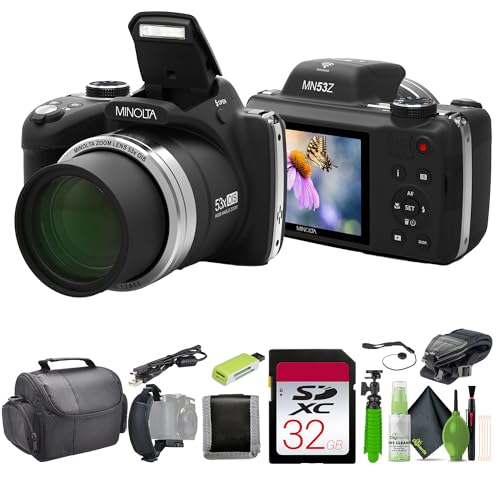
Wildlife enthusiasts will appreciate the Minolta MN53Z Digital Camera Bundle, which combines a powerful 53x optical zoom with a compact design, making it easy to capture stunning images from a distance. With a 16 MP BSI CMOS sensor, you’ll enjoy sharp photos and 1080p FHD video. Its optical and digital stabilization minimizes shake, ensuring clarity in every shot. You can switch between automatic and manual modes, perfect for both casual snaps and creative photography. The bundle includes a 32GB SD card, tripod, and more, making it a complete package for your wildlife adventures. Plus, it boasts a solid 4.5-star rating from users.
Best For: Wildlife enthusiasts and casual photographers looking for a compact camera with powerful zoom capabilities.
Pros:
- High 53x optical zoom allows for capturing distant subjects clearly.
- 16 MP BSI CMOS sensor provides sharp photos and 1080p FHD video quality.
- Includes a comprehensive bundle with essential accessories for various shooting needs.
Cons:
- The photo sensor size is smaller than 1/4-inch, which may limit low-light performance.
- Autofocus relies on contrast detection, which may not be as fast as phase detection in some situations.
- The camera’s bulkiness may make it less portable compared to smaller point-and-shoot models.
Factors to Consider When Choosing a Bridge Camera for Wildlife
When choosing a bridge camera for wildlife photography, you’ll want to take into account several key factors. Zoom capability is essential for capturing distant subjects, while image stabilization helps keep your shots sharp. Don’t forget about sensor quality, battery life, and how portable the camera is for those long treks into nature.
Zoom Capability Importance
Choosing a bridge camera with excellent zoom capability is essential for capturing stunning wildlife images. A high optical zoom of 40x or more lets you photograph distant animals without sacrificing image quality. Unlike digital zoom, optical zoom provides true magnification, ensuring your shots remain sharp and clear, especially when dealing with skittish wildlife. Cameras with at least a 50x optical zoom cater to various scenarios, from wide landscapes to detailed close-ups. Additionally, enhanced zoom often includes Optical Image Stabilization (OIS), which minimizes blurriness from hand movements when you’re at maximum zoom. A wider focal length range adds versatility, allowing you to switch effortlessly between expansive views and intimate wildlife portraits, all without changing lenses.
Image Stabilization Features
Effective image stabilization features are essential for capturing sharp wildlife photos, especially under challenging conditions. When you’re using high optical zoom levels, even the slightest hand movement can lead to blurry images. That’s where Optical Image Stabilization (OIS) shines, considerably reducing shake during handheld shooting. This is particularly useful when photographing fast-moving subjects in dynamic environments. Look for bridge cameras that offer multiple stabilization modes to adapt to various conditions, like low light or extreme zoom. Advanced OIS systems can enhance image sharpness, ensuring your distant wildlife shots are detailed and clear. Plus, understanding the differences between optical and digital stabilization will help you choose the right camera for your wildlife photography needs.
Sensor Quality Considerations
Capturing stunning wildlife images goes beyond just stabilization; sensor quality plays an essential role in determining the overall outcome of your photos. When choosing a bridge camera, consider the megapixel count—higher resolutions, like 20 MP, capture more detail for larger prints. Look for backside-illuminated (BSI) sensors to enhance low-light performance, especially during dawn or dusk. A larger sensor size typically offers better dynamic range and color accuracy, helping you achieve vibrant images in varying light. Pay attention to the ISO range, as higher capabilities (e.g., 3200) allow for faster shutter speeds, reducing motion blur with fast-moving subjects. Finally, advanced autofocus systems with multiple points can greatly improve your chances of getting sharp shots of elusive wildlife.
Battery Life and Type
Battery life is essential for wildlife photography, where every moment counts. When choosing a bridge camera, consider the battery type; rechargeable lithium-ion batteries usually provide longer life and are more cost-effective than standard AA batteries. Aim for models that offer around 240 shots per charge, ensuring you can capture those fleeting moments without constant battery changes. It’s also wise to look for alternative battery options, like higher-capacity lithium AAs or other rechargeable types, to keep you powered during long outings. Cameras that support USB charging are particularly useful, allowing you to recharge on the go with a portable power bank. Finally, remember that features like Wi-Fi and image stabilization can drain your battery quickly, so factor that in during your selection.
Weight and Portability
Weight and portability play essential roles when you’re selecting a bridge camera for wildlife photography. Lighter models are easier to carry during long hikes or extended observation sessions, allowing you to stay comfortable and focused. A compact design enhances portability, making it easier to navigate various terrains and ready you for spontaneous wildlife encounters. Aim for a camera that balances weight with features like optical zoom capabilities, vital for capturing distant subjects without sacrificing image quality. Also, consider how the camera’s weight combines with necessary accessories—like tripods—to avoid fatigue during long shoots. A lightweight bridge camera helps maintain stability, reducing the risk of camera shake, which is significant when using high optical zoom settings for those stunning wildlife shots.
Shooting Modes Versatility
When choosing a bridge camera for wildlife photography, consider the significance of versatile shooting modes. These modes, including automatic, manual, and scene-specific options, let you adapt to various conditions and capture stunning images. Specialized modes, like sports, night, and macro, enhance your ability to photograph fast-moving subjects or intricate details of wildlife. Continuous shooting modes with rates of 6 FPS or even 30 FPS are essential for capturing action sequences effectively. Additionally, panorama modes allow you to frame your subjects within breathtaking landscapes. Features like automatic scene detection guarantee your camera best adjusts settings for different environments, reducing the need for manual tweaks and boosting your chances of nailing that perfect wildlife shot.
Connectivity Options Available
Connectivity options play an essential role in enhancing your wildlife photography experience, especially when you want to share your stunning shots quickly. Many bridge cameras come with built-in Wi-Fi, making it easy to wirelessly transfer images to your smartphone or tablet for rapid sharing and editing. Some models also include Bluetooth, allowing you to control your camera remotely and instantly share photos with compatible devices. You’ll often find HDMI outputs for direct connections to TVs or monitors, perfect for showcasing your captures. USB ports guarantee fast, reliable uploads to your computer for storage or editing. Additionally, certain cameras support mobile apps, providing advanced settings and remote shooting capabilities that can elevate your wildlife photography game.