Learning flash can feel intimidating at first, but the right speedlight makes a huge difference fast. For beginners, the best options are simple, forgiving, and versatile enough to grow with you.
In this roundup, we focused on camera flashes for beginners that balance ease of use, sensible output, and practical features like manual control, wireless triggering, and broad camera compatibility.
Best 10 Camera Flashes for Beginners Picks for 2026
Smart Wireless Flash
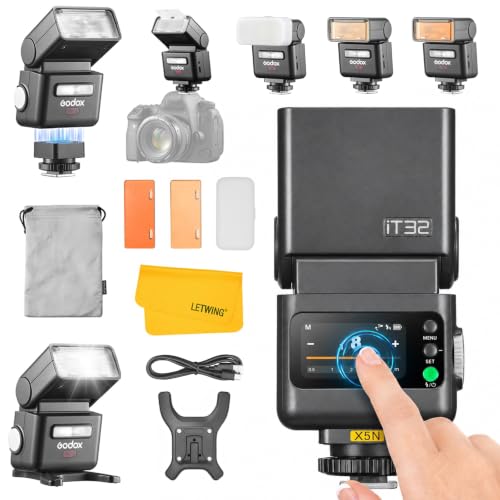
- TTL flash with manual control and HSS
- Built-in 2.4G wireless receiver for multi-light use
- Compact design with touchscreen and LED light
Best For: Beginners who want auto exposure and wireless expansion
Wireless Power Flash

- GN60 manual flash with 2.4G wireless system
- Good battery life and fast recycle time
- Wide compatibility with standard hotshoe cameras
Best For: Beginners wanting a strong manual flash with wireless potential
Compact Manual Starter Pick
ULANZI SL03 Mini Flash for Single-Contact Hotshoe

- Manual flash with 4 power levels
- 90° bounce head plus fill light
- Single-contact hotshoe only
Best For: Beginners learning manual flash on compatible cameras
Most Beginner-Friendly Budget Option

- 8 manual power levels
- 5600K light with rechargeable battery
- No TTL or camera menu support
Best For: Beginners who want a compact budget flash with simple controls
Ultra-Compact Battery Flash
NEEWER Z160 SE Mini Manual Speedlight

- Compact 5.3 oz design with a built-in battery
- Manual power from 1/128 to 1/1 with 20Ws output
- No TTL or HSS, so exposure is set manually
Best For: Beginners who want a portable manual flash
Simple Manual Studio Flash
PHOTOOLEX FK300 GN33 Speedlite

- GN33 output with 8 manual power levels
- Manual, S1, and S2 modes for basic off-camera use
- Includes pouch, stand, and 12 color filters
Best For: Beginners who want a simple manual flash with extras
Manual Starter Flash – NEEWER TT560 Manual Speedlite
If you’re shopping for camera flashes for beginners and want a simple way to learn manual lighting, the NEEWER TT560 keeps the feature set focused. It has no TTL, no HSS, and no camera menu control, so you set the power directly on the flash and build your understanding step by step.
Best For: Beginners who want a straightforward manual flash for compatible DSLR and mirrorless cameras.
Pros:
- Manual power control with 8 levels from 1/128 to 1/1
- GN38 output, tilting and rotating head for bounce work
- S1/S2 optical slave modes and PC sync support off-camera use
- Works with many Canon, Nikon, Sony, Fuji, Panasonic, Olympus, and Pentax models with a standard center-contact hotshoe
Cons:
- No TTL, no HSS, and no automatic flash exposure
- Requires compatible hotshoe and some cameras need mechanical shutter mode
- 4 AA batteries are required and not included
The TT560 is a practical entry point if you want to learn flash basics without extra automation. It is best viewed as a hands-on manual tool rather than an all-in-one smart flash.
Smart Wireless Flash – GODOX iT32 TTL Kit
For camera flashes for beginners who want more automation, the GODOX iT32 adds TTL, high-speed sync, and a wireless trigger system. Its intelligent recognition and built-in 2.4G receiver are designed to make setup quicker, especially if you want to move from on-camera use to multi-light shooting without a complicated workflow.
Best For: Beginners who want TTL convenience and room to grow into wireless lighting.
Pros:
- TTL and manual output control from 1/128 to 1/1
- Supports high-speed sync up to 1/8000s and front/rear curtain sync
- Built-in 2.4G receiver and X5N transmitter support wireless multi-light setups
- Compact body with touchscreen, LED modeling light, and USB-C charging
Cons:
- Kit is tailored to Nikon compatibility in the supplied notes
- X5 module charging requires attachment to the iT32 body
- More advanced and less simple than a basic manual flash
This is the most feature-rich option in the group and makes sense if you want beginner-friendly automation plus expansion potential. It is especially appealing if you plan to add wireless lighting later.
Mini Pocket Flash – Ulanzi SL01 Mini Speedlite
The Ulanzi SL01 is a small on-camera option for beginners who want a lightweight flash without diving into advanced automation. It does not offer TTL or automatic exposure, but it gives you simple brightness steps, a compact body, and compatibility guidance that is easy to follow before buying.
Best For: Beginners who want a tiny, straightforward flash for compatible cameras.
Pros:
- Mini flash with 4 brightness levels from 1/1 to 1/8
- GN8 output with 6500K color temperature and 97 CRI
- At least 500 full-power flashes for consistent use
- Works with many Sony, Canon, Nikon, Fuji, Panasonic, Leica, Pentax, and Olympus models that have a single-contact hotshoe
Cons:
- No TTL and not automatic
- Package does not include a charger or cable
- Requires careful compatibility checking and may need mechanical shutter mode on some Fuji cameras
The SL01 makes sense when portability matters more than power or automation. It is a simple way to add on-camera flash to a beginner kit, provided your camera matches the required hotshoe and settings.
Wireless Power Flash – Godox TT600 Speedlite
If you’re comparing camera flashes for beginners and want a flash that can grow with you, the Godox TT600 is a strong manual choice. It has a built-in 2.4G X system, a high guide number, and broad hotshoe compatibility, but it still keeps operation centered on manual flash control.
Best For: Beginners who want a powerful manual flash with wireless upgrade potential.
Pros:
- GN60 output with stable 5600K color temperature
- Built-in Godox 2.4G X system for wireless use
- Up to about 230 full-power flashes and 0.1-2.6s recycle time
- Compatible with many Canon, Nikon, Pentax, Olympus, Fujifilm, and Panasonic cameras with a standard hotshoe
Cons:
- Cannot realize HSS when used directly on the camera hotshoe
- No TTL mentioned in the supplied notes
- 4 AA batteries are required and not included
The TT600 is a practical pick if you want more output and wireless flexibility than a very basic flash. It is especially useful for beginners who do not mind manual control and want a system they can expand later.
Compact Manual Starter Pick – ULANZI SL03 Mini Flash for Single-Contact Hotshoe
If you’re comparing camera flashes for beginners, the ULANZI SL03 is a simple manual option for cameras with a single-contact hotshoe. It skips TTL and automatic features, but it does add adjustable flash power, a 90° bounce head, and a fill light to help you learn basic off-camera lighting with less gear.
Best For: Beginners who want a tiny, manual flash for compatible cameras and simple indoor portraits.
Pros:
- 4 brightness levels: 1/1, 1/2, 1/4, and 1/8
- 90° flash angle adjustment for bouncing light indoors
- Flash plus fill light function adds a constant auxiliary focusing light
- Very small design for easy carry
Cons:
- No TTL function and not automatic
- Requires a camera with a single-contact hotshoe
- Several camera models are explicitly not compatible
The SL03 makes the most sense if you want a lightweight way to practice manual flash basics, especially indoors where bounce light can soften shadows. Just be sure to verify compatibility carefully before buying.
Retro Style Value Pick – Godox Lux Junior Retro Camera Flash
For beginners who want camera flashes without a complicated setup, the Godox Lux Junior keeps things simple with A and M modes and a classic retro design. It offers a fixed 28 mm flash coverage, manual flash control, and optical S1/S2 support in M mode, making it a practical way to experiment with simple lighting while keeping the controls easy to understand.
Best For: New photographers who want an easy manual/auto flash with a vintage look.
Pros:
- A and M modes for simple shooting and creative control
- Fixed 28 mm coverage and GN12 output
- Optical S1/S2 control available in manual mode
- Compact, portable design with included storage bag and sync cable
Cons:
- Battery is not included
- Not compatible with Sony ZV-1F/ZV1-F
- Requires checking hot shoe compatibility before buying
This is a good entry point if you value simplicity and style over advanced automation. Its manual-friendly controls make it approachable, but buyers should confirm camera compatibility and be ready to supply batteries.
Most Beginner-Friendly Budget Option – NEEWER N12 Mini Camera Flash
If you’re shopping for camera flashes for beginners, the NEEWER N12 stands out for its straightforward, plug-and-play approach. It uses a single-contact hot shoe, offers 8 power levels, and keeps a consistent 5600K color temperature, so it can serve as a simple fill light for portraits, product shots, and everyday indoor or outdoor use.
Best For: Beginners who want an affordable, easy-to-use mini flash with basic manual control.
Pros:
- 8 power levels from 1/1 to 1/128 for fine adjustment
- 5600K color temperature for consistent lighting
- Built-in rechargeable battery supports 500-700 flashes
- Very compact and lightweight at 1.3 oz/37 g
Cons:
- No TTL support and no camera menu setting function
- Not compatible with several Canon Rebel models listed in the notes
- Uses a single-contact hot shoe only
The N12 is a practical first flash if you want simple manual control without extra complexity. Its small size and rechargeable battery make it easy to carry and use, but compatibility checks are still important before purchase.
Entry-Level Manual Flash Kit – Godox TT520II GN33 Wireless Speedlite
If you’re comparing camera flashes for beginners, the Godox TT520II is a straightforward manual option with a strong GN33 output and simple wireless triggering. It’s built for photographers who want a budget-friendly flash that can handle basic off-camera work, added diffusion, and quick power adjustments without a complicated menu system.
Best For: Beginners who want an affordable manual flash with wireless triggering and a full starter kit.
Pros:
- GN33 output with 1/128 to full power control for flexible lighting.
- 433MHz wireless system with RT transmitter and 16 channels.
- Includes diffuser, color filters, mini stand, and protection bag.
- Built-in reflection board and wide panel diffuser help soften light.
Cons:
- Manual exposure only, so it is less automated than TTL flashes.
- Not water resistant.
- Uses a simpler feature set than higher-end speedlites.
The TT520II is a practical entry point if you want a flash that teaches the basics while still giving you usable light and wireless control. It’s especially appealing for beginners who value included accessories and a simple, hands-on workflow.
Ultra-Compact Battery Flash – NEEWER Z160 SE Mini Manual Speedlight
For buyers researching camera flashes for beginners, the NEEWER Z160 SE is a compact manual speedlight that keeps things simple while staying portable. It offers manual power control, a built-in battery, and a small footprint, making it a practical choice for learning flash basics on the go.
Best For: Beginners who want a lightweight, battery-powered manual flash for travel and everyday shooting.
Pros:
- Very compact and lightweight at 5.3 oz for easy carry.
- Manual output range from 1/128 to 1/1 with 20Ws power.
- Built-in 1200mAh battery supports up to 650 full-power flashes.
- Compatible with many Canon, Nikon, Sony, Fuji, Olympus, and Panasonic cameras with the right hot shoe.
Cons:
- No TTL, no HSS, and no automatic flash exposure.
- Not compatible with several listed camera models.
- Fuji and some mirrorless bodies require mechanical shutter mode.
The Z160 SE is best when portability matters more than advanced automation. Its manual-only design makes it easy to learn the fundamentals, but you should be ready to set power yourself and confirm compatibility before buying.
Simple Manual Studio Flash – PHOTOOLEX FK300 GN33 Speedlite
The PHOTOOLEX FK300 is a solid pick for camera flashes for beginners who want a no-frills manual speedlite with enough power for portraits, events, and basic off-camera setups. With GN33 output, three flash modes, and an included accessory kit, it gives new users a practical way to learn flash control without overcomplicating the process.
Best For: Beginners who want a manual flash with a simple control layout and useful starter accessories.
Pros:
- GN33 output provides stronger light than entry-level mini flashes.
- Manual, S1, and S2 modes support basic wireless and off-camera use.
- 8 power levels from 1/128 to 1/1 make exposure control easy to learn.
- Includes pouch, stand, and 12 color filters for creative lighting.
Cons:
- Manual-only operation means no TTL automation.
- Uses optical pulse triggering rather than a radio system.
- Not water resistant.
For beginners who want a dependable flash that covers the essentials, the FK300 is an easy recommendation. It balances decent output, simple controls, and useful accessories, making it a friendly way to start experimenting with flash photography.
How We Picked These Camera Flashes for Beginners
We looked for flashes that are easy to mount, straightforward to operate, and useful for real-world learning. That means clear power controls, dependable trigger options, compact size, and compatibility across popular camera systems. We also favored models that make it easier to practice bounce flash, fill light, and off-camera setups without overwhelming new users.
Quick Comparison: What Stands Out
For a first flash, manual models are often the easiest place to start because they teach you how light works. TTL-equipped options can be more convenient when you want faster automatic exposure adjustments, while mini flashes are attractive if you want something lightweight for casual indoor shooting. Wireless-ready units are the best choice if you plan to move the flash off-camera later.
Key Buying Factors for Camera Flashes for Beginners
Manual Vs. TTL
Manual flashes are usually cheaper and better for learning. TTL can save time in changing situations, but it is not required for basic flash photography.
Power Output
Beginners do not need the most powerful flash available. A modest guide number is often enough for portraits, indoor events, and fill light. More power helps if you want to bounce light off ceilings or use larger rooms.
Ease of Controls
Look for an LCD, clearly labeled buttons, and power steps that are easy to adjust. If a flash is confusing to set up, it will slow your learning.
Triggering and Compatibility
Check that the flash supports your camera brand and your intended workflow. Some units work only on-camera, while others include built-in radio receivers or master/slave functions for off-camera use.
Size, Battery, and Portability
Mini flashes are convenient for travel and casual shooting. Full-size speedlights often give you more flexibility, better bounce performance, and longer sessions, especially if they use AA or higher-capacity rechargeable batteries.
Who Should Buy Which Camera Flashes for Beginners?
If you want the simplest learning path, choose a manual speedlight with straightforward controls. If you shoot in changing light and want less guesswork, a TTL flash is a smart upgrade. If portability matters most, a compact mini flash is a strong fit. And if you plan to build lighting skills over time, pick a wireless-ready model so you can experiment with off-camera flash without replacing your gear later.
For most Camera Flashes for Beginners, the best choice is the one that matches your camera, fits your budget, and gives you room to practice without extra complexity.