Low light can turn sharp photos soft, noisy, or blurry fast. The right flash gives you cleaner exposure, better subject separation, and more control indoors or after dark.
Below, we’ve rounded up 10 options to help you compare compact, on-camera solutions for different cameras, budgets, and shooting styles.
Best 10 Camera Flashes for Low Light Picks for 2026
Wireless TTL Mini Flash
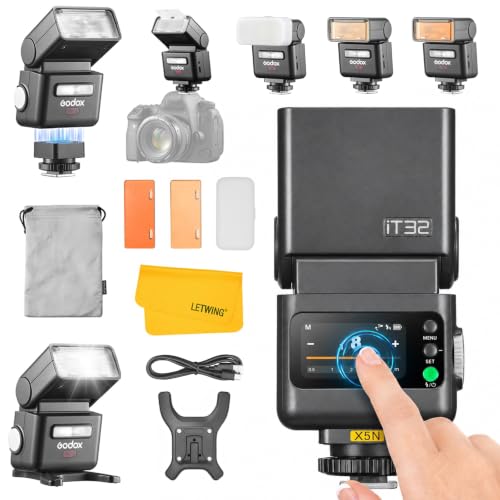
- TTL and manual control with HSS up to 1/8000s
- X5N trigger enables quick wireless multi-light setups
- Magnetic design and touchscreen make setup fast
Best For: Nikon shooters needing compact wireless flash control
Portable Manual Mini Flash

- GN16 output with 10 manual power levels
- Lightweight 160g design for travel and street use
- USB-C battery supports up to 700 flashes
Best For: Travel and street shooters who want a tiny manual flash
Ultra-Compact Hot Shoe Flash

- 31g pocketable design with USB-C charging
- Five power levels for simple manual control
- Up to 440 full-power flashes per charge
Best For: Users who want a tiny manual flash for supported cameras
Compact Auto/Manual Speedlite

- 22Ws output with GN14 for stronger light
- Auto and manual modes plus optical slave support
- Built-in modeling light and fast recycle time
Best For: Creators wanting compact flash power with a modeling light
Ultra-compact starter flash
GODOX iM20 Mini Flash for Sony ZV-E10/ZV-1

- 31g ultra-light mini flash
- 5 manual power levels
- USB-C charging, up to 440 flashes
Best For: Travel, street, and vlogging setups
Bounce-ready mini flash
SmallRig RS-22 Mini Camera Flash
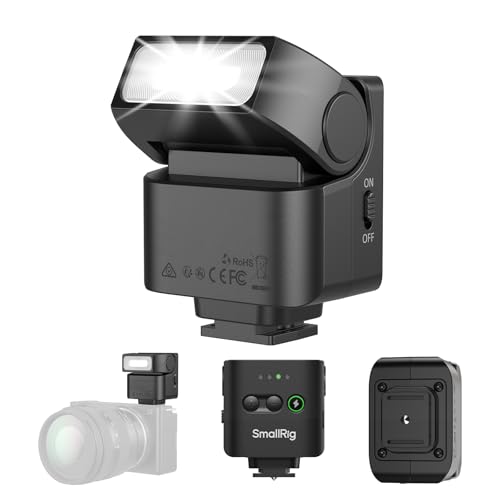
- 85° tilting head for bounce light
- 45g lightweight manual flash
- USB-C battery with fast recycle times
Best For: Mirrorless users needing soft on-camera light
Ultra-Light Bounce-Ready Pick
Ulanzi SL03 Mini Flash Speedlite

- GN8 flash with 4 power levels
- AF assist light and 90° bounce angle
- Ultra-light 1.16 oz body with USB-C charging
Best For: Compact-camera and mirrorless users who want a tiny manual flash for low light
Manual Power-Control Choice

- 20Ws output with GN15 and 6000K light
- Manual 1/128 to 1/1 power adjustment
- Built-in battery supports up to 650 flashes
Best For: Manual-flash users who want more output control in a compact body
Best Value Mini Speedlite

- GN8 flash with 4 brightness levels
- 6500K light with 97+ CRI
- Ultra-light 0.07 lb body and USB-C fast charging
Best For: Anyone wanting a tiny manual flash for simple low-light shooting
Wireless TTL Mini Flash – GODOX IT32 for Nikon
If you want camera flashes for low light that stay flexible as your setup changes, the Godox iT32 is built for quick, modern shooting. It supports TTL and manual control, adds high-speed sync up to 1/8000s, and pairs with the X5N trigger for fast wireless use without manual pairing.
Best For: Nikon shooters who want a compact flash with wireless control and TTL convenience.
Pros:
- TTL, manual power control from 1/128 to 1/1, and high-speed sync for more exposure control.
- Built-in 2.4G receiver and X5N trigger support make multi-light wireless setups easier.
- Magnetic detachable design speeds up switching between on-camera and off-camera use.
- Built-in LED modeling light, diffuser, reflector, and touchscreen add practical shooting tools.
Cons:
- Designed specifically for Nikon compatibility, so it is not a universal pick.
- The X5 module must be charged through the iT32 flash body.
- More advanced than a basic manual flash, so it may be more than some casual users need.
This is a strong choice if you need a compact flash that handles low-light work with automation, speed, and wireless flexibility. It is especially appealing for photographers who want one light they can adapt across on-camera and off-camera setups.
Portable Manual Mini Flash – PHOTOOLEX G01 Mini Flash
The PHOTOOLEX G01 is a compact option for camera flashes for low light when you want a lightweight manual unit with straightforward controls. It offers GN16 output, 10 power levels, and S1/S2 optical slave modes, making it useful for simple flash work and video-friendly lighting.
Best For: Photographers who want a small, manual flash for travel, street shooting, and basic off-camera use.
Pros:
- Very lightweight at 160g, with a mini body that is easy to carry.
- GN16 output and 10 manual power levels give useful control for a small flash.
- Includes diffuser and 7 color filters for softer light and creative looks.
- Built-in battery charges by USB-C and is rated for up to 700 full-power flashes.
Cons:
- No TTL support, so exposure must be managed manually.
- Not compatible with several camera models listed in the notes, including some Canon and Sony bodies.
- Recycle time and power are modest compared with larger flash units.
For simple low-light shooting, this flash keeps things compact and affordable in spirit, while still offering enough control for everyday use. It is best when portability matters more than advanced automation.
Ultra-Compact Hot Shoe Flash – Godox iM20 Mini Flash
The Godox iM20 is a tiny choice for camera flashes for low light when you want something that stays out of the way. It uses a built-in battery, USB-C charging, and five power levels, but it is a manual-only flash without TTL or high-speed sync.
Best For: Photographers who want a pocketable flash for simple low-light fill on supported single-contact hot shoe cameras.
Pros:
- Extremely compact at 31g, making it easy to keep in a pocket or small bag.
- Five power levels let you adjust output for different lighting needs.
- Built-in battery and USB-C charging make it convenient for regular use.
- Rated for up to 440 full-power flashes with about a 3-second recycle time.
Cons:
- No TTL or high-speed sync, so it requires manual exposure setup.
- Compatibility is limited to many single-contact hot shoe cameras, and several models are excluded.
- Recommended shutter speeds are below 1/200 to avoid edge issues.
This is a practical minimal-flash option for users who value portability above all else. If you mainly need a simple fill light for low-light moments, the iM20 keeps the footprint very small.
Compact Auto/Manual Speedlite – NEEWER Z160 Mini Flash
If you need camera flashes for low light with a bit more power, the NEEWER Z160 packs a 22Ws output into a compact body. It adds Auto and Manual modes, optical slave triggering, and a built-in modeling light, giving it more flexibility than a basic mini flash.
Best For: Shooters who want a compact flash with auto exposure support and a modeling light for previews.
Pros:
- 22Ws output and GN14 rating provide stronger illumination than many mini flashes.
- Auto and Manual modes offer a choice between convenience and precise control.
- Built-in modeling light can help preview lighting before taking the shot.
- Fast 1.5-second recycle and up to 650 full-power flashes support longer sessions.
Cons:
- Single-contact hot shoe design limits compatibility and excludes several camera models.
- Wireless use is optical slave only, not a full radio system.
- High-speed sync is not listed, so it is less advanced for fast-shutter work.
This is a strong middle-ground pick if you want a small flash with more output and a helpful preview light. It suits creators who need a compact on-camera light that can handle basic low-light work with more confidence.
Ultra-compact starter flash – GODOX iM20 Mini Flash for Sony ZV-E10/ZV-1
If you want camera flashes for low light that stay small and simple, the GODOX iM20 is a practical hot-shoe mini flash for compact shooting. It keeps things manual, light, and portable, with adjustable power levels and USB-C charging for quick turnaround between sessions.
Best For: Travel, street photography, vlogging, and entry-level shooters who need a tiny on-camera flash.
Pros:
- Very lightweight at 31g with a compact 39 x 38 x 29.5 mm body.
- 5 power levels from 1/1 to 1/32 for basic manual control.
- Built-in rechargeable battery supports up to 440 full-power flashes.
- USB-C charging fully recharges in about 70 minutes.
Cons:
- Not compatible with several Sony, Canon, and Fuji models listed in the notes.
- Manual-only operation, so there is no TTL automation.
- Works best when the camera flash setting is set to manual mode if needed.
For buyers who want a no-fuss light source that adds fill in dim scenes without much bulk, the iM20 is a straightforward option. Just double-check compatibility before ordering, since the notes call out several unsupported camera models.
Bounce-ready mini flash – SmallRig RS-22 Mini Camera Flash
The SmallRig RS-22 is a smart pick if you’re comparing camera flashes for low light and want a compact unit with more flexible shaping than a fixed-head model. Its 85° tilting head lets you bounce light for a softer look, while the manual power steps keep it easy to control for everyday shooting.
Best For: Mirrorless photographers who want a lightweight bounce flash for portraits, travel, and casual low-light work.
Pros:
- 85° upward tilting head supports bounce flash for softer light.
- Lightweight at 45g, making it easy to carry for outdoor night photography.
- 4 manual power levels with GN8 output and 6500K color temperature.
- Fast recycle time and USB-C charging with a built-in 400mAh battery.
Cons:
- No TTL function, so power is fully manual.
- Compatibility is limited; several Sony, Canon, and Fuji models are excluded.
- Lower guide number than a full-size speedlite, so it suits close-range use better.
Overall, the RS-22 is a useful low-light flash when portability and bounce flexibility matter more than raw output. It’s especially appealing for small mirrorless bodies and simple on-camera lighting setups.
Full-power manual speedlite – NEEWER TT560 Universal Flash
If you need camera flashes for low light with more output and broader support, the NEEWER TT560 is a classic manual speedlite built around a universal single-contact hot shoe. It’s designed for photographers who are comfortable setting power by hand and want a flash with tilt, rotation, and optical slave options.
Best For: Shooters who want a powerful manual flash for compatible DSLRs and mirrorless cameras.
Pros:
- GN38 output provides much more power than mini flashes.
- 8 manual power levels from 1/128 to 1/1.
- Tilts 0°-90° and rotates 0°-270° for more flexible light placement.
- Supports S1/S2 optical slave modes and PC sync for off-camera use.
Cons:
- No TTL, no HSS, and no camera menu control.
- Requires 4 AA batteries, which are not included.
- Compatibility depends on a standard center-contact hot shoe and manual flash mode.
The TT560 makes sense if you want a budget-friendly manual flash with stronger performance for low-light shooting. It’s less beginner-friendly than automatic flashes, but it offers useful control and reach for the price-minded buyer.
Ultra-Light Bounce-Ready Pick – Ulanzi SL03 Mini Flash Speedlite
If you want camera flashes for low light that stay compact and travel-friendly, the Ulanzi SL03 is built for simple on-camera use. It offers manual flash output, a 6500K light source, and a continuous AF assist light, making it a practical option for close-up portraits, street snaps, food, and everyday shooting when you need a small boost of light.
Best For: Shooters who want an ultra-light manual flash with bounce flexibility and a built-in AF assist light for compact cameras and mirrorless bodies.
Pros:
- GN8 output with 4 power levels for controlled low-light flash
- AF assist light and 90° angle adjustment help with focusing and bounce lighting
- Very compact at 1.16 oz, making it easy to keep on-camera
- USB-C charging and pass-through use support longer shooting sessions
Cons:
- No TTL or automatic flash exposure
- Requires a single-contact hot shoe and is incompatible with several listed camera models
- Manual setup may take more adjustment in changing light
Overall, the SL03 is a sensible low-light companion if you value portability and simple manual control over advanced automation. Its strength is quick, lightweight flash coverage for casual and travel shooting, not a full-featured pro speedlight.
Manual Power-Control Choice – NEEWER Z160 SE Camera Flash
For camera flashes for low light, the NEEWER Z160 SE is a manual speedlight designed for photographers who want direct control over output. It delivers 20Ws of power, a 6000K±200K color temperature, and a 1/128 to 1/1 manual range, so it fits street shooting, travel kits, and simple off-camera or on-camera setups where you can dial in the light yourself.
Best For: Photographers who prefer a compact manual flash with a wider power range and built-in battery for low-light shooting.
Pros:
- 20Ws output with GN15 for stronger flash performance than very small mini units
- Manual power range from 1/128 to 1/1 gives fine control
- Built-in 1200mAh battery supports up to 650 full-power flashes
- Compact 5.3 oz design with a stylish rotary dial and display
Cons:
- No TTL, no HSS, and no automatic flash exposure
- Single-contact hot shoe design means compatibility must be checked carefully
- Fuji and some mirrorless cameras require mechanical shutter mode
The Z160 SE is a strong fit if you want a manual flash that feels more capable than an ultra-mini option but still stays portable. It’s best for users comfortable setting flash power themselves and checking camera compatibility before buying.
Best Value Mini Speedlite – ULANZI SL01 Mini Camera Flash
If you’re comparing camera flashes for low light, the ULANZI SL01 is a small manual speedlite aimed at photographers who want simple, reliable on-camera lighting. It uses a GN8 flash index, 6500K light, and 4 brightness levels, with fast USB-C charging and pass-through use for quick turnarounds during portraits, street work, or everyday shooting.
Best For: Shooters who want a tiny, lightweight flash with basic manual control and broad single-contact hot shoe support.
Pros:
- GN8 output with 4 brightness steps for straightforward low-light use
- 6500K, 97+ CRI lighting supports accurate color
- Very lightweight design at 0.07 lb makes it easy to carry
- USB-C fast charging and simultaneous charging/use add convenience
Cons:
- No TTL and not automatic
- Requires a single-contact hot shoe and excludes several specific camera models
- Charger and cable are not included
The SL01 keeps things simple: small size, basic power control, and fast recharging. It’s a practical pick for users who want a minimal flash setup and are willing to confirm camera compatibility before ordering.
How We Picked These Camera Flashes for Low Light
We focused on flashes that are practical for real-world indoor and nighttime shooting: enough power for close to medium distances, fast recycle times, simple controls, and broad compatibility where possible. We also favored compact units that are easy to carry and mount, since portability matters for travel, events, and everyday use.
Quick Comparison
Not every flash in this lineup serves the same shooter. Some are best for beginners who want a simple manual flash, while others suit users who need TTL support, wireless triggering, or higher output for tougher low-light scenes. If you mainly shoot portraits or family events, prioritize output and recycle speed. If you want a lightweight everyday option, a mini flash may be the better fit.
Key Buying Factors for Camera Flashes for Low Light
Power and Guide Number
More power helps you light subjects from a greater distance and bounce light off ceilings or walls. For indoor work, a stronger guide number or watt-second rating usually means more flexibility.
TTL, Manual, and HSS
TTL can make exposure easier in changing light, while manual control gives more consistency once you know your setup. High-speed sync is useful if you want to use flash with brighter ambient light or wider apertures.
Recycle Time and Battery
In low light, slow recycle times can cause missed moments. Look for a flash that recharges quickly and has a battery system that matches how long you shoot.
Size, Mounting, and Compatibility
Compact flashes are easier to travel with and less likely to make a small camera feel front-heavy. Check hot shoe compatibility carefully, especially if you switch between brands or use single-contact manual flashes.
Color Temperature and Light Quality
A consistent color temperature makes post-processing easier. If you plan to bounce or diffuse the flash, light quality and even output matter as much as raw brightness.
Who Should Buy Which Camera Flashes for Low Light?
Choose a mini flash if you want the smallest possible setup for casual indoor photos, vlogs, or travel. Choose a more powerful speedlite if you shoot events, portraits, or group photos and need better reach. Beginners often do well with simple manual models, while frequent shooters may prefer TTL, wireless control, or HSS for more flexibility. If you’re comparing Camera Flashes for Low Light, the best option is the one that matches your camera system, shooting pace, and how much control you want in post.