Choosing the right flash can make portrait lighting cleaner, softer, and far more flattering than available light alone.
This roundup of camera flashes for portraits focuses on reliable output, useful controls, and real-world value for beginners through advanced shooters.
Best 10 Camera Flashes for Portraits Picks for 2026
Studio Strobe
Godox MS300V 300W Compact Studio Strobe Flash Light

- 300W output with GN58 and 0.1-1.8s recycle time
- Upgraded LED modeling lamp with 5%-100% manual control
- Bowens mount and 2.4G wireless trigger support
Best For: Studio portraits needing a compact, modifier-friendly strobe
Compact TTL Flash
Godox iT32 TTL Camera Flash with X5S Trigger
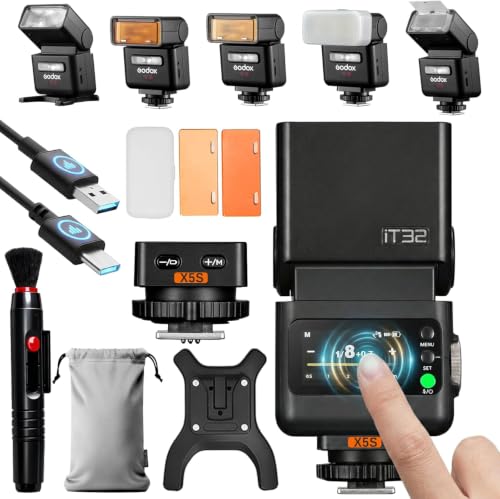
- TTL and HSS support for Sony portrait shooting
- X5 module doubles as hotshoe and wireless trigger
- Built-in 2.4GHz receiver and magnetic quick-attach design
Best For: Sony portrait shooters wanting a compact TTL flash with wireless flexibility
Budget Speedlite
PHOTOOLEX Camera Flash Speedlite FK310

- GN33 output with LCD display and 22-level power control
- Manual, Multi, S1, and S2 modes for portrait lighting
- Universal hotshoe support for many camera brands
Best For: Entry-level portrait shooters wanting an affordable manual speedlite
Round Head TTL Flash
NEEWER Z2PRO-S 2.4G TTL Round Head Flash Speedlite

- 76Ws output with TTL, HSS, and 2.4G wireless triggering
- Built-in battery delivers about 600 full-power flashes
- Dual LED modeling lights help preview portrait lighting
Best For: Sony portrait photographers needing a powerful rechargeable TTL flash
Compact TTL System Flash
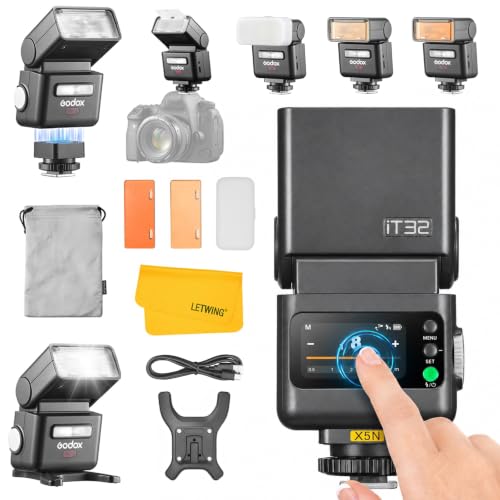
- TTL flash with HSS up to 1/8000s
- Built-in 2.4G receiver for wireless multi-light use
- Magnetic detachable design for quick setup changes
Best For: Nikon portrait shooters who want compact wireless TTL
Ultra-Compact Entry Flash
Godox iM20 Mini Flash for Hot-Shoe Cameras

- 31g mini flash with hot-shoe mounting
- Five manual power levels, 1/1 to 1/32
- USB-C rechargeable battery, up to 440 flashes
Best For: Travel-friendly portrait fill and quick everyday shooting
Budget Wireless Manual Flash
Godox TT520II Speedlite with RT Trigger

- 433MHz wireless system with 16 channels
- Eight manual power levels from 1/128 to full
- Built-in receiver plus RT transmitter included
Best For: Affordable manual portrait lighting and wireless off-camera practice
Studio Strobe – Godox MS300V 300W Compact Studio Strobe Flash Light
If you want camera flashes for portraits in a controlled studio setup, the Godox MS300V is built around straightforward manual power, reliable recycle times, and Bowens mount support. Its 300W output, GN58 rating, and upgraded LED modeling lamp make it a practical choice when you need consistent light for portrait sessions.
Best For: Studio portrait photographers who want a compact, Bowens-compatible strobe with dependable output and remote control options.
Pros:
- 300W studio strobe with GN58 and fast 0.1-1.8 second recycle time
- Upgraded LED modeling lamp and manual power adjustment from 5% to 100%
- 2.4G wireless control with support for X2, XT16, XPro, and X1 triggers
- Bowens mount compatibility for a wide range of modifiers and accessories
Cons:
- No HSS function
- Lamp cover must be removed before use
- Manual exposure control only, so it is less flexible for casual run-and-gun shooting
Overall, the MS300V fits portrait work where repeatable light and modifier flexibility matter more than advanced on-camera flash features. It is compact, stable, and geared toward studio use rather than portability.
Compact TTL Flash – Godox iT32 TTL Camera Flash with X5S Trigger
For photographers looking at camera flashes for portraits on Sony bodies, the Godox iT32 pairs TTL and HSS support with a modular X5 hotshoe system. Its small form factor and built-in 2.4GHz receiver make it easy to move between on-camera shooting and multi-light setups without a complicated workflow.
Best For: Sony shooters who want a compact TTL flash that can also act as part of a wireless Godox lighting setup.
Pros:
- TTL and HSS support for easier portrait exposure control
- X5 module works as both hotshoe and wireless trigger
- Built-in 2.4GHz receiver for simple wireless communication
- Magnetic attach-and-release design speeds up setup changes
Cons:
- Designed specifically for Sony compatibility
- Guide number of 18 is modest compared with larger flashes
- Wired connectivity is listed in the specs, so it is less about universal radio flexibility than a larger system unit
The iT32 is a smart pick if you want a compact flash that can stay on-camera one moment and help drive a broader Godox setup the next. It is most appealing to portrait shooters who value speed, portability, and Sony-specific compatibility.
Budget Speedlite – PHOTOOLEX Camera Flash Speedlite FK310
If you need camera flashes for portraits without jumping to a large system, the PHOTOOLEX FK310 offers a simple manual speedlite setup with useful control. Its GN33 output, LCD display, and S1/S2 optical modes make it a practical entry-level option for indoor portrait work and basic off-camera lighting.
Best For: Beginner and budget-minded photographers who want a straightforward, universal hotshoe flash for portraits.
Pros:
- GN33 output with an easy-to-read LCD screen
- 22-level power adjustment from 1/128 to 1/4 for fine control
- Manual, Multi, S1, and S2 modes for creative and off-camera use
- Universal single-contact hotshoe support for many camera brands
Cons:
- Manual exposure control only, with no TTL or HSS
- Uses 4 AA batteries instead of a rechargeable pack
- Wireless triggering is optical rather than radio-based
The FK310 is a good value pick when you want a simple portrait flash kit with enough control to learn lighting basics. It gives you the essentials for portrait, event, and studio use without adding system complexity.
Round Head TTL Flash – NEEWER Z2PRO-S 2.4G TTL Round Head Flash Speedlite
When shopping for camera flashes for portraits on Sony systems, the NEEWER Z2PRO-S stands out for its TTL support, round head design, and strong 76Ws output. It combines quick recycle times, HSS, and a built-in battery with modeling lights, making it well suited to portrait shooters who want speed and flexibility.
Best For: Sony portrait photographers who want a powerful rechargeable flash with TTL, HSS, and wireless control.
Pros:
- 76Ws output with TTL, HSS, and 2.4G wireless triggering
- 1/1 to 1/256 power range plus 1.5 second recycle time
- Built-in lithium battery provides about 600 full-power flashes
- Dual LED modeling lights help preview facial fill and shadow placement
Cons:
- Compatible with Sony cameras only
- Some wireless features depend on separate transmitters or system compatibility
- It is a flash speedlite, not a larger studio strobe for modifier-heavy setups
The Z2PRO-S is a strong fit if you want a modern portrait flash with plenty of power and a rechargeable design. It is especially appealing for photographers who need reliable performance across portraits, events, and mixed lighting situations.
Wireless Bounce Workhorse – Godox TT600 Thinklite Flash
If you want camera flashes for portraits that can handle bounce light, off-camera setups, and bright-day fill, the Godox TT600 is a flexible manual speedlite with plenty of output. Its GN60 power, included diffuser, and 360° rotating head make it a practical choice for photographers who want more control over portrait lighting without jumping into a more complex system.
Best For: Portrait shooters who want a powerful, manual flash with wireless expansion and HSS support off-camera.
Pros:
- GN60 output with consistent 5600K color temperature across the power range
- Built-in Godox 2.4G X wireless system supports master/slave control and multi-group setups
- Included diffuser helps soften light and reduce harsh shadows for portrait work
- Flexible head tilts and rotates for bounce lighting and creative positioning
Cons:
- Uses 4 AA batteries, which are not included
- HSS works only off-camera with a compatible Godox wireless trigger
- Manual operation means no TTL automation
Overall, the TT600 is a strong value if you want a dependable portrait flash with room to grow into wireless lighting. It is especially appealing for photographers who are comfortable working manually and want a straightforward path into the Godox ecosystem.
Manual Budget Starter – Neewer TT560 Speedlite
For photographers shopping camera flashes for portraits on a budget, the Neewer TT560 keeps things simple with manual power control and broad hot shoe compatibility. It is a no-frills speedlite designed for users who are comfortable setting exposure themselves and want a basic flash for bounce, slave, or off-camera use.
Best For: Budget-minded portrait shooters who prefer manual flash control and simple off-camera lighting.
Pros:
- GN38 output with 8 manual power levels for controlled portrait lighting
- Supports S1/S2 optical slave modes and PC sync for off-camera use
- Tilting and rotating head adds flexibility for bounce and directional light
- Wide compatibility list for many Canon, Sony, Nikon, Fuji, Panasonic, Olympus, and Pentax cameras
Cons:
- No TTL, no HSS, and no camera menu control
- Requires manual adjustment on the flash unit
- Works only with cameras that have a standard center-contact hot shoe
This is a good entry point if you mainly want a manual flash for portraits and do not need automation. It gives you the essentials for learning flash placement and exposure without paying for advanced features you may not use.
Compact TTL System Flash – Godox iT32 with X5N Trigger
If you want camera flashes for portraits in a compact package, the Godox iT32 combines TTL, high-speed sync, and wireless control in a very small body. The included X5N trigger, magnetic hotshoe design, and built-in receiver make it easier to move between on-camera and off-camera portrait setups without a lot of setup friction.
Best For: Nikon shooters who want a compact TTL flash with wireless control and fast setup.
Pros:
- TTL and manual control with HSS up to 1/8000s
- Built-in 2.4G receiver and X5N trigger support wireless multi-light setups
- Magnetic detachable design makes on-camera and off-camera switching quick
- Includes LED modeling light, reflector, diffuser, and USB-C charging support
Cons:
- Guide number of 18 is lower than larger speedlites
- X5 module charges only when attached to the iT32 body via USB-C
- Compatible mounting details are listed for Nikon cameras
The iT32 is best if you value portability and modern wireless convenience more than raw power. For portrait work where fast setup, TTL flexibility, and compact gear matter, it brings a lot into one small flash system.
Ultra-Compact Entry Flash – Godox iM20 Mini Flash for Hot-Shoe Cameras
If you want camera flashes for portraits without carrying a bulky speedlite, the Godox iM20 is a simple, lightweight option for quick fill light. It offers manual power control, USB-C charging, and a compact hot-shoe design that suits casual portrait sessions, travel, and vlogging.
Best For: Photographers who want a tiny, rechargeable flash for basic portrait fill and everyday carry.
Pros:
- Ultra-light 31g body with a very compact footprint
- Five power levels from 1/1 to 1/32 for manual light control
- Built-in rechargeable battery with USB-C charging and up to 440 flashes
- 3-second recycle time helps keep shooting moving
Cons:
- Single-contact design means no TTL automation
- Compatibility is not universal across every camera body mentioned in the notes
- Guide number is modest at about GN12, so it is best for close-range work
The iM20 makes sense if you value portability over advanced flash features. For portraits, it is best used as a lightweight fill or on-the-go backup rather than a full-featured studio replacement.
Budget Wireless Manual Flash – Godox TT520II Speedlite with RT Trigger
The Godox TT520II is a straightforward choice in camera flashes for portraits if you want manual control and wireless triggering without paying for TTL features. It uses a standard hot shoe, offers multiple output levels, and includes a built-in receiver with RT transmitter for off-camera setups.
Best For: Shooters who want an affordable manual flash for learning portrait lighting and simple wireless setups.
Pros:
- 433MHz wireless transmission with 16 channels and included RT transmitter
- Eight output levels from 1/128 to full power
- Manual M, S1, and S2 modes for flexible portrait lighting
- GN33 output gives more reach than mini flashes
Cons:
- No TTL support, so exposure is fully manual
- Runs on 4 AA batteries instead of a built-in rechargeable pack
- Compatibility is limited to standard hot-shoe DSLR systems listed in the notes
For photographers who are comfortable adjusting flash power themselves, the TT520II offers practical off-camera flexibility at a budget-friendly level. It is a solid step up from tiny direct-on-camera flashes when you need more power for portraits.
Flexible Bounce Flash Kit – Godox TT520III Manual Flash with Diffuser
If you want camera flashes for portraits with more bounce and modifier-friendly control, the Godox TT520III is built around manual output, a diffuser, and broad hot-shoe compatibility. It keeps the setup simple while adding 433MHz wireless operation, optical slave modes, and adjustable head movement for more shaping options.
Best For: Portrait shooters who want a manual bounce flash kit with wireless and optical slave options.
Pros:
- GN33 output with 8-stop manual adjustment and fine 1/3-stop tuning
- 330° horizontal and 120° tilt for bounce lighting
- 433MHz wireless plus M/S1/S2 modes for off-camera and slave use
- Includes diffuser kit, reflector, mini stand, transmitter, and storage bag
Cons:
- No TTL, so portrait exposure must be set manually
- Uses AAA batteries rather than a built-in rechargeable battery
- Not compatible with Sony ZV-1F, per the notes
The TT520III is the most feature-rich of the three for shaping portrait light while still staying manual. Its bounce range and included accessories make it a practical pick if you want more control than a basic direct flash.
How We Picked the Best Camera Flashes for Portraits
We prioritized flashes and strobes that make portrait shooting easier in common real-world setups: on-camera fill, bounced indoor light, off-camera key light, and entry-level studio work. The strongest picks balanced power, recycling speed, triggering options, and ease of use. We also considered system compatibility, since Camera Flashes for Portraits should fit your body, lens workflow, and lighting goals without extra friction.
Quick Comparison
For the fastest automation, TTL-capable flashes are ideal when subjects move or lighting changes often. Manual flashes are better when you want consistent output and more control, especially in controlled portrait sessions. Compact mini flashes suit travel, candid work, or lightweight mirrorless kits, while higher-power speedlights and studio strobes are better for larger spaces, modifiers, and more polished portraits.
Key Buying Factors for Camera Flashes for Portraits
TTL Vs. Manual
TTL helps you get close exposure quickly, which is useful for events, family portraits, and changing locations. Manual flash is usually the better long-term choice for studio-style portrait work because it keeps output consistent shot to shot.
Power and Light Quality
More power matters if you bounce light off ceilings, shoot through modifiers, or work outdoors. For portraits, raw power is only part of the story; the shape of the light, zoom control, and whether the flash head can bounce or rotate also affect how flattering the result looks.
Triggering and Compatibility
Make sure the flash supports your camera brand and any wireless system you plan to use. A built-in receiver or compatible trigger can simplify off-camera setups, which is especially helpful if you want to grow from on-camera fill light to a more layered portrait lighting style.
Recycle Time, Battery, and Ease of Use
Faster recycle times help you capture natural expressions without long pauses. Rechargeable battery systems can be convenient for frequent shooting, while AA-based flashes remain easy to swap and keep going. Clear displays and intuitive controls matter more than many buyers expect, particularly when you are learning flash exposure.
Who Should Buy Which Camera Flashes for Portraits?
If you want simple, dependable results, a TTL speedlite is the easiest starting point. If you want maximum consistency and value, a manual flash is often the smartest pick. If you shoot portraits in a small studio or plan to use softboxes and larger modifiers, a stronger strobe is the better fit. For mirrorless creators who value portability, compact flashes can be the best balance of size and flexibility. The best Camera Flashes for Portraits are the ones that match your camera system, your working style, and the amount of control you want over your light.