Choosing the right camera gimbal can make handheld footage look dramatically smoother, more professional, and easier to shoot on the move.
Below, we’ve narrowed the field to 10 standout options for different camera rigs, budgets, and workflow needs so you can buy with confidence.
Best 10 Camera Gimbals Picks for 2026
Pro Creator Pick
DJI RS 4 Camera Gimbal for Mirrorless Rigs

- Native vertical shooting without extra accessories
- 3 kg payload for mainstream mirrorless setups
- RSA port for broader accessory support
Best For: Mirrorless shooters needing a high-payload, expandable gimbal
Compact Hybrid Pick
FeiyuTech SCORP Mini 2 Kit with AI Tracking

- Works with cameras, smartphones, and action cams
- Built-in AI tracking and fill light
- Lightweight body with touchscreen controls
Best For: Creators wanting a lightweight, multi-device stabilizer
Fast Solo Filming Pick
DJI RS 4 Mini Combo with Tracking Module

- Auto axis locks speed up setup
- Includes intelligent tracking module
- Supports cameras and smartphones up to 2 kg
Best For: Solo creators needing fast setup and subject tracking
Budget Workhorse Pick
FeiyuTech SCORP-C DSLR and Mirrorless Gimbal

- Wide compatibility with major camera brands
- Integrated handle for upright or underslung shots
- 10-13 hour battery life with fast charging
Best For: DSLR and mirrorless users wanting a dependable camera gimbal
Compact Hybrid Gimbal
DJI RS 4 Mini for Cameras and Phones

- Auto axis locks speed setup to about 1 second
- Supports cameras and smartphones up to 2 kg
- Fast vertical switch and Intelligent Tracking
Best For: Solo creators and vertical video workflows
Heavy-Duty AI Gimbal
FeiyuTech SCORP-C2 for Pro Camera Builds

- 7.72 lb payload for heavier DSLR and mirrorless rigs
- Built-in AI Tracking 4.0 needs no app pairing
- 14-hour runtime with 18W fast charging
Best For: Creators using heavier camera setups and solo tracking
Ultra-Light Travel Gimbal
DJI RS 3 Mini for Mirrorless Cameras
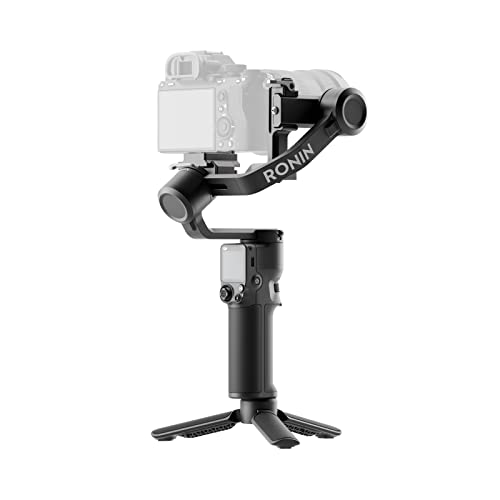
- 795 g body is easy to carry for travel
- Supports up to 2 kg payload
- Bluetooth shutter control and native vertical shooting
Best For: Travel creators with lighter mirrorless setups
Compact Hybrid Creator Gimbal

- Works with cameras, smartphones, and action cams
- AI Tracking 4.0 supports 18m follow with fast response
- Detachable handle doubles as a remote control
Best For: Solo creators who want a lightweight, multi-device gimbal
Lightweight Vertical Shooter

- Native vertical shooting for social content
- 3 kg payload in a 1.05 kg body
- Up to 16 hours of battery life
Best For: Mirrorless and DSLR users who film vertically and shoot all day
High-Payload Tracking Gimbal

- Built-in AI tracking follows faces automatically
- 7.72 lb payload supports heavier camera/lens combos
- Native vertical shooting and OLED status display
Best For: Shooter who wants higher payload capacity and subject tracking
Pro Creator Pick – DJI RS 4 Camera Gimbal for Mirrorless Rigs
If you want one of the more capable camera gimbals for a mirrorless setup, the DJI RS 4 is built around faster vertical shooting, smoother balancing, and a 3 kg payload rating. It’s aimed at creators who need a flexible stabilizer for solo shooting, controlled movement modes, and a setup that can grow with extra accessories.
Best For: Mirrorless shooters who want a high-payload gimbal with quick vertical switching and room for accessories.
Pros:
- 2nd-gen native vertical shooting lets you switch to vertical without extra accessories.
- Teflon-coated axis arms are designed for smoother, more precise balancing.
- 3 kg payload supports many mainstream mirrorless camera and lens combinations.
- RSA port expands compatibility with selected DJI and third-party accessories.
Cons:
- Battery grip is sold separately if you want the longer runtime upgrade.
- Not water resistant.
- Primarily focused on camera setups rather than smartphones.
Overall, the RS 4 is a strong choice if your priority is a more advanced camera gimbal with efficient vertical workflows and a broader accessory ecosystem. It makes the most sense for creators who know they’ll benefit from the higher payload and expansion options.
Compact Hybrid Pick – FeiyuTech SCORP Mini 2 Kit with AI Tracking
The FeiyuTech SCORP Mini 2 is a compact option in the camera gimbals category if you want one stabilizer that can handle mirrorless cameras, smartphones, DSLR cameras, and even action camera use. Its built-in AI tracking, fill light, and touchscreen make it especially practical for flexible shooting and quick solo setups.
Best For: Creators who want a lightweight, multi-device gimbal with built-in tracking and onboard controls.
Pros:
- Supports multiple device types, including mirrorless cameras, smartphones, DSLR cameras, and action cameras.
- Built-in AI tracker can follow faces or objects without connecting to an app.
- 1.3-inch touchscreen and five-way joystick simplify operation.
- Kit includes carrying case, extension rod, tripod, and wireless fill light.
Cons:
- 1.2 kg payload is lower than larger camera-focused gimbals.
- Not as specialized for heavier mirrorless rigs.
- Best for compact setups rather than full-size camera builds.
This is a smart pick if you want versatility over raw payload. The SCORP Mini 2 works well when you need one stabilizer for multiple shooting styles and value built-in tracking more than maximum load capacity.
Fast Solo Filming Pick – DJI RS 4 Mini Combo with Tracking Module
Among camera gimbals for solo creators, the DJI RS 4 Mini Combo stands out for fast setup, quick vertical switching, and included intelligent tracking. It’s designed for mirrorless cameras and smartphones, making it a practical stabilizer when you want responsive handling and a compact kit for dynamic shooting.
Best For: Solo creators who want quick setup, subject tracking, and easy vertical shooting in a compact gimbal.
Pros:
- Auto axis locks help the gimbal get ready in about 1 second.
- Included RS Intelligent Tracking Module helps keep subjects framed.
- Supports cameras and smartphones with up to a 2 kg payload.
- Fast vertical switch is useful for mobile-friendly content.
Cons:
- Lower payload than the full-size RS 4.
- Not water resistant.
- Best suited to lighter rigs rather than heavier camera-and-lens combinations.
If you want a compact gimbal that prioritizes speed and solo-friendly features, the RS 4 Mini Combo is easy to like. Its tracking module and quick setup make it especially useful for run-and-gun filming and social-first video.
Budget Workhorse Pick – FeiyuTech SCORP-C DSLR and Mirrorless Gimbal
The FeiyuTech SCORP-C is a practical camera gimbal for DSLR and mirrorless users who want solid stabilization and a broad compatibility list. Its integrated hanging handle, adjustable balance system, and multiple shooting modes make it a useful all-around choice for creators who need dependable control without a more complex ecosystem.
Best For: DSLR and mirrorless shooters who want a capable, feature-rich gimbal with strong battery life.
Pros:
- Supports many mainstream Sony, Canon, Nikon, Panasonic, and Fujifilm camera/lens combinations.
- Integrated hanging handle works for upright or underslung shooting.
- Five-way center of gravity adjustment and quick release plate help with setup.
- Battery life is rated at 10-13 hours, with fast charging support.
Cons:
- Heavier and more specialized than a compact travel gimbal.
- Primarily focused on camera bodies rather than smartphones.
- May be more than casual users need for simple stabilization.
The SCORP-C is a strong value-oriented pick if you need a real camera-first stabilizer with useful controls and long runtime. It’s best for shooters who want a reliable everyday gimbal that can handle a wide range of compatible camera systems.
Compact Hybrid Gimbal – DJI RS 4 Mini for Cameras and Phones
If you want a camera gimbal that speeds up setup and keeps pace with quick content shoots, the DJI RS 4 Mini is built around convenience. Its automated axis locks, fast vertical switch, and responsive follow mode make it easy to move from setup to shooting without losing momentum.
Best For: Solo creators, mirrorless users, and mobile-friendly vertical video shoots.
Pros:
- Auto axis locks help it get ready in about 1 second.
- Switches from horizontal to vertical in 10 seconds.
- Supports cameras and smartphones up to 2 kg / 4.4 lbs.
- Intelligent Tracking helps keep subjects framed during solo filming.
Cons:
- Maximum payload is limited to lighter camera setups.
- App access may require downloading from DJI’s official website.
Overall, the RS 4 Mini is a strong fit if your priority is fast setup, portable handling, and quick vertical content creation. It leans toward lightweight rigs, but it adds useful automation that can save time on busy shoots.
Heavy-Duty AI Gimbal – FeiyuTech SCORP-C2 for Pro Camera Builds
The FeiyuTech SCORP-C2 is a camera gimbal aimed at heavier mirrorless and DSLR setups that need more payload and control. With built-in AI tracking, native vertical shooting, and an underslung handle, it is designed for creators who want a more pro-oriented stabilizer for run-and-gun work.
Best For: DSLR and mirrorless users carrying heavier rigs who want hands-free tracking.
Pros:
- High 7.72 lb / 3500 g payload supports heavier camera and lens combinations.
- Built-in AI Tracking 4.0 works without apps or Bluetooth pairing.
- Native vertical mounting makes portrait shooting quick for social media.
- 14-hour runtime and 18W fast charging support long shoot days.
Cons:
- Heavier-duty design may be more than casual users need.
- Best suited to cameras in its listed compatibility range.
In practice, the SCORP-C2 stands out when payload and tracking matter more than ultra-light portability. It offers a capable mix of stability, vertical shooting, and comfort features for creators working with larger camera builds.
Ultra-Light Travel Gimbal – DJI RS 3 Mini for Mirrorless Cameras
The DJI RS 3 Mini is a compact camera gimbal made for travel-friendly stabilization and quick content capture. At 795 g, it stays easy to carry, while features like Bluetooth shutter control, native vertical shooting, and the 1.4-inch touchscreen make it practical for everyday shooting.
Best For: Travel creators and mirrorless camera users who want a lightweight stabilizer.
Pros:
- Very lightweight at 795 g for easier all-day carrying.
- Supports camera and lens combinations up to 2 kg / 4.4 lbs.
- Bluetooth shutter control simplifies photo and video capture.
- Native vertical shooting is built in for social content.
Cons:
- Payload is limited to lighter rigs.
- Requires the DJI Ronin app for activation and full functionality.
For buyers who value portability first, the RS 3 Mini covers the basics well without adding much bulk. It is a sensible choice if your camera setup is within its weight limit and you want a compact gimbal for quick, vertical-ready shooting.
Compact Hybrid Creator Gimbal – FeiyuTech SCORP Mini-3-Pro
If you want one of the more flexible camera gimbals for mixed shooting, the FeiyuTech SCORP Mini-3-Pro is built around versatility. It supports mirrorless cameras, compact cameras, smartphones, and action cameras, while its 4.4 lb payload and AI tracking make it useful for solo creators who switch between setups.
Best For: Creators who need a lightweight, multi-device gimbal with AI tracking and remote operation.
Pros:
- Supports cameras, smartphones, and action cameras in one design
- AI Tracking 4.0 offers 18m tracking and a 0.003s response time
- Detachable handle can be used as a remote control for flexible filming
- 2kg / 4.4 lb payload covers a wide range of mainstream setups
Cons:
- Not water resistant
- Best suited to lighter camera builds rather than heavy rigs
Overall, this is a practical pick if you value portability and features that simplify one-person shooting. Its modular design and quick horizontal/vertical switching make it especially appealing for creators who move fast between formats.
Lightweight Vertical Shooter – ZHIYUN Weebill 3E
Among camera gimbals in the lightweight class, the ZHIYUN CINEPEER Weebill 3E stands out for portable DSLR and mirrorless use. It combines a 3 kg payload, native vertical shooting, and Bluetooth shutter control, which makes it a strong fit for social content and all-day filming.
Best For: Mirrorless and DSLR shooters who want native vertical shooting and long battery life.
Pros:
- Native vertical shooting without extra accessories or reassembly
- Up to 3 kg payload in a compact 1.05 kg body
- Bluetooth shutter control supports record and photo triggering
- Up to 16 hours of battery life with PD fast charging
Cons:
- Only the Panasonic control cable is included; other brands need separate cables
- Sling grip and wrist rest are purchased separately
This is a smart buy if your workflow includes vertical video and long shooting days. Just make sure your camera compatibility and cable requirements are sorted before you order.
High-Payload Tracking Gimbal – FeiyuTech SCORP-C 2
The FeiyuTech SCORP-C 2 is aimed at creators who need a more capable camera gimbal for heavier mirrorless or DSLR setups. With built-in AI tracking, native vertical shooting, and an upgraded 7.72 lb payload, it suits users who want stronger support and more camera/lens compatibility.
Best For: Mirrorless and DSLR shooters needing higher payload capacity and intelligent tracking.
Pros:
- Built-in AI tracking recognizes and follows faces automatically
- Upgraded payload reaches 7.72 lb for more camera and lens combinations
- Native vertical shooting supports content creation without extra accessories
- OLED display helps monitor status and adjust settings quickly
Cons:
- Not water resistant
- Compatibility depends on the camera/lens combo being within the supported range
If you want a gimbal that can handle more ambitious camera builds while still keeping the workflow simple, this is an appealing option. The tracking sensor and improved balance hardware make it especially useful for run-and-gun video work.
How We Picked These Camera Gimbals
We focused on real-world buying factors that matter most: payload capacity, stabilization performance, balance and setup speed, compatibility with popular mirrorless and DSLR systems, and useful extras like AI tracking or a built-in fill light. We also favored models that fit distinct user needs, from compact travel rigs to heavier camera setups.
Quick Comparison
For a fast shortlist, think in three categories. Lightweight Camera Gimbals are best for mirrorless bodies, compact lenses, and frequent travel. Mid-range models tend to offer the best balance of payload, battery life, and versatility for most creators. Heavier-duty options are the right call if you use larger lenses, add-ons, or want more future-proof capacity.
Key Buying Factors for Camera Gimbals
Payload and Camera Compatibility
Always check the rated payload against your actual camera, lens, microphone, and accessory weight. A gimbal that is near its limit may still work, but it will be harder to balance and less flexible for upgrades.
Axis Design and Stabilization
Most Camera Gimbals use a 3-axis design, which handles walking shots, pans, tilts, and movement across uneven ground. Look for smooth motor response and reliable locking mechanisms to make balancing faster and repeatable.
Portability and Ergonomics
If you shoot run-and-gun video, size and weight matter as much as raw capacity. Smaller designs are easier to pack and hold for longer periods, while larger grips and more robust builds can feel steadier with heavier setups.
Smart Features and Workflow Tools
Features such as AI tracking, touchscreen controls, built-in lights, and detachable remotes can save time and expand how you shoot. These extras are especially useful for solo creators, live content, and self-filming.
Who Should Buy Which Camera Gimbals?
Choose a compact model if you prioritize travel, everyday vlogging, or lightweight mirrorless cameras. Pick a more powerful option if you use a DSLR, longer lens, or accessory-heavy rig. If you often film yourself, AI tracking can be worth the upgrade. For creators who want the simplest all-around purchase, mid-size Camera Gimbals usually offer the best mix of stability, ease of use, and value.