Camera glasses let you capture a rider’s-eye view without mounting a camera to your helmet or handlebars. The best pair should also work as cycling eyewear: comfortable under a helmet, protective in changing light, and easy to control without taking your hands off the bars.
These 10 selections range from sport-focused smart glasses to 4K recording sunglasses. Look past the headline resolution and choose for the rides you actually do.
Best 10 Camera Glasses for Cycling Picks for 2026
Best for Quick Sharing
AI Smart Glasses with 1200P Video

- 8MP camera with 1200P/30fps video
- Six-axis electronic stabilization
- Wi-Fi syncing and app editing
Best For: Cyclists who want stabilized clips and quick phone transfers
Best for Secure Fit
Zigtik GP04 Black Camera Glasses
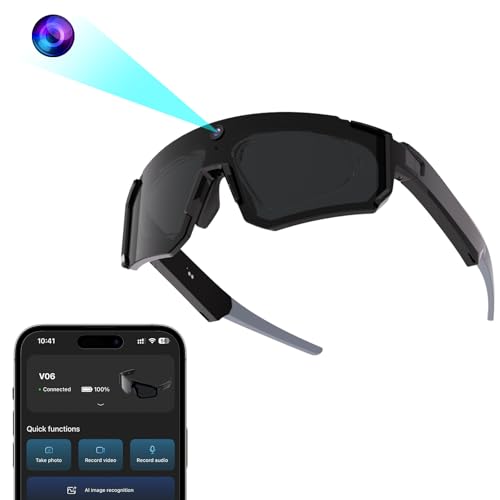
- Anti-slip nose pads and temple grips
- Listed 32MP camera with stabilization
- Polarized glare-reducing lenses
Best For: Riders who prioritize a stable fit and polarized lenses
Best White Frame
Zigtik GP04 White Camera Glasses
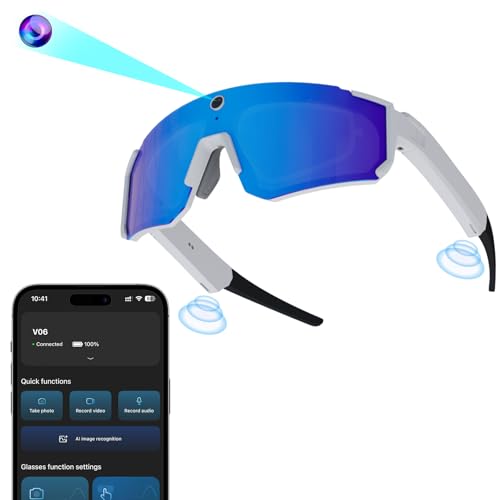
- White frame with polarized lenses
- Listed 32MP camera and stabilization
- Optional custom-lens inner frame
Best For: Riders seeking a white frame and optional custom lenses
Best Blue Frame
Zigtik GP04 Blue Camera Glasses

- Blue frame with anti-slip grips
- Listed 32MP camera and stabilization
- Adjustable 15-second to 12-minute clips
Best For: Riders wanting a blue frame and voice-accessible features
Performance Pick

- 3K video from a centered 12 MP camera
- Up to 9 hours of typical battery life
- Garmin metrics require a compatible device
Best For: Cyclists seeking ride footage and Garmin-linked workout metrics
Travel-Friendly Pick
AI Smart Glasses with POV Camera

- 6-axis EIS for 1200P/30FPS video
- 53 g frame with UV400 lenses
- 4GB built-in storage
Best For: Cyclists who also hike or travel
Sport-Ready Pick
SGUKZF AI Sports Smart Glasses

- Stated 4K camera with EIS
- IP66 water resistance
- Open-ear audio and Bluetooth calls
Best For: Riders seeking POV video and hands-free audio
Best for Connected Rides
AI Smart Glasses with POV Camera

- 1200P/30fps video with six-axis stabilization
- UV400 lenses and IP65 water resistance
- Voice assistance and 4GB built-in storage
Best For: Cyclists seeking recording, calls, and AI features
Best for App-Based Filming
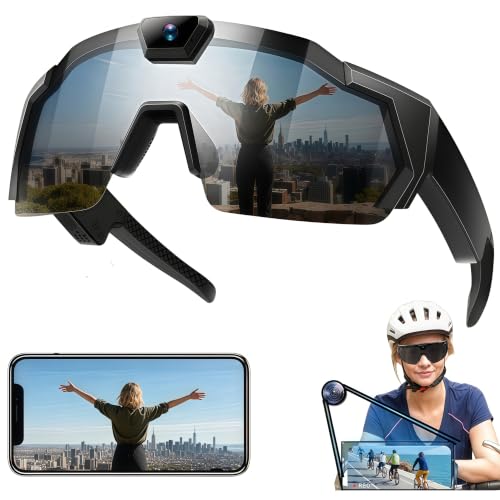
- App live preview and video downloads
- Polarized, UV-blocking lenses
- Up to two hours of continuous recording
Best For: Riders who prefer app controls and polarized lenses
Best for Secure Sports Fit
Blue-Lens Smart Camera Glasses

- Anti-slip grips and included lanyard
- Removable prescription-lens frame
- IP64 dust and light-rain protection
Best For: Cyclists prioritizing fit and prescription-lens compatibility
Best for Quick Sharing – AI Smart Glasses with 1200P Video
These camera glasses for cycling pair an 8MP camera with 1200P/30fps video and six-axis electronic stabilization. Polarized UV400 lenses and app-based Wi-Fi transfers make them a practical option for recording rides and sharing clips afterward.
Best For: Cyclists who want stabilized ride footage, polarized lenses, and convenient phone transfers.
Pros:
- Six-axis stabilization helps reduce shake in cycling footage.
- Wi-Fi syncing and one-click app editing simplify sharing.
- Adjustable temple ends and a 49.3g frame support a comfortable fit.
Cons:
- No built-in heads-up display.
- The notes give conflicting IP64 and IP54 protection ratings; confirm the rating before relying on them in wet conditions.
The quick-transfer tools distinguish this pair, but the conflicting weather-resistance specifications are worth checking before purchase.
Best for Secure Fit – Zigtik GP04 Black Camera Glasses
For riders comparing camera glasses for cycling, the black Zigtik GP04 combines a listed 32MP camera and six-axis gyro-assisted electronic stabilization with anti-slip nose pads and temple grips. Its polarized lenses are intended to cut reflected glare from roads.
Best For: Cyclists prioritizing a stable fit and glare reduction while recording rides.
Pros:
- Anti-slip contact points help keep the frame in place during movement.
- Six-axis gyro and electronic stabilization aim to reduce shaky video.
- App-adjustable clip lengths range from 15 seconds to 12 minutes.
Cons:
- No GPS geotagging is listed.
- The seller recommends transferring one video at a time and notes the glasses may warm during transfer.
This black GP04 is a sensible fit-first choice; consider its transfer guidance if you expect to offload numerous clips after each ride.
Best White Frame – Zigtik GP04 White Camera Glasses
These white Zigtik camera glasses for cycling offer a listed 32MP camera, six-axis gyro-assisted electronic stabilization, and polarized lenses. Anti-slip nose pads and temple grips are useful details for riders who want the frame to stay put while moving.
Best For: Cyclists seeking a white frame with polarized lenses and hands-free ride recording.
Pros:
- Six-axis gyro and electronic stabilization help reduce video shake.
- Polarized lenses reduce reflected glare from roads.
- A detachable inner frame allows optional custom lenses.
Cons:
- No GPS geotagging is listed.
- App transfers are recommended one video at a time.
Choose this version if the white frame and optional custom-lens insert appeal to you; its core recording and fit features closely resemble the other listed GP04 variants.
Best Blue Frame – Zigtik GP04 Blue Camera Glasses
If you prefer a blue frame, these Zigtik camera glasses for cycling combine a listed 32MP camera with six-axis gyro-assisted electronic stabilization. Polarized lenses, anti-slip grips, and hands-free AI voice activation round out the ride-oriented features.
Best For: Cyclists who want a blue frame, polarized lenses, and voice-accessible features.
Pros:
- Anti-slip nose pads and temple grips help the glasses stay secure.
- Polarized lenses are designed to reduce reflected road glare.
- App settings let you choose video clips from 15 seconds to 12 minutes.
Cons:
- The notes conflict on GPS: they list no GPS geotagging but also mention GPS navigation support.
- The seller recommends transferring videos individually.
This blue GP04 offers the same practical recording-and-fit appeal as its sibling colors, but verify GPS capabilities with the seller if they matter to your rides.
Performance Pick – Meta Oakley Vanguard
If you want camera glasses for cycling that also deliver workout information, the Meta Oakley Vanguard combines a centered 12 MP ultra-wide camera with Prizm Road lenses, open-ear audio, and a wraparound sports frame.
Best For: Cyclists who want hands-free ride footage and workout metrics from a compatible Garmin device.
Pros:
- Records 3K video with a 122° field of view, plus slow-motion and hyperlapse modes.
- Offers up to 9 hours of typical battery life; the case provides an additional 36 hours of charging.
- IP67-rated for sweat, dust, and water resistance.
Cons:
- Garmin-based metrics require a compatible device sold separately.
- The listed camera resolution is 3K, not 4K.
Choose this pair when ride-focused features matter more than a 4K recording specification. Its Garmin integration is useful if you already own a compatible device.
Travel-Friendly Pick – AI Smart Glasses with POV Camera
These camera glasses for cycling pair a hands-free POV camera with 6-axis electronic image stabilization, UV400 lenses, and a 53 g frame. They also add AI assistance and translation features for trips beyond the bike.
Best For: Riders who also want lightweight glasses for hiking and travel.
Pros:
- 6-axis EIS is specified for smoother 1200P/30FPS video.
- Built-in Wi-Fi supports wireless photo and video transfer.
- Includes open-ear audio, Bluetooth calling, and IP65 water resistance.
Cons:
- Despite the 4K product title, the detailed recording specification lists 1200P/30FPS video; confirm available modes before buying.
- Built-in storage is limited to 4GB.
This is a practical option if wireless transfers and travel tools appeal to you. Check the recording modes carefully if 4K video is a deciding factor.
Sport-Ready Pick – SGUKZF AI Sports Smart Glasses
For shoppers comparing camera glasses for cycling, these SGUKZF sports glasses offer a stated 4K camera with electronic image stabilization, Bluetooth connectivity, and a lightweight sport-inspired design.
Best For: Riders looking for first-person video alongside open-ear audio and hands-free calls.
Pros:
- Built-in 4K camera with EIS is designed for first-person outdoor footage.
- IP66 water resistance suits active outdoor use.
- Open-ear speakers and Bluetooth calling provide audio without covering your ears.
Cons:
- AI translation and object recognition rely on a companion app.
- No GPS geotagging is listed.
This pair covers the core camera-and-audio features for a ride, while its AI extras depend on app use. The supplied specifications do not state a battery runtime, so check that detail before purchase.
Best for Connected Rides – AI Smart Glasses with POV Camera
These camera glasses for cycling combine hands-free recording with voice assistance and open-ear audio. The listing specifies 1200P/30fps video with six-axis electronic stabilization, despite highlighting 4K in the title.
Best For: Riders who want POV clips, calls, and AI features in one pair of sunglasses.
Pros:
- Six-axis stabilization and Wi-Fi transfers support on-the-go recording and sharing.
- UV400 lenses, IP65 water resistance, and a 53g frame suit outdoor wear.
- Voice assistance, translation, and open-ear Bluetooth calling add hands-free options.
Cons:
- Built-in storage is limited to 4GB.
- The stated 1200P/30fps video specification does not substantiate 4K video recording.
This is the feature-rich pick if you value connectivity as much as footage. Check the video specification against your recording needs before buying.
Best for App-Based Filming – PIEPIE 4K Camera Sunglasses
For riders comparing camera glasses for cycling, these PIEPIE sunglasses emphasize first-person 4K recording and phone-based camera controls. Their polarized, UV-blocking lenses also address road glare.
Best For: Cyclists who want hands-free footage with app preview and easy phone downloads.
Pros:
- The companion app supports live preview, photo capture, and video downloads.
- Polarized lenses help cut glare on bright rides.
- The listing specifies up to two hours of continuous recording and includes 16GB of storage.
Cons:
- Two hours of stated recording time may not cover a longer ride.
- Moisture resistance is listed, but no specific IP rating is provided.
These make sense when app control and polarized lenses are priorities. Plan around the stated recording limit if you expect to film an entire cycling tour.
Best for Secure Sports Fit – Blue-Lens Smart Camera Glasses
These camera glasses for cycling focus on a stable fit, with anti-slip nose pads, temple grips, and an included safety lanyard. A removable inner frame also accommodates prescription lenses supplied separately.
Best For: Riders who need a secure fit or a prescription-lens option alongside POV recording.
Pros:
- Anti-slip contact points and a lanyard help keep the glasses in place.
- IP64 protection covers dust and light rain.
- Voice assistance, Bluetooth audio, and dual microphones add hands-free functions.
Cons:
- The notes specify 1200P video while also claiming 4K; confirm the actual recording resolution before purchase.
- No recording runtime is stated.
Fit and prescription compatibility distinguish this pair. Its mixed resolution claims and unspecified runtime deserve a closer look if video performance is your main concern.
How We Picked the Best Camera Glasses for Cycling
We prioritized features that matter on a bike: a usable point-of-view camera, video stabilization, secure eyewear fit, lens protection, straightforward controls, and stated resistance to sweat or weather. We also considered claimed resolution, Bluetooth and AI features, and how much information each listing provides about recording time and storage. Specifications are manufacturer or seller claims, not independently verified performance results. Several selections have near-identical names, so check the exact listing and configuration before buying.
Quick Comparison
For a recognizable sport-eyewear option, start with the Meta Oakley Vanguard and its Prizm Road lenses. If maximum advertised video resolution is your priority, compare the 4K POV and 4K EIS models; stabilization may matter more than pixel count on rough pavement. The 1200P model pairs 6-axis EIS with polarized UV400 lenses, while the 32MP options emphasize still-photo resolution. A megapixel figure describes photos, not necessarily video quality. Bluetooth, voice assistance, and object recognition can be useful extras, but they should not outweigh fit and dependable recording.
Key Buying Factors for Camera Glasses for Cycling
Fit, Visibility, and Lens Choice
Glasses should stay put when you look over your shoulder and fit comfortably beneath helmet straps. Check temple shape, nose grip, lens coverage, and whether your preferred lens tint suits your usual light conditions. Polarized lenses can reduce glare but may make some bike computers and phone screens harder to read. UV400 describes UV protection; it does not tell you how dark a lens is.
Video, Stabilization, and Field of View
Compare sample footage when available, especially on shaded roads and uneven surfaces. Electronic image stabilization (EIS) can smooth vibration, but it may crop the frame. A camera that points too high or low for your riding posture can miss the action, regardless of its resolution. If audio matters, look for wind-noise examples rather than relying on microphone claims.
Battery, Storage, and Weather Resistance
Check continuous recording time, clip-length limits, storage capacity, and how files transfer to your phone or computer. Battery estimates for standby or music playback are not substitutes for video runtime. An IP64 rating indicates protection against dust and splashes, not immersion; models without a stated rating need extra caution in rain. Confirm warranty terms and replacement-lens availability where possible.
Controls, Safety, and Privacy
Buttons or reliable voice controls are easier to use while stopped than touch gestures that demand attention mid-ride. Set up recording before moving, and follow local rules on filming and audio recording. Camera glasses do not replace attentive riding or appropriate protective eyewear.
Who Should Buy Which Camera Glasses for Cycling?
Choose sport-oriented glasses if secure fit and road-focused lenses come first. Choose a 4K model if ride footage is the main goal, but verify stabilization and recording time before committing. Consider the 32MP options if still photos matter most, and the 1200P polarized option if glare reduction is a priority. If you mainly want calls, music, or AI assistance, compare those functions separately from camera performance. Whatever your budget, buy the pair whose lens, fit, and recording limits match your typical route—not just the biggest number on the product page.