Wildlife photography demands more than a clear view through the lens. Bright sun, reflective surfaces, stray light, and skittish subjects can all affect your results, making the right hood a useful part of your field setup.
These 10 camera lens hoods for wildlife photography include model-specific shades, universal designs, camouflage covers, and flexible anti-reflection options. The best choice depends on your lens diameter, shooting conditions, portability needs, and whether concealment matters as much as flare control.
Best 10 Camera Lens Hoods for Wildlife Photography Picks for 2026
Camouflage Concealment

- Realtree Max5 camouflage design
- Lightweight 1.6-ounce construction
- Integrated pouch with accessory storage
Best For: Field photographers prioritizing lens concealment
Glass-Shooting Specialist

- Helps reduce reflections through glass
- Universal fit for compatible lenses
- Fits lenses up to 8 inches in diameter
Best For: Wildlife photography from vehicles or behind windows
Secure Petal Shade

- Direct screw-mount connection
- Rotating rear locking ring
- Hard rubber tulip design
Best For: 58mm-thread lenses used in active outdoor shooting
Packable Universal Shade

- Foldable accordion-style design
- Fits 72mm to 112mm lenses
- Can reduce glare through glass
Best For: Large-lens users who value portability and flexibility
Flexible Glare Control
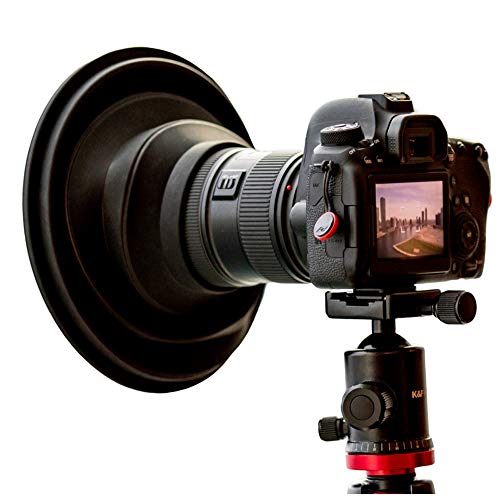
- Fits 49mm–82mm filter threads
- Soft design packs compactly
- Helps reduce reflections through glass
Best For: Through-window wildlife photography and multi-lens kits
Telephoto Shade Protection

- Made for selected Canon telephoto lenses
- Matte interior helps reduce flare
- Reverses for storage and accepts 58mm accessories
Best For: Compatible Canon 75–300mm and 55–250mm lens owners
Best Filter-and-Hood Kit
NEEWER 58mm ND Lens Filter Kit

- Includes collapsible three-stage rubber hood
- Adds ND, CPL, UV, and FLD filters
- Comes with cap, pouch, tether, and cloth
Best For: 58mm lenses and photographers wanting a versatile outdoor kit
Best Window-Shooting Hood
DS. DISTINCTIVE STYLE Rubber Lens Hood

- Helps reduce reflections through glass
- Flexible silicone can press against windows
- Collapses for pocket or bag storage
Best For: 70–85mm lenses used behind windows or glass
Camouflage Concealment – LensCoat Lenshide Max5
LensCoat Camouflage Camera Lens Tripod Cover Blind Lenshide Lightweight, Realtree Max5 (lclh2m5)
Check Price On AmazonFor wildlife photographers who need more than a conventional shade, this LensCoat Lenshide provides camouflage coverage for a camera lens while helping you blend into outdoor surroundings. Its lightweight construction and integrated storage features make it practical for field use.
Best For: Wildlife photographers seeking camouflage and lightweight lens coverage.
Pros:
- Realtree Max5 camouflage helps reduce the visibility of the covered lens.
- Expanded mesh window and Velcro closure support access and positioning.
- Elastic cinch cord helps secure the cover around the lens.
- Integrated pouch includes belt loops, D-rings, and an internal accessory pocket.
Cons:
- This is a camouflage lens cover rather than a traditional rigid flare-blocking hood.
- Compatibility should be checked against your specific camera and lens setup.
At 1.6 ounces, the Lenshide is a particularly portable option for hide-based or mobile wildlife work. Choose it when concealment and storage matter more than a standard petal hood.
Glass-Shooting Specialist – Lenskirt Anti-Reflection Hood
The Lenskirt is a flexible, universal lens hood aimed at photographers shooting through windows or other glass. For wildlife photography, it can help reduce reflections and glare when working from vehicles, hides, or observation areas.
Best For: Wildlife photographers shooting through glass with lenses up to 8 inches in diameter.
Pros:
- Designed to help prevent reflections and remove glass glare.
- Universal fit for compatible lenses and cameras.
- Fits lenses up to 8 inches in diameter and works with lenses as wide as 15mm.
- Portable design weighs 3.84 ounces.
Cons:
- It is not water resistant.
- Its primary strength is shooting through glass, not general impact protection.
If reflections are the main problem in your wildlife setup, the Lenskirt offers a focused solution. It is less suitable if you mainly need a rigid hood for outdoor flare control or physical protection.
Secure Petal Shade – Altura Photo 58mm Hood
This Altura Photo 58mm tulip hood is a conventional choice for wildlife photographers using a lens with a 58mm front filter thread. Its screw-mount design, adjustable rear locking ring, and hard rubber construction are geared toward stable flare control during active outdoor shooting.
Best For: Canon Rebel and other compatible lenses with a 58mm front filter thread.
Pros:
- Screw-mount connection is designed for a secure, rattle-free fit.
- Rear locking ring allows the hood to rotate and lock into position.
- Tulip shape blocks stray light while maintaining full frame coverage without vignetting.
- Hard rubber construction can help shield the front element from minor bumps and scratches.
Cons:
- It is limited to lenses with a 58mm front filter thread.
- Thread size must be verified before ordering.
For compatible Canon Rebel and EF-S setups, this hood balances flare reduction, positioning flexibility, and basic front-element protection. It is a better fit for photographers who prefer a traditional mounted hood over a universal design.
Packable Universal Shade – KUVRD Foldable Hood
The KUVRD Universal Lens Hood is designed for photographers who need a flexible, packable option for large lenses. Its accordion-style construction can block flare, fold backward for added weather coverage, and help reduce reflections when shooting through glass.
Best For: DSLR, mirrorless, cine, medium-format, and larger super-telephoto lenses from 72mm to 112mm.
Pros:
- Folds down compactly for storage in a camera bag or pocket.
- Stretches to fit lenses from 72mm to 112mm.
- Can expand forward for flare control or fold backward to protect against the elements.
- Helps reduce glare and reflections when shooting through glass.
Cons:
- Vignetting can begin with ultra-wide or fisheye lenses at focal lengths wider than 20mm.
- Its universal stretch fit may be less tailored than a dedicated lens hood.
The KUVRD is a versatile choice for wildlife photographers carrying larger lenses or switching between setups. Its main advantage is adaptability, though ultra-wide users should account for the stated vignetting limitation.
Flexible Glare Control – ULHgo Ultimate Lens Hood
For photographers comparing camera lens hoods for wildlife photography, the ULHgo stands out as a soft, adaptable option for shooting through glass or working with multiple lenses. Its stretchy design fits lenses with filter threads from 49mm through 82mm and packs down compactly for travel.
Best For: Wildlife photographers who shoot through windows or use several lenses with different filter-thread sizes.
Pros:
- Fits lenses with filter threads from 49mm to 82mm, including many Canon, Olympus, Panasonic, Pentax, and Nikon lenses.
- Soft, stretchy construction helps create a close fit against glass and packs small in a camera bag.
- Designed to reduce reflections and includes a microfiber carry bag.
Cons:
- Its universal fit depends on the lens diameter and filter-thread compatibility being checked carefully.
- The soft construction may offer less rigid impact protection than a hard hood.
The ULHgo is a practical choice when reflection control and portability matter more than a rigid, lens-specific profile. Its broad compatibility can also reduce the need to carry multiple hoods.
Telephoto Shade Protection – JJC ET-60 Lens Hood
For compatible Canon telephoto zooms, the JJC ET-60 is a straightforward choice among camera lens hoods for wildlife photography. Its matte interior helps limit stray light, while the extended tulip design also adds a layer of protection around the front of the lens.
Best For: Owners of compatible Canon RF 75-300mm, EF 75-300mm, EF 90-300mm, or EF-S 55-250mm lenses.
Pros:
- Compatible with a range of specified Canon RF, EF, and EF-S telephoto lenses.
- Non-glare matte interior helps minimize flare from stray light.
- Supports a 58mm filter and lens cap, and reverses onto the lens for storage.
- Lightweight ABS construction helps protect against bumps and scratches.
Cons:
- Not compatible with Canon EF 75-300mm f/4-5.6 IS USM or EF-S 55-250mm f/4-5.6 IS STM lenses.
- Designed for specific Canon lenses rather than universal use.
Choose the ET-60 when your lens appears on the compatibility list and you want a lens-specific hood with flare reduction, reversible storage, and front-element protection. Verify the exact lens model before ordering.
Two-Style Shade Kit – CamKix 58mm Lens Hood Set
This CamKix set gives photographers comparing camera lens hoods for wildlife photography both a collapsible rubber hood and a tulip-style hood. The kit is designed to block excess sunlight, reduce glare, and provide flexible shading for lenses using the specified 58mm filter-thread size.
Best For: Photographers who want two hood styles plus a lens cap for compatible 58mm-thread lenses.
Pros:
- Includes a three-step collapsible rubber hood, tulip hood, and lens cap.
- Rubber hood can remain on the lens while collapsed and offers three shading positions.
- Tulip shape is intended to maximize shading without vignetting on wide-angle lenses.
Cons:
- Compatibility depends on confirming the lens’s actual filter-thread size before purchase.
- The tulip hood is intended for wide-angle lenses, so it may not suit every wildlife telephoto setup.
- The supplied listing contains conflicting size wording, so verify the required diameter carefully.
This is a versatile accessory bundle for users who value choice and a spare hood style. Check the lens marking or existing cap for the correct thread size, especially because the product information references both 58mm and 67mm compatibility.
Best 67mm Tulip Hood – K&F CONCEPT Flower Lens Hood
For photographers comparing camera lens hoods for wildlife photography, the K&F CONCEPT 67mm Tulip Flower Lens Hood is a straightforward choice when your lens uses a 67mm filter thread. Its flower-shaped design helps block stray light while also adding basic front-element protection.
Best For: Wildlife photographers using a compatible 67mm-thread lens who want glare reduction and a lightweight protective accessory.
Pros:
- Helps reduce stray light, glare, and unwanted reflections in backlight, side light, flash, and night photography.
- Flower-shaped design is intended to reduce vignetting.
- Durable, wear-resistant composite construction helps shield the lens from dust, droplets, accidental contact, and minor collisions.
- Includes a washable, reusable microfiber cleaning cloth.
Cons:
- Compatible only with lenses using a 67mm thread, so the lens diameter must be verified before purchase.
- It is a screw-mounted hood, which may be less convenient than a dedicated bayonet hood for rapid changes.
This hood makes sense for users who have confirmed the 67mm specification and want a simple way to manage stray light in demanding outdoor conditions. Its compact, lightweight construction adds useful protection without introducing a complicated setup.
Best Filter-and-Hood Kit – NEEWER 58mm ND Lens Filter Kit
The NEEWER 58mm ND Lens Filter Kit suits photographers who want camera lens hoods for wildlife photography along with several light-control accessories. It combines a collapsible rubber hood with ND, CPL, UV, and FLD filters, making it a versatile option for outdoor shooting with a compatible 58mm lens.
Best For: Wildlife photographers with a 58mm-thread lens who want a portable hood, lens cap, and multiple filters in one kit.
Pros:
- Includes a three-stage collapsible rubber lens hood for flexible use and easy travel.
- ND2, ND4, and ND8 filters provide one-, two-, and three-stop light reduction.
- CPL filter can reduce reflections from water, foliage, glass, and other nonmetallic surfaces.
- Includes UV and FLD filters, a snap-on cap, cap keeper, pouch, tether, and cleaning cloth.
Cons:
- Compatible only with lenses marked with a 58mm thread.
- The kit is more extensive and heavier than a basic hood alone, weighing 8.45 ounces.
- The supplied notes do not describe the filters or hood as water resistant.
This is a practical all-in-one kit for outdoor photographers who regularly adjust light and reflections rather than needing only a lens hood. The collapsible rubber design is convenient for packing, while the filter selection adds flexibility for bright conditions and reflective scenes.
Best Window-Shooting Hood – DS. DISTINCTIVE STYLE Rubber Lens Hood
For camera lens hoods for wildlife photography involving zoo buses, viewing platforms, or shooting through glass, the DS. DISTINCTIVE STYLE Rubber Lens Hood focuses on reflection control. Its flexible silicone construction can press against a window, helping create a practical shooting surface while remaining compact in a camera bag.
Best For: Wildlife photographers shooting through windows or glass with lenses measuring 70–85mm in diameter.
Pros:
- Designed to reduce glare and reflections when shooting through glass, including at night and in showcases.
- Silicone material creates some suction against a window for easier positioning.
- Reversible design can help protect the camera from rain or blowing sand.
- Collapses for convenient storage in a coat pocket or camera bag.
Cons:
- Fits lenses with diameters from 70–85mm, so compatibility must be checked carefully.
- It is intended especially for window and glass shooting, making it less universal than a standard rigid hood.
- The supplied instructions caution users to attach it correctly to avoid tearing.
This hood is a specialized solution for wildlife viewing situations where glass reflections are a bigger problem than ordinary side light. Its collapsible rubber construction is portable, but careful installation and accurate lens-diameter measurement are important.
How We Picked the Best Camera Lens Hoods for Wildlife Photography
We focused on practical features that matter in the field: compatibility, flare reduction, portability, durability, and ease of use. The selection includes dedicated hoods for specific Canon lenses, standard screw-on and bayonet-style options, collapsible rubber models, and universal designs for photographers who use multiple lenses.
We also considered wildlife-specific concerns such as camouflage, reflection control, silent handling, and how easily a hood fits into a camera bag. Because no single design suits every telephoto setup, compatibility and intended use carry more weight than appearance alone.
Quick Comparison
| Hood Type | Best For | Main Advantage | Watch Out For |
|---|---|---|---|
| Camouflage lens cover | Hide equipment in the field | Reduces visible lens outline and reflections | May not replace a rigid flare hood |
| Universal anti-reflection hood | Flexible wildlife setups | Fits multiple lens sizes and helps conceal reflections | Fit and handling vary by lens |
| Dedicated lens hood | Owners of compatible lenses | Precise fit and dependable shading | Works with fewer lenses |
| Rubber collapsible hood | Travel and compact kits | Folds down for storage | Can be less rigid than plastic |
| Filter-kit hood | Photographers building a basic kit | Combines shading with filter accessories | Check filter and cap compatibility |
Key Buying Factors for Camera Lens Hoods for Wildlife Photography
Compatibility and Size
Check the exact lens model, mounting style, and filter-thread diameter before buying. A 58mm or 67mm thread designation is not interchangeable with a bayonet mount, and a universal hood still needs a secure, light-blocking fit.
Flare Control
A hood should block light entering from outside the frame without causing vignetting. Tulip-shaped and dedicated hoods are often effective for compatible lenses, while flexible anti-reflection designs can help when shooting near water, glass, or bright foliage.
Portability and Durability
Collapsible rubber hoods pack easily and are less vulnerable to bumps, while rigid hoods typically hold their shape better. For long hikes, prioritize a design that stores flat or stays attached without interfering with lens controls.
Camouflage and Reflection Reduction
Wildlife subjects may react to movement, shine, or an unusual outline. Camouflage covers and matte, flexible materials can make a setup less conspicuous, but always maintain a respectful distance and follow local wildlife guidelines.
Who Should Buy Which Camera Lens Hoods for Wildlife Photography?
Choose a dedicated model if you own one compatible lens and want the most predictable fit. A universal anti-reflection hood is better for photographers rotating between lenses or working from hides and blinds. Pick a camouflage cover when concealment and reducing the visual outline of a long lens are priorities.
For travel, beginner kits, or photographers who want a low-cost backup, a collapsible rubber hood offers useful protection with minimal storage space. If you are assembling a broader accessory kit, a hood-and-filter package can be convenient, but verify that the included sizes match your lens. Whichever style you choose, test it at different focal lengths and angles before an important wildlife trip.