Choosing the right support can make a huge difference when you’re starting out with photography or video. The best beginner monopod should feel stable, pack down small, and stay simple to set up.
In this roundup, we focus on camera monopods for beginners that are practical for travel, vlogging, casual wildlife shooting, and everyday use without overwhelming features.
Best 10 Camera Monopods for Beginners Picks for 2026
Beginner-Friendly All-Rounder
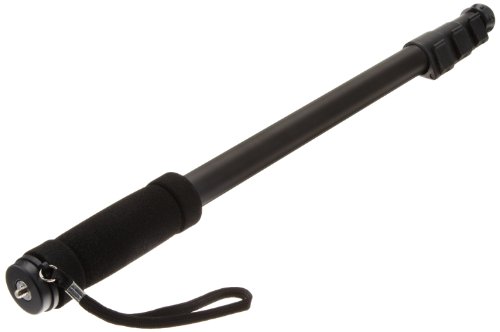
- Supports cameras and scopes up to 6.6 lb.
- Extends to 67 inches with 4-section adjustment.
- Includes rubber foot, spikes, carry bag, and strap.
Best For: New users needing a simple, portable monopod for light camera setups.
Ultra-Light Travel Pick
Altura Photo 62-Inch Camera Monopod

- Weighs just 0.59 lb and folds to 16.75 inches.
- Supports cameras and scopes up to 5 lb.
- Includes foam grip, wrist strap, carry pouch, and spike foot.
Best For: Travel-focused beginners with compact DSLR or mirrorless kits.
Higher-Capacity Value Option
K&F CONCEPT 63-Inch Camera Monopod

- 5-section design reaches 63 inches and folds to 17 inches.
- 10kg capacity offers extra support for heavier setups.
- Dual 1/4-inch and 3/8-inch interfaces add flexibility.
Best For: Beginners who want more load capacity and mounting options.
Stability-First Starter Kit
NEEWER Extendable Monopod with Base
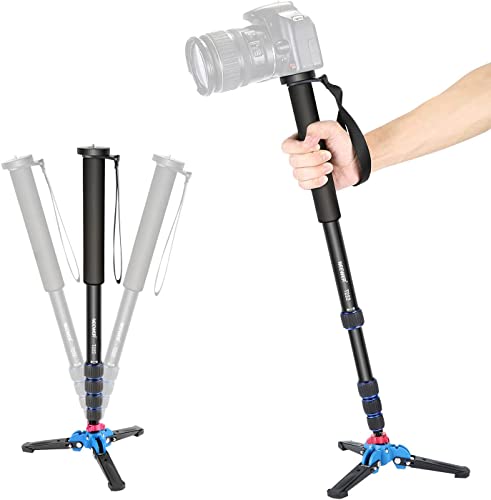
- Includes a detachable three-leg base for added support.
- Extends to 66 inches and supports up to 11 lb.
- Foam grip and tilt base help with comfort and control.
Best For: Beginners who want extra stability and a tripod-style base.
Easy Travel Pick
PATONA Premium Telescopic 155cm Portable Camera Monopod

- Light aluminum body for easy carrying
- Extends from 44 cm to 155 cm
- 1/4" and 3/8" mount fits most cameras
Best For: Beginners who want a simple travel monopod
Feature-Rich Stability Pick
SIRUI 75.8" Aluminum Camera Monopod with Feet

- 3-in-1 design with detachable tripod base
- Quick-release system speeds up setup
- Built-in 360° panning for smoother framing
Best For: Beginners who want extra stability and more shooting modes
Budget-Friendly Versatility Pick
NEEWER 61" Camera Monopod Stand TP41

- Lightweight and folds to 44 cm
- Adjusts from 67.5 cm to 155 cm
- Includes rubber and spike feet for different surfaces
Best For: Beginners who want an affordable all-around monopod
Portable 61-Inch Travel Stick

- 0.83 lb aluminum build for easy carry
- Extends to 61 inches with 5 sections
- Supports up to 11.02 lbs and multiple modes
Best For: Beginners wanting a lightweight travel monopod with simple versatility
65-Inch Quick-Release Travel Monopod

- 65-inch max height with quick-turn adjustment
- Lightweight 0.93 lb aluminum construction
- 7 kg load rating plus carry bag and accessories
Best For: Beginners who want a fast-adjusting, travel-ready monopod with useful extras
Stable 67-Inch Monopod Base

- 67-inch max height with 5 sections
- Removable 3-foot base adds stability
- Rated for up to 15.5 lbs
Best For: Beginners who want extra stability and a higher load rating
Beginner-Friendly All-Rounder – Amazon Basics 67-Inch Monopod
If you’re comparing camera monopods for beginners, this Amazon Basics model is a straightforward pick with familiar features and easy portability. It supports cameras and scopes up to 6.6 lb, extends to 67 inches, and includes a rubber foot plus retractable spikes for more secure footing on different surfaces.
Best For: New photographers who want a lightweight, simple monopod for general camera support and travel.
Pros:
- Supports up to 6.6 lb with a universal 1/4-inch mount.
- Four-section design extends to 67 inches for flexible framing.
- Non-skid rubber foot and retractable spikes improve stability.
- Lightweight aluminum build includes a cushion grip, wrist strap, and carry bag.
Cons:
- Not water resistant.
- Lower weight capacity than some heavier-duty options.
- Best for lighter camera setups rather than bulkier rigs.
For beginners who want a no-fuss option, this monopod covers the essentials without adding complexity. It balances reach, portability, and basic stability in a compact package.
Ultra-Light Travel Pick – Altura Photo 62-Inch Camera Monopod
Among camera monopods for beginners, this Altura Photo model stands out for being compact and easy to carry. It collapses to 16.75 inches, weighs just 0.59 lb, and works with DSLR, mirrorless, video cameras, or scopes up to 5 lb using its universal thread mount.
Best For: Beginners who want a very lightweight monopod for travel, hikes, and small camera kits.
Pros:
- Very light at 0.59 lb and easy to pack.
- Folds down to 16.75 inches for convenient storage.
- Includes a soft foam grip, safety wrist strap, and carry pouch.
- Rubber foot and retractable spike help on indoor and outdoor terrain.
Cons:
- 5 lb weight limit is modest for larger camera setups.
- Not the tallest option compared with some alternatives.
- Requires care when using with heavier accessories.
If portability matters most, this is an easy monopod to understand and carry. It keeps the setup simple while still offering useful adjustment and basic stability features.
Higher-Capacity Value Option – K&F CONCEPT 63-Inch Camera Monopod
If you want camera monopods for beginners with a little more flexibility, this K&F CONCEPT model adds a 5-section design and higher load capacity. It reaches 63 inches, stores down to 17 inches, and includes dual 1/4-inch and 3/8-inch interfaces for cameras, gimbals, and other devices.
Best For: Beginners who want a compact monopod with stronger load support and more mounting flexibility.
Pros:
- 5-section build reaches 63 inches while storing to 17 inches.
- 10kg weight capacity gives it more headroom for heavier gear.
- Dual 1/4-inch and 3/8-inch interfaces widen compatibility.
- 2-in-1 metal and rubber foot design adds stability on varied ground.
Cons:
- Heavier-capacity features may be more than some first-time buyers need.
- Not water resistant.
- Foot design and locking system may feel more involved than basic models.
This is a practical step up if you want a beginner-friendly monopod that can handle more gear and different shooting situations. It stays compact, but offers a bit more versatility than the most basic picks.
Stability-First Starter Kit – NEEWER Extendable Monopod with Base
For beginners who want extra support, this NEEWER option combines a monopod with a detachable three-leg base. It extends to 66 inches, folds to 20.5 inches, and supports up to 11 lb, making it a useful choice when you want added steadiness while learning.
Best For: New users who want a more stable monopod setup with a tripod-style base.
Pros:
- Includes a detachable three-leg base for added support.
- Extends to 66 inches and folds to 20.5 inches for portability.
- Supports up to 11 lb for a wider range of cameras.
- Foam handle and 15-degree tilt base help comfort and angle control.
Cons:
- Heavier and less minimal than a basic monopod.
- Requires one-handed support when a camera is mounted.
- More parts may mean a slightly more involved setup.
This is a good pick if you want beginner-friendly stability without giving up monopod mobility. The base adds confidence, especially for users still getting comfortable with camera support.
Easy Travel Pick – PATONA Premium Telescopic 155cm Portable Camera Monopod
If you want camera monopods for beginners that are simple to carry and quick to set up, this PATONA model keeps the learning curve low. The telescopic aluminum design extends from 44 cm to 155 cm, and the 1/4″ and 3/8″ mount gives you broad camera compatibility for photo or video use.
Best For: Beginners who want a lightweight, travel-friendly monopod with straightforward adjustment and universal mounting.
Pros:
- Lightweight aluminum build is easy to transport and handle.
- Telescopic range from 44 cm to 155 cm supports flexible shooting heights.
- 1/4″ and 3/8″ thread mount works with most cameras.
- Non-slip grip and wrist strap add confidence for outdoor use.
Cons:
- Not water resistant.
- Does not include a dedicated base with feet.
For a first monopod, this is a practical choice because it focuses on portability, simple setup, and stable everyday support. The included carrying bag also makes it easier to pack for trips and casual shoots.
Feature-Rich Stability Pick – SIRUI 75.8" Aluminum Camera Monopod with Feet
For camera monopods for beginners who want room to grow into more advanced support, this SIRUI model offers a lot of flexibility. It combines a detachable tripod base with feet, a quick-release system, and 360° panning, giving you multiple ways to use one support as your shooting needs change.
Best For: Beginners who want a more advanced monopod with a base, quick release convenience, and extra shooting options.
Pros:
- 3-in-1 design can be used with feet, without feet, or as a low-angle support.
- Quick-release plate system makes camera mounting fast and simple.
- Built-in 360° panning adds smooth movement without a ball head.
- High load capacity and lightweight aluminum alloy construction.
Cons:
- Heavier than simpler travel-style monopods.
- More features may be more than a first-time user truly needs.
This is the most versatile option in the group, especially if you expect to experiment with different shooting setups. It is a strong pick when you want stability features now and more advanced flexibility later.
Budget-Friendly Versatility Pick – NEEWER 61" Camera Monopod Stand TP41
If you are comparing camera monopods for beginners and want one that feels easy to use right away, this NEEWER stand is a strong everyday option. It extends to 155 cm, folds down to 44 cm, and includes a wrist strap, rubber handgrip, and a dual 1/4″ to 3/8″ adapter for broad device compatibility.
Best For: Beginners who want a portable, flexible monopod for cameras, phones, and outdoor shooting.
Pros:
- Very portable at 0.88 lb and folds to a compact 44 cm.
- Quick height adjustment from 67.5 cm to 155 cm.
- Interchangeable rubber and spike feet suit indoor and outdoor use.
- Works with DSLRs, mirrorless cameras, camcorders, gimbals, and phone holders.
Cons:
- Maximum load is lower than some heavier-duty alternatives.
- Not water resistant.
This model stands out for beginners who want one monopod that can handle a lot of different situations without feeling complicated. The mix of portability, foot options, and adapter support makes it a practical all-around starter choice.
Portable 61-Inch Travel Stick – ULANZI TB12 Camera Monopod
If you want camera monopods for beginners that are easy to carry and simple to adapt, the ULANZI TB12 is a practical starting point. Its aluminum build stays lightweight at 0.83 lbs, yet it still extends to 61 inches and supports cameras up to 11.02 lbs, making it a flexible choice for travel, hiking, and casual photo or video work.
Best For: Beginners who want a lightweight, multi-use monopod for travel, hiking, and mirrorless or DSLR setups.
Pros:
- Folds to 16.9 inches and is easy to pack for trips.
- Five-section design offers multiple height settings from 16.9 to 61 inches.
- Supports up to 11.02 lbs and works with cameras, selfie-stick use, and walking-stick modes.
Cons:
- Not water resistant.
- Lower max load than the heavier-duty Manbily options.
Overall, this is a beginner-friendly monopod if portability matters most and you want one tool for casual shooting and outdoor carry.
65-Inch Quick-Release Travel Monopod – Manbily E-222 Monopod
Among camera monopods for beginners, the Manbily E-222 stands out for its straightforward height adjustment and travel-friendly design. It extends to 65 inches, folds to 19.7 inches, and weighs only 0.93 lb, while the aerospace-grade aluminum build and 7 kg load rating give it more headroom for cameras and camcorders.
Best For: New users who want a lightweight monopod with a simple quick-release setup and strong carrying capacity.
Pros:
- Quarter-turn quick-release leg makes height changes fast.
- Reinforced mounting platform and reversible 1/4"-20 & 3/8"-16 screw add flexibility.
- Includes rubber grip, wrist strap, carry bag, metal spike, and phone holder.
Cons:
- Heavier and slightly longer when folded than the ULANZI option.
- Does not include a tripod-style base.
This is a solid beginner pick if you want a compact monopod that feels a little more robust and comes with useful extras right out of the box.
Stable 67-Inch Monopod Base – Manbily A-222 Monopod
If you are comparing camera monopods for beginners and want a little more stability, the Manbily A-222 is the most support-focused option here. It extends from 21 to 67 inches, uses a foldable 3-foot tripod-style base for added steadiness, and is rated for up to 15.5 lbs, which makes it well suited to DSLR, mirrorless, and video use.
Best For: Beginners who want a more stable monopod with a removable base for added support during shooting.
Pros:
- Highest max height in this group at 67 inches.
- Foldable 3-foot base and 20° tilt help with stability and framing.
- 15.5 lb load limit and interchangeable rubber/metal feet add versatility.
Cons:
- Slightly heavier than the other two options.
- Base is for stability, not full tripod use.
For beginners who care more about steadiness than ultra-compact size, this Manbily gives you the most support-oriented feature set of the three.
How We Picked These Camera Monopods for Beginners
We prioritized models that are easy to carry, straightforward to adjust, and capable of handling common entry-level cameras and mirrorless setups. Beginner-friendly monopods should offer a sensible height range, dependable build quality, and a clear balance between portability and support.
We also favored options with useful basics such as rubber feet, detachable bases, fold-out feet, or quick-release plates, since these features can make learning and shooting much easier.
Quick Comparison
For Camera Monopods for Beginners, the main tradeoff is usually stability versus portability. Taller aluminum models can help with framing and comfort, while shorter, lighter designs are easier to travel with. Monopods with feet or a tripod base provide more support, but simpler stick-style designs are often faster to use and less bulky.
Key Buying Factors for Camera Monopods for Beginners
Height and Adjustability
Choose a monopod that extends high enough for comfortable eye-level shooting without requiring full arm extension. More sections can make a monopod more compact, but too many sections may feel slightly less rigid.
Weight Capacity
Check that the rated load supports your camera body, lens, and any accessories. If you plan to use a larger DSLR or telephoto lens, leave extra headroom rather than matching the minimum rating.
Base Design
Rubber feet are simple and effective on flat ground. Models with fold-out feet or a removable stand base add more stability, which can be helpful for video, long lenses, or slower shooting styles.
Portability
If you travel often, look for a lighter aluminum build and a collapsed length that fits in a backpack or carry-on. Compact designs are especially useful for new shooters who want to bring the monopod everywhere.
Ease of Use
Beginner gear should be intuitive. Fast locks, clear section controls, and a straightforward head or plate system reduce setup time and help you focus on composition instead of hardware.
Who Should Buy Which Camera Monopods for Beginners?
If you want the simplest, most affordable starting point, go with a basic stick-style monopod. If you shoot video, wildlife, or longer lenses, choose one with added base support for better steadiness. Travelers and casual creators should prioritize compact, lightweight builds, while DSLR users may prefer a stronger aluminum model with a higher load rating.
For most Camera Monopods for Beginners, the best choice is the one that matches your camera weight, shooting style, and how often you’ll carry it. Keep the setup simple, and you’ll get more value from the monopod right away.