Camera monopods for low angle shots give you a compact way to stay close to the ground without carrying a full tripod. They’re useful for sports, wildlife, video, and creative framing where fast setup matters.
Below, we focus on models that balance stability, height range, portability, and control so you can choose the right monopod for your shooting style.
Best 10 Camera Monopods for Low Angle Shots Picks for 2026
Portable Travel Pick
ULANZI TB12 61-Inch Camera Monopod

- Ultralight 0.83 lb aluminum build
- 5-section design with 43cm to 155cm height
- Supports up to 11.02 lb and multiple modes
Best For: Travel shooters and hikers needing a compact monopod for flexible low-angle framing
Precision Carbon Fiber Pick
SmallRig 65.6" Carbon Fiber Monopod

- One-touch height adjustment for fast setup
- Carbon fiber build with 15kg leg capacity
- Built-in bubble level and accessory mounting
Best For: Photographers wanting quick one-handed adjustments and a sturdier carbon fiber feel
Heavy-Duty Modular Pick
IFOOTAGE Cobra 3 A180T Monopod
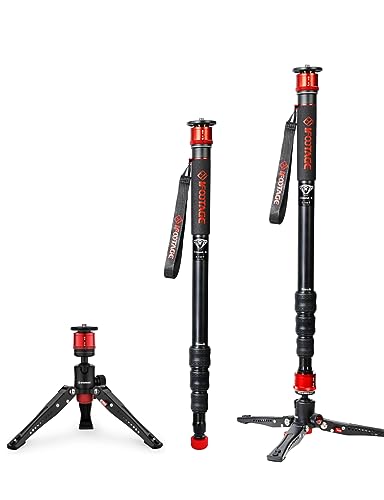
- 17.6 lb payload for heavier setups
- Detachable mini tripod base for low-profile support
- Quick-adjust twist-lock and modular release system
Best For: Creators needing a higher-capacity monopod with extra stability for low-angle work
Budget Basics Pick
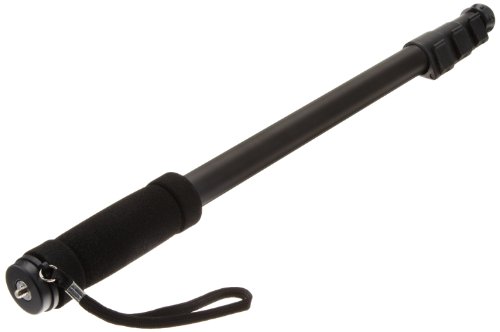
- Lightweight aluminum build under 1 lb
- 67-inch reach with four-section adjustment
- Rubber foot, spikes, and carry bag included
Best For: Budget buyers wanting a simple monopod for lighter cameras and basic low-angle shooting
Overhead Flexibility
NEEWER TP63 2-in-1 Tripod Monopod
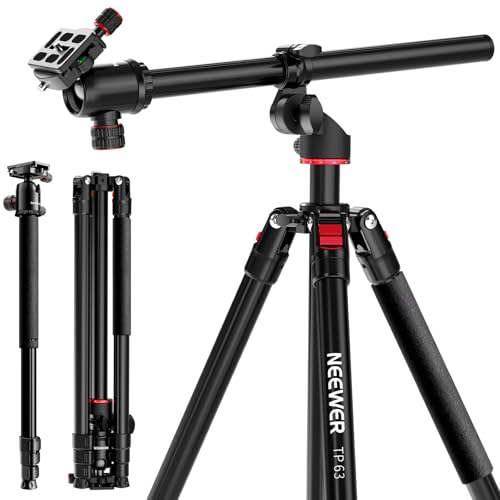
- Converts to a monopod
- Horizontal center column for low angles
- Supports up to 22 lbs
Best For: Creators needing one flexible stand for low-angle and overhead shots
Lightweight Travel Pick

- Weighs just 0.59 lb
- Collapses to 16.75 inches
- Includes foam grip and wrist strap
Best For: Travelers who need a lightweight, basic monopod
Low-Angle 2-in-1 Value

- Inverted pole supports low-angle shots
- Tripod converts to monopod
- Rated up to 33 lbs vertical
Best For: Users wanting a versatile tripod-monopod for low-angle work
Low-Angle Stability Pick
Koolehaoda 71.6" Pan-Tilt Monopod

- 3-way pan-tilt head with 360° rotation
- Detachable 3-leg base for steadier low angles
- 1.6 kg aluminum build with carry bag
Best For: travel, sports, and low-angle framing
Fluid Head Low-Angle Choice

- Q6 fluid head with 360° pan and +90°/-60° tilt
- 3-in-1 setup for monopod and low-angle base use
- Aluminum build supports up to 22 lb
Best For: video creators and low-angle shots
Convertible Low-Angle Budget Pick
XXZU 75" Tripod with Monopod Mode

- Detachable center column works as monopod or selfie stick
- Spreads to 15.35-inch minimum height for low shots
- Light 2.18 lb build includes remote and carry bag
Best For: travelers and creators needing multi-use support
Portable Travel Pick – ULANZI TB12 61-Inch Camera Monopod
If you want camera monopods for low angle shots that stay light and easy to carry, the ULANZI TB12 is built for travel and flexible framing. Its 5-section aluminum design extends from a compact 43cm to 155cm, so you can drop the camera low for creative perspectives or raise it when you need more reach.
Best For: Travel shooters, hikers, and hobbyists who want a compact monopod that can also handle casual low-angle framing.
Pros:
- Very light at about 0.83 lb, with a folded size of 16.9 inches for easy packing.
- Adjustable height levels make it simple to find a lower shooting position.
- Supports up to 11.02 lb, which suits many compact cameras and mirrorless setups.
- Can switch between monopod, selfie stick, walking stick, hiking stick, and trekking pole modes.
Cons:
- Lower maximum load than heavier-duty options in this roundup.
- Not water resistant.
- Designed more for portability than maximum stability.
This is a practical pick if your priority is carrying less while still having multiple height options for low-angle work and general outdoor shooting.
Precision Carbon Fiber Pick – SmallRig 65.6" Carbon Fiber Monopod
The SmallRig carbon fiber model is a strong fit if you want camera monopods for low angle shots with fast adjustment and a more substantial feel. Its one-touch height lock lets you change position quickly, while the 4-section carbon fiber leg extends to 166.5cm for a wide range of framing choices.
Best For: Shooters who want quick one-handed height changes and a sturdy carbon fiber monopod for varied angles.
Pros:
- One-touch adjustment makes it easy to lock height with one hand.
- Carbon fiber and aluminum alloy construction balances portability and durability.
- Supports up to 15kg on the legs and 5kg on the head.
- Built-in bubble level and accessory mounting points add useful setup flexibility.
Cons:
- Heavier than the most portable aluminum monopods at 1.73 kg.
- Folded length is 68cm, so it is not the smallest collapsed option here.
- Best for users who value control over ultra-minimal carry weight.
For low-angle shooting, the quick height changes and solid load support make this a polished choice when you need responsive positioning without giving up stability.
Heavy-Duty Modular Pick – IFOOTAGE Cobra 3 A180T Monopod
The IFOOTAGE Cobra 3 A180T is aimed at users who want camera monopods for low angle shots plus extra versatility from a modular base. Its 5-section aluminum body reaches 71.7 inches, and the detachable mini tripod base adds low-profile support when you want a steadier setup near the ground.
Best For: Creators who want a higher-capacity monopod with a detachable base for more stable low-angle shooting.
Pros:
- High payload rating of 17.6 lb supports heavier camera rigs.
- Detachable foldable base adds more stable, low-profile support.
- Quick-adjust twist-lock and quick-disconnect design speed up setup.
- Compatible with camera, camcorder, and smartphone use.
Cons:
- Heavier than the lightest travel-focused monopods at 2.76 lb.
- Folded length of 27.2 inches is not especially compact.
- Not water resistant.
If you want one monopod that can handle more weight and give you a more grounded feel for low-angle scenes, this is the most versatile option in the group.
Budget Basics Pick – Amazon Basics 67-Inch Monopod
If you want an affordable way to try camera monopods for low angle shots, the Amazon Basics monopod covers the essentials without extra complexity. It extends to 67 inches, uses four sections for height adjustment, and includes a rubber foot plus retractable spikes to help it stay planted on different surfaces.
Best For: Budget-minded buyers who need a simple, lightweight monopod for basic camera support and lower framing.
Pros:
- Very light at under 1 lb, making it easy to carry.
- Four-section design gives flexible height adjustment.
- Rubber foot and retractable spikes improve footing on varied ground.
- Includes a carrying bag and wrist strap for transport.
Cons:
- 6.6 lb weight limit is lower than the stronger options here.
- Less feature-rich than premium carbon fiber or modular models.
- Best suited to lighter camera setups.
This is the most straightforward pick if you mainly want a low-cost monopod for simple shooting needs and occasional low-angle perspectives.
Overhead Flexibility – NEEWER TP63 2-in-1 Tripod Monopod
If you want camera monopods for low angle shots that also give you room to experiment overhead, the NEEWER TP63 is built for flexible positioning. Its horizontal center column, 360° ball head, and low minimum height make it easy to frame ground-level, sports, and creative content without changing stands.
Best For: Creators who want a tripod-monopod combo with low-angle and overhead positioning options.
Pros:
- Converts into a monopod for tighter shooting spaces
- Center column supports horizontal setup and low-angle framing
- 360° ball head and Arca-type QR plate improve quick adjustments
- Metal build supports up to 22 lbs for heavier gear
Cons:
- Heavier and less minimal than a dedicated monopod
- Designed more for flexibility than ultra-fast grab-and-go use
Overall, this is the most versatile option here if your low-angle work also needs tripod support, panoramic movement, and occasional monopod use. It suits creators who value one stand that can handle multiple shooting styles.
Lightweight Travel Pick – Altura Photo 62-Inch Monopod
For camera monopods for low angle shots, the Altura Photo 62-inch Monopod keeps things simple, light, and portable. Its compact collapsed size, foam grip, and retractable spike make it an easy option when you want a basic stabilizing pole for hiking, travel, or quick outdoor setups.
Best For: Budget-conscious shooters who want a lightweight monopod for travel and basic stabilization.
Pros:
- Very light aluminum build for easy carrying
- Collapses to 16.75 inches for travel storage
- Includes soft foam grip and safety wrist strap
- Rubber foot with retractable spike helps on varied terrain
Cons:
- 5 lb weight limit is lower than heavier-duty options
- Does not offer the angle-adjustment range of a tripod-monopod combo
In practice, this is a straightforward monopod rather than a multi-position support tool. If you mainly need a compact, portable pole for steadier shots and occasional low-angle framing, it fits the job well.
Low-Angle 2-in-1 Value – SmallRig CT-10 Tripod Monopod
If you need camera monopods for low angle shots but still want tripod versatility, the SmallRig CT-10 is a strong all-around choice. Its inverted center pole supports low-angle and macro work, while the 2-in-1 tripod-to-monopod design makes it useful for travel, content creation, and general camera setups.
Best For: Shooters who want a stable tripod that can also convert into a monopod for low-angle work.
Pros:
- Inverted central pole helps with low-angle shooting and macro photography
- Converts from tripod to monopod for more shooting flexibility
- 360° metal ball head supports broad angle adjustment
- High payload rating handles up to 33 lbs in vertical use
Cons:
- Some telephoto lenses may need an extra mounting ring for balance
- Not the lightest option for ultra-minimal travel
This model stands out when you want one support that can handle low-angle framing, mobile content work, and heavier camera rigs. It offers more versatility than a basic monopod without giving up portability entirely.
Low-Angle Stability Pick – Koolehaoda 71.6" Pan-Tilt Monopod
If you want camera monopods for low angle shots that still feel versatile in the field, this Koolehaoda model gives you a useful mix of height, control, and support. The 3-way pan-tilt head and detachable 3-leg base make it easier to frame near-ground compositions while keeping movement smooth and stable.
Best For: Creators who want a lightweight monopod with a removable base for low-angle framing, travel, and sports use.
Pros:
- 3-way pan-tilt head offers 360° rotation and -70° to +90° tilt.
- Detachable tripod base adds stability and can also work as a mini tabletop tripod.
- Light aluminum build weighs 1.6 kg and includes a carry bag and wrist lanyard.
- Supports up to 22 lb and uses a quick-release mounting system.
Cons:
- At 22.8 inches folded, it is not the shortest option for ultra-compact packing.
- The product is built for flexibility, but it is still primarily a monopod rather than a full tripod.
This is a practical choice if you want a monopod that can handle low-angle framing without giving up everyday portability. The detachable base and broad tilt range make it especially useful for creators who move between travel, events, and casual video work.
Fluid Head Low-Angle Choice – COMAN KX3232Q6 Video Monopod
Among camera monopods for low angle shots, this COMAN model stands out if you want smoother video-style control. The upgraded Q6 fluid head supports panoramic movement plus +90°/-60° tilt, and the removable tripod base gives you a way to work closer to the ground with extra support.
Best For: Video shooters who want a fluid-head monopod with a removable base for low-angle and overhead shots.
Pros:
- New Q6 fluid head supports 360° panoramic movement and +90°/-60° tilt.
- 3-in-1 design works as a fixed monopod, portable stand, or low-angle camera base setup.
- One-touch vertical locking knob helps keep the base steady on uneven ground.
- Lightweight aluminum build folds to 26 inches and supports up to 22 lb.
Cons:
- Weighs 3.9 lb, so it is not the lightest travel option in the group.
- The 26-inch folded length may still feel bulky if you pack very tightly.
This is a strong pick if your priority is controlled motion rather than the simplest possible monopod design. The fluid head and three-use setup make it especially useful for creators who want more flexibility when shooting near the ground.
Convertible Low-Angle Budget Pick – XXZU 75" Tripod with Monopod Mode
If you want a more all-in-one setup than a pure monopod, this XXZU model is worth a look for camera monopods for low angle shots. Its detachable center column can be used as a monopod or selfie stick, and the tripod legs can spread almost horizontally for a minimum height of 15.35 inches.
Best For: Travelers and content creators who want a compact tripod that can also handle low-angle shooting and monopod use.
Pros:
- 3-in-1 design includes tripod, detachable monopod/selfie-stick mode, and upside-down low-angle macro use.
- Legs adjust to three angles and can reach a low minimum height of 15.35 inches.
- 360° ball head and built-in remote make angle changes and self-shooting easier.
- Lightweight at 2.18 lb and includes a carrying bag for travel.
Cons:
- Its max load is lower than the monopod-focused options, especially at tilt.
- The design is more tripod-centric than a dedicated monopod rig.
This model makes sense if you need low-angle flexibility without carrying separate support gear. It is especially practical for travel, vlogging, and mixed phone-or-camera use where compact size matters.
How We Picked These Camera Monopods for Low Angle Shots
We looked for monopods that can get low enough for ground-level composition while still offering enough height for general shooting. Key factors included minimum usable height, leg or foot stability, payload capacity, head compatibility, and how easy each design is to pack and deploy.
Quick Comparison
For the fastest setup, standard aluminum monopods are the simplest choice. If you want more stability for low-angle work, models with detachable feet or a wider base are easier to control. Carbon fiber options reduce weight for travel, while taller hybrid designs can double as overhead or video supports.
Key Buying Factors for Camera Monopods for Low Angle Shots
Minimum height: A low minimum height matters more than maximum extension when your goal is close-to-ground framing. Look for models that collapse short or allow the lower sections to be removed or reversed.
Stability: Rubber feet, detachable tripods, and wider support bases help prevent wobble, especially with heavier cameras or longer lenses. If you plan to pan or tilt, make sure the base stays predictable under movement.
Head type: Ball heads are flexible and fast, while pan-tilt heads offer more controlled motion for video. Arca-style compatibility is helpful if you already use quick-release plates or multiple support systems.
Weight and material: Aluminum is durable and usually budget-friendly. Carbon fiber is lighter and easier to carry over long sessions, though it typically costs more.
Load capacity: Match the monopod to your heaviest camera-and-lens setup, not just the body alone. Extra capacity gives you better confidence for low-angle shots where leverage can increase strain.
Who Should Buy What
If you want the simplest option for travel or casual shooting, a lightweight aluminum monopod is usually enough. If you need more control for video or precise framing, choose a model with a ball head or pan-tilt head. Photographers using heavier rigs should prioritize stronger bases, higher load ratings, and carbon fiber or reinforced construction. For the most versatile setup, look for Camera Monopods for Low Angle Shots with detachable feet or a hybrid tripod-monopod design, since those tend to offer the best mix of mobility and stability.