The right camera strap can make a long hike more comfortable while keeping your camera accessible and secure. These 10 camera neck straps for hiking include padded neoprene designs, quick-release systems, cross-body options, and lightweight alternatives for different shooting styles.
Use the guide below to compare fit, attachment security, carrying comfort, and convenience before choosing a strap for your next trail, travel day, or outdoor photo session.
Best 10 Camera Neck Straps for Hiking Picks for 2026
Storage-Focused Choice

- Soft neoprene helps reduce carrying strain
- Removable zipper pocket stores small accessories
- Anti-slip surface and safety buckle support stability
Best For: Hikers needing a pocket-equipped strap for DSLR or mirrorless cameras
Lightweight Classic

- Soft woven cotton is comfortable against the neck
- Adjusts from 35.4 to 62.2 inches
- Broad 1.5-inch strap supports several camera brands
Best For: Casual hiking and everyday camera carrying
Secure Quick-Release Pick

- Safety tether and anti-fall buckle add retention
- Padded, adjustable design for extended carrying
- Built-in pocket holds batteries or memory cards
Best For: DSLR hikers wanting extra camera security and storage
Comfort-Focused Classic
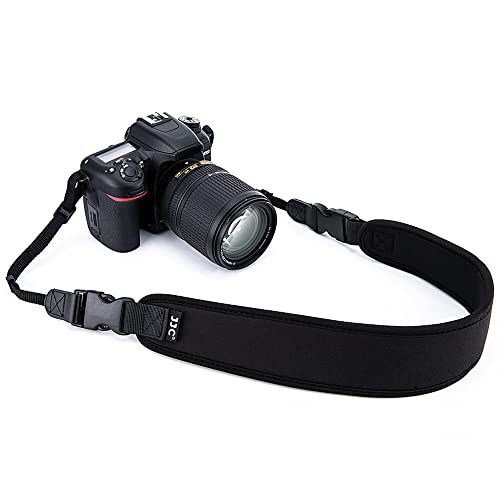
- Neoprene comfort curve helps reduce fatigue
- Anti-slip surface supports steadier shooting
- Removable section converts it into a hand strap
Best For: Photographers seeking a versatile strap for DSLR or mirrorless cameras
Fast Magnetic System
TARION Magislide Camera Neck Strap

- Magnetic quick release supports blind, rapid attachment
- 110-pound-rated Dyneema anchors include wear warnings
- One-handed adjustment spans 32.5 to 55.5 inches
Best For: Hikers and videographers who switch gear or shooting positions often
Lightweight Rope Pick
K&F CONCEPT 100cm Camera Strap

- Only 60g for lighter carrying
- Rolls up for compact storage
- O-ring connectors fit most DSLR/SLR loops
Best For: Hikers and street photographers who value minimal pack weight
Padded Comfort Choice
Neoprene Camera Strap with Quick Release

- Soft, breathable neoprene padding
- Adjusts from 44 to 56 inches
- Includes two sets of quick-release connectors
Best For: Longer hikes and photographers carrying cameras with binoculars
Compact Canvas Option
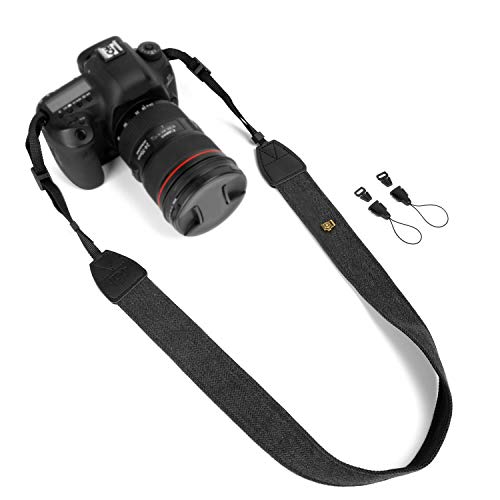
- Lightweight 40-gram construction
- Elastic neck section helps reduce tension
- Quick-release buckles and anti-slip backing
Best For: Day hikers wanting a short, lightweight strap
Trail Comfort Pick – USA Gear TrueSHOT Neoprene Strap
For hikers who carry a DSLR or mirrorless camera for hours, the USA Gear TrueSHOT is one of the more comfort-focused camera neck straps for hiking. Its padded neoprene construction is designed to distribute weight across the shoulders and back, while quick-release buckles make camera handling convenient on the move.
Best For: Extended hikes, sightseeing, and photographers who want built-in storage for small camera accessories.
Pros:
- Padded, stretchy neoprene helps distribute camera weight.
- Dual quick-release buckles support faster camera access.
- Storage pockets hold memory cards, batteries, lens caps, and other small items.
- Non-slip surface and reinforced stitching improve carrying confidence.
Cons:
- The pockets and padded design may feel bulkier than a basic strap.
- It is listed in one size, so fit adjustment is limited to the strap system.
With comfort padding, accessory storage, and a three-year manufacturer warranty, this is a practical choice for hikers prioritizing convenience during long outings.
Storage-Focused Choice – K&F CONCEPT Camera Neck Strap
The K&F CONCEPT strap combines a soft neoprene belt with a removable zipper pocket, making it a useful option among camera neck straps for hiking. Its anti-slip body surface is intended to help stabilize the camera, while the included stickers and hardware rings broaden compatibility with different cameras.
Best For: Hikers who want a comfortable adjustable strap with a detachable pocket for batteries or memory cards.
Pros:
- Neoprene construction helps distribute camera weight.
- Removable zipper pocket stores small accessories or can hang from a backpack.
- Anti-slip texture is designed to reduce shifting against the body.
- UTX safety buckle and braided rope construction add carrying security.
Cons:
- The pocket may add an extra piece to manage while hiking.
- Compatibility still depends on the camera’s attachment hardware.
This strap stands out for its accessory pocket and included mounting hardware, making it a flexible everyday option for DSLR and mirrorless camera users.
Active Carry Pick – Vigorport Cross-Shoulder Harness
The Vigorport is a cross-shoulder chest harness rather than a traditional neck strap, making it appealing for active photographers comparing camera neck straps for hiking. Its X-shaped elastic nylon design spreads weight across the shoulders and is intended to keep the camera near the belly while walking or jostling.
Best For: Hikers, bird watchers, hunters, and photographers who want a camera or binoculars secured close to the body.
Pros:
- X-shaped construction spreads weight across the shoulders.
- Elastic nylon straps are adjustable for sliding the camera into position.
- Designed to limit bouncing and movement while walking.
- Works with DSLR cameras, binoculars, and rangefinders.
Cons:
- Its cross-body harness layout may be less familiar than a standard neck strap.
- It is designed for compatible attachment points larger than 0.5 mm, so hardware fit should be checked.
- The supplied notes do not list accessory storage on the harness itself.
For active trails, the Vigorport’s main advantage is stable, hands-ready carry. It is especially versatile for users switching between a camera, binoculars, and a rangefinder.
Lightweight Classic – MoKo Cotton Camera Strap
The MoKo cotton strap offers a simple, lightweight approach to camera neck straps for hiking. Its woven cotton material is described as soft against the neck and shoulders, while the adjustable length accommodates different wearing preferences for compatible Canon, Nikon, Sony, and other cameras.
Best For: Casual hikers and photographers who prefer a soft, understated strap for longer camera-carrying sessions.
Pros:
- Soft woven cotton is designed to reduce neck and shoulder pressure.
- Adjusts from approximately 35.4 to 62.2 inches.
- 1.5-inch width provides a broad contact area.
- Compatible with several camera brands and some camcorders or binoculars.
Cons:
- It does not include quick-release buckles or accessory pockets in the supplied notes.
- The strap has no manufacturer warranty listed.
- Cotton may offer less specialized cushioning than a padded neoprene design.
This is a straightforward choice for users who value a soft, adjustable strap and a classic appearance over extra storage or quick-access features.
Secure Quick-Release Pick – waka Rapid Camera Neck Strap
For hikers who want camera neck straps for hiking with added protection, the waka Rapid combines an adjustable neoprene shoulder pad, quick release hardware, and a separate safety tether. Its zipper pocket also provides a convenient spot for small accessories such as memory cards or spare batteries.
Best For: DSLR users who prioritize multiple camera-retention features and on-strap accessory storage during outdoor shooting.
Pros:
- Includes an extra safety tether and an anti-falling plastic buckle.
- Quick-release plate uses a stainless steel screw and anti-slip rubber padding.
- Adjusts from 20.8 to 31.5 inches and includes a padded neoprene shoulder area.
- Zipper pocket stores spare batteries or memory cards.
Cons:
- Its listed compatibility is centered on cameras with a standard 1/4-inch tripod stud screw.
- The relatively short adjustment range may offer less flexibility than longer sling-style straps.
The waka is a practical choice when secure attachment is more important than minimalist design. Install the safety cord as directed and lock the slider after adjusting the length for hiking use.
Comfort-Focused Classic – JJC DSLR Camera Neck Strap
The JJC is a straightforward option among camera neck straps for hiking, using a comfortable neoprene design with an anti-slip body-facing surface. Its adjustable buckles and removable neck section make it useful for photographers who want a simple carrying strap that can also convert to a hand strap.
Best For: DSLR and mirrorless users who want a comfortable, adaptable strap for carrying and occasional handheld shooting.
Pros:
- Comfort curve is designed to reduce neck and shoulder fatigue.
- Anti-slip surface helps improve stability while shooting.
- Two buckles allow length adjustment for different users.
- Quick-release clips let the strap convert to a hand strap.
Cons:
- Attachment uses two small hooks on the camera strap eyelets, rather than a tripod-screw plate.
- The listed strap size is 19.29 inches long, so fit should be checked against personal carrying preferences.
Choose the JJC if comfort and flexible use matter more than specialized safety features. Its broad camera compatibility listing makes it a versatile everyday option, provided your camera has two strap eyelets.
Fast Magnetic System – TARION Magislide Camera Neck Strap
For hikers who need camera neck straps for hiking with rapid access, the TARION Magislide uses magnetic quick-release connections and one-handed length adjustment. Its seatbelt-style nylon webbing, multiple anchors, and long 32.5-to-55.5-inch range suit photographers who switch between carrying and shooting positions.
Best For: Outdoor photographers and videographers who value fast, blind attachment and frequent switching between cameras or other compatible equipment.
Pros:
- Magnetic guides enable quick attachment with an audible click.
- Dyneema anchors are rated for a 110-pound load and include wear-warning layers.
- One-piece pull ring adjusts the length with one hand from 32.5 to 55.5 inches.
- Four included anchors support switching between multiple devices.
Cons:
- The magnetic quick-release system adds a specialized component that users must inspect for wear.
- The long adjustment range and multi-anchor setup may be more than needed for simple, lightweight camera carrying.
- The buckle doubles as a bottle opener, which may not be useful to every photographer.
The Magislide stands out for speed and adjustability rather than a conventional minimalist strap design. Its wear-warning anchors and stated load rating are useful on demanding outings, but regular inspection remains important.
Lightweight Rope Pick – K&F CONCEPT 100cm Camera Strap
For hikers who want camera neck straps for hiking that pack down easily, the K&F CONCEPT model uses lightweight nylon rope and weighs just 60 grams. Its 100cm length and O-ring connectors suit most DSLR and SLR camera strap loops.
Best For: Outdoor and street photographers who prioritize low pack weight and compact storage.
Pros:
- Lightweight 60-gram design helps reduce neck and shoulder stress.
- Nylon construction is described as wear-resistant and durable.
- Rope design rolls up for easy storage in a hiking bag.
- Double-ended metal O-rings fit most camera shoulder strap loops.
Cons:
- The 100cm length offers less adjustment flexibility than the longer strap options.
- Its rope-style design may provide less cushioning than a padded strap.
This is a practical minimalist choice when portability matters most. Consider a padded model instead if extended carrying comfort is your top priority.
Padded Comfort Choice – Neoprene Camera Strap with Quick Release
For longer hikes, these camera neck straps for hiking add a soft, breathable neoprene-padded contact area and adjustable length from 44 to 56 inches. The wider 1.5-inch body and quick-release system are designed for many compact and SLR cameras.
Best For: Photographers who want adjustable carrying length, padded comfort, and quick camera removal on the trail.
Pros:
- Soft, breathable neoprene padding is designed for comfortable wear.
- Adjusts from 44 to 56 inches for different users and carrying preferences.
- Two sets of quick-release connectors can support a camera and binoculars.
- Washable material helps remove sweat and grime.
Cons:
- At 75 grams, it is heavier than the 60-gram K&F CONCEPT strap.
- The supplied information does not specify weatherproofing or water resistance.
Its padded, adjustable construction makes it the more comfort-focused option for day hikes. The dual connector sets are also useful if binoculars are part of your outdoor kit.
Compact Canvas Option – WANBY Adjustable Camera Strap
For hikers seeking camera neck straps for hiking with a compact, classic design, this WANBY strap combines cotton canvas webbing, PU leather, and quick-release buckles. It is 1.5 inches wide, adjusts to 28 inches, and weighs only 40 grams.
Best For: Lightweight day hikers who want a short, adjustable strap with an elastic neck section.
Pros:
- Lightest option in this roundup at 40 grams.
- Elastic neck section is designed to reduce neck tension.
- Anti-slip inner layer helps limit accidental slipping.
- Universal design works with DSLR and SLR cameras, plus some binoculars and rangefinders.
Cons:
- The listed 28-inch length is shorter than the other two options.
- Its shorter adjustment range may not suit every carrying style or body size.
- The supplied notes do not state whether the canvas is water-resistant.
This strap is a strong fit for compact carry and shorter camera positioning. Check the 28-inch sizing carefully before choosing it for layered hiking clothing.
How We Picked These Camera Neck Straps for Hiking
We focused on features that matter outdoors: comfortable materials, dependable attachment points, adjustable length, quick-release convenience, and compatibility with common DSLR and mirrorless cameras. We also considered whether each design supports neck, shoulder, cross-body, or chest carry. A hiking strap should keep the camera available without creating unnecessary pressure, swinging excessively, or interfering with a backpack.
Because hiking conditions vary, no single strap is ideal for every photographer. Padded neoprene can improve comfort, while canvas may appeal to users who prefer a simpler, traditional design. Magnetic and quick-release systems can speed up camera access, but they should always be checked for secure engagement before walking or scrambling.
Quick Comparison
| Feature | What to look for | Best suited to |
|---|---|---|
| Neoprene padding | Stretch, cushioning, and a broad contact area | Long hikes and heavier cameras |
| Quick release | Fast removal with locking buckles or connectors | Frequent shooting and changing carry positions |
| Cross-body or chest carry | Better stability than a loose neck carry | Active walking, uneven trails, and backpack use |
| Storage pockets | Space for memory cards, batteries, or small accessories | Minimalist outings and travel |
| Adjustable length | Enough range for neck, shoulder, or cross-body use | Layered clothing and varied body sizes |
Key Buying Factors for Camera Neck Straps for Hiking
Comfort and Weight Distribution
Look for a wide, padded strap if you carry a heavier DSLR or long lens. A narrow strap may pack smaller but can become uncomfortable during several hours on the trail. Consider how the strap sits with a jacket, hydration pack, or backpack shoulder straps.
Security and Attachment Hardware
Inspect the connectors, buckles, tether, and camera attachment point. Quick-release hardware is useful only if it locks firmly and is easy to verify. A safety tether provides additional protection, but it should not replace checking the main connection regularly.
Stability and Access
A traditional neck strap offers quick access but may allow the camera to swing. Cross-body, chest-harness, and anti-slip designs can reduce movement on uneven ground. Choose based on how actively you hike and how often you stop to take photographs.
Compatibility and Adjustability
Confirm that the strap works with your camera’s lug style, plate, or connector. Check the listed length range as well, especially if you want to wear it over outer layers or use it cross-body.
Who Should Buy Which Camera Neck Straps for Hiking?
Choose a padded neoprene model if comfort is your priority or you regularly carry a heavier camera. A quick-release or magnetic design suits photographers who alternate between carrying and shooting throughout the day. Cross-shoulder and chest-harness options are better for steep, uneven, or active routes where camera movement is distracting. If you prefer a straightforward, lightweight setup, a basic canvas or soft shoulder strap may be sufficient.
Before setting out, test the strap with your actual camera and lens combination, tighten the adjustment points, and inspect every connector. The best Camera Neck Straps for Hiking are the ones that remain comfortable, stable, and secure for the full distance.