Traveling with camera bodies, lenses, lighting, and accessories is easier when your bag rolls through airports instead of riding on your shoulders. The right camera roller bag can also protect delicate equipment with padded dividers, weather-resistant materials, and a stable frame.
We compared 10 camera roller bags for travel across carry-on practicality, storage flexibility, protection, mobility, and backpack-conversion features. Use the guide below to narrow your choices by shooting style and trip requirements.
Best 10 Camera Roller Bags for Travel Picks for 2026
Most Versatile
Slinger 2-in-1 Wheeled Camera Backpack

- Converts from roller to backpack
- Holds extensive DSLR and lens kits
- Includes 15-inch laptop sleeve
Best For: Photographers switching between rolling and carrying
Best Lightweight Carry-On
Think Tank Airport Advantage Rolling Camera Bag
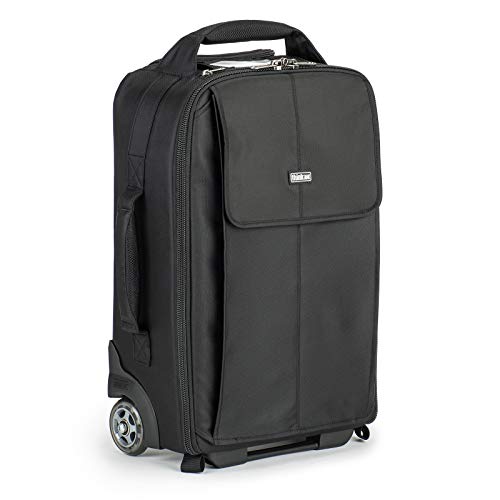
- Lightweight 5.9-pound design
- Made for airline carry-on use
- Fits two camera bodies and lenses
Best For: Air travelers carrying a compact professional kit
Best Weather-Ready Hybrid
PGYTECH 2-in-1 Roller Camera Backpack

- Switches between spinner and backpack modes
- Adds 10 liters of expandable storage
- Includes rain cover and AirTag pocket
Best For: Travel photographers needing flexible, organized storage
Best High-Capacity Option
NEEWER Convertible Rolling Camera Backpack

- Large 50-liter storage capacity
- Fits laptops up to 17 inches
- Uses four wheels and backpack straps
Best For: Photographers transporting larger, multi-camera kits
Rugged Carry-On Pick
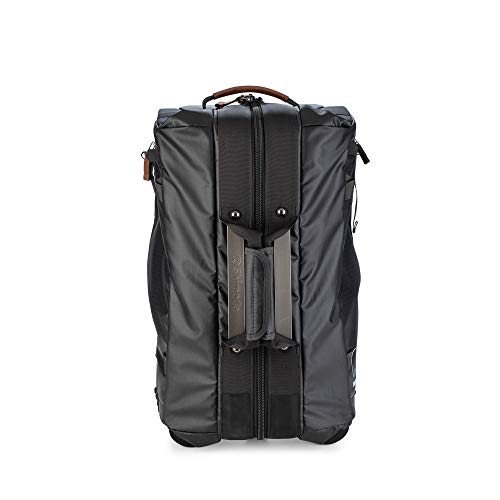
- 100mm all-terrain wheels and water-repellent nylon
- Wide doctor bag-style opening for quick access
- Modular Core Unit compatibility; insert sold separately
Best For: Adventure photographers taking protected gear onboard
Convertible Capacity Pick
NEEWER 2 in 1 Rolling Camera Bag

- Converts between rolling bag and backpack
- 11 adjustable padded compartments
- 17-inch laptop space and included rain cover
Best For: Travelers needing rolling and backpack carry options
Convertible Carry-On Pick
Neewer 2-in-1 Camera Roller Bag

- Converts between roller case and backpack
- Customizable padded camera compartment
- Fits a 16-inch laptop and includes rain cover
Best For: Traveling creators who need flexible carry and organized gear storage
Hard-Shell Protection Pick
Full Aluminum Rolling Camera Bag
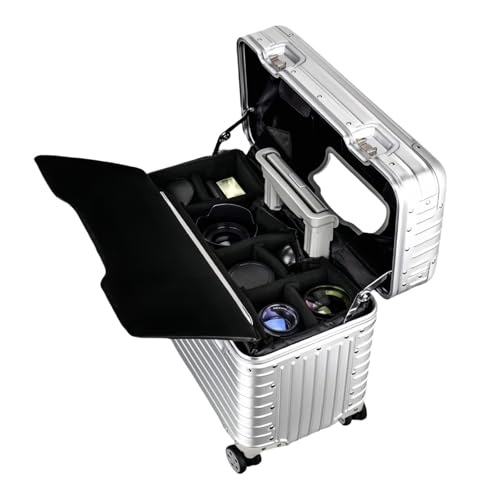
- Rigid aluminum-magnesium alloy shell
- Dual TSA-approved combination locks
- Detachable 360-degree spinner wheels
Best For: Photographers who prioritize hard-case protection during air travel
All-Weather Backpack Pick
Neewer 2-in-1 Rolling Camera Backpack

- Converts between backpack and trolley case
- Waterproof nylon body with rain cover
- Holds two DSLR bodies and a 15-inch laptop
Best For: Mobile photographers carrying larger kits in changeable weather
Most Versatile – Slinger 2-in-1 Wheeled Camera Backpack
The Slinger combines a rolling camera bag and backpack in one carry-on-sized design, making it a flexible option among camera roller bags for travel. Its padded dividers, laptop sleeve, and polyurethane wheels support organized airport and field transport.
Best For: Photographers who want the option to roll gear through airports or carry it as a backpack.
Pros:
- Converts between a wheeled bag and backpack with a hide-away harness.
- Stores up to two professional DSLRs, seven lenses, flashes, and accessories.
- Includes 13 customizable padded dividers and a sleeve for laptops up to 15 inches.
- Durable wheels and retractable trolley handle suit travel between terminals and stations.
Cons:
- It is not water resistant, so additional weather protection may be needed.
- Uses two in-line skate wheels rather than spinner wheels.
Choose this model when mobility flexibility matters more than weather protection. The backpack conversion is particularly useful when rolling is impractical.
Best Lightweight Carry-On – Think Tank Airport Advantage Rolling Camera Bag
The Think Tank Airport Advantage is a lightweight roller designed to maximize camera gear within carry-on dimensions. Its compact interior, padded 15-inch laptop pocket, and included rain cover make it a practical pick among camera roller bags for travel.
Best For: Air travelers prioritizing low bag weight and carry-on compatibility, including smaller regional aircraft.
Pros:
- Designed to meet U.S. and international airline carry-on requirements; verify current airline rules.
- Weighs about 5.9 to 6.2 pounds depending on configuration.
- Fits a gripped DSLR, another DSLR, three to four lenses, and a 15-inch laptop.
- Includes a rain cover and tripod strap.
Cons:
- The laptop compartment may expand the roller’s external dimensions.
- Its 17-liter capacity is more limited than larger camera cases.
This is a focused carry-on solution rather than a high-capacity gear hauler. Its light construction can help travelers stay within airline weight limits.
Best Weather-Ready Hybrid – PGYTECH 2-in-1 Roller Camera Backpack
The PGYTECH 2-in-1 Roller Camera Backpack shifts between spinner suitcase and backpack modes, giving traveling photographers flexibility on smooth streets and more demanding terrain. Its expandable compartment, digital organizer, and splash-proof construction add practical travel utility.
Best For: Photographers who need a hybrid roller-backpack with expandable storage and added organization.
Pros:
- Offers spinner suitcase and backpack modes for different surfaces.
- Includes DIY dividers, a 10-liter expandable front compartment, and a digital organizer bag.
- Has removable silent double wheels and a three-stage aluminum handle.
- Features a rain cover, YKK zippers, side pockets, and a hidden AirTag pocket.
Cons:
- At 7.9 pounds, it is heavier than the Think Tank option.
- The listed storage volume is 20 liters, so it may not suit very large kits.
With its expandable front section and multiple carrying modes, this bag works well for travel photographers balancing camera equipment with clothing or a gimbal.
Best High-Capacity Option – NEEWER Convertible Rolling Camera Backpack
NEEWER Convertible Rolling Camera Backpack for SLR/DSLR and Accessories | NW3300, Black
Check Price On AmazonThe NEEWER Convertible Rolling Camera Backpack offers a roomy 50-liter interior with four wheels, backpack straps, and a telescoping handle. For shoppers comparing camera roller bags for travel, its large compartment and 17-inch laptop pocket make it suited to substantial equipment loads.
Best For: Photographers carrying multiple cameras, lenses, accessories, and a larger laptop.
Pros:
- Provides 11 adjustable dividers for cameras, lenses, flashes, and hoods.
- Includes four small pockets, four mesh pockets, and a front tripod strap.
- Fits laptops up to 17 inches.
- Combines backpack straps, handles, telescoping handle, and smooth wheels.
Cons:
- Its 4.15-kilogram weight is relatively heavy for a travel bag.
- The 22-by-14-by-10-inch dimensions may not fit every airline’s overhead-bin limits.
- It is water resistant rather than fully waterproof, despite including a rain cover.
This model favors capacity and organization over minimum weight. Confirm your airline’s carry-on measurements before relying on it for overhead storage.
Rugged Carry-On Pick – Shimoda Carry-On Roller v2
For photographers seeking camera roller bags for travel, the Shimoda Carry-On Roller v2 emphasizes carry-on compatibility, fast access, and durable handling. Its 100mm all-terrain wheels, water-repellent nylon, and wide doctor bag-style opening suit demanding travel days.
Best For: Adventure and expedition photographers who want to keep modular camera gear onboard.
Pros:
- Designed to meet most airline carry-on requirements.
- Wide opening provides unobstructed access to gear.
- Works with Shimoda Core Units up to the Large DSLR size, sold separately.
- Includes all-terrain wheels, tripod straps, and a five-year warranty against manufacturing defects.
Cons:
- At 8.5 pounds, it adds noticeable weight before gear is packed.
- Core Unit inserts are sold separately.
- Carry-on acceptance can vary by airline and route.
This is a specialized roller for photographers who prioritize rugged mobility and organized access over minimum weight. The modular interior and replaceable handle add practical value for frequent, gear-intensive travel.
Convertible Capacity Pick – NEEWER 2 in 1 Rolling Camera Bag
The NEEWER 2 in 1 is a large camera roller bag for travel that converts between a rolling suitcase and backpack. Its 11 adjustable compartments, laptop sleeve, and tripod straps make it useful when equipment needs to move through airports and destinations in different ways.
Best For: Photographers who want one bag that can roll on smooth surfaces and be carried as a backpack.
Pros:
- Converts from a briefcase-style roller to a backpack.
- Offers 11 adjustable compartments for cameras and accessories.
- Padded space accommodates a 17-inch tablet or laptop.
- Includes a rain cover and side tripod straps.
Cons:
- Its listed dimensions may not qualify as carry-on with every airline.
- At 3.92 kg, it is relatively heavy before equipment is added.
- Its two-wheel design may be less stable than a four-wheel roller when standing.
This model stands out for flexibility rather than compactness. Check the dimensions against your airline before buying, especially if you plan to use it as hand luggage.
High-Capacity City Pick – Cwatcun Camera Trolley Bag
The Cwatcun Camera Trolley Bag combines a removable cart with a padded camera case, making it a practical option among camera roller bags for travel. It holds multiple bodies, lenses, a flash, tripod, and 15.6-inch laptop while using removable dividers to customize the interior.
Best For: City photographers carrying a larger kit who still want a relatively lightweight, carry-on-friendly case.
Pros:
- Capacity for two DSLR bodies, three to five lenses, a flash, tripod, and 15.6-inch laptop.
- Includes five thick, removable padded dividers for flexible organization.
- Uses water-repellent 900D polyester fabric.
- Removable cart and shoulder strap provide carrying flexibility.
Cons:
- No waterproof rain cover is included.
- The listed dimensions are relatively substantial for strict airline carry-on limits.
- Its 35-liter capacity may be more than needed for a small everyday kit.
This bag favors equipment capacity and adaptable packing over the smallest footprint. Its lightweight construction and multiple carry options make it appealing for city shoots, but travelers should verify airline measurements.
Convertible Carry-On Pick – Neewer 2-in-1 Camera Roller Bag
For travelers who want flexible camera roller bags for travel, this Neewer model switches between a rolling case and a backpack. Its customizable padded interior, laptop slot, rain cover, and accessory storage make it practical for carrying a substantial camera kit through airports and outdoor shoots.
Best For: Creators who need both rolling mobility and backpack carry for cameras, lenses, a tripod, and a laptop.
Pros:
- Converts from a trolley case to a backpack for more flexible transport.
- Customizable padded dividers accommodate cameras, lenses, flashes, and other gear.
- Includes a dedicated 16-inch laptop slot, accessory pockets, and a rain cover.
- Retractable handle, in-line skate wheels, and detachable waist support aid longer moves.
Cons:
- Its larger carry-on dimensions should be checked against your airline’s requirements.
- The soft polyester shell may provide less rigid protection than an aluminum case.
This is a versatile option when a single bag needs to cover airport transfers, city streets, and outdoor content work. Verify the dimensions before flying, especially when overhead-bin compatibility is important.
Hard-Shell Protection Pick – Full Aluminum Rolling Camera Bag
This full aluminum camera case is built for photographers prioritizing a rigid shell and secure travel handling. The 29-liter interior uses adjustable shock-absorbing dividers, while TSA combination locks and detachable spinner wheels add convenience for airport travel.
Best For: Photographers seeking a protective hard case for DSLR bodies, lenses, flashes, and a laptop under 17 inches.
Pros:
- 6-series aluminum-magnesium alloy shell offers a rigid exterior.
- Dual TSA-approved combination locks support security inspections without damage.
- Adjustable padded dividers help organize and protect different gear configurations.
- Detachable 360-degree spinner wheels can be removed and reinstalled without tools.
Cons:
- At 3.6 kg, it is heavier than many soft-sided camera bags.
- The 18.5-by-10.24-by-15.35-inch dimensions should be checked against airline limits.
- The aluminum exterior may offer less flexibility for squeezing into tight spaces.
Choose this case when shell rigidity, TSA locks, and smooth four-wheel movement matter more than minimizing weight. Its adjustable interior and laptop compatibility make it suited to organized photo travel.
All-Weather Backpack Pick – Neewer 2-in-1 Rolling Camera Backpack
For camera roller bags for travel that can also be carried on your back, this Neewer trolley case combines a rolling design with padded backpack straps. The waterproof nylon body, included rain cover, removable camera compartment, and tripod straps make it useful for air travel and mobile shoots.
Best For: Travelers carrying multiple DSLR bodies, lenses, a 15-inch laptop, and accessories who want backpack flexibility.
Pros:
- Converts quickly between a backpack and a trolley case.
- Removable padded compartment can be reconfigured or taken out for business-trip use.
- Waterproof nylon construction, rain cover, and anti-slip base help with outdoor use.
- Side straps hold a tripod, monopod, or light stand, while wide rollerblade wheels support smooth movement.
Cons:
- Its 19.7-by-13-by-9.84-inch size should be checked against airline boarding requirements.
- At 4.28 kg, it may feel substantial when carried as a backpack.
- The two-wheel design may be less maneuverable than a four-spinner case.
This model is a strong fit for photographers who regularly switch between rolling and shoulder carry. Its generous compartment and weather-focused features support larger kits, but confirm airline sizing and consider the packed weight before flying.
How We Picked the Best Camera Roller Bags for Travel
We focused on the features that matter most when transporting photography equipment between airports, hotels, studios, and outdoor locations. Our comparison considers interior organization, divider adjustability, padding, wheel quality, handle design, carry-on potential, weather protection, and the usefulness of backpack-conversion systems.
We also included a range of formats: compact rolling backpacks, conventional trolley cases, premium outdoor-oriented luggage, and rigid aluminum cases. Because airline policies and equipment dimensions vary, confirm each bag’s external measurements and weight before buying.
Quick Comparison
| Best For | Look For | Most Suitable Style |
|---|---|---|
| Frequent flyers | Carry-on dimensions, smooth wheels, sturdy telescoping handle | Rolling camera carry-on |
| Hybrid travel and walking | Comfortable straps, manageable weight, secure dividers | 2-in-1 roller backpack |
| Outdoor photographers | Large wheels, durable shell, weather resistance | Rugged roller case |
| Large kits | Deep compartments, reinforced construction, high load capacity | Full-size trolley or aluminum case |
Key Buying Factors for Camera Roller Bags for Travel
Size and Airline Compatibility
Measure the packed bag, including wheels and handles. A case marketed as carry-on luggage may still exceed a carrier’s limits when fully loaded. Smaller bags are easier to place in overhead bins, while larger cases offer more room but may require checking.
Protection and Interior Layout
Look for thick padding, movable dividers, reinforced corners, and a compartment that keeps cameras and lenses from shifting. Removable inserts are useful if you sometimes carry clothing, a drone, lighting equipment, or personal items instead of a full camera kit.
Wheels, Handle, and Backpack Straps
Large, smooth-rolling wheels handle uneven pavement better than small luggage wheels. Check whether the telescoping handle locks securely and whether backpack straps are padded, adjustable, and stowable. A 2-in-1 design is valuable when you need to move from an airport terminal to stairs, trails, or crowded streets.
Weather Resistance and Access
Water-resistant fabric, sealed zippers, and an included rain cover add protection during unexpected weather. A wide doctor-bag opening or full-zip access makes equipment easier to reach, while discreet compartments can help protect smaller accessories.
Who Should Buy Which Camera Roller Bags for Travel?
Choose a Compact Rolling Backpack for Flexible Travel
Photographers who alternate between rolling luggage and walking should prioritize a lighter 2-in-1 model with dependable straps and a well-padded removable interior.
Choose a Dedicated Rolling Carry-On for Airport-Heavy Trips
If your priority is organized access and smooth terminal travel, choose a purpose-built carry-on with a stable frame, strong handle, and dimensions suited to your usual airline.
Choose a Rugged Case for Outdoor Work
Outdoor and adventure photographers should favor larger wheels, durable construction, weather protection, and enough space for modular inserts. These features can add weight, but they improve usability on rough ground.
Choose an Aluminum or Larger Trolley Case for Maximum Protection
For valuable or bulky equipment, a reinforced hard case may be preferable to a soft-sided roller. Expect more weight and less flexibility, and verify whether the case must be checked.
Before purchasing, lay out your complete kit and compare its dimensions with the bag’s usable compartment space—not just its advertised capacity. Leave room for padding, cables, batteries, and safe access so the case remains practical when fully packed.