Choosing the right slider can instantly make your footage feel more polished, controlled, and professional. The best camera sliders help you create smooth motion for interviews, product shots, b-roll, and timelapse work without adding unnecessary setup complexity.
In this roundup, we focused on real-world usability, build quality, motion control, load support, and portability so you can find a slider that matches your camera setup and shooting style.
Best 10 Camera Sliders Picks for 2026
Portable 24" Carbon Fiber Slider
Zecti 24" Adjustable Carbon Fiber Camera Dolly Track

- 24" rail with carrying bag for travel
- Four bearings and dual carbon fiber rails
- Works with small cameras, phones, and action cams
Best For: Travel-friendly manual slider use with lightweight gear
Motorized 120cm Remote Slider
GVM 48" Carbon Fiber Motorized Camera Slider
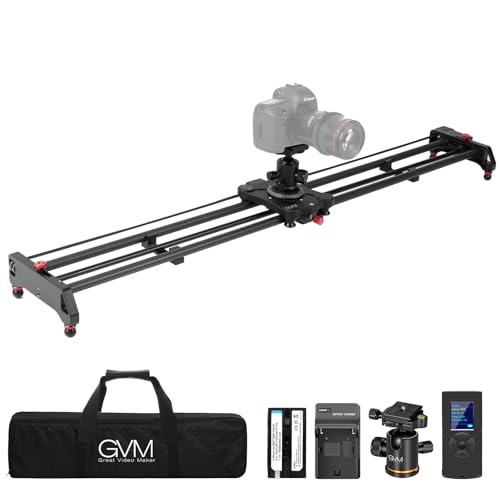
- Motorized rail with remote-controlled settings
- Supports tracking, video, timelapse, and 120° panorama
- Includes shutter cables and carry bag
Best For: Controlled motion shots and timelapse on a 48-inch rail
Tabletop Dolly Skater
NEEWER SD001 Camera Slider Dolly with Ball Head

- Moves in straight lines or circles
- Quiet rubber wheels for smooth tabletop use
- Includes ball head and phone clamp
Best For: Compact tabletop and floor-level motion shots
App-Controlled 48" Motorized Slider
GVM 48" Motorized Camera Slider

- App control from iOS and Android devices
- Tracking, panoramic, timelapse, and video modes
- Includes 6 shutter cables and carry bag
Best For: App-controlled motion work for video and timelapse
Compact Manual Slider
Andoer 30cm Aluminum Alloy Rail

- Aluminum alloy construction supports up to 11 lbs.
- Four bearings help deliver smoother, quieter slides.
- Multiple 1/4" and 3/8" threads add mounting flexibility.
Best For: Beginners and small setups needing a compact manual slider
Motorized Time-Lapse Slider

- Motorized slider with app control and time-lapse modes.
- Silent stepper motor and included 4400mAh battery.
- Carbon fiber rail supports up to 11 lbs horizontally.
Best For: Time-lapse and video shooters wanting automated motion
Portable Travel Slider

- Very lightweight 16-inch slider with carrying bag.
- Carbon fiber rail uses four precision bearings.
- Adjustable legs and level help with setup on different surfaces.
Best For: Travel-friendly shooters needing a compact manual slider
Motorized Compact Slider

- Aluminum alloy build with smooth motion
- Time-lapse, video, and auto round-trip modes
- Ground or tripod use with flexible mounts
Best For: DSLR shooters needing a compact motorized slider
Long-Travel Motorized Slider

- 47.2-inch carbon fiber rail for longer moves
- App control with manual, video, and timelapse modes
- Silent motor and roller bearings for smooth motion
Best For: Longer cinematic shots and time-lapse work
Portable 24" Carbon Fiber Slider – Zecti 24" Adjustable Carbon Fiber Camera Dolly Track
If you want a compact option in camera sliders for travel and tabletop work, this Zecti 24-inch rail is built to be easy to pack and versatile to position. It supports vertical, horizontal, diagonal, and sideways use, and the included legs with non-skid feet help you level it on different surfaces.
Best For: Photographers and creators who need a lightweight, portable slider for small cameras, phones, and action cams.
Pros:
- 24″/60 cm portable size with a scratch-resistant carrying bag
- Four precision bearings and double interior carbon fiber rails for added stability
- Multiple 1/4-inch and 3/8-inch screw holes for flexible mounting
- Compatible with many small cameras, phones, and action cameras
Cons:
- Manual operation can feel noisy or less smooth if screws are overtightened
- Maximum weight recommendation is 4.4 pounds
- Not water resistant
Overall, this is a practical travel-friendly slider if you want a simple rail system and can live with manual operation. It makes the most sense for lightweight rigs where portability matters more than heavy-duty load capacity.
Motorized 120cm Remote Slider – GVM 48" Carbon Fiber Motorized Camera Slider
Among camera sliders, this GVM motorized model is aimed at controlled motion shots, with remote-adjustable settings for video and timelapse work. It supports tracking, horizontal, and 120-degree panoramic shooting, and the remote lets you set points, speed, dwell time, distance, pause time, and loop behavior.
Best For: Creators who want motorized control for timelapse, video, and panoramic shooting with a larger 48-inch rail.
Pros:
- Supports tracking, horizontal, and 120° panoramic shooting
- Remote control adjusts start/end points, speed, dwell time, and loops
- Includes multiple shutter cables plus an extension cable
- Carbon fiber build and carry bag help with stability and transport
Cons:
- Heavier than manual compact sliders at 5.42 kg
- Not water resistant
- Requires planning around compatible camera and tripod setup
This is a strong pick if your workflow depends on repeatable motion and app-controlled shooting parameters. It is better suited to serious video and timelapse use than casual handheld-style travel setups.
Tabletop Dolly Skater – NEEWER SD001 Camera Slider Dolly with Ball Head
If you need a compact alternative to longer camera sliders, this NEEWER tabletop dolly is built for straight-line or circular movement on floors and tables. The adjustable wheels, ball head, and phone clamp make it useful for small camera setups where portability and simple motion matter most.
Best For: Tabletop and floor-level shots with mirrorless cameras, phones, and action cameras.
Pros:
- Linear and circular movement for sliding and panning shots
- Soft rubber wheels are designed for smooth, quiet motion
- Ball head offers 360° rotation and 90° tilt
- Includes a rotatable phone clamp with a cold shoe for accessories
Cons:
- Not suitable for telephoto lenses
- Adapter may be needed for some camera or action cam setups
- Smaller tabletop design limits traditional rail-style moves
For lightweight rigs, this dolly gives you a flexible way to add motion without carrying a full-size rail system. It is best viewed as a compact motion tool rather than a replacement for a longer production slider.
App-Controlled 48" Motorized Slider – GVM 48" Motorized Camera Slider
This GVM motorized option stands out among camera sliders for app-based control and flexible motion settings. It supports tracking, panoramic, timelapse, and video capture modes, and the carbon fiber rail includes multiple mounting points for different tripod and shooting setups.
Best For: Shooters who want app-controlled motion and a motorized slider for video, timelapse, and panoramic work.
Pros:
- App control through iOS and Android devices
- Supports tracking, panoramic, timelapse, and video capture
- Multiple speed, interval, stop time, and photo count settings
- Includes 6 shutter release cables and a carry bag
Cons:
- Battery average life is listed at 2 hours
- Not water resistant
- Maximum weight recommendation is 20 pounds, so it is not for the heaviest rigs
For creators who want detailed motion control from a phone or tablet, this model offers a lot of shooting flexibility. It makes the most sense when you need motorized repeatability more than a simple manual slide.
Compact Manual Slider – Andoer 30cm Aluminum Alloy Rail
If you want a simple entry into camera sliders, this Andoer rail keeps things straightforward: a compact manual design, aluminum alloy build, and smooth bearing-based movement. The 30cm version is easy to pack, while the multiple thread options make it easier to build out a small video setup.
Best For: Creators who want a lightweight manual slider for basic DSLR, camcorder, or accessory-supported shooting.
Pros:
- Aluminum alloy body with support for up to 11 lbs.
- Four high-precision bearings for smoother, quieter sliding.
- 1/4″ and 3/8″ threads for tripods, lights, monitors, and mics.
- Sliding plate includes 1/4 screw and convertible 3/8 screw.
Cons:
- Only the 30cm option is a compact travel size.
- Manual operation means no motorized motion or app control.
This is a practical pick if you need a no-frills camera slider with useful mounting flexibility. It fits small productions well, especially when portability and simple setup matter more than advanced automation.
Motorized Time-Lapse Slider – NEEWER ER1 80cm Carbon Fiber
For creators looking at motorized camera sliders, this NEEWER ER1 stands out with app control, remote-ready operation, and time-lapse-friendly modes. The 80cm carbon fiber rail is built for smooth camera movement, and the included battery support makes it more practical for longer shoots.
Best For: Video makers and time-lapse shooters who want automated motion and multiple control options.
Pros:
- Motorized movement with manual, video, and time lapse modes.
- App control plus 2.4G remote support for flexible operation.
- Silent stepper motor designed for quiet shooting.
- Carbon fiber build with 4 roller bearings for stability and anti-shake support.
Cons:
- Remote control is not included.
- Type-C portable charger is not included.
- Minor shake may occur during macro photography.
This is the most feature-rich option in the group if you want automated camera movement. It is especially appealing for content creators who value time-lapse control, multiple shooting angles, and battery-powered operation.
Portable Travel Slider – Zecti 16in Carbon Fiber Dolly
If portability is the main goal when comparing camera sliders, the Zecti 16-inch rail is built for easy travel and flexible setup. It uses a carbon fiber track, comes with a carrying bag, and includes adjustable legs plus a bubble level for more controlled placement.
Best For: Travelers and lightweight shooters who need a compact manual slider with flexible mounting options.
Pros:
- Lightweight 16-inch design weighs only 1.3 pounds.
- Carbon fiber rail with four precision bearings for stability.
- Adjustable legs, non-skid rubber feet, and a bubble level for setup help.
- Multiple 1/4″ and 3/8″ screw holes for varied mounting positions.
Cons:
- Manual slider is noted to make noise and may need screw adjustment.
- Maximum weight recommendation is 4.4 pounds.
- Phone holder is not included for smartphone use.
This is a good fit if you want a small, backpack-friendly slider for basic motion shots. It offers useful stability features for its size, but it is best matched to lighter camera setups.
Motorized Compact Slider – GVM 27" Motorized Rail
If you want camera sliders that handle more than simple left-to-right moves, this GVM motorized model is built for flexible shooting. Its aluminum alloy rail supports time-lapse, video, and auto round-trip motion, while the adjustable feet and multiple mounting points make it easier to set up on the ground or with a tripod.
Best For: DSLR and hybrid shooters who want a compact motorized slider for time-lapse, interviews, and multi-angle video work.
Pros:
- Supports time-lapse, video shooting, and auto round-trip movement
- Multiple 1/4″ and 3/8″ screw holes for flexible mounting
- Works on the ground, with a tripod, or with a ball head
- Allows vertical, horizontal, and 45-degree shooting
Cons:
- Max weight recommendation is 2.5 kg
- Not water resistant
- Shorter 27-inch rail limits how far the camera can travel
Overall, this is a practical pick if you need a feature-rich motorized slider in a smaller footprint. It is especially appealing for creators who want stable motion plus the convenience of round-trip automation and angle flexibility.
Wireless Dolly Motion – NEEWER 3-Wheel Video Dolly
Among camera sliders, this NEEWER three-wheel dolly stands out if you want portable motion with remote control instead of a traditional rail system. The wheel angle is adjustable for straight-line or circular movement, and the built-in battery plus wireless remote make it easy to manage speed and direction on set.
Best For: Creators who want a compact motorized dolly for flexible smartphone, action camera, or small camera movement.
Pros:
- Wireless remote controls speed, direction, and pause
- 3 adjustable speeds for different motion styles
- Wheel angle can be set for straight or circular routes
- Built-in rechargeable battery with up to 6 hours of use
Cons:
- Maximum load is 6.6 pounds
- Accessories like phone holders and action camera adapters are not included
- Not water resistant
This is a good choice when you need a lightweight camera slider alternative for creative movement and simple remote operation. It is especially useful for short-form video, small rigs, and controlled tracking shots.
Long-Travel Motorized Slider – NEEWER 47.2" Carbon Fiber ER1
If you need camera sliders with more travel and app-based control, this NEEWER 47.2-inch carbon fiber model is built for smooth motion on longer shots. It supports manual, video, and time-lapse modes, and the silent stepper motor makes it a strong fit for quiet shooting environments.
Best For: Video creators who want a longer motorized slider for time-lapse, product footage, and controlled cinematic movement.
Pros:
- Long 47.2-inch rail for extended camera movement
- App control plus 2.4G remote support
- Silent stepper motor for quiet operation
- Carbon fiber build with roller bearings for added stability
Cons:
- 2.4G remote is not included
- Charger is not included
- Max load drops to 5.5 lb at 45-degree tilt
For creators who want a longer, more versatile motorized slider, this ER1 offers a strong mix of control and portability. Its lightweight carbon fiber construction and multiple shooting angles make it especially useful for polished motion shots on location.
How We Picked These Camera Sliders
We prioritized models that make smooth motion easier to achieve in everyday shooting. That means looking at rail length, material quality, motorized versus manual operation, app or remote control options, weight capacity, and how practical each slider is for solo creators.
We also considered whether the slider is better suited to tabletop product work, tripod-mounted video, timelapse sequences, or lightweight travel kits. A good choice should feel stable, be easy to set up, and match the type of movement you actually need.
Quick Comparison
Shorter manual sliders are usually the best fit for compact spaces, controlled product shots, and creators who want a lighter rig. Longer motorized Camera Sliders are more useful for cinematic tracking shots, timelapse, and repeatable motion with cleaner results.
Carbon fiber options tend to offer a strong balance of stiffness and portability, while aluminum models can be a smart value choice for smaller cameras or simpler setups. Motorized units add convenience, but they also introduce battery, app, and control considerations.
Key Buying Factors for Camera Sliders
Length and Travel Distance
Choose slider length based on your shooting environment. A 12-inch or 16-inch slider is easier to use in tight spaces, while 24-inch, 31.5-inch, 47.2-inch, and 48-inch models provide more dramatic movement and better framing variety.
Manual Vs. Motorized
Manual Camera Sliders are simple and reliable, and they work well when you want direct control. Motorized sliders are better for repeatable motion, timelapse, and moves that need to be consistent from take to take.
Load Capacity and Rig Weight
Make sure the slider can handle your camera, lens, and any accessories you plan to mount. If you use a heavier DSLR or mirrorless rig, look for a higher load rating and a rail system that stays rigid under weight.
Control Features
App control, remote operation, and programmable motion paths can save time during solo shoots. For creators who shoot timelapse or follow shots often, these features can make Camera Sliders much more useful in practice.
Portability and Build
If you travel often or shoot on location, lighter materials and a compact footprint matter. Carbon fiber is often preferred for portability, while aluminum can be a cost-effective alternative for less demanding setups.
Who Should Buy Which Camera Sliders?
If you need a simple, affordable option for small productions, a compact manual slider is usually enough. If you shoot commercial b-roll, product content, or timelapse regularly, a motorized model is worth the upgrade for smoother repeatable motion.
Creators working with heavier cameras should focus on stability and load support first, then compare control options and travel length. For mobile creators, the best choice is often the slider that balances smooth movement with the easiest setup and transport.
Overall, the right Camera Sliders are the ones that fit your shooting space, your camera weight, and how often you need controlled motion. Matching those factors will do more for your results than choosing the longest or most feature-packed model by default.