A good camera tripod for photography does more than hold your camera still—it helps you frame shots accurately, shoot longer exposures, and work more comfortably.
In this roundup, we focused on practical, user-friendly tripods that balance stability, height, portability, and value for different kinds of creators.
Best 10 Camera Tripod for Photography Picks for 2026
Travel-Friendly Starter Pick
Amazon Basics 50-Inch Lightweight Tripod

- Lightweight 1.23 lb aluminum build
- 16.1 to 50 inch adjustable height
- Quick-release plate and 3-way head
Best For: Travel, casual photography, and lighter camera kits
Overhead Shooting Pick
K&F Concept 76 in Overhead Camera Tripod

- Boom arm for 0-180° overhead positioning
- 360° ball head for panorama shots
- Tall 76.7 inch max height, 17.6 lb capacity
Best For: Overhead, panorama, and flexible angle photography
All-Purpose Photo and Video Pick
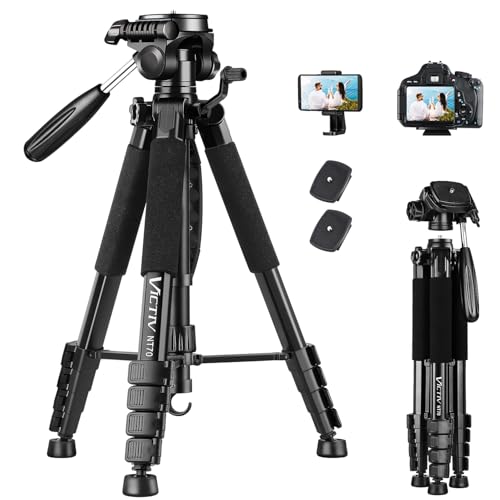
- 19 to 74 inch height range
- Includes phone holder and quick-release plate
- 3-way pan head with added stability features
Best For: Multi-use shooting with cameras and smartphones
Compact Travel Pro Pick
K&F Concept 64 Inch Lightweight Tripod

- 2.53 lb travel-friendly design
- Up to 17.6 lb load capacity
- 360° ball head with low-angle support
Best For: Portable shooting with better load support
Ultra-Light Travel Pick
71" Camera Tripod Aluminum Tall Tripod Stand

- Weighs just 1.4 lbs for easy travel.
- Extends from 15 to 71 inches with tilt and rotation.
- Includes phone holder, Bluetooth remote, and bag.
Best For: Travel photographers and lightweight mobile setups
Versatile Tripod-Monopod
SmallRig 71" Aluminum Camera Ball Head Tripod

- Converts from tripod to monopod for added flexibility.
- Ball head and inverted column support creative angles.
- Aluminum build with accessory mounting holes.
Best For: Travel, hiking, and creators who want tripod plus monopod support
High-Reach Compact Pick
K&F CONCEPT 75" Aluminum Camera Tripod

- Tallest option here at 75 inches.
- Folds to 19.6 inches for easier travel.
- Includes 2-in-1 phone/tablet holder and remote.
Best For: Travelers and creators who want maximum height in a compact package
Travel-Ready Monopod Combo
CAMBOFOTO 73" Camera Tripod and Monopod

- Center column detaches into a monopod
- 73.3" max height; folds to 19.7"
- 11 lb capacity with bubble level
Best For: Travel and event shooters who want a lightweight 2-in-1 tripod
All-Purpose Travel Tripod
JOILCAN 74" Tripod for Camera Phone Video

- 19" to 74" height range
- 3-way pan head with 360° rotation
- Works with cameras, phones, and accessories
Best For: Travelers and creators who need one tripod for camera and phone use
Flexible Low-Angle Tripod
XXZU 75" Camera Tripod with Remote

- 75" max height with low-angle setup options
- Detachable center column works as monopod/selfie stick
- Built-in remote control with 10 m range
Best For: Outdoor and content creators who want portability plus low-angle flexibility
Travel-Friendly Starter Pick – Amazon Basics 50-Inch Lightweight Tripod
If you need a camera tripod for photography that’s easy to carry and quick to set up, this Amazon Basics model keeps things simple. Its lightweight aluminum build, 3-section lever-lock legs, and quick-release plate make it a practical option for travel, casual shoots, and basic framing.
Best For: Travel photographers, hobbyists, and anyone who wants a compact, lightweight tripod for lighter camera setups.
Pros:
- Weighs only 1.23 lbs, making it easy to pack and carry.
- Adjusts from 16.1 inches to 50 inches for flexible shooting positions.
- 3-way head supports tilt, swivel, portrait, and landscape shots.
- Quick-release plate helps speed up camera changes between shots.
Cons:
- Not recommended for heavy DSLR cameras or long lenses.
- Weight limit is capped at 4.4 pounds.
- Shorter max height may feel limiting for taller framing needs.
This is a budget-friendly, portable choice if you value convenience over heavy-duty support. It’s best viewed as a lightweight travel tripod rather than a setup for large professional rigs.
Overhead Shooting Pick – K&F Concept 76 in Overhead Camera Tripod
If your camera tripod for photography needs to handle top-down shots, panoramas, or more flexible positioning, this K&F Concept model is built for that job. The removable boom arm, 360° ball head, and tall maximum height give it more creative range than a basic travel tripod.
Best For: Creators who need overhead angles, panorama shooting, or a taller, more adaptable tripod setup.
Pros:
- Removable extension boom arm rotates from 0 to 180 degrees and 360° horizontally.
- 36.7 lb? Actually notes specify 17.6 lb load capacity, suitable for many standard setups.
- Extends from 17.3 inches to 76.7 inches while still folding to 15.3 inches.
- Ball head and quick flip leg locks make positioning fast and flexible.
Cons:
- At 3.63 lbs, it is less ultra-light than smaller travel tripods.
- Not water resistant.
- Extra overhead features may be more than some simple users need.
This is a strong option if you want more than a basic stand and need creative shooting angles. The boom arm and taller build make it especially useful for content, product, and landscape work.
All-Purpose Photo and Video Pick – VICTIV 74-Inch Camera Tripod
For buyers looking for a camera tripod for photography that can also handle phone shooting, this VICTIV model offers a versatile middle ground. With a 74-inch max height, a 3-way pan head, and included phone holder, it fits everything from casual portraits to video and live streaming.
Best For: Photographers and creators who want one tripod for cameras, phones, and everyday shooting.
Pros:
- Adjusts from 19 to 74 inches for a wide range of framing options.
- Includes a phone holder, quick-release plate, and carry bag.
- 3-way pan head supports 360° horizontal, 180° vertical, and 90° portrait movement.
- Weight hook and non-slip pads add extra stability.
Cons:
- At 3.14 lbs, it is not the lightest travel option.
- Weight limit is 9.5 pounds, so it is best for moderate setups.
- Not water resistant.
This tripod stands out for everyday versatility rather than niche specialization. It’s a practical pick if you want one setup for photography, phone content, and video work.
Compact Travel Pro Pick – K&F Concept 64 Inch Lightweight Tripod
If you want a camera tripod for photography that stays compact but still supports more serious use, this K&F Concept travel model is a compelling choice. It combines a 64.1-inch maximum height, a 360° ball head, and inverted center-column support for lower-angle shooting.
Best For: Travel shooters, vloggers, and photographers who want a lightweight tripod with stronger load support.
Pros:
- Weighs just 2.53 lbs with the ball head included.
- Holds up to 17.6 lbs, giving it more capacity than many lightweight tripods.
- Folds to 15.5 inches for easier transport in the included bag.
- Inverted center column supports low-angle and specialty shooting.
Cons:
- 64.1-inch max height is good, but not as tall as some full-size tripods.
- Ball head setup may be less intuitive for users who prefer a pan head.
- Not water resistant.
This model hits a useful balance between portability and stability. It’s a smart option if you want a lighter tripod that can still handle a broader range of camera setups.
Ultra-Light Travel Pick – 71" Camera Tripod Aluminum Tall Tripod Stand
If you want a camera tripod for photography that is easy to carry but still reaches real shooting height, this aluminum model is built around portability and flexibility. It weighs just 1.4 lbs, extends from 15 to 71 inches, and includes a phone holder, Bluetooth remote, and carry bag for travel or outdoor use.
Best For: Travel photographers, mobile creators, and anyone who wants a tall, lightweight tripod with phone support.
Pros:
- Very lightweight at 1.4 lbs, making it easy to pack for travel.
- Extends up to 71 inches and includes 360° rotation, 180° tilt, and 90° side flip.
- Works with cameras and phones, plus includes a Bluetooth remote and carrying bag.
- Detachable center column can double as a selfie stick.
Cons:
- Max load is 6.6 lb, so it is best suited to lighter camera setups.
- Primarily designed for portability rather than heavy-duty rigs.
This is a practical pick if your priority is a tall, travel-friendly setup with broad device compatibility. It offers a lot of versatility in a compact, lightweight package.
Versatile Tripod-Monopod – SmallRig 71" Aluminum Camera Ball Head Tripod
For a camera tripod for photography that can do more than standard tripod duty, this SmallRig model adds a monopod mode and a ball head for flexible shooting. It adjusts from 16 to 71 inches, folds down to a compact size, and uses aluminum construction for a solid balance of strength and portability.
Best For: Photographers who want a tripod that can also convert into a monopod for travel, hiking, and content creation.
Pros:
- 2-in-1 design converts from tripod to monopod.
- 36mm metal ball head supports 360° rotation for flexible angles.
- Inverted center column allows low-angle and macro shooting.
- Three threaded holes on the bracket add accessory mounting options.
Cons:
- For telephoto zoom lenses, an additional tripod mount ring may be needed for better balance.
- At 3.4 lbs, it is less featherweight than the most travel-focused options.
This is a strong all-around choice if you want one support that can handle both standard shooting and monopod use. The added accessory mounting points also make it appealing for content creators who want a flexible setup.
High-Reach Compact Pick – K&F CONCEPT 75" Aluminum Camera Tripod
If you need a camera tripod for photography that goes tall without becoming bulky, this K&F CONCEPT model is designed for compact travel and steady framing. It weighs 2.6 lbs, folds to 19.6 inches, and reaches up to 75 inches, giving you extra height for portraits, group shots, and outdoor shooting.
Best For: Travelers, vloggers, and photographers who want a tall tripod with a compact folded size and phone/tablet support.
Pros:
- Reaches 75 inches, the tallest option in this group.
- Compact folded size of 19.6 inches makes it easy to carry.
- 2-in-1 holder works with both smartphones and tablets.
- Includes a Bluetooth remote for hands-free shooting.
Cons:
- Weight limit is 8.8 lbs, so it is best for lighter gear setups.
- Uses a 3-way pan head rather than a ball head.
This model stands out if height is your priority and you still want a packable tripod. It is especially useful for creators who switch between camera, phone, and tablet setups.
Travel-Ready Monopod Combo – CAMBOFOTO 73" Camera Tripod and Monopod
If you want a camera tripod for photography that does more than just stand there, this CAMBOFOTO model is built for flexibility. It reaches 73.3 inches, folds down to 19.7 inches, and the center column can be removed and used as a monopod for faster repositioning when you need to move quickly between shots.
Best For: Travel, events, vlogging, and photographers who want a lightweight tripod with monopod versatility.
Pros:
- Center column converts to a monopod for more shooting options.
- Lightweight at 3.3 lbs with a compact folded length for easier transport.
- Supports up to 11 lbs and includes a bubble level for alignment.
- Smooth head movement with 360° rotation and 160° tilt range.
Cons:
- Not suitable for telephoto lenses.
- Load limit is lower than some heavier-duty alternatives.
- Setup requires locking the rotatable knobs before tightening the head.
This is a practical pick if you value portability and a built-in monopod more than maximum payload. It fits a broad range of general shooting needs, but it is best matched to lightweight camera kits.
All-Purpose Travel Tripod – JOILCAN 74" Tripod for Camera Phone Video
For buyers comparing a camera tripod for photography with strong versatility, this JOILCAN stand leans into portability and broad compatibility. It extends from 19 inches to 74 inches, folds to 18 inches, and includes a 3-way pan head plus a phone mount, making it useful for stills, video, and mixed-device shooting.
Best For: Travelers, content creators, and casual photographers who want an adjustable tripod that works with both cameras and phones.
Pros:
- Lightweight 3.15 lb design with a carry bag for easier transport.
- 3-way pan head supports vertical, horizontal, overhead, and panoramic shooting.
- Compatible with cameras, phones, webcams, projectors, ring lights, and more.
- Non-slip feet, double sponge pads, and a stability hook add support.
Cons:
- At 15 lb max load, it is not the strongest option for heavier rigs.
- Some buyers may prefer a ball head instead of a 3-way head.
- Best performance depends on using the leg angle adjustment and support features correctly.
Overall, this is a flexible all-rounder for users who need one tripod for multiple setups. It offers strong height range and solid compatibility without becoming hard to carry.
Flexible Low-Angle Tripod – XXZU 75" Camera Tripod with Remote
If you need a camera tripod for photography that handles both tall framing and low-angle work, the XXZU model is built around flexibility. It extends to 75 inches, drops to a 15.35-inch minimum height with leg angle adjustments, and includes a detachable center column that can work as a monopod or selfie stick.
Best For: Outdoor photographers, vloggers, and travelers who want a lightweight tripod with low-angle and monopod options.
Pros:
- 3-in-1 design with detachable center column, monopod, and selfie stick use.
- Low-angle capability with adjustable leg positions and upside-down column mounting.
- Built-in remote control with up to 10 m range.
- Lightweight at 2.18 lbs and folds to 14.17 inches for travel.
Cons:
- 17.64 lb load rating applies vertically; it drops to 6.61 lb at a 45° tilt.
- Best suited to compact gear rather than heavy camera setups.
- Remote and multi-function features may be more than some simple shooters need.
This is a strong option if your shooting often changes between landscape, portrait, macro, and self-recording setups. It offers useful adaptability in a very portable package.
How We Picked the Best Camera Tripod for Photography
We looked for tripods that make sense for real-world shooting: reliable build quality, usable height, manageable weight, and quick setup. We also prioritized models with features photographers actually use, such as quick-release plates, adjustable legs, ball heads, center columns, and convertible monopod designs.
Because a Camera Tripod for Photography should fit different workflows, we considered options for travel, overhead content, portrait framing, and casual video capture. The goal was to surface choices that offer good value without forcing you to overpay for features you may not need.
Quick Comparison
If you want the most portable option, choose a lighter travel tripod. If you need flexible framing for product shots or tabletop work, an overhead design is the better fit. For taller shooting angles or mixed photo-and-video use, look for a tripod with a higher max height, a smooth ball head, and a stable center column. If you want extra versatility, a tripod that converts to a monopod can be a smart middle ground.
Key Buying Factors for a Camera Tripod for Photography
Height and Working Range
Check both maximum height and minimum height. A taller tripod helps with eye-level portraits and standing composition, while lower minimum heights are useful for macro, product, and creative low-angle shots.
Stability and Load Capacity
Stability matters more than peak height. Make sure the tripod can comfortably support your camera and lens setup, especially if you use a heavier DSLR or mirrorless body with a zoom lens.
Weight and Portability
If you travel often, a lighter aluminum tripod is easier to carry. Just remember that ultra-light designs may be less stable in wind or on uneven ground.
Head Type and Controls
Ball heads are popular for fast composition changes, while pan-style heads can feel more controlled for video. A quick-release plate also saves time when mounting and removing your camera.
Special Features
Some users will benefit from overhead shooting capability, a removable monopod, or a phone holder for hybrid content creation. These extras are useful when they match your workflow, but they should not come at the expense of basic stability.
Who Should Buy Which Camera Tripod for Photography?
Travel photographers should lean toward compact, lightweight models. Product creators and tabletop shooters may prefer an overhead tripod. Beginners and casual users can choose a simple, budget-friendly model with straightforward adjustments. If you create both photos and video, a taller aluminum tripod with a smooth head and monopod conversion offers the most flexibility.
In short, the best Camera Tripod for Photography is the one that matches your camera weight, shooting style, and portability needs—not just the tallest or most feature-packed option.