Choosing a commercial cleaning robot for retail stores is really about uptime, coverage, and how well a machine handles busy floors without constant supervision.
The best options balance reliable navigation, strong cleaning performance, and easy maintenance so your team can keep aisles, entryways, and display areas presentable throughout the day.
Best 10 Commercial Cleaning Robot for Retail Stores Picks for 2026
Compact Robotic Vacuum
Cordless Hard-Floor Cleaner for Stores

- Up to 200 minutes of continuous operation
- Three-stage system cleans with brushes and suction
- Remote control with boundary tape included
Best For: Dry pickup on hard retail floors and office spaces
Smart Vacuum Mop
Self-Cleaning Robot for Mixed Floors

- 12,000Pa suction handles dirt and debris
- Auto-empties and self-washes for less upkeep
- LiDAR mapping and obstacle avoidance support routing
Best For: Mixed-floor retail areas that need vacuuming and light mopping
Walk-Behind Mini Scrubber

- 15-inch width with 170 RPM brush speed
- Up to 90 minutes of runtime
- Lightweight 22 lb design for tight aisles
Best For: Small retail stores and other compact hard-floor areas
Pet-Friendly Auto-Mop Pick
eufy C28 Robot Vacuum and Mop Combo

- 15,000 Pa suction for dust, crumbs, and pet hair
- Self-washing mop roller with hot-air drying
- Auto-empty/refill station reduces daily upkeep
Best For: Small retail spaces and mixed hard-floor areas
Cordless Floor-Scrubbing Workhorse
SUNMAX 22" Walk-Behind Scrubber

- 22-inch scrub path with one-pass water recovery
- Cordless design for easier aisle cleaning
- Up to 4 hours runtime on battery power
Best For: Large retail floors and sealed hard surfaces
Commercial-Grade Mapping

- 90-day self-emptying base reduces maintenance.
- LiDAR mapping with up to 5 saved maps.
- 6000Pa suction with vacuum-and-mop cleaning.
Best For: Small retail spaces and mixed floors with scheduled, hands-off cleaning.
Deep-Clean Docking System
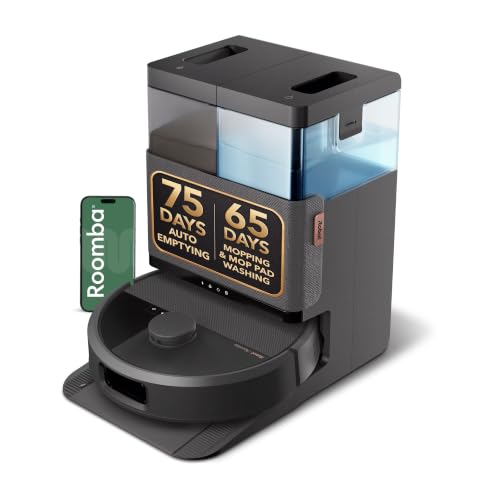
- AutoWash Dock empties debris and dries mop pads.
- AI obstacle avoidance helps steer around clutter.
- 70x stronger suction with vacuum-and-mop modes.
Best For: Retail spaces needing strong suction and automated mop maintenance.
High-Suction Long-Run Pickup

- 10,000Pa suction for heavy debris pickup.
- 90-day self-emptying dustbin cuts upkeep.
- dToF LiDAR mapping with anti-tangle blades.
Best For: Busy retail areas needing strong suction and long, low-maintenance runs.
Autonomous Scrubbing Robot – Intelligent Floor Scrubber for Large Spaces
If you need a commercial cleaning robot for retail stores that can handle wide open floor areas with less hands-on oversight, this autonomous floor scrubber is built for large, high-traffic interiors. It combines sweeping, scrubbing, and mopping in one pass, while app-based controls make scheduling and status checks straightforward for facility managers.
Best For: Shopping centers, retail floors, offices, hotels, schools, and other large commercial spaces
Pros:
- Autonomous navigation plans routes and avoids obstacles for efficient coverage
- Combines sweeping, scrubbing, and mopping to reduce manual labor
- Mobile app support for start/stop, scheduling, tracking, and cleaning reports
- Compatible with common commercial flooring like marble, tile, concrete, epoxy resin, and hardwood
Cons:
- Pricing varies by configuration and accessories, so buyers need to confirm details first
- Battery is listed as not included, which may add to setup considerations
- Better suited to large commercial environments than tight or small retail layouts
This is a practical pick if your priority is broad coverage, low-noise operation, and centralized control across a sizable retail or commercial site. The customization note also suggests you should verify the exact configuration before purchasing.
Compact Robotic Vacuum – Cordless Hard-Floor Cleaner for Stores
Makita DRC200Z 18V X2 LXT Lithium-Ion 36V Brushless Cordless Robotic Vacuum Kit - Tool Only
Check Price On AmazonThe Makita DRC200Z is a straightforward commercial cleaning robot for retail stores when your priority is dry pickup on hard floors rather than mopping. With a brushless motor, remote control, and boundary tape support, it is designed for continuous cleaning over defined areas without a complicated setup.
Best For: Hard-floor retail areas, offices, and other indoor spaces where dry vacuum cleaning is the main need
Pros:
- Cleans approximately 5,380 square feet on hard floors with two 18V LXT 5.0Ah batteries
- Up to 200 minutes of runtime in main brush plus vacuum mode
- Brushless motor is designed for efficiency and longer life
- Three-stage cleaning system uses side brushes, main brush, and vacuum suction
Cons:
- Batteries are not included, so it is not ready-to-run out of the box
- Designed for hard floors rather than wet cleaning or carpeted areas
- Remote-control operation is less advanced than app-based fleet management
This model makes sense when you want dependable automated vacuuming for open retail or office floors and do not need scrubbing or mopping. It is a solid fit for simple, repeatable dry-cleaning routines.
Smart Vacuum Mop – Self-Cleaning Robot for Mixed Floors
For a commercial cleaning robot for retail stores that needs strong pickup plus automated upkeep, the Roborock Qrevo S5V brings high suction, vacuuming, and mopping into one system. Its app controls, obstacle recognition, and self-maintenance features make it a strong option when you want more automation around routine floor care.
Best For: Retail spaces, mixed hard floors, and areas that benefit from both vacuuming and mopping automation
Pros:
- 12,000Pa suction helps lift embedded dirt and debris from carpets, rugs, and hard floors
- Auto-empties, self-washes, and hot-air dries the mops for reduced upkeep
- FlexiArm edge mopping and dual spinning mops help cover corners and edges
- Smart obstacle avoidance, LiDAR mapping, and app-based zone control improve navigation
Cons:
- Designed primarily as a robot vacuum and mop, not a dedicated scrubber
- The supplied details emphasize home coverage, so very large retail sites may need more planning
- Some advanced features depend on app setup and dock maintenance
This is a versatile option if your retail cleaning priorities include regular dust control, light mopping, and less manual dock maintenance. It is especially useful where floor layouts change or where automation matters as much as raw cleaning power.
Walk-Behind Mini Scrubber – Compact Battery Floor Cleaner
If you want a commercial cleaning robot for retail stores that focuses on scrubbing rather than autonomous navigation, this compact walk-behind machine is built for small hard-floor spaces. It is lightweight, quiet, and sized for narrow aisles, making it practical for daytime cleaning in compact retail environments.
Best For: Small retail stores, offices, restaurants, and other compact hard-floor areas
Pros:
- 15-inch cleaning width and 170 RPM brush speed for efficient scrubbing
- Up to 90 minutes of runtime with a 100-minute charge time
- Quiet 65 dB operation suits daytime cleaning in customer-facing spaces
- Lightweight 22 lb design is easy to maneuver in tight aisles
Cons:
- Not intended for carpets or rugs
- Requires manual walk-behind operation rather than autonomous cleaning
- Best suited to smaller areas, not large retail footprints
This machine is a strong fit when you need compact scrubbing power and quick drying on sealed hard floors. It is less about robotics and more about delivering dependable floor care in tight commercial spaces.
Pet-Friendly Auto-Mop Pick – eufy C28 Robot Vacuum and Mop Combo
If you’re comparing a commercial cleaning robot for retail stores with a strong focus on everyday mess control, the eufy C28 is a compelling floor-care option for smaller indoor spaces that need frequent upkeep. Its self-cleaning mop roller, strong suction, and hands-off base station make it well suited to areas where dust, crumbs, and tracked-in debris build up quickly.
Best For: Small retail spaces, back offices, and mixed hard-floor/carpet areas that need low-maintenance daily cleaning.
Pros:
- 15,000 Pa suction helps lift dust, crumbs, and pet hair from hard floors and short carpets.
- HydroJet roller mop self-cleans while mopping, which helps reduce streaks and visible residue.
- All-in-one station automates emptying, mop washing, hot-air drying, and wastewater collection.
- LiDAR navigation and privacy-safe mapping support obstacle avoidance without cameras.
Cons:
- Designed for indoor home-style flooring rather than large commercial open areas.
- Surface recommendation is limited to hard floor, wooden floor, and short wool carpet.
- May be overkill if you only need simple dry vacuuming.
This is a practical pick when you want more automation and less manual upkeep than a basic robot vacuum. For retail environments with manageable floor面积 and frequent touch-up cleaning needs, it offers a polished set of features, but it’s best viewed as a premium maintenance tool rather than a heavy-duty commercial scrubber.
Cordless Floor-Scrubbing Workhorse – SUNMAX 22" Walk-Behind Scrubber
If you need a commercial cleaning robot for retail stores that leans more toward automated floor maintenance than consumer-style vacuuming, the SUNMAX walk-behind scrubber is built for sealed hard floors. It combines scrubbing and water recovery in one pass, making it a practical choice for stores, corridors, and other high-traffic commercial areas.
Best For: Large retail floors, aisles, and back-of-house hard surfaces that need faster routine scrubbing than mop-and-bucket cleaning.
Pros:
- 22-inch scrub path and 31-inch squeegee help clean and recover water in a single pass.
- Cordless battery operation makes it easier to move through aisles and open retail spaces.
- Up to 4 hours of runtime supports routine commercial cleaning cycles.
- Includes batteries, charger, pads, brush, and squeegee assembly for a complete setup.
Cons:
- At 200 pounds, it is much heavier than compact cleaning machines.
- Best suited to sealed hard floors, not carpeted retail areas.
- Requires adequate doorway width, aisle space, and storage room.
For stores that need real floor-scrubbing capability rather than a small autonomous vacuum, this machine brings the right scale and recovery system. It is most useful where durable hard floors and repeat cleaning schedules justify a walk-behind commercial unit.
Deep-Cleaning Edge Specialist – ECOVACS DEEBOT T80 Omni
As a commercial cleaning robot for retail stores, the ECOVACS DEEBOT T80 Omni fits best where you want frequent automated cleaning on hard floors and light carpeted areas rather than heavy-duty scrubbing. Its self-cleaning roller mop, strong suction, and AI navigation make it a smart option for maintaining polished customer areas with less manual intervention.
Best For: Small shops, boutique retail spaces, and mixed-surface interiors that benefit from frequent automated vacuuming and mopping.
Pros:
- 18,000 Pa suction supports deep pickup of dust, crumbs, and pet hair.
- Instant self-cleaning roller mop helps reduce cross-contamination while mopping.
- TruEdge design extends cleaning closer to walls and furniture legs.
- OMNI station automates dust emptying, mop washing, hot-air drying, and water refilling.
Cons:
- Form factor and feature set are better suited to indoor maintenance than large commercial floor spans.
- Battery life and runtime are aimed at robotic cleaning, not heavy floor restoration.
- Not a substitute for a full-size scrubber on very large hard-floor areas.
This model stands out if you want a more refined robot for regular touch-up cleaning and edge coverage. It offers a strong automation package, but it makes the most sense in smaller retail environments where precision and low maintenance matter more than raw floor-cleaning volume.
Commercial-Grade Mapping – Tikom L8000 Plus
If you’re comparing a commercial cleaning robot for retail stores, the Tikom L8000 Plus is worth a look for locations that need automated sweeping, mopping, and low-touch upkeep on hard floors and carpets. Its LiDAR mapping, self-emptying base, and app controls make it practical for scheduled cleaning in busy spaces with multiple zones.
Best For: Small retail spaces, back rooms, and mixed-floor areas that need scheduled, hands-off cleaning with mapping and mopping.
Pros:
- 3L self-emptying base supports up to 90 days of debris collection.
- 6000Pa suction and automatic carpet boost help with debris and pet hair.
- 360° LiDAR mapping with up to 5 saved floor maps for multi-area cleaning.
- 2-in-1 sweeping and mopping with customizable water and suction settings.
Cons:
- In mop mode, you need to remove the mop holder or set no-go zones to protect carpet.
- Battery life is shorter than some larger-capacity alternatives at up to 150 minutes.
Overall, this model is a solid fit if your priority is efficient routine floor care with minimal manual emptying and reliable room-by-room control. It is especially appealing where consistent mapping and flexible cleaning modes matter more than heavy-duty commercial scrub power.
Deep-Clean Docking System – Roomba 505X Combo
For buyers evaluating a commercial cleaning robot for retail stores, the Roomba 505X Combo stands out for its dock automation, obstacle avoidance, and strong edge cleaning. It combines vacuuming and mopping with AI navigation features that can help keep high-traffic floors presentable with less day-to-day intervention.
Best For: Retail spaces that need strong suction, smarter obstacle avoidance, and automatic mop maintenance between cleanings.
Pros:
- AutoWash Dock empties debris for up to 75 days and washes, refreshes, and heat-dries mop pads.
- Up to 70x stronger suction plus dual mop pads help handle real-life messes.
- PrecisionVision AI avoids cords, socks, and wet or dry messes ahead.
- ClearView Pro LiDAR, cliff sensors, and app-based room targeting improve navigation and control.
Cons:
- Battery life is listed at up to 120 minutes, which may require planning for larger layouts.
- Best results depend on using the dock for washing, drying, and debris disposal.
This is a strong option if you want a more automated cleaning routine with a premium dock and responsive obstacle handling. It makes sense for environments where avoiding interruptions and keeping mop pads fresh are top priorities.
High-Suction Long-Run Pickup – D15S MAX Robot Vacuum
If you’re shopping for a commercial cleaning robot for retail stores, this model is aimed at heavy-duty pickup with long runtime and hands-free dustbin management. Its 10,000Pa suction, dToF LiDAR mapping, anti-tangle brush design, and multi-floor controls make it suitable for demanding floor maintenance on hard surfaces and carpet.
Best For: Busy retail areas that need strong suction, longer cleaning runs, and low-maintenance debris handling.
Pros:
- 10,000Pa suction is the strongest in this group for debris and pet hair pickup.
- 3.5L self-emptying dustbin supports up to 90 days of hands-free cleaning.
- dToF LiDAR plus anti-collision and anti-drop sensors support precise mapping.
- Built-in anti-tangle blade roller is designed to cut through hair buildup.
Cons:
- Mopping details are less emphasized than suction and navigation features.
- Maximum runtime varies by mode, dropping to 70 minutes at the highest setting.
This is the most aggressive pickup-focused option here, and it pairs that power with a large self-emptying base and advanced mapping. It is a good fit when raw suction and low-touch upkeep matter more than polished mopping features.
How We Picked the Best Commercial Cleaning Robot for Retail Stores
For retail environments, we prioritized navigation accuracy, cleaning versatility, runtime, ease of emptying or tank refilling, and the ability to work around shelves, fixtures, and foot traffic. We also looked for models that reduce labor by handling routine floor care with minimal intervention.
Quick Comparison
In simple terms, walk-behind scrubbers are best for larger hard-floor areas that need deeper cleaning, while robot vacuum-mop combos are better for frequent maintenance on mixed floor plans. If your store has heavy daily traffic, choose a model with strong obstacle avoidance and a self-emptying or self-cleaning dock. For simpler layouts, a budget-friendly unit with mapping and long runtime can still deliver solid results.
Key Buying Factors for Commercial Cleaning Robot for Retail Stores
Floor Type and Cleaning Needs
Match the machine to the surface. Hard tile, sealed concrete, and polished floors often benefit from scrubber-style machines, while dust, debris, and light spills are usually handled well by vacuum-mop robots. If your store sees tracked-in dirt from entrances, prioritize stronger suction and better edge cleaning.
Navigation and Obstacle Handling
Retail aisles, endcaps, mannequins, and seasonal displays can challenge weak mapping systems. Look for LiDAR, dToF, or advanced AI navigation so the robot can create dependable routes and avoid frequent interruptions.
Runtime and Maintenance
A Commercial Cleaning Robot for Retail Stores should complete real work on one charge and minimize downtime. Larger batteries, automatic charging, self-emptying, and self-cleaning docks matter because they reduce manual labor between runs.
Capacity and Coverage
For bigger footprints, dust bin size, water tank capacity, and cleaning path width affect how often you need to stop. Longer runtime and wider coverage are especially valuable for open sales floors and back-of-house corridors.
Who Should Buy Which Commercial Cleaning Robot for Retail Stores?
Choose a walk-behind scrubber if your store needs aggressive cleaning on larger hard-floor areas, especially where sticky residue or heavy foot traffic is common. Pick a robot vacuum and mop if you want frequent autonomous maintenance, better daily dust control, and less staff involvement.
If your layout changes often, focus on smarter navigation and obstacle avoidance. If your floor plan is simple, durability, runtime, and easy servicing may matter more than premium AI features. The best choice is the one that fits your floor type, traffic level, and maintenance schedule—not just the highest suction number.