Choosing the right microscope can make homeschool science more hands-on, memorable, and effective. The best models balance image clarity, magnification range, durability, and ease of use.
Below, we focus on options that work well for different ages and learning levels, from first-time users to students ready for more advanced biology work.
Best 10 Compound Microscopes for Homeschool Picks for 2026
Advanced Metal STEM Scope
100X-2000X Metal STEM Microscope Kit

- 100X-2000X magnification range
- Dual LED lighting for varied specimens
- Metal frame with phone adapter and case bag
Best For: older homeschool students, beginners, and hobbyists
Starter Classroom Pick
40X-1000X Microscope Kit with 52 Pieces
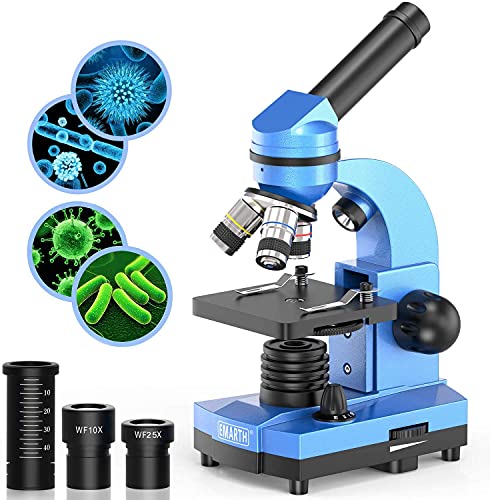
- 40X-1000X magnification for beginners
- 52-piece accessory and slide kit
- Top/bottom LED lighting with metal frame
Best For: young homeschool learners and first-time microscope users
Complete Home Lab Kit
100X-2000X Microscope with 28 Slides

- 100X-2000X magnification with clear glass optics
- 28-slide kit plus phone clip and Bluetooth remote
- Dual LED lighting for opaque and translucent samples
Best For: homeschool biology projects and complete home lab use
Beginner Blue Kit
58-Piece 100X-1200X Kids Microscope

- 100X-1200X magnification for beginners
- 58-piece kit with prepared and blank slides
- Guide, LED light, and carrying box included
Best For: elementary homeschool science and supervised beginners
Premium High-Power Starter
40X-2500X Compound Microscope with Phone Holder

- 40X-2500X magnification range
- Dual LED lighting for slides and opaque objects
- Includes phone holder and starter accessories
Best For: Homeschoolers who want higher magnification and extra viewing tools
Classic All-Metal School Pick
Cordless 40X-1000X AmScope Microscope

- 40X-1000X five-step magnification
- All-metal frame with LED illumination
- Runs on adapter or AA batteries
Best For: Students from elementary through high school who need a durable basic scope
Complete Biology Kit
100X-2000X Microscope with Slides and Bag
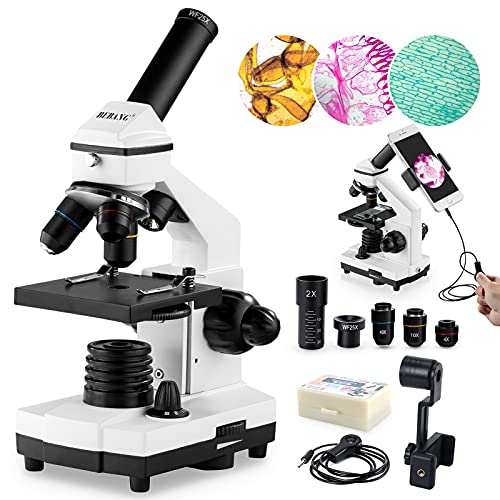
- 100X-2000X magnification range
- Dual LED lighting with fine focus control
- Includes slides, phone adapter, and carrying bag
Best For: Homeschool biology lessons that need a ready-to-use bundle
Advanced STEM Pick
2500X Compound Microscope for Homeschool Labs

- Up to 2500X magnification with WF10X/WF25X eyepieces
- All-metal aluminum alloy body for stability
- Includes slides, phone adapter, and accessories
Best For: Upper elementary to beginner high school homeschool science
Easy-Start Value
40-2000X Compound Microscope for Beginners

- 40X-2000X range with H10X/H25X eyepieces
- Achromatic glass lenses for clear, bright images
- Includes 5-piece slide set and storage bag
Best For: Beginners and homeschoolers who want a ready-to-use microscope
Rechargeable Runner-Up
2000X Compound Microscope with Dual Light

- 40X-2000X magnification with achromatic objectives
- USB-C rechargeable battery with up to 4 hours use
- Includes phone holder, slides, and carrying box
Best For: Homeschool families who want portability and easy sharing
Advanced Metal STEM Scope – 100X-2000X Metal STEM Microscope Kit
If you want compound microscopes for homeschool that feel closer to a real lab setup than a toy, this metal STEM kit is a strong fit. It offers 100X-2000X magnification, dual LED lighting, and a complete accessory bundle, making it practical for older students who want to study slides, cells, and small specimens with more detail.
Best For: homeschool science for older kids, beginners, and adult learners who want a sturdy all-in-one compound microscope
Pros:
- 100X-2000X magnification with WF25X eyepiece and 2X Barlow lens
- Top and bottom LED lighting helps with opaque and translucent specimens
- All-metal frame and coaxial coarse/fine focus support more stable viewing
- Includes a phone adapter and case bag for home or STEM use
Cons:
- Best suited to ages 12+ and beginners with some patience
- Needs AC power or 3 AA batteries, which are not included
- Higher magnification will require careful slide prep and focusing
Overall, this is a solid choice if you want a homeschool microscope kit that balances higher magnification, practical lighting, and a durable build for regular use.
Starter Classroom Pick – 40X-1000X Microscope Kit with 52 Pieces
This compound microscope is a budget-friendly option for families looking at compound microscopes for homeschool, especially for younger students who need a straightforward starter kit. With 40X-1000X magnification, LED illumination, and 52 included pieces, it supports hands-on science without overwhelming first-time users.
Best For: kids, beginners, and homeschool families wanting a true entry-level compound microscope with learning accessories
Pros:
- 40X-1000X magnification covers common beginner biology activities
- 52-piece kit includes prepared slides, blank slides, and tools
- Top and bottom LED lighting helps with different specimen types
- Durable metal frame and color filters support easier viewing
Cons:
- Batteries are not included
- Lower maximum magnification than some higher-end homeschool models
- Designed for beginners, so advanced users may outgrow it quickly
For families who want a real compound microscope that is easy to introduce at home, this kit gives strong value and a useful mix of learning tools.
Complete Home Lab Kit – 100X-2000X Microscope with 28 Slides
For families comparing compound microscopes for homeschool, this all-in-one model stands out because it pairs 100X-2000X magnification with a ready-to-use slide bundle. It is built for students and adults who want a more complete home lab experience, including phone imaging accessories and dual LED illumination for different specimen types.
Best For: homeschool science projects, middle and high school biology, and families wanting a complete microscope kit
Pros:
- 100X-2000X optical range with 4X, 10X, 40X objectives and WF25X eyepiece
- Includes 28 slides plus blank slides for immediate and DIY use
- Top and bottom LED lighting works for opaque and translucent samples
- Phone clip adapter and Bluetooth remote add convenience for photos
Cons:
- Requires a power adapter or battery power setup
- More features may be more than very young beginners need
- Smaller angle of view than some larger educational scopes
This is a practical pick if you want a fuller homeschool microscope package without having to buy slides and accessories separately.
Beginner Blue Kit – 58-Piece 100X-1200X Kids Microscope
If you need compound microscopes for homeschool that are especially approachable for younger kids, this 58-piece kit is built for beginner science exploration. The 100X-1200X range, LED light, and included guide make it easy to start observing plants, insects, and everyday objects with adult help.
Best For: elementary homeschool science, beginner family projects, and kids ages 5-12 with supervision
Pros:
- 100X-1200X magnification is a practical range for beginner exploration
- 58-piece kit includes prepared specimens, blank slides, and tools
- Colorful guide helps kids learn microscope parts and basics
- Metal body and carrying box make it easier to store and move
Cons:
- Requires 2 AA batteries, which are not included
- Maximum magnification is lower than some advanced homeschool models
- More of a guided beginner kit than a high-end lab microscope
For families starting science at home, this kit makes the microscope experience more accessible while still offering real optical viewing and useful learning materials.
Premium High-Power Starter – 40X-2500X Compound Microscope with Phone Holder
If you want compound microscopes for homeschool that lean toward higher magnification and a more classroom-style feature set, this JECONE model is a strong pick. It combines 40X-2500X viewing, dual LED illumination, and coarse/fine focusing, so students can move from quick setup to sharper inspection without much fuss.
Best For: Homeschool families who want a high-magnification microscope with kid-friendly extras like a phone holder and included slides.
Pros:
- 40X-2500X magnification range with WF25X/10X eyepieces and 4X/10X/100X objectives
- Dual LED lighting for both opaque objects and translucent slides
- Coarse/fine focus knobs help dial in clearer detail
- Includes a phone holder and starter accessories for hands-on use
Cons:
- Higher magnification may be more than some beginners need right away
- Phone holder and extra accessories add complexity compared with simpler student models
This is a feature-rich option for families who want more than a basic intro scope and expect to spend time on slide observation. The built-in lighting and focus controls make it easier to teach careful viewing, while the included accessories help you start exploring sooner.
Classic All-Metal School Pick – Cordless 40X-1000X AmScope Microscope
For families comparing compound microscopes for homeschool, this AmScope model stands out for its straightforward design and school-friendly build. It offers 40X-1000X magnification, all-metal construction, and LED illumination that can run from an outlet or batteries, which is handy for flexible lesson setups.
Best For: Homeschool students who need a durable, no-nonsense microscope for elementary through high school science.
Pros:
- 40X, 100X, 250X, 400X, and 1000X magnification settings
- All-metal framework for a sturdier feel
- Cordless LED illumination with adapter or AA battery power
- Rotatable monocular head for easier viewing position changes
Cons:
- Top magnification is lower than some higher-power homeschool models
- More basic accessory set than microscope kits that include slides and phone adapters
This is the kind of microscope that fits a home classroom well: durable, simple to operate, and versatile enough for a wide age range. If you want reliable basics instead of a feature-heavy kit, it makes a practical long-term choice.
Complete Biology Kit – 100X-2000X Microscope with Slides and Bag
This BEBANG option is aimed at families who want compound microscopes for homeschool with a more complete starter kit. With 100X-2000X magnification, top and bottom LED lighting, and several included accessories, it gives students a lot to work with for biology observation at home.
Best For: Homeschool science lessons that benefit from a bundled microscope kit with slides, a phone adapter, and carrying bag.
Pros:
- 100X-2000X magnification for a broad range of observations
- Dual LED illumination with a 0.65 NA condenser and disc diaphragm
- Includes 15 slides, 10 accessories, a phone adapter, and carrying bag
- Coarse/fine focus and solid metal frame support precise viewing
Cons:
- More accessories may be more than needed for casual users
- Single monocular design is less flexible than a binocular setup
If you want an all-in-one homeschool biology microscope, this kit is easy to justify because it arrives ready for guided observation. The included slides and phone adapter make it especially useful for lessons where you want to view, compare, and document specimens.
Advanced STEM Pick – 2500X Compound Microscope for Homeschool Labs
If you’re comparing compound microscopes for homeschool, this 2500X model stands out for families that want a more advanced setup without moving into a lab-only price tier. It combines high-magnification eyepieces and objectives with a sturdy metal body, so students can explore slides with a more serious feel and solid support.
Best For: Upper elementary through beginner high school homeschoolers who want a durable, feature-rich microscope for biology and STEM work.
Pros:
- Up to 2500X maximum magnification with WF10X/WF25X eyepieces and 4X/10X/100X objectives
- All-metal aluminum alloy body for added stability and durability
- Adjustable LED illumination helps with bright, even viewing
- Includes prepared slides, blank slides, a phone adapter, and key accessories
Cons:
- The 2500X claim is geared toward advanced use, so beginners may not need that much power
- More complex than basic entry-level student microscopes
This is a strong pick if your homeschool needs a microscope that can grow with science lessons and handle more detailed observation. The included accessories make it easier to start right away, while the metal build should appeal to families who want something sturdier than typical plastic models.
Easy-Start Value – 40-2000X Compound Microscope for Beginners
For families shopping for compound microscopes for homeschool, this 40-2000X option offers a practical balance of range, included extras, and simple setup. It uses metal construction and achromatic glass lenses for clear, bright images, making it a good fit for students who want to start exploring without a steep learning curve.
Best For: Beginners, students, and homeschoolers who want an easy-to-use microscope with a ready-to-go slide set.
Pros:
- 40X-2000X magnification range with H10X and H25X eyepieces plus 4X/10X/40X objectives
- Aluminum alloy body adds stability during use
- Achromatic glass lenses are designed for clear and bright imaging
- Includes a 5-piece slide set and storage bag for immediate use
Cons:
- Higher magnification depends on the 2X magnifying lens, so setup is a little more involved
- Fewer included accessories than some more complete kits
This is a sensible choice if you want a homeschool microscope that is straightforward but still capable of detailed observation. The included slides and storage case help make it classroom-ready, while the sturdy build should hold up well for regular use.
Rechargeable Runner-Up – 2000X Compound Microscope with Dual Light
If you want compound microscopes for homeschool that are easy to move between rooms and flexible in different lighting conditions, this 2000X model is worth a look. It pairs a metal frame with rechargeable power, dual illumination, and a phone holder, which makes it especially convenient for hands-on learning and sharing discoveries.
Best For: Homeschool families, beginners, and science students who want rechargeable convenience and built-in photo sharing.
Pros:
- 40X-2000X magnification with WF10X/WF25X eyepieces, a 2X lens, and 4X/10X/40X achromatic objectives
- Rechargeable battery via USB-C with up to 4 hours of use
- Mirror and LED lighting with adjustable angle and brightness
- Includes 5 prepared slides, a shockproof carrying box, and a phone holder
Cons:
- The monocular design may feel less comfortable for some users than binocular models
- Battery-powered use adds one more thing to remember to charge
As a homeschool microscope, this model is appealing because it combines practical portability with useful extras. The rechargeable design and phone holder make it easy to capture images or move the microscope around the house, while the metal frame and included slides support regular study sessions.
How We Picked These Compound Microscopes for Homeschool
We looked for Compound Microscopes for Homeschool that offer a practical mix of optical quality, sturdy construction, and student-friendly controls. Priority was given to models with usable magnification ranges, LED illumination, reliable focus mechanisms, and accessories that support real learning instead of just novelty appeal.
We also favored microscopes that are easier to set up and maintain at home, since homeschool environments often need tools that can be shared across ages and used repeatedly without much frustration.
Quick Comparison
For younger beginners, the best choice is usually a simpler microscope with lower-to-moderate magnification, bright LED lighting, and included slide kits. For older students, look for stronger optics, metal construction, and broader magnification flexibility so they can study cells, tissues, and prepared specimens more effectively.
If you want one microscope to cover multiple grade levels, a midrange model with decent optics and a solid build is often the most practical balance.
Key Buying Factors for Compound Microscopes for Homeschool
Magnification Range
Higher numbers are not always better. For homeschool use, useful magnification matters more than extreme claims. A balanced range helps students see detail without losing image sharpness.
Optics and Lens Quality
Clear lenses make a bigger difference than raw magnification. Glass optics generally provide better viewing than basic plastic components, especially for older students studying biology.
Lighting
LED illumination is important because it improves visibility on prepared slides and is easier to use indoors. Adjustable brightness is a helpful bonus when viewing different specimen types.
Build Quality
Metal bodies and stable bases are worth prioritizing if the microscope will be used often or shared among siblings. A sturdier frame also helps reduce vibration during focusing.
Accessories and Learning Value
Slide sets, tools, and carrying cases can add real value, especially for younger learners. Just make sure the extras do not come at the expense of the microscope’s core optical performance.
Who Should Buy Which Compound Microscopes for Homeschool?
If your student is just starting out, choose a simple, durable model with easy controls and an included starter kit. Families with middle-school or high-school students should consider higher-quality Compound Microscopes for Homeschool with better optics and metal construction. If multiple children will use the same microscope, a versatile midrange option is usually the smartest buy.
For advanced learners, prioritize lens quality, stable focus, and a broader objective range over accessory count. That will give you a microscope that remains useful as science lessons become more demanding.