Compound microscopes with cameras make it easier to observe, document, and share detailed specimens without losing what you see through the eyepieces. They’re a smart choice for students, educators, hobbyists, and lab users who want both hands-on viewing and digital capture.
Below, we focus on the most practical options across budget, usability, image quality, and magnification range so you can choose a microscope that fits your workflow, not just the spec sheet.
Best 10 Compound Microscopes with Cameras Picks for 2026
Best Value Lab-Ready Pick
AmScope B120 Series 5MP Binocular Microscope
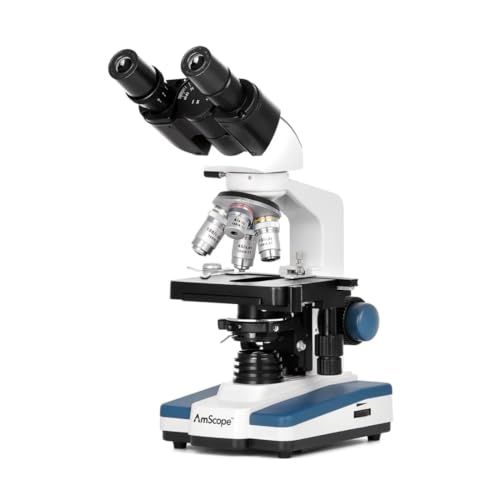
- 5MP USB camera with software for image capture and analysis
- 40X-2500X magnification for educational and lab use
- LED lighting with fly-eye lens for bright viewing
Best For: Students and lab users who want an affordable microscope-camera bundle
Software-First Camera Upgrade
SWIFT EP2M 2MP Digital Eyepiece Camera

- 2 MP live view at 1920x1080/30 fps
- S-Viewer software for measuring, annotation, and export
- Fits 23.2 mm eyepieces and most trinocular phototubes
Best For: Adding digital capture and measurement to an existing microscope
Starter Digital Lab Option
AmScope B120C-E1 1MP Binocular Microscope
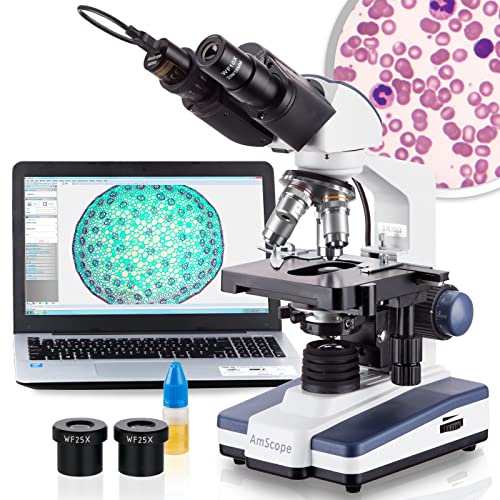
- 1.0 MP USB camera with Windows microscopy software
- 40X-2500X magnification for student and lab use
- LED lighting with fly-eye lens for bright viewing
Best For: Entry-level users who want a simple microscope-camera combo
High-Magnification Trinocular Pick
Woehrsh 40X-5000X Trinocular Microscope Kit
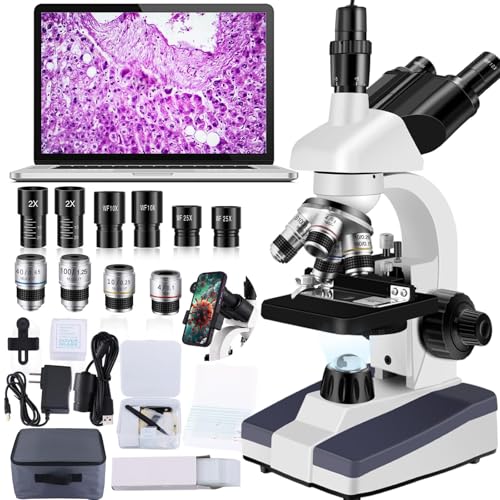
- 40X-5000X magnification for high-power viewing
- Trinocular body includes an HD USB camera
- Comes with a large lab accessory bundle
Best For: Users who want a high-magnification lab-style microscope kit
Student-Friendly USB Model
AmScope 40X-1000X with 640x480 Camera

- 640x480 USB 2.0 camera for photos and videos
- 40X-1000X magnification with LED lighting
- Metal frame and rotating monocular head
Best For: Beginners and students who want simple digital capture
Advanced Lab Bundle

- 5.0MP camera with imaging software for Mac/Windows
- Trinocular head for viewing, recording, and capture
- 40X-2500X magnification with 4 DIN objectives
Best For: Clinicians and serious hobbyists needing stronger imaging tools
Dual-View Screen Microscope
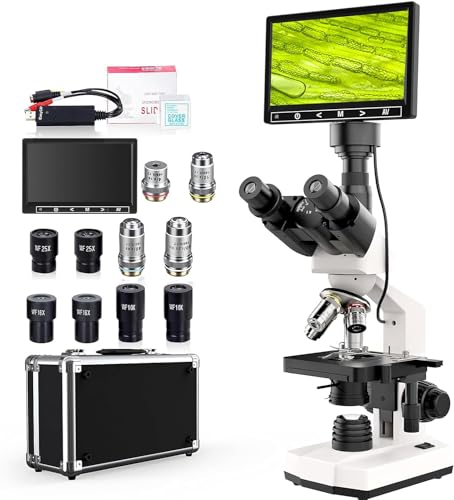
- Built-in 7-inch LCD screen and 5MP camera
- 40X-2500X magnification with dual illumination
- Aluminum case and included accessories
Best For: Buyers who want an all-in-one screen microscope
Research-Grade Trinocular

- 1.3MP USB camera for live streaming and captures
- 40X-5000X trinocular compound microscope
- Double-layer metal stage with LED lighting
Best For: Users who want a trinocular scope for computer-based viewing and sharing
Lab-Grade Imaging
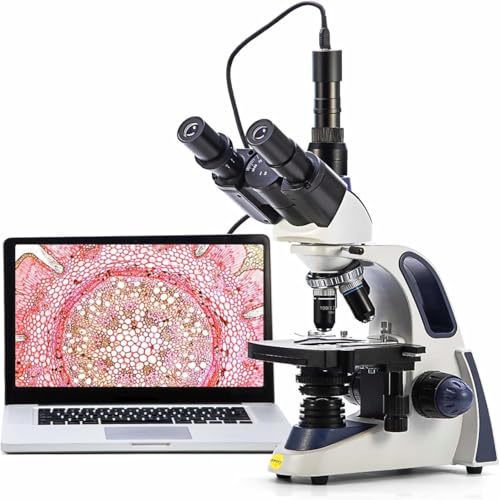
- 5MP USB camera with analysis software
- 40X-2500X DIN achromatic optics
- Trinocular head with mechanical stage
Best For: Students and lab users who want a trinocular microscope with strong imaging support
Research Value Trinocular

- 40X-5000X magnification with flat-field achromats
- Trinocular head supports add-on camera accessories
- Double-layer stage with coaxial coarse/fine focus
Best For: Users who want a research-leaning trinocular scope and plan to add imaging gear
Best Value Lab-Ready Pick – AmScope B120 Series 5MP Binocular Microscope
If you want compound microscopes with cameras for school, lab work, or basic clinical use, this AmScope B120 Series gives you a strong feature set without pushing into premium pricing. It pairs 40X-2500X magnification with a 5MP USB camera and software, so it can handle viewing, image capture, and analysis in one setup.
Best For: Students, educators, and budget-conscious users who want a full microscope-and-camera kit.
Pros:
- Includes a 5MP USB camera with professional software for capturing and analyzing images
- Offers 40X-2500X magnification for educational, lab, and clinic settings
- LED illumination with a fly-eye lens is designed for bright, daylight-balanced lighting
- Binocular head and 3D stage make day-to-day viewing more practical
Cons:
- USB camera is 5MP, but the listing does not specify advanced imaging features beyond capture and analysis
- Best suited to standard lab and education work rather than highly specialized imaging
This is a well-rounded choice if you want a dependable compound microscope with a camera for teaching or general lab use. Its main appeal is the balance of magnification, illumination, and included digital tools.
Software-First Camera Upgrade – SWIFT EP2M 2MP Digital Eyepiece Camera
For users who already own one of the compound microscopes with cameras-ready trinocular or eyepiece-compatible setups, this SWIFT digital eyepiece camera is a practical add-on. It focuses on live viewing, measuring, annotation, and file export through S-Viewer, making it useful when your priority is documentation and teaching rather than a full microscope bundle.
Best For: Users who need a compact microscope camera for measurement, annotation, and PC viewing.
Pros:
- 2 MP 1920×1080 live view at 30 fps for hands-free PC or projector display
- S-Viewer software supports measuring, annotation, capture, and export
- Fits 23.2 mm eyepieces and most trinocular phototubes
- Compatible with Windows 7-11 and macOS
Cons:
- Camera-only product, so it is not a complete microscope setup
- Some microscopes may require a separate adapter
This is a sensible buy if your microscope already has the right mounting options and you mainly want imaging, measurement, and classroom display. It is more of a focused camera solution than an all-in-one package.
Starter Digital Lab Option – AmScope B120C-E1 1MP Binocular Microscope
This AmScope model is a straightforward entry in the compound microscopes with cameras category for users who want a capable student-to-professional scope with built-in digital capture. It combines the same 40X-2500X optical range as the B120 line with a 1.0 MP USB camera, making it a practical choice for basic image documentation.
Best For: Students and labs that want an affordable microscope with simple digital capture.
Pros:
- Includes a 1.0 MP USB camera and microscopy software for Windows
- 40X-2500X magnification supports education, lab, and clinic use
- LED illumination with a fly-eye lens is built for bright, daylight-balanced light
- Binocular design keeps the viewing experience practical for routine use
Cons:
- Camera resolution is lower than higher-end microscope-camera bundles
- Best for basic capture and analysis rather than advanced imaging workflows
If your priority is an affordable microscope with a camera for everyday observation and simple documentation, this model fits well. It keeps the setup accessible while still covering the core needs of teaching and entry-level lab work.
High-Magnification Trinocular Pick – Woehrsh 40X-5000X Trinocular Microscope Kit
Among compound microscopes with cameras, this Woehrsh trinocular model stands out for buyers who want a broader magnification range and a more fully equipped lab-style package. It includes a HD USB camera, dual mechanical stage, LED lighting, and a large accessory set, so it is aimed at more serious educational and inspection use.
Best For: Lab-focused users who want a high-magnification trinocular microscope with bundled accessories.
Pros:
- 40X-5000X magnification gives it a wider top-end range than the other options here
- Trinocular design includes an HD USB camera for digital viewing
- Dual mechanical stage and dual coaxial coarse/fine focus support more controlled use
- Large accessory kit adds slides, coverslips, tools, and a cell phone holder
Cons:
- More complex than a basic student microscope
- Detailed performance specs for the camera are limited in the listing
This is the most feature-packed option in the group if you want high magnification and a more complete bench setup. It makes the most sense for users who value extras, trinocular viewing, and a lab-oriented package.
Student-Friendly USB Model – AmScope 40X-1000X with 640×480 Camera
If you want compound microscopes with cameras for classroom work or casual home use, this AmScope model keeps things straightforward. It pairs 40X-1000X magnification with a 640×480 USB 2.0 digital camera, so you can view slides and capture basic photos or videos on Windows or Mac.
Best For: Students, beginners, and families who want an easy-to-use microscope with simple digital image capture.
Pros:
- Includes a 640×480 USB 2.0 camera for photos and videos.
- Works with Windows and Mac, with third-party software support.
- Sturdy all-metal frame and LED illumination for everyday use.
- Rotating monocular head adds viewing flexibility.
Cons:
- Camera resolution is modest compared with higher-end options.
- Windows-only software features advanced tools, while Mac support is more basic.
Overall, this is a practical entry-level choice if you want a compound microscope with a camera without moving into a more complex lab setup. It focuses on usability, basic imaging, and durable construction.
Advanced Lab Bundle – Swift SW350T Trinocular 5.0MP
This Swift option is built for buyers comparing compound microscopes with cameras that can handle more serious imaging and documentation. It combines 40X-2500X magnification, a trinocular head, and a 5.0MP camera with software for editing, stitching, EDF, and measurement on Mac or Windows.
Best For: Clinicians, students, and hobbyists who want a higher-magnification microscope with more capable camera features.
Pros:
- 5.0MP camera with software for editing, stitching, EDF, and measurement.
- Trinocular head supports viewing, livestreaming, recording, and capture.
- 40X-2500X magnification with 4 DIN achromatic objectives.
- Includes 5 prepared slides and 5 blank slides.
Cons:
- More complex than a basic student microscope.
- Bulky all-metal and plastic build weighs 4.16 kg.
For users who want more than a starter microscope, this model offers a strong mix of optical range, camera capability, and practical accessories. The trinocular design makes it especially useful when image capture matters as much as viewing.
Dual-View Screen Microscope – VITANO 7" LCD 5MP
Among compound microscopes with cameras, this VITANO model stands out for its built-in 7-inch LCD screen and non-removable 5MP camera. It supports dual-view use, 40X-2500X magnification, and dual illumination, making it a convenient setup for observing, capturing, and reviewing samples without relying only on an external computer.
Best For: Users who want an integrated screen-and-camera microscope for easy viewing and documentation.
Pros:
- Built-in 7-inch LCD screen with a non-removable 5MP camera.
- 40X-2500X magnification using 10X and 25X eyepieces.
- NA1.25 Abbe condenser and dual illumination support clearer viewing.
- Includes an aluminum carrying case and accessory package.
Cons:
- Camera is non-removable, so it is less flexible than upgradeable setups.
- Uses a capture card workflow rather than a direct PC-focused camera system.
This is a good pick if you prefer an all-in-one microscope with a screen built in. The combination of screen, camera, and sturdy carrying case makes it especially convenient for repeated use and storage.
Research-Grade Trinocular – 40X-5000X USB Viewing
If you are comparing compound microscopes with cameras for classroom demos, shared viewing, or basic research work, this trinocular model is built around flexible digital use. Its 1.3MP USB 2.0 camera supports live streaming, recording, and image capture on Mac OS X or Windows, while the trinocular head also keeps the optical path available for direct observation.
Best For: Adults, educators, and hobbyists who want a trinocular compound microscope with USB camera output for computer-based viewing and sharing.
Pros:
- 1.3MP USB camera supports live streaming, recording, and image capture
- 40X-5000X magnification with 4X, 10X, 60X, and 100X objectives
- Double-layer metal mechanical stage for stable X-Y movement
- LED illumination with variable diaphragm for light control
Cons:
- Requires a computer or projector to use the camera features
- Top-end magnification is dependent on the listed objective combination
Overall, this is a strong pick if your priority is a conventional trinocular compound microscope that also adds easy USB imaging for presentations, classroom sharing, or documentation. The metal build, mechanical stage, and adjustable lighting make it more suitable for serious hands-on use than a basic student scope.
Lab-Grade Imaging – SW380T 5MP Trinocular
For buyers focused on compound microscopes with cameras, the SWIFT SW380T stands out for its 5MP USB imaging setup and lab-oriented optical layout. It combines a trinocular head with a dedicated camera port, wide-field eyepieces, and DIN achromatic objectives, making it a practical option for photography, live instruction, and specimen documentation.
Best For: Students, educators, and lab users who want a trinocular microscope with stronger imaging support and a polished viewing workflow.
Pros:
- 5MP USB camera with analysis software for photos and videos
- 40X-2500X magnification with 4 achromatic objectives
- Trinocular design with dedicated camera port for imaging
- Mechanical stage, Abbe condenser, and LED dimmer for controlled viewing
Cons:
- Maximum magnification is lower than some research-style listings
- Camera workflow depends on included software and computer compatibility
This model makes sense if you want a balanced microscope that is as comfortable for observation as it is for imaging. The trinocular layout, spring-protected objectives, and wide-field eyepieces point to a more deliberate, lab-style experience rather than a simple starter scope.
Research Value Trinocular – 40X-5000X LED Platform
If you are shopping for compound microscopes with cameras and want research-style features without a complicated layout, this Herwicm trinocular model is worth a look. It offers a high-magnification optical system, a double-layer mechanical stage, and LED illumination, while the trinocular head is designed to accommodate additional camera accessories for viewing, broadcasting, recording, and capturing enlarged specimens.
Best For: High school, college, and adult users who want a research-leaning trinocular microscope with room for camera attachment.
Pros:
- 40X-5000X magnification with 195 flat-field achromatic objective lens design
- Trinocular head supports additional electronic eyepieces and microscope camera accessories
- Coaxial coarse and fine focusing for more precise control
- Double-layer mechanical stage with Abbe condenser and adjustable aperture
Cons:
- Camera is not included according to the supplied notes
- Best suited to users comfortable adding their own imaging accessory
As configured, this is the most flexible option for buyers who already have or plan to add a camera later. It leans more toward a serious lab workflow than an entry-level classroom scope, with the kind of stage, focusing, and illumination controls that support careful specimen work.
How We Picked These Compound Microscopes with Cameras
We prioritized models that balance optical quality, camera usefulness, stage control, and everyday setup convenience. For Compound Microscopes with Cameras, the most important factor is not just maximum magnification, but how well the image stays clear, stable, and easy to record at the magnifications you’ll actually use.
We also looked for useful extras such as mechanical stages, trinocular heads, LED illumination, and included software or built-in displays, since these features can significantly improve workflow for teaching, documentation, and inspection.
Quick Comparison: What to Expect
Broadly speaking, student-friendly models usually favor simpler operation and solid general-purpose imaging, while trinocular or research-style options are better for photography and video capture. Camera resolution matters, but so does sensor quality, software support, and whether the microscope can deliver a steady field of view during capture.
If you need easy sharing or lab documentation, a model with a dedicated camera port or integrated screen is often more convenient than relying on an eyepiece adapter alone.
Key Buying Factors for Compound Microscopes with Cameras
Magnification and Optical Clarity
Higher magnification is not automatically better. Look for a useful working range and reliable optics that stay sharp at the powers you’ll use most often. For many buyers, a clean 40X to 1000X or 2500X range is more practical than chasing extreme numbers.
Camera Resolution and Software
A good camera should capture clear stills and usable video with straightforward controls. Check whether the software supports measurement, calibration, and compatibility with your operating system. For Compound Microscopes with Cameras, software quality can matter as much as megapixels.
Stage, Focus, and Illumination
A mechanical stage and precise coarse/fine focusing make specimen tracking much easier. Bright, adjustable LED lighting helps preserve contrast and detail, especially when photographing thin or translucent samples.
Head Style and Viewing Needs
Binocular models are comfortable for long sessions, while trinocular models are usually the best choice when you plan to use the camera regularly. If you want live classroom viewing or simple image sharing, integrated display models can be especially convenient.
Who Should Buy Which Compound Microscopes with Cameras?
Students and beginners should look for an easy-to-use model with dependable optics, a mechanical stage, and a camera that does not require a complex setup. Teachers and lab users may prefer trinocular designs for smoother documentation and presentation.
If you’re focused on research, inspection, or frequent imaging, invest in better stage control, stronger software, and a camera system that supports consistent capture. If you mainly want occasional photos and general observation, a simpler compound microscope with camera support can be the better value.