Choosing the right dash cam for highway driving means prioritizing plate readability, steady footage at speed, and dependable low-light performance. The best models reduce motion blur, handle glare, and keep recording when traffic gets busy.
Below, we focus on practical features that matter most on the open road, from sensor quality and field of view to rear coverage, app access, and parking protection.
Best 10 Dash Cam for Highway Driving Picks for 2026
Best for High-Speed Detail
ROVE R2-4K DUAL Front & Rear Dash Cam

- 4K front and 1080P rear recording
- STARVIS 2 sensor for better night footage
- Built-in GPS with 128GB card included
Best For: Drivers who want sharp dual-channel coverage with strong night visibility on highways.
Best for Plate Reading
REDTIGER ZP1 Front and Rear Dash Cam

- Telephoto front lens targets distant plate capture at speed
- Dual front views plus rear camera cover more angles
- STARVIS 2, HDR, and 5.8GHz WiFi improve clarity and convenience
Best For: Highway drivers who want sharper plate detail and multi-angle incident evidence.
Best for Ride-Hail Monitoring

- 160° front lens plus 155° interior camera
- IR night vision for dark roads and cabin use
- Simple suction-cup setup with loop recording
Best For: Rideshare drivers, commuters, and families who want front-and-cabin coverage.
Best for Night Highway Clarity
REDTIGER F7NA 4K Dual Dash Cam

- True 4K front recording with STARVIS 2 for sharper highway detail
- Dual front/rear coverage helps with lane changes and rear-end incidents
- 5GHz Wi‑Fi, GPS, and voice control add convenience on the road
Best For: Drivers who want clear night footage, dual-camera protection, and fast clip sharing.
Best for All-Around Coverage
PRUVEEO 360° 4-Channel Dash Cam

- Records front, rear, inside, left, and right at once
- Built-in GPS and Wi-Fi for trip tracking and easy sharing
- Includes 128GB card and supports parking mode with hardwire kit
Best For: Drivers who want broad 360-degree protection and detailed incident recording on long highway commutes.
Best for Night-Like Detail
REDTIGER 4K STARVIS 2 F7N Touch
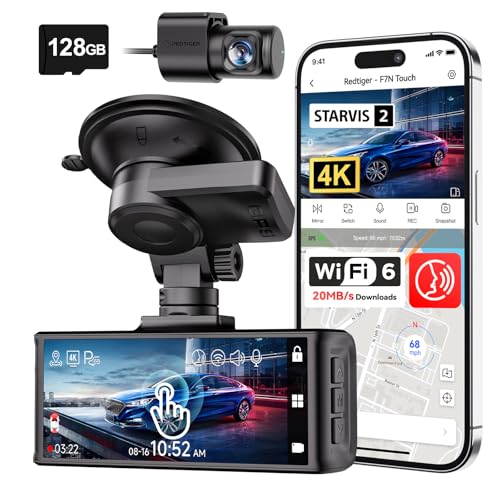
- 4K front and 1080p rear dual recording
- STARVIS 2 sensor with strong low-light performance
- Voice control, touchscreen, GPS, and 5GHz WiFi
Best For: Drivers who want sharp footage and easy controls for highway commutes and night driving.
Best for Highway Coverage

- 4K front + 2K rear recording for clear highway footage
- 170° wide-angle lenses cover up to six lanes
- Built-in GPS, dual-band Wi-Fi, and 64GB card included
Best For: Highway drivers who want wide coverage, GPS tracking, and a dual-camera setup.
Best for Cabin Coverage
3-Channel Front, Cabin & Rear Dash Cam

- Front, cabin, and rear recording in one system
- Includes 32GB card, loop recording, and G-sensor
- Night vision plus HDR/WDR for better low-light footage
Best For: Drivers who want all-around coverage, including the cabin and rear view, on long highway trips.
Best Simple Pick
REDTIGER F7NP 4K Dual Dash Cam

- 4K front and 1080P rear recording
- STARVIS 2 sensor with WDR/HDR night support
- 5.8GHz WiFi and free card included
Best For: Drivers who want clearer night footage and dependable dual-channel coverage on highways.
Best for High-Speed Detail – ROVE R2-4K DUAL Front & Rear Dash Cam
If you want a dash cam for highway driving that captures both lanes ahead and traffic behind, the ROVE R2-4K DUAL is built for that job. It pairs 4K front recording with 1080P rear coverage, a wide field of view, and STARVIS 2 night performance, so you get clearer detail in fast-moving, mixed-light conditions.
Best For: Drivers who want sharp dual-channel coverage, strong night visibility, and built-in GPS for long highway commutes or road trips.
Pros:
- 4K front + 1080P rear recording helps capture more detail on the highway.
- STARVIS 2 sensor and fast aperture improve low-light clarity.
- Built-in GPS adds speed, route, and location data to recordings.
- Includes a 128GB card and 5GHz WiFi for easy setup and transfers.
Cons:
- Hardwire kit is required for parking mode and sold separately.
- Dual-camera setup takes more time to install than a basic front-only model.
For shoppers comparing a dash cam for highway driving, this ROVE model stands out for its mix of sharp front footage, rear coverage, and quick app-based access. It’s a practical choice if you want reliable evidence capture without giving up modern features.
Best for Plate Reading – REDTIGER ZP1 Front and Rear Dash Cam
If you want a dash cam for highway driving that prioritizes distant plate capture and clear lane-by-lane context, the REDTIGER ZP1 is built for that job. Its telephoto front lens, wide-angle front view, and rear camera work together to document fast-moving traffic, merges, and rear-end incidents with more detail than a single-lens setup.
Best For: Drivers who spend a lot of time on highways and want sharper evidence from far-away plates, night traffic, and multi-angle incident coverage.
Pros:
- Telephoto front lens is tuned for distant plate recognition at speed
- Dual front views plus rear coverage give strong all-angle incident evidence
- STARVIS 2 and HDR help improve night clarity and reduce glare on dark roads
- 5.8GHz WiFi and voice control make saving and transferring clips quick
Cons:
- Hardwire kit for 24/7 parking mode is sold separately
- Advanced multi-lens setup may be more than casual drivers need
- SD card is not included
For a dash cam for highway driving, the ZP1 stands out because it focuses on the hardest part of the job: capturing usable detail from farther away while still preserving road context. If your commute or road trips involve fast traffic, lane disputes, or night driving, this model brings a strong evidence-first approach.
Best for Ride-Hail Monitoring – Front and Inside Dash Cam
If you want a practical dash cam for highway driving that can also record the cabin, this dual-camera model is built for everyday coverage. The front lens uses a wide 160° view for the road ahead, while the inside camera adds another layer of visibility for passengers, rideshare work, or family trips.
Best For: Drivers who want front-and-cabin recording, strong night visibility, and simple setup without complicated wiring.
Pros:
- Records both the road and interior in split-screen for fuller coverage
- IR night vision helps maintain clarity on dark highways and in low light
- Loop recording keeps recording automatically as the card fills up
- Easy suction-cup install with cigarette-lighter power
Cons:
- Parking monitoring requires a hardwiring kit
- Not a true single-purpose front-only camera if you only need road footage
- 1080P is solid, but not as detailed as higher-resolution premium models
This is a sensible pick if you need a dash cam for highway driving and also want cabin coverage for rideshare or family use. Its biggest strengths are the wide-angle front view, infrared interior recording, and straightforward installation.
Best for Night Highway Clarity – REDTIGER F7NA 4K Dual Dash Cam
If you want a dash cam for highway driving that can keep up with fast lane changes, heavy traffic, and low-light commutes, the REDTIGER F7NA stands out for its true 4K front capture, STARVIS 2 sensor, and wide front/rear coverage. It’s built to capture license plates, brake events, and merge incidents with enough detail to be useful later.
Best For: Drivers who want strong night performance, dual-camera coverage, and quick app-based access to footage.
Pros:
- True 4K front video with STARVIS 2, HDR, and WDR for clearer highway detail
- Dual 160°/140° coverage helps reduce blind spots in multi-lane traffic
- 5GHz Wi‑Fi and app support make it easy to download clips fast
- GPS, voice control, and a supercapacitor add convenience and reliability
Cons:
- SD card is not included, so you’ll need to buy storage separately
- Parking mode requires a hardwire kit, which adds installation effort
- Best performance depends on proper angle and a clean windshield
For shoppers comparing a dash cam for highway driving, this model is especially appealing if night visibility and fast incident review matter as much as front-road sharpness. It’s not the cheapest option, but the sensor quality and dual-channel setup make it a practical pick for everyday commuting and longer trips.
Best for Highway Clarity – 70mai M310 Plus 4K Dash Cam
If you want a practical dash cam for highway driving, the 70mai M310 Plus focuses on sharp front-facing footage, wider road coverage, and helpful low-light performance. Its 4K recording and 140° field of view make it easier to capture plates, lane changes, and incidents at speed without overcomplicating the setup.
Best For: Drivers who want a simple front dash cam with strong daytime detail, better night visibility, and useful app-based control for commuting or road trips.
Pros:
- 4K front video helps preserve road detail and license plate visibility.
- 140° wide-angle view gives broader coverage for multi-lane traffic.
- Night vision features improve clarity on dark roads and in tunnels.
- WiFi app access and voice control make it easy to review or lock footage.
Cons:
- Front-only design may not suit buyers who want rear coverage too.
- Parking mode needs a hardwire kit, which adds cost and installation effort.
- Some advanced features are useful, but not essential for very basic users.
Overall, this is a strong pick if your priority is dependable front recording with clear highway detail and simple controls. For anyone shopping a dash cam for highway driving, it offers a well-rounded mix of image quality, night performance, and everyday convenience.
Best for All-Around Coverage – PRUVEEO 360° 4-Channel Dash Cam
If you want a dash cam for highway driving that captures more than just the road ahead, the PRUVEEO 360° 4-channel setup is built for full-vehicle coverage. With front, rear, inside, left, and right angles recorded at once, it’s a strong pick for drivers who want extra context in fast-moving traffic, lane-change incidents, and side-impact claims.
Best For: Drivers who want broad 360-degree protection and detailed incident recording on long highway commutes.
Pros:
- Four 1080p cameras record the front, rear, interior, left, and right sides simultaneously.
- Built-in GPS and Wi-Fi make it easy to log trips and review footage on your phone.
- Night vision and infrared cabin lights help improve visibility after dark.
- Includes a 128GB card, giving you an immediate start out of the box.
Cons:
- Setup is more involved than a standard single-lens dash cam.
- Parking mode requires a separate ACC hardwire kit.
- Four-channel footage can fill storage faster than simpler systems.
For drivers shopping specifically for a dash cam for highway driving, this model stands out because it prioritizes coverage and incident context over simplicity. It’s a good fit if you want a more complete record of what happens around your vehicle at speed.
Best for Night-Like Detail – REDTIGER 4K STARVIS 2 F7N Touch
If you want a dash cam for highway driving that prioritizes clear lane, plate, and roadside detail, the REDTIGER F7N Touch is a strong pick. Its 4K front camera, STARVIS 2 sensor, and wide-angle rear recording help capture faster-moving traffic with plenty of context, while GPS and dual-channel recording add useful trip evidence.
Best For: Drivers who want sharp daytime and nighttime footage, plus easy touch-and-voice controls for long highway commutes.
Pros:
- 4K front + 1080p rear recording with STARVIS 2 and wide-angle coverage
- Voice control and a 3.18-inch touchscreen make it easy to use while driving
- Built-in GPS and 5GHz WiFi help with route tracking and fast video transfers
- 128GB card included, so you can start recording right away
Cons:
- Parking monitoring needs a separate hardwire kit
- Premium features make it pricier than basic single-channel models
For a dash cam for highway driving, this model stands out most when you care about readable footage, dependable evidence capture, and simple controls on long, fast-paced routes. It is especially appealing if you want a well-rounded dual-camera setup without piecing together extra accessories.
Best for Highway Coverage – 4K+2K Front and Rear Dash Cam
If you want a dash cam for highway driving, this model stands out for its 4K front and 2K rear recording, 170° wide-angle coverage, and built-in GPS. It’s designed to capture more lanes, more detail, and more context at speed, while WDR and night vision help keep footage usable in changing light.
Best For: Drivers who spend a lot of time on highways and want wide coverage, clear evidence, and easy app access in a front-and-rear setup.
Pros:
- 4K front and 2K rear recording with a 170° wide view for multi-lane coverage
- Built-in GPS logs speed, route, and location for incident documentation
- Dual-band Wi-Fi and included 64GB card make setup and transfers easier
- Parking monitor and G-sensor add protection when the car is parked
Cons:
- Parking monitoring needs a hardwiring kit, which is not included
- More advanced features may be more than casual city-only drivers need
For a dash cam for highway driving, the appeal here is coverage and clarity: it records a wide stretch of road, keeps important clips locked automatically, and adds GPS data that can help when reviewing fast-moving incidents. If you want a practical dual-camera setup with strong specs instead of a bare-bones model, this is a solid pick.
Best for Cabin Coverage – 3-Channel Front, Cabin & Rear Dash Cam
If you want a practical dash cam for highway driving with coverage beyond just the road ahead, this 3-channel setup adds cabin and rear views to help capture more of what happens around your car. The 170° front lens, loop recording, night vision, and included 32GB card make it a straightforward option for daily commuting and long-distance trips.
Best For: Drivers who want front, interior, and rear recording in one easy-to-install camera package.
Pros:
- Three-camera coverage helps reduce blind spots on busy highways.
- Includes loop recording, G-sensor locking, and 24-hour parking monitoring.
- Night vision and HDR/WDR improve capture quality in changing light.
- 32GB card is included, so it’s ready to use out of the box.
Cons:
- 1080P resolution is solid, but not as sharp as higher-end 2K/4K models.
- Cabin camera may be more than some solo drivers need.
- Rear camera is waterproof, but setup is more involved than a single-lens unit.
For drivers who want broad coverage over maximum resolution, this is a sensible dash cam for highway driving because it records front, rear, and cabin activity while keeping operation simple.
Best Simple Pick – REDTIGER F7NP 4K Dual Dash Cam
If you want a dash cam for highway driving that prioritizes sharp front-and-rear footage, the REDTIGER F7NP is a strong fit. Its 4K front recording, 1080P rear camera, STARVIS 2 sensor, and wide-angle lenses help capture lane changes, merging traffic, and plate details more reliably at speed.
Best For: Drivers who want clearer night footage and dependable dual-channel recording for long commutes, road trips, and highway-heavy driving.
Pros:
- 4K front and 1080P rear recording with 170°/140° coverage
- STARVIS 2 sensor, WDR/HDR, and F1.5 aperture improve low-light clarity
- 5.8GHz WiFi makes video downloads and app review fast and easy
- Free memory card included, so it’s ready to use out of the box
Cons:
- Parking mode needs a hardwire kit for full functionality
- Feature-rich setup may take a little more time to install and configure
Overall, this is a practical pick if you need a dash cam for highway driving with strong image quality, quick file access, and added rear coverage. It leans more toward evidence capture and night visibility than bare-bones simplicity, which makes it especially useful for frequent commuters and road-trippers.
How We Picked the Best Dash Cam for Highway Driving
For highway use, we favored dash cams that emphasize sharp detail in fast-moving traffic, strong sensors for day and night recording, and features that make footage easy to retrieve after an incident. Dual-channel setups, reliable loop recording, GPS, and wide dynamic range all scored well.
We also looked for models that balance wide coverage with usable clarity. On highways, a camera that is too wide can make distant plates harder to read, while a camera that is too narrow can miss adjacent lanes.
Quick Comparison
Most buyers will narrow this list into three camps: front-only models for simple coverage, front-and-rear systems for commuting and insurance protection, and multi-channel setups for drivers who want interior or side coverage. If you drive long stretches at speed, a Dash Cam for Highway Driving should lean toward strong sensors, fast Wi-Fi for downloads, and good night performance.
Key Buying Factors for Dash Cam for Highway Driving
Plate Clarity at Speed
Look for higher-resolution recording paired with a capable sensor and good compression handling. Resolution alone does not guarantee plate capture; lens quality, exposure control, and motion handling matter just as much.
Night Vision and WDR/HDR
Highway driving often means dusk, headlights, and reflective road signs. Wide dynamic range and HDR help manage harsh contrast, while quality night vision improves usable detail after dark.
Field of View
A moderate-to-wide angle is usually best. Extremely wide lenses can distort distant objects, while narrower views may miss lane changes or shoulder activity. Choose based on whether you want maximum context or better plate focus.
Rear and Interior Coverage
Front-and-rear cameras are the sweet spot for most drivers. Add interior or side coverage if you transport passengers, want rideshare protection, or frequently drive in dense traffic where side impacts are a concern.
Convenience Features
Fast Wi-Fi, app support, GPS, voice control, and included storage can make daily use much easier. For a highway commuter, quick file transfer and automatic event locking are especially valuable after a collision or road-rage incident.
Who Should Buy Which Dash Cam for Highway Driving?
If you want the best all-around protection, choose a dual-channel model with strong sensor performance and dependable night recording. If your top priority is lane-to-lane awareness and incident capture from every angle, a 3- or 4-channel system makes sense.
Drivers who mainly want a simple, affordable setup can choose a front-focused camera with good resolution and parking mode. For anyone spending serious time on interstates, the smartest pick is the model that offers the clearest footage at speed, not just the highest specs on paper.