Sand can turn a routine drone launch into a source of clogged motors, scratched cameras, and unstable takeoffs. The right landing pad creates a cleaner, more visible surface while helping keep loose grit away from sensitive equipment.
We selected 10 portable drone landing pads with practical features for beach flights, desert outings, and other sandy locations, from compact fast-fold designs to heavier wind-resistant models.
Best 10 Drone Landing Pad for Sand Picks for 2026
Weighted Sand Shield
Hoodman LP21 Trifold Landing Pad

- 1.9-pound weighted design needs no stakes
- Vinyl surface helps block sand and pebbles
- 22.8-inch pad folds to one-sixth size
Best For: Stake-free landings on sand and uneven ground
Portable Reflective Pick
17-Inch Foldable Drone Landing Pad
- Folds compactly for hard-case storage
- Waterproof, non-slip PU leather surface
- Reflective markings aid low-light landings
Best For: Small-drone travel and easy-clean sandy takeoffs
Large Night-Ready Pad
FPVtosky 25-Inch Reflective Mat
- 25-inch surface suits many drone sizes
- 730-gram weight improves wind stability
- Waterproof double-sided PU leather cleans easily
Best For: Windy sand, uneven ground, and low-light flights
Extra-Large Stake Kit
30-Inch Waterproof Landing Mat
- 30-inch surface accommodates larger drones
- Includes three ground nails for windy use
- Waterproof nylon includes reflective strips
Best For: Large-drone landings on sand and open outdoor terrain
Best All-Weather Pick
STARTRC 22-Inch Foldable Landing Pad
- Waterproof, wipe-clean nylon surface
- Four stakes and two safety buckles
- High-contrast double-sided positioning design
Best For: Sandy outdoor launches needing weather resistance and anchoring
Best Lightweight Option
Universal 19.6-Inch Weighted Landing Pad
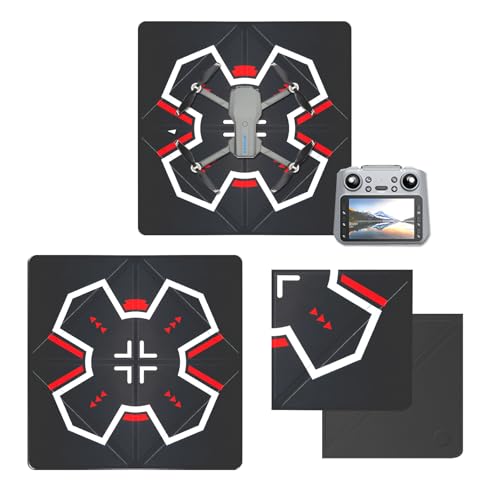
- 450g portable design
- Waterproof, rinse-clean surface
- Suitable for sand and uneven ground
Best For: Traveling pilots who prioritize easy carrying and setup
Best for Low-Light Visibility
FPVtosky Reflective Landing Pad
- Waterproof PU leather construction
- Weighted for improved wind stability
- Reversible blue-and-red visibility design
Best For: Outdoor pilots prioritizing visibility on sand and rough terrain
Best Compact Sand Pick
CQT 17-Inch Universal Landing Pad

- Bright double-sided yellow and dark gray design
- Waterproof, washable surface for sand and dirt
- Folds compactly and includes a storage bag
Best For: Portable everyday drone flights on sandy or uneven ground
Best Night Visibility
FPVtosky 30-Inch Reflective Landing Pad

- Large 30-inch landing surface
- Reflective blue and red double-sided design
- Waterproof and easy to rinse clean
Best For: Large drones and outdoor flights where visibility matters
Best Large Sand Pad

- Spacious 21.65-inch landing area
- Includes four ground nails for stability
- Waterproof PU surface handles sand and uneven ground
Best For: Larger drones and windy, exposed sandy locations
Weighted Sand Shield – Hoodman LP21 Trifold Landing Pad
If you want a drone landing pad for sand that stays put without stakes, the Hoodman LP21 is a practical choice. Its 1.9-pound weighted design conforms to the ground, while the rugged vinyl surface helps reduce sand, pebbles, and tall grass from reaching your drone.
Best For: Pilots who need a stable, stake-free landing pad for sandy or uneven outdoor locations.
Pros:
- Weighted design stays in place during takeoff and landing.
- Springs open from its folded state for quick setup.
- Vinyl surface helps protect rotors, camera lenses, and motor bearings from debris.
- Wet-towel cleanup is simple, and the sealed bottom helps block morning dew.
Cons:
- Its 22.8-inch size is larger to carry than compact 17-inch pads.
- The weighted construction may add bulk to a lightweight travel kit.
The LP21 is especially well suited to sand because it avoids relying on stakes that may be difficult to place. Choose it when stability and debris protection matter more than the smallest packed size.
Portable Reflective Pick – 17-Inch Foldable Drone Landing Pad
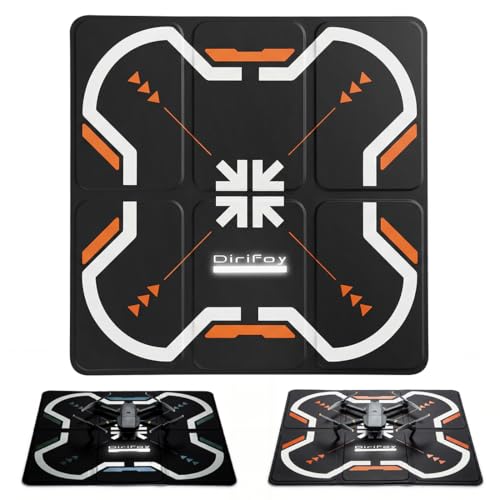
This 17-inch pad offers a portable way to create a cleaner launch area when using a drone landing pad for sand. Its textured PU leather surface is waterproof and non-slip, while the reflective markings improve visibility during dusk, dawn, or nighttime flights.
Best For: Travelers flying smaller drones who want a compact, easy-clean pad with improved visibility.
Pros:
- Folds to approximately 8.6 by 5.9 inches for case storage.
- Waterproof, non-slip surface can be rinsed and shaken dry.
- Reflective strips and logo create a visible landing target.
- Designed for sand, dirt, grass, and rocky surfaces.
Cons:
- Additional modular weights are sold separately.
- Its 17-inch size is intended for drones under a 14-inch diagonal wheelbase.
This is a flexible option for pilots who prioritize portability and quick cleanup. For consistently windy sand, plan on using the optional weights to improve hold.
Large Night-Ready Pad – FPVtosky 25-Inch Reflective Mat
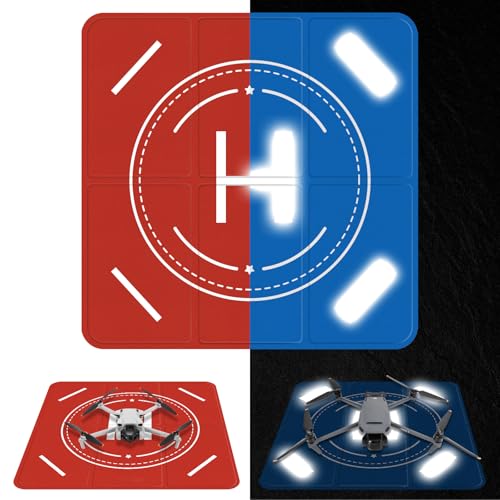
The FPVtosky 25-inch mat is a substantial drone landing pad for sand, gravel, mud, and other uneven surfaces. Its double-sided PU leather construction is waterproof and easy to rinse, while the 730-gram weight helps provide stability in stronger wind.
Best For: Pilots flying a range of drones who want a larger, heavier pad with bright two-color visibility.
Pros:
- 25-inch surface accommodates many small and mid-sized drones.
- 730-gram weight helps keep the pad stable in windy conditions.
- Waterproof, dustproof material rinses clean and shakes dry.
- Blue and red sides improve outdoor visibility, including in fog.
Cons:
- Heavier than the 17-inch portable pad.
- The larger deployed size may take more room in a case or backpack.
For sandy locations where wind and uneven ground are concerns, the FPVtosky combines useful surface area with meaningful weight. It is a strong fit for pilots who value stability and broad compatibility over minimal carry weight.
Extra-Large Stake Kit – 30-Inch Waterproof Landing Mat
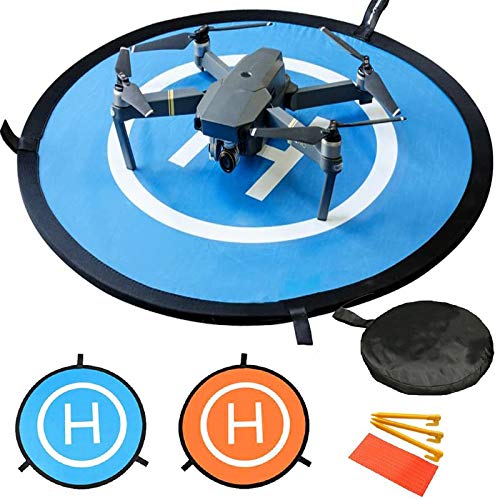
For larger aircraft and exposed locations, this 30-inch mat provides a broad drone landing pad for sand and other outdoor surfaces. The waterproof nylon pad includes three ground nails for windy conditions and reflective strips for nighttime visibility.
Best For: Pilots using larger drones who want a wide landing area and included ground anchors.
Pros:
- 30-inch diameter offers generous landing space.
- Three included land nails help secure it in windy environments.
- Waterproof, sun-resistant nylon is designed for outdoor use.
- Eight reflective strips improve visibility during night flying.
Cons:
- Stakes require suitable ground and may be less convenient on hard sand or rock.
- Larger deployed dimensions can be less portable than smaller pads.
- Nylon may be less debris-resistant than a weighted, sealed vinyl design.
This pad makes sense when size and anchoring are priorities. Its included carrying bag and stakes support outdoor transport, while the broad surface is useful for drones that need more landing clearance.
Best All-Weather Pick – STARTRC 22-Inch Foldable Landing Pad
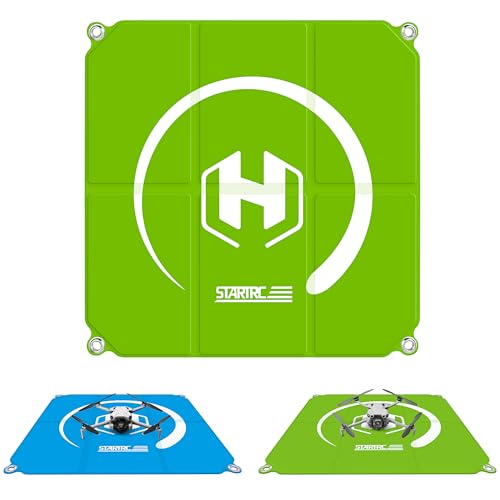
If you need a dependable drone landing pad for sand, the STARTRC 22-inch model combines a waterproof, wipe-clean surface with stakes and safety buckles for outdoor stability. Its high-contrast design also helps with visual positioning during takeoff and landing.
Best For: Pilots who want a larger, weather-resistant pad with secure anchoring for sand, grass, and concrete.
Pros:
- Waterproof nylon helps block sand, dust, mud, rain, and snow.
- Four ground stakes and two safety buckles help secure it outdoors.
- Folds quickly and includes a carrying bag for portable use.
- Bright blue-and-green sides and a positioning circle improve visibility.
Cons:
- The 22-inch size may be less suitable for larger drones such as the DJI Air 3S and Mavic 4 Pro.
- Anchoring requires using the included stakes or buckles where appropriate.
With its wipe-clean construction, compact folding design, and supplied anchoring hardware, this is a practical choice for sandy launch areas. The manufacturer specifically recommends a larger 65-inch version for certain larger drones.
Best Lightweight Option – Universal 19.6-Inch Weighted Landing Pad
This universal pad is a convenient drone landing pad for sand when portability matters. At 450g and 50cm square, it offers a stable landing surface for uneven ground while folding compactly for travel and cleaning easily with water.
Best For: Travelers and aerial photographers seeking a lightweight, broadly compatible pad for sand, grass, snow, and other uneven surfaces.
Pros:
- Weighs about 450g for easier transport.
- Provides a 50cm by 50cm landing area with stated wind resistance.
- Waterproof surface resists stains and scratches and can be rinsed clean.
- Bold pattern improves visibility from the air.
Cons:
- The supplied notes identify a screw but do not specify a full stake or buckle system.
- Its 19.6-inch size provides less landing area than larger pads.
This model emphasizes low weight, simple maintenance, and broad drone compatibility. It is a sensible sand pad for mobile setups, particularly when you want a compact accessory rather than a larger heavily anchored design.
Best for Low-Light Visibility – FPVtosky Reflective Landing Pad
The FPVtosky reflective pad is a useful drone landing pad for sand when visibility is a priority. Its double-sided blue-and-red PU leather surface is waterproof and washable, while the weighted construction helps create a smoother landing area on gravel, mud, and other uneven terrain.
Best For: Pilots who need a portable, highly visible pad for outdoor or lower-visibility flying conditions.
Pros:
- Waterproof, dustproof PU leather can be rinsed and shaken dry.
- Weighted design helps resist movement in strong wind.
- Blue-and-red reversible sides improve outdoor visibility.
- Folds for storage in many drone cases and backpacks.
Cons:
- The supplied notes do not list included stakes or ground anchors.
- Its listed folded dimensions indicate a compact form, but the usable open size is not specified.
- Reflective visibility is emphasized, but no specific lighting or illumination feature is listed.
For sandy or bumpy terrain, the weighted build and washable surface offer practical protection from dust and mud. Its strongest differentiator is the reversible high-visibility color design, making it appealing for pilots who want easier visual alignment.
Best Compact Sand Pick – CQT 17-Inch Universal Landing Pad
If you need a practical drone landing pad for sand, this 17-inch CQT model provides a visible, washable surface that folds down for transport. Its lightweight waterproof PU/PVC construction is designed for use on sand, grass, uneven dirt, and snow.
Best For: Drone pilots who want a compact, colorful landing pad for routine outdoor flights.
Pros:
- Double-sided yellow and dark gray design improves visibility and positioning.
- Waterproof, stain-resistant, washable material is suited to sandy environments.
- Foldable 16.9-inch design includes a storage bag for easier transport.
- Compatible with a broad range of DJI, Holy Stone, FPV, and other quadcopters.
Cons:
- The 17-inch surface may be less suitable for larger drones.
- The supplied notes do not mention included ground stakes.
This is a sensible compact option when portability matters more than maximum landing area. The bright color combination and washable surface are particularly useful for sandy takeoff locations.
Best Night Visibility – FPVtosky 30-Inch Reflective Landing Pad
For pilots looking for a drone landing pad for sand with extra visibility, the FPVtosky 30-inch mat combines a larger landing area with reflective styling. Its double-sided PU leather surface is waterproof, dustproof, and easy to rinse clean after sandy or muddy flights.
Best For: Pilots who want a large, visible landing surface for outdoor and lower-light conditions.
Pros:
- Large 30-inch size accommodates a wide range of drones.
- Reflective design and blue/red sides help improve visibility, including in dense fog.
- Suitable for mud, gravel, and other uneven ground.
- Waterproof surface can be rinsed clean and shaken dry.
Cons:
- Its 550 g weight and larger size may be less convenient for ultralight travel.
- The supplied notes do not specify included ground nails or stakes.
The larger footprint makes this a strong choice for pilots who want more landing margin, while the reflective two-color design helps with orientation. It is especially practical when sand, dust, or changing visibility are concerns.
Best Large Sand Pad – CQT 55CM Weighted Landing Pad
This 55 cm CQT model is a good drone landing pad for sand when you want more room around the aircraft. The waterproof, wear-resistant PU surface is designed for sand, grass, uneven dirt, and snow, while the included ground nails help secure it outdoors.
Best For: Pilots who need a larger landing zone and added anchoring for breezy outdoor locations.
Pros:
- Large 21.65-inch surface provides extra landing and takeoff space.
- Waterproof, stain-resistant, wear-resistant material is suited to sandy use.
- Includes four ground nails for added stability.
- Bright yellow and dark gray sides improve visibility and positioning.
Cons:
- The larger size takes up more room when packed or transported.
- The product notes do not provide a specific packed weight beyond the listed details.
Choose this version over the smaller CQT pad if you value landing space and outdoor stability. Its included nails make it the more complete option for exposed sand or other surfaces where wind could shift the mat.
How We Picked the Best Drone Landing Pad for Sand
We focused on the features that matter most on loose, exposed surfaces: weight or anchoring, waterproof construction, foldability, surface visibility, and compatibility with common DJI and FPV drones. We also considered whether each design should be easy to wipe clean after landing and compact enough to carry with other flight gear.
Because sand is easily blown onto a pad, weighted edges and fast setup are especially valuable. Reflective markings can also improve visibility during low-light flights, while a larger diameter gives pilots more margin when returning from an awkward angle.
Quick Comparison
| Feature | Best for | What to look for |
|---|---|---|
| Weighted or reinforced design | Windy beaches and dunes | Stable edges without relying only on stakes |
| Waterproof, wipe-clean surface | Frequent outdoor use | Non-absorbent material that releases sand easily |
| Reflective markings | Dawn, dusk, and nighttime flights | High-contrast symbols or reflective borders |
| Fast-fold construction | Travel and quick launches | Compact storage with simple deployment |
| Large landing area | Less precise landings | Approximately 22 to 30 inches when transport space allows |
Key Buying Factors for a Drone Landing Pad for Sand
Weight and Wind Resistance
Sand provides little support for ordinary stakes, so a weighted or reinforced pad is often the safer choice. If the pad uses anchors, check whether they are suitable for the surface and whether the design remains stable when gusts catch its edges.
Material and Cleaning
Choose waterproof fabric or coated material that can be shaken or wiped clean. Avoid designs with deep seams or absorbent sections that can trap fine grit. Let the pad dry before folding it if it becomes wet or salty.
Size and Portability
A larger pad makes returning easier, particularly for compact drones with limited precision in wind. However, a 17-inch model may be more practical for a small kit, while 22- to 30-inch pads offer more landing room at the cost of bulk.
Visibility and Night Use
Bright contrasting colors help define the landing zone against pale sand. Reflective details are useful in low light, but they do not replace legal lighting requirements or safe visual identification of the aircraft.
Drone Compatibility
Landing pads are generally universal, but confirm that the pad is wide enough for your drone and propeller clearance. Product listings may mention specific DJI Mini, Mavic, Phantom, Avata, or other models; treat those references as sizing guidance rather than a guarantee of flight compatibility.
Who Should Buy Which Drone Landing Pad for Sand?
Beach and desert pilots who regularly face gusts should prioritize the heaviest weighted option available and choose a larger diameter if they have room in their vehicle or gear bag. Travelers and casual users will usually prefer a fast-fold, waterproof pad that packs down quickly. Pilots who fly at dawn or dusk should choose a reflective, double-sided design with strong contrast. For small DJI Mini-class drones, a compact 17- to 22-inch pad is often sufficient; larger drones or less precise landings benefit from a 30-inch surface.
Whichever model you choose, clear away loose stones before setup, keep the pad flat, and brush sand from the drone before storing it. A landing pad reduces exposure to grit, but careful handling remains essential in sandy environments.