Choosing a field monitor with HDR can make focusing, exposure checks, and framing far easier than relying on a camera’s rear screen.
In this roundup, we focus on brightness, HDR support, touchscreen usability, and real-world video workflow features that matter on set.
Best 10 Field Monitor with Hdr Picks for 2026
Sunlight-ready touch monitor
NEEWER F700 7" 2000nit HDR Field Monitor

- 2000-nit 7-inch IPS touch display
- HDR, 3D LUT, waveform, and peak focus tools
- Includes 2 NP-F750 batteries and cold shoe mount
Best For: Outdoor shooters who want a bright, tool-rich monitoring display
Compact portable monitor
FEELWORLD P6XL 6" HDR Monitor with Battery

- 1200-nit 6-inch Full HD touchscreen
- Built-in 3000mAh battery for mobile shoots
- HDR, waveform, overlay, and 9:16 markers
Best For: Travel-friendly creators and solo shooters
Pro-level daylight monitor
Osee G7 Pro 7" 3000nit HDR Field Monitor

- 3000-nit 7-inch touchscreen for bright outdoor use
- Camera control plus touch focus tracking on supported models
- 3G-SDI, 4K HDMI, waveform, and 3D LUT support
Best For: Advanced shooters needing brightness, control, and SDI connectivity
Compact exposure-focused monitor
Osee T5+ 5.5" HDR Field Monitor

- 1000-nit 5.5-inch display for outdoor use
- Custom false color, HDR, and 3D LUT support
- 8 MySets and 4K HDMI input for faster workflow
Best For: Creators who want a small monitor with strong exposure tools
Compact Outdoor Field Monitor
FEELWORLD F5 Prox 5.5" 1600nit Touch Monitor

- 1600nit screen is easier to see in bright outdoor light.
- Waveform, histogram, false color, and focus peaking are included.
- LUT preview helps with Log footage monitoring.
Best For: Creators who want a compact daylight-visible monitor for field work.
Large Bright HDR Monitor
FEELWORLD LUT11S 10.1" 2000nit HDR Field Monitor

- 10.1-inch IPS screen offers a larger viewing area.
- 2000nit brightness and HDR support suit daylight shooting.
- SDI, dual HDMI, and custom LUT loading add workflow flexibility.
Best For: Advanced shooters who want a large bright monitor with HDR and pro inputs.
Budget Lightweight HDR Monitor
FEELWORLD S55E 5.5" Lightweight HDR Field Monitor

- 175g body is easy to use on compact rigs and gimbals.
- HDR, waveform, vectorscope, and false color are included.
- 3D LUT support helps preview log footage in real time.
Best For: Beginner and budget-conscious shooters needing a lightweight monitoring tool.
Bright Touch Monitor
Osee Lilmon 5 1000-Nit 5.5-Inch HDR Field Monitor

- 1000-nit touchscreen for daylight use
- HDR/LOG mapping with 22-bit processing
- Compact body with reinforced mounting
Best For: Solo shooters and gimbal setups needing a bright compact monitor
Portable Battery Monitor
FEELWORLD P6XL 6-Inch 1200-Nit HDR Monitor
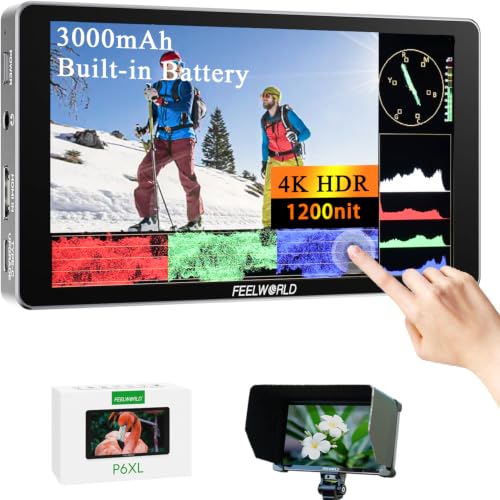
- 1200-nit 6-inch IPS touchscreen
- Built-in 3000mAh battery for mobility
- HDR, waveform, and custom LUT support
Best For: Mobile shooters who want a bright self-powered monitor
Pro 4K HDMI Monitor
VILTROX DC-550 5.5-Inch 1200-Nit HDR Monitor

- 1200-nit 5.5-inch IPS touchscreen
- 4K HDMI in/out with REC-709 calibration
- Waveform, LUT, false color, and focus tools
Best For: Filmmakers needing a bright 4K HDMI monitor with pro assist tools
Sunlight-ready touch monitor – NEEWER F700 7" 2000nit HDR Field Monitor
If you want a field monitor with hdr that stays readable in strong daylight, the NEEWER F700 is built around brightness, touch control, and flexible monitoring tools. Its 7-inch 1080p IPS panel, 2000-nit output, and 3D LUT support make it a practical fit for DSLR and video workflows where exposure checks and focus confirmation matter.
Best For: Creators who need a bright, feature-packed on-camera monitor for outdoor shooting and detailed exposure checks.
Pros:
- 2000-nit 7-inch IPS touch screen is designed for clear viewing in bright conditions.
- Supports HDR, waveform, vectorscope, false color, zebras, peak focus, and more.
- 4K HDMI loop in/out plus headphone monitoring adds flexibility on set.
- Includes 2 NP-F750 batteries and a cold shoe mount for easier setup.
Cons:
- DC power cable is not included for all power setups.
- At 1.6 pounds, it is not the lightest option once batteries are attached.
Overall, the F700 looks strongest as a bright all-around monitoring tool for shooters who want more than basic framing. The combination of HDR tools, LUT loading, and adjustable brightness makes it especially useful when lighting changes fast.
Compact portable monitor – FEELWORLD P6XL 6" HDR Monitor with Battery
The FEELWORLD P6XL is a compact field monitor with hdr features aimed at creators who need a portable screen that still handles exposure and focus checks well. Its 1200-nit 6-inch Full HD panel, built-in rechargeable battery, and waveform-based analysis tools make it a solid choice for mobile shooting.
Best For: Mobile filmmakers and solo creators who want a small monitor with built-in power and reliable exposure tools.
Pros:
- 1200-nit brightness helps visibility in indoor and outdoor use.
- Built-in 3000mAh battery supports portable shooting without external packs.
- Includes HDR monitoring, waveform, vector scope, histogram, and audio displays.
- 4K HDMI in/out and touchscreen controls add convenience on location.
Cons:
- Battery charging requires a 9V charger, per the notes.
- Smaller 6-inch screen offers less viewing area than 7-inch alternatives.
For creators who value portability over size, the P6XL offers a useful balance of brightness and monitoring tools. The built-in battery and vertical 9:16 marker also make it appealing for social-first workflows.
Pro-level daylight monitor – Osee G7 Pro 7" 3000nit HDR Field Monitor
If you need a field monitor with hdr that can handle harsh daylight and more advanced camera control, the Osee G7 Pro is aimed at serious production use. Its 3000-nit 7-inch touchscreen, 3G-SDI plus 4K HDMI I/O, and touch focus features make it especially appealing for supported mirrorless and cinema camera workflows.
Best For: Advanced users who want a super-bright monitor with camera control and professional signal options.
Pros:
- 3000-nit display is designed for very bright outdoor filming.
- Touch focus, focus tracking, and camera control can reduce reliance on separate controls.
- 3G-SDI and 4K HDMI in/out support a wider range of production setups.
- Waveform, histogram, vectorscope, and 3D LUT support help with exposure and color checks.
Cons:
- Camera control only works when powered by an NP-F battery.
- Battery is not included, so you need to budget for power separately.
The G7 Pro stands out for users who want brightness plus control features in one unit. It is a more specialized option than basic monitors, but the monitoring and workflow tools are well matched to demanding shoots.
Compact exposure-focused monitor – Osee T5+ 5.5" HDR Field Monitor
The Osee T5+ is a compact field monitor with hdr features for shooters who want useful exposure tools without moving up to a larger pro display. With a 1000-nit 5.5-inch screen, 4K HDMI input, and customizable false color presets, it is positioned as a workflow-focused monitor for DSLR and mirrorless users.
Best For: Budget-conscious creators who want strong exposure tools in a compact on-camera monitor.
Pros:
- 1000-nit brightness is useful for outdoor filming without a sun hood.
- Customizable false color tools and one-key MySets support efficient setup changes.
- HDR, LUT loading, waveform, histogram, vector, and zebra tools improve monitoring.
- 4K HDMI input keeps it compatible with modern camera setups.
Cons:
- Battery is not included.
- Smaller 5.5-inch screen may feel limited for users who prefer more display space.
As a compact monitor, the T5+ makes the most sense when workflow matters more than screen size. Its custom exposure tools and LOG/HDR preview features make it a smart pick for creators refining their on-set monitoring process.
Compact Outdoor Field Monitor – FEELWORLD F5 Prox 5.5" 1600nit Touch Monitor
If you want a field monitor with HDR that stays easy to read outdoors, the FEELWORLD F5 Prox is built around brightness and practical on-set tools. Its 5.5-inch 1600nit screen gives you a larger viewing area than a camera’s built-in display, while focus peaking, waveform, histogram, false color, and LUT preview help you check exposure and framing with more confidence.
Best For: Photographers, videographers, vloggers, and filmmakers who need a bright, compact monitor for outdoor and mobile shoots.
Pros:
- 1600nit brightness improves visibility in direct sunlight.
- Includes pro monitoring tools like waveform, histogram, false color, and focus peaking.
- LUT preview helps you judge the look of Log footage while shooting.
- Compact size and standard mounting support work well on rigs, cages, gimbals, and tripods.
Cons:
- 5.5-inch screen is smaller than larger field-monitor options.
- Brightness is strong, but not as high as 2000nit models.
- Best suited to monitoring and framing rather than a large review display.
Overall, the F5 Prox is a solid choice if you need a practical field monitor with HDR tools in a small, daylight-friendly package. It focuses on the essentials creators actually use on set without adding unnecessary bulk.
Large Bright HDR Monitor – FEELWORLD LUT11S 10.1" 2000nit HDR Field Monitor
The FEELWORLD LUT11S is a strong pick if you’re shopping for a field monitor with HDR and want a larger screen for detailed on-set viewing. Its 10.1-inch 1920×1200 IPS panel, 2000nit brightness, and HDR monitoring make it well suited to daylight work, while touch controls, custom LUT loading, and SDI/HDMI connectivity add flexibility for more advanced setups.
Best For: Filmmakers, video crews, and advanced creators who want a large, bright monitor with HDR support and multiple input options.
Pros:
- 10.1-inch IPS display gives you more room to judge framing and detail.
- 2000nit brightness and ambient light sensing help in direct sunlight.
- HDR monitoring plus support for custom 3D LUTs improves on-set previewing.
- SDI and dual HDMI inputs/outputs make it flexible for pro video workflows.
Cons:
- Larger size is less portable than compact on-camera monitors.
- At 1.8 pounds, it may be better for rigs and stands than lightweight handheld use.
- May be more monitor than casual creators need for simple shoots.
For productions that value screen real estate and bright, accurate monitoring, the LUT11S stands out. It’s especially appealing when you need HDR playback, LUT previewing, and broader connectivity in one field-ready display.
Budget Lightweight HDR Monitor – FEELWORLD S55E 5.5" Lightweight HDR Field Monitor
If you need a field monitor with HDR for everyday DSLR or mirrorless shooting, the FEELWORLD S55E keeps things simple and lightweight. Its 5.5-inch Full HD IPS display, focus and exposure tools, and 3D LUT support make it a practical choice for indoor filming, tripod work, and compact rigs where portability matters more than maximum brightness.
Best For: Beginner creators, vloggers, and videographers who want an affordable, lightweight field monitor for indoor and mobile shooting.
Pros:
- Lightweight 175g design is easy to balance on small rigs and gimbals.
- Includes waveform, vectorscope, histogram, focus peaking, zebra, false color, and HDR.
- 4K HDMI input/output supports a wide range of cameras and accessories.
- 3D LUT support lets you preview the look of log footage in real time.
Cons:
- 500nit brightness is best for indoor use and less ideal in harsh sunlight.
- Smaller screen may feel limited for detailed monitoring.
- More of a budget-friendly tool than a high-brightness field display.
The S55E is a good fit if you want core monitoring tools without adding much weight or cost. It is especially useful when you prioritize HDR tools and LUT preview over extreme outdoor visibility.
Bright Touch Monitor – Osee Lilmon 5 1000-Nit 5.5-Inch HDR Field Monitor
If you want a compact field monitor with hdr support that stays readable outdoors, the Osee Lilmon 5 is built around a 1000-nit touchscreen, low-reflection glass, and fast-touch workflow. It combines HDR/LOG mapping, 3D LUT support, and common exposure and focus tools in a small body that fits camera rigs and gimbals well.
Best For: Solo shooters and gimbal users who need a bright 5.5-inch monitor with touchscreen control and HDR mapping.
Pros:
- 1000-nit daylight-viewable 5.5-inch touchscreen with anti-fingerprint coating
- HDR/LOG mapping and 22-bit internal processing for detailed tone rendering
- Touch Swift OS with customizable Mysets for quick framing and exposure checks
- Lightweight build with reinforced mounting points and flexible battery options
Cons:
- Smaller 5.5-inch screen may feel limited for operators who want more viewing area
- Uses an optional DC-to-D-tap cable for V/AB mount power
- No built-in battery is listed in the supplied specs
The Lilmon 5 is a practical choice if brightness, portability, and fast touchscreen operation matter more than screen size. It brings together the core tools most creators need from a field monitor with hdr display support in a lightweight package.
Portable Battery Monitor – FEELWORLD P6XL 6-Inch 1200-Nit HDR Monitor
The FEELWORLD P6XL is a handy field monitor with hdr features for shooters who want a bright 6-inch display and built-in power in a travel-friendly design. Its 1200-nit IPS touch screen, HDR monitoring modes, waveform tools, and custom 3D LUT support make it a strong all-around option for checking exposure and color on location.
Best For: Mobile creators who want a bright monitor with built-in battery and easy touchscreen controls.
Pros:
- 1200-nit 6-inch Full HD touchscreen with IPS panel
- Built-in 3000mAh battery for portable shooting
- HDR monitoring with HLG modes plus waveform, vector scope, and histogram tools
- Supports custom .cube LUT files and screenshot/image overlay functions
Cons:
- Built-in battery runtime is listed at about 2 hours at 100% brightness
- Single HDMI port limits simple monitor setups
- Glossy screen finish may reflect more than matte alternatives
The P6XL is a well-rounded pick if you want a self-powered monitor that still gives you serious monitoring tools. It balances brightness, portability, and HDR-focused features in a slim package.
Pro 4K HDMI Monitor – VILTROX DC-550 5.5-Inch 1200-Nit HDR Monitor
The VILTROX DC-550 is a capable field monitor with hdr tools for creators who want a bright 5.5-inch IPS touchscreen and full-size monitoring features. With 1200 nits of brightness, 4K HDMI input and output, REC-709 calibration, and detailed exposure aids, it is built for practical on-set monitoring.
Best For: Filmmakers and camera operators who need a bright 4K HDMI monitor with strong exposure and LUT tools.
Pros:
- 1200-nit daylight-viewable 5.5-inch IPS touchscreen
- 4K HDMI input/output supports up to 3840×2160 and 4096×2160 signals
- Includes waveform, vector graph, histogram, false color, and focus assist tools
- Triple power options: NP-F battery, DC input, or Type-C power bank support
Cons:
- Screen size may be small for users who prefer a larger on-set display
- Included NP-F550 battery is basic compared with larger-capacity packs
- Power bank support is limited to Type-C 5V 3A use
The DC-550 stands out as a feature-rich, bright monitor that covers both image review and basic on-set video assist needs. If you want a field monitor with hdr support and 4K HDMI pass-through, it checks many of the right boxes.
How We Picked the Best Field Monitor with Hdr
We prioritized monitors that balance brightness, reliable HDR monitoring, and practical tools for field use. That means usable daylight visibility, accurate exposure aids, touch controls where available, and connectivity that fits modern DSLR, mirrorless, and cinema rigs.
We also favored models with useful extras such as 3D LUT support, waveform or false color, HDMI loop-through, and battery flexibility. For a Field Monitor with Hdr, those features often matter more than resolution alone.
Quick Comparison
The best choice usually comes down to three things: screen size, brightness, and input/output options. Smaller 5.5-inch monitors are easier to rig and travel with, while 7-inch and 10.1-inch models give you more room for framing and menu visibility.
If you shoot outdoors often, higher nit ratings are a major advantage. If you work with multiple cameras or need a cleaner signal chain, look for HDMI loop out and SDI support. Creators who rely on fast setup will usually prefer touchscreen models with built-in exposure tools.
Key Buying Factors for a Field Monitor with Hdr
Brightness and Viewing Conditions
Brightness is one of the most important specs. Around 1000 nits is a solid starting point for mixed indoor-outdoor use, while 1200 to 2000 nits is better for bright daylight. Very high-bright monitors can help, but they may trade off battery life or increase size and cost.
HDR, LUTs, and Monitoring Tools
HDR support helps preserve highlight and shadow awareness during capture and review. Pair that with 3D LUT loading, waveform, false color, zebra, and focus assist for a more dependable on-set monitoring experience. These tools are especially valuable when you need quick exposure decisions.
Size, Weight, and Mounting
Choose screen size based on how you work. A 5.5-inch monitor is compact and travel-friendly, a 6- to 7-inch model is the most versatile for many shooters, and a 10.1-inch display is better for director, client, or studio viewing. Also check mounting points and hood/shade options.
Connections and Power
Match the monitor to your camera’s output. Most creators will want 4K HDMI support, while more advanced users may need SDI. Built-in batteries, USB-C power, and NP-F compatibility can simplify long shoot days and reduce cable clutter.
Who Should Buy Which Field Monitor with Hdr?
Travel videographers and gimbal users should lean toward smaller, lighter monitors with strong brightness and touch controls. Run-and-gun shooters may benefit most from a balanced 6- to 7-inch Field Monitor with Hdr and a full set of exposure tools.
If you work in studio, client, or multi-operator environments, a larger monitor with better viewing angles and SDI/HDMI flexibility makes more sense. For budget-conscious buyers, focus on the essentials first: enough brightness for your environment, dependable HDR tools, and the right input/output connection for your camera.