Finding the best FPV drone for indoor flying means balancing compact size, stable controls, protected propellers, and a camera system that is easy to use in tight spaces. The right model can make learning more approachable while reducing the risk of damaging furniture, walls, or the drone itself.
We selected 10 beginner-friendly options ranging from ready-to-fly FPV kits with goggles to camera drones with screens, optical-flow positioning, adjustable lenses, and safety-focused propeller guards. Use the guide below to compare the features that matter most for indoor practice.
Best 10 Fpv Drone for Indoor Flying Picks for 2026
Best Ready-to-Fly Pick
Tiny Hawk RTF Micro Indoor Racing Drone
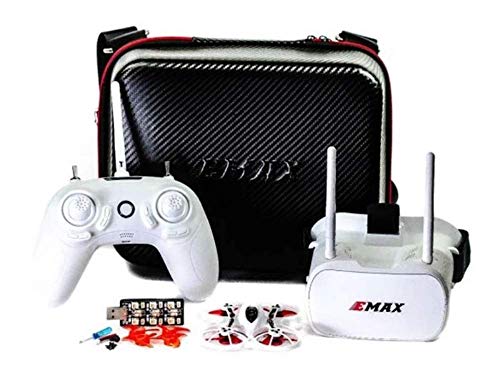
- Complete kit with goggles and controller
- Real radio-frequency FPV, not Wi-Fi
- Lightweight case and speeds up to 35 mph
Best For: Beginners seeking a complete indoor FPV racing setup
Best Feature-Rich Kit
Brushless FPV Drone with VR Goggles

- Optical-flow positioning and one-key controls
- Dual cameras with adjustable camera angle
- Includes two batteries and propeller guards
Best For: Adults wanting assisted flight and camera flexibility
Best Beginner FPV Trainer

- Height hold supports stable indoor hovering
- Self-protection enables emergency landing
- Transmitter works with FPV simulators
Best For: New pilots practicing FPV indoors
Best Phone-Controlled Option

- Enclosed propeller guards for indoor use
- Altitude hold and one-touch controls
- Two batteries provide 25 minutes total flight
Best For: Beginners wanting smartphone FPV and protected flying
Screen-Ready Flyer
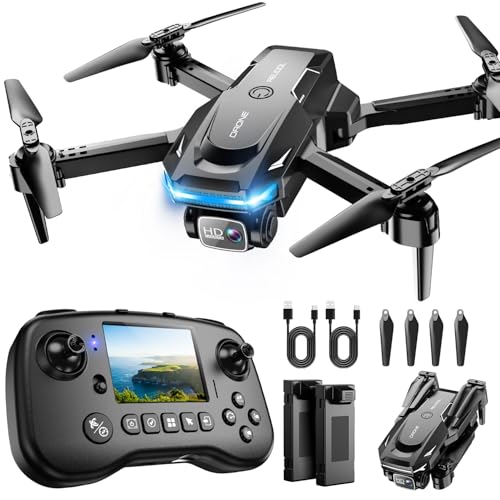
- Built-in controller screen for live HD FPV viewing
- Four propeller guards and beginner safety features
- Two batteries provide up to 25 minutes of flight time
Best For: Beginners seeking convenient indoor FPV practice without a phone
Guarded Stability Pick

- Optical flow and altitude hold support stable hovering
- Full propeller guards suit indoor practice
- Dual cameras with a 90-degree adjustable lens
Best For: Beginners wanting assisted indoor control and protected propellers
Kids' Screen FPV Gift
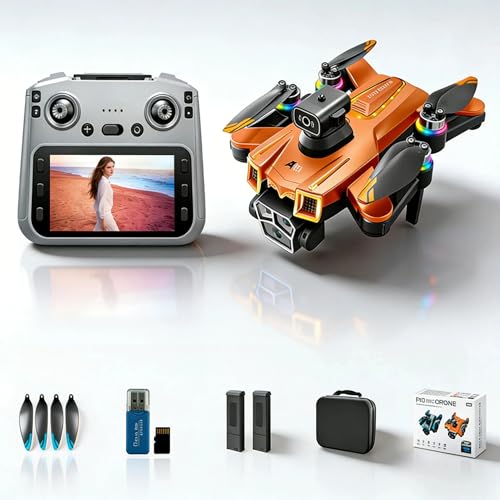
- 5.6-inch remote screen supports phone-free FPV flying
- Dual batteries offer up to 40 minutes of total flight time
- Includes triple cameras, dynamic LEDs, and a memory card
Best For: Kids ages 8–12 who want an entertaining FPV starter kit
Best Long-Play Beginner Option

- Up to 25 minutes with two batteries
- 1080P adjustable camera
- Propeller guards and emergency stop
Best For: New pilots wanting portable indoor practice with extra battery time
Best Kids’ Starter Set
Holy Stone HS210P Mini FPV Drone

- 1080P smartphone FPV camera
- Three batteries included
- Full propeller guards and optical flow
Best For: Kids and first-time pilots learning indoors
Best Ready-to-Fly Pick – Tiny Hawk RTF Micro Indoor Racing Drone
Tiny Hawk RTF Micro Indoor Racing Drone with FPV Goggles and Controller for Beginners
Check Price On AmazonIf you want an FPV drone for indoor flying that is ready to use without buying additional equipment, this Tiny Hawk package is a practical beginner option. It includes the drone, controller, and FPV goggles, uses real radio-based FPV rather than Wi-Fi, and is designed to be lightweight and portable.
Best For: Beginners who want a complete, compact FPV racing setup with goggles included.
Pros:
- Ready-to-fly kit includes the drone, controller, and FPV goggles.
- Real FPV video uses radio-frequency connectivity rather than Wi-Fi.
- Lightweight design, carrying case, and claimed speeds up to 35 mph.
Cons:
- Its maximum stated range is 200 feet.
- The racing-focused speed may require practice for first-time pilots.
This is a strong choice when immersive FPV matters more than automated flight assistance. Its all-in-one format lowers the setup barrier, while the compact case makes transporting the kit easy.
Best Feature-Rich Kit – Brushless FPV Drone with VR Goggles
This brushless quadcopter kit is worth considering if you want an FPV drone for indoor flying with stabilization and camera flexibility. It combines VR goggles, optical-flow positioning, one-key takeoff and landing, propeller guards, and dual cameras in one package.
Best For: Adults who want a versatile FPV kit with assisted flight features and camera options.
Pros:
- Includes VR glasses, remote controller, two modular batteries, and spare propellers.
- Optical-flow positioning and one-key takeoff/landing support easier control.
- Dual cameras, an electrically adjustable camera angle, and multiple flight modes add versatility.
- Propeller guards help protect the motors and propellers.
Cons:
- The supplied notes do not specify a flight range or total flight time.
- Its larger feature set may take longer to learn than a basic beginner drone.
The brushless motor and optical-flow system make this a more feature-oriented choice than a minimal micro racer. The included batteries, guards, and accessories also make the package suitable for pilots who want to explore both FPV flight and aerial recording.
Best Beginner FPV Trainer – BETAFPV Cetus FPV Kit
The BETAFPV Cetus is a beginner-focused FPV drone for indoor flying, with height hold and self-protection features intended to make early practice less intimidating. The ready-to-fly kit includes the Cetus quadcopter, LiteRadio 2 SE transmitter, VR02 goggles, and a carry bag.
Best For: New FPV pilots who want stable indoor practice and simulator support.
Pros:
- Height hold helps the drone hover steadily indoors in N mode.
- Self-protection can trigger an emergency landing after signal loss or low battery.
- Transmitter supports an FPV simulator and can work as a USB joystick.
- Custom carry bag stores and protects the kit.
Cons:
- The stated maximum range is 80 meters.
- Height hold is available only in N mode.
For someone learning FPV fundamentals, the simulator compatibility and assisted hovering are especially useful. It is less focused on high-speed performance and more focused on building confidence before progressing to manual control.
Best Phone-Controlled Option – Mini HD FPV Camera Drone
If you prefer a conventional controller and smartphone FPV instead of dedicated goggles, this mini quadcopter is a practical FPV drone for indoor flying. It offers altitude hold, one-key takeoff and landing, enclosed propeller guards, three speed modes, and two batteries rated for 25 minutes of combined flight.
Best For: Beginners and teens who want protected indoor flying with smartphone FPV and simple stunt features.
Pros:
- Fully enclosed propeller guards improve safety around indoor obstacles.
- Altitude hold, headless mode, and one-touch controls support beginners.
- Two batteries provide a stated 25 minutes of total flight time.
- HD FPV camera has a remotely adjustable 90-degree tilt lens.
Cons:
- FPV connectivity relies on Wi-Fi and a smartphone rather than dedicated goggles.
- The listed age guidance is 14 years and up.
- Its camera and controls are aimed at casual use rather than dedicated racing.
This is the most approachable choice for casual indoor practice and family-style flying. The guards and automated controls reduce the learning curve, while the adjustable camera and flip function add variety as skills improve.
Screen-Ready Flyer – PK01 FPV Drone
If you want an fpv drone for indoor flying without relying on a smartphone, the PK01 stands out for its controller-mounted screen. Its adjustable 1080p camera, guarded propellers, beginner controls, and included dual batteries make it practical for learning in a windless indoor space.
Best For: Beginners who want screen-based FPV viewing, simple controls, and indoor practice.
Pros:
- Built-in controller screen provides live HD viewing without a phone.
- Four propeller guards, emergency stop, and child lock add useful safety features.
- Brushless motors and two batteries provide smoother operation and up to 25 minutes of flight time.
- Supports one-key takeoff and landing, headless mode, flips, and multiple control modes.
Cons:
- The SD card needed for saving photos and videos is not included.
- Its stated 30-meter maximum range and indoor guidance favor close-range practice.
- Some functions require the companion app.
The PK01 is a well-rounded choice when convenience matters. The built-in display reduces setup friction, while the guards and beginner-focused features make it easier to practice indoors before moving outside.
Guarded Stability Pick – D2 Mini FPV Drone
For shoppers prioritizing steadier control, this D2 mini drone combines optical flow positioning, altitude hold, and full propeller guards. Those features make it a sensible fpv drone for indoor flying, while Wi-Fi app viewing and dual cameras add flexibility for casual recording.
Best For: Adults and beginners who want assisted hovering, protected propellers, and app-based FPV viewing.
Pros:
- Optical flow positioning, altitude hold, and a 6-axis gyroscope support stable hovering.
- Full propeller guards help protect the drone during indoor takeoffs, landings, and bumps.
- Dual HD cameras include a remotely adjustable 90-degree lens.
- Includes two batteries, spare propellers, charging cables, and a carrying case.
Cons:
- FPV viewing and control use a smartphone Wi-Fi connection.
- The supplied notes do not specify total flight time or maximum control range.
- Its 140-gram design is better suited to casual flying than demanding aerial work.
The D2 focuses on stability and protection rather than advanced piloting demands. If you are learning indoors and want assistance holding position, its flight aids and full guards are particularly useful.
Kids' Screen FPV Gift – A19 Camera Drone for Kids
Designed for younger beginners, the A19 pairs a 5.6-inch FPV screen with dynamic racing LEDs and a triple-camera system. It is a fun fpv drone for indoor flying and outdoor play, especially for kids who want an all-in-one kit with recording accessories included.
Best For: Kids ages 8–12 who want screen-based FPV flying, colorful lights, and extended play sessions.
Pros:
- The 5.6-inch built-in screen enables real-time FPV flying without a smartphone.
- Triple cameras and a 90-degree electric adjustable lens offer multiple viewing angles.
- Dual batteries provide up to 40 minutes of total flight time.
- Includes a memory card and reader for storing and transferring FPV footage.
Cons:
- The supplied notes do not identify a propeller-guard system for indoor collision protection.
- At 230 grams, it is larger and heavier than a very small indoor toy drone.
- The total 40-minute figure is based on the included dual batteries rather than one continuous flight.
The A19 is aimed at entertainment and easy sharing rather than advanced drone photography. Its large screen, lighting effects, included memory card, and long combined battery time make it an appealing gift-oriented option.
Best Screen-Controlled Pick – HD FPV Mini Drone with Obstacle Avoidance
For shoppers seeking an fpv drone for indoor flying, this model stands out with a built-in 4.3-inch display, so you can view live footage without connecting a smartphone. Optical flow positioning is designed to help it hover steadily in GPS-free indoor spaces, while obstacle avoidance may reduce collisions around furniture and other objects.
Best For: Beginners and families who want screen-based FPV viewing, simple controls, and indoor or backyard flight features.
Pros:
- Built-in 4.3-inch screen provides real-time FPV viewing without a smartphone.
- Optical flow positioning supports steadier hovering indoors.
- Includes obstacle avoidance, one-touch takeoff and landing, and adjustable speed modes.
- Offers 360-degree flips, headless mode, gesture control, and dual-camera functions.
Cons:
- The supplied notes do not specify total flight time or charging duration.
- Obstacle avoidance is helpful but does not eliminate the need for clear indoor flying space.
- Its many smart features may take beginners some time to learn.
This is a feature-rich option for indoor pilots who value a dedicated viewing screen and assistance with hovering and obstacle awareness. It is especially appealing when quick setup and flexible controls matter more than a minimalist design.
Best Long-Play Beginner Option – Foldable 1080P FPV Drone
This foldable model is a practical fpv drone for indoor flying because it combines altitude hold, optical flow, propeller guards, and one-key takeoff. Its two batteries provide up to 25 minutes of stated total flight time, giving beginners more practice before recharging.
Best For: New pilots who want a portable camera drone with longer combined battery life and multiple safety-oriented features.
Pros:
- 1080P camera with an adjustable 80-degree lens supports live FPV viewing through the app.
- Two batteries provide up to 25 minutes of total flight time.
- Propeller guards, emergency stop, child lock, and low-power alarm support safer operation.
- Includes remote and app control, altitude hold, optical flow, and beginner-friendly one-key start.
Cons:
- Live video and some functions require the smartphone app.
- The stated maximum range is 30 meters, which is best suited to close-range flying.
- Windless indoor practice is recommended, so outdoor use may be affected by conditions.
With its foldable body, safety features, and two-battery setup, this drone offers a balanced starting point for casual indoor flying. The app adds versatility, although pilots who prefer a built-in display may want a different design.
Best Kids’ Starter Set – Holy Stone HS210P Mini FPV Drone
The Holy Stone HS210P is a straightforward fpv drone for indoor flying aimed at kids and beginners. Its optical flow positioning helps with auto hovering, while full propeller guards and three included batteries make the package well suited to supervised practice and short indoor flights.
Best For: Children and first-time pilots who want a complete starter kit with smartphone FPV, simple flight modes, and replacement accessories.
Pros:
- 1080P adjustable camera streams live FPV video to a smartphone over Wi-Fi.
- Optical flow positioning supports stable hovering for easier control.
- Includes three batteries for up to 15 minutes of total flight time.
- Full propeller guards, three speed levels, one-key takeoff and landing, and headless mode suit beginners.
Cons:
- Total flight time is shorter than the longer-play option in this roundup.
- FPV viewing requires a smartphone and Wi-Fi connection.
- Its kid-focused nano design is intended for short-range indoor play rather than advanced aerial filming.
This is the most approachable choice for young or inexperienced pilots who want a ready-to-use kit. The included batteries and protective guards add practical value, while the optical flow system helps make early indoor flights less frustrating.
How We Picked the Best Fpv Drone for Indoor Flying
We focused on features that have the greatest impact inside homes, offices, and other confined areas. The selection includes ready-to-fly kits, compact camera drones, and beginner models with simplified controls. We considered flight stability, propeller protection, camera and viewing options, control layout, battery setup, and the learning curve.
Indoor flying places different demands on a drone than outdoor use. GPS is usually unavailable or unreliable inside, so altitude hold, optical-flow positioning, low-speed modes, and responsive controls can be more useful than long-range specifications. We also favored products that include the essential accessories needed to start flying.
Quick Comparison
| Feature | What to look for | Why it matters indoors |
|---|---|---|
| Flight assistance | Altitude hold or optical flow | Helps maintain a steadier hover for beginners |
| Protection | Full propeller guards or ducted design | Reduces damage from contact with walls and furniture |
| Viewing system | Goggles, controller screen, or phone FPV | Determines how you frame shots and learn first-person flight |
| Power | Multiple batteries and USB charging | Extends practice time between charging sessions |
| Controls | One-key takeoff, low-speed mode, and headless mode | Makes early flights less intimidating |
Key Buying Factors for an Fpv Drone for Indoor Flying
Size, Guards, and Durability
A small, lightweight drone is generally easier to maneuver indoors. Full propeller guards are especially valuable for beginners because they help protect both the propellers and nearby objects. Even with guards, clear floor space and soft obstacles are recommended during early practice.
Stability and Beginner Controls
Altitude hold can reduce constant throttle corrections, while optical-flow positioning may help the drone maintain its position close to the ground. One-key takeoff, landing, speed modes, and emergency-stop controls are useful features, but they do not replace supervised practice.
FPV Display and Camera Quality
Goggles provide the most immersive FPV experience, while a built-in controller screen can be simpler for casual flying. Phone-based FPV may be convenient, but latency and wireless range vary. Indoor cameras are best judged by usable framing and responsiveness rather than headline resolution alone.
Battery Life and Replacement Cost
Small FPV drones commonly offer short flights, particularly when using a camera or goggles. Multiple batteries are more useful than a small increase in advertised flight time. Check whether replacement batteries are readily available and whether charging requires a dedicated hub.
Who Should Buy Which Fpv Drone for Indoor Flying?
First-time FPV pilots: Choose a ready-to-fly kit with goggles, a dedicated controller, propeller protection, and beginner modes. These packages reduce compatibility issues and provide a structured introduction to FPV flight.
Families and younger pilots: Look for lightweight models with full guards, one-key controls, altitude hold, and a controller screen. A screen can be easier to share and monitor than goggles, especially during supervised sessions.
Casual indoor camera users: A drone with an adjustable lens, optical flow, or a built-in display may be more practical than a racing-focused kit. Prioritize stable hovering and simple recording controls over maximum speed.
Hobbyists learning FPV: A dedicated micro racing kit with goggles and manual control options offers a better path toward FPV skills. Start in the lowest speed mode, practice orientation and throttle control, and move to tighter spaces only after you can consistently hover and land.