Choosing the right infrared inspection camera for energy audits can make missed air leaks, insulation gaps, and electrical hot spots much easier to spot before they become expensive problems.
Below, we focus on practical options for real-world inspection work, from compact app-connected cameras to more capable standalone thermal imagers.
Best 10 Infrared Inspection Camera for Energy Audits Picks for 2026
Professional Handheld Thermal
FLIR E5-XT WiFi Thermal Camera

- 160 × 120 thermal resolution with MSX detail enhancement
- Measures from -20°C to 400°C for inspection work
- FLIR Ignite cloud helps store and share images
Best For: Contractors and energy auditors needing a dedicated handheld camera
Mobile Thermal Accessory

- 4,800-pixel IR images with VividIR and MSX processing
- OneFit connector works with many phone cases
- FLIR Tools Mobile App adds spot meters and reporting
Best For: Smartphone users who need a portable thermal add-on
Pocket Pro Thermal
FLIR C5 Compact Thermal Camera

- 160×120 true thermal imaging with MSX detail enhancement
- -20°C to 400°C range for inspection tasks
- FLIR Ignite cloud streamlines upload and sharing
Best For: Inspectors wanting a pocketable FLIR camera with cloud workflow
Compact Touchscreen Thermal Imager
FNIRSI TDM-120 for HVAC & Building Checks

- 120x90 IR sensor for clear thermal imaging
- 2.8" touchscreen with easy parameter control
- 32GB SD card for snapshot storage and export
Best For: Technicians needing a compact thermal camera for routine energy and building inspections
Phone-Mounted Inspection Cam
FLIR ONE Pro for iPhone 14 and Older

- Lightning-port iPhone compatibility
- VividIR upscales to 480x360 detail
- App guides help find leaks and moisture
Best For: iPhone owners who want a compact, guided thermal tool for home inspection and energy checks
Long-Run Thermal Scanner
GT14S for Large-Surface Inspections
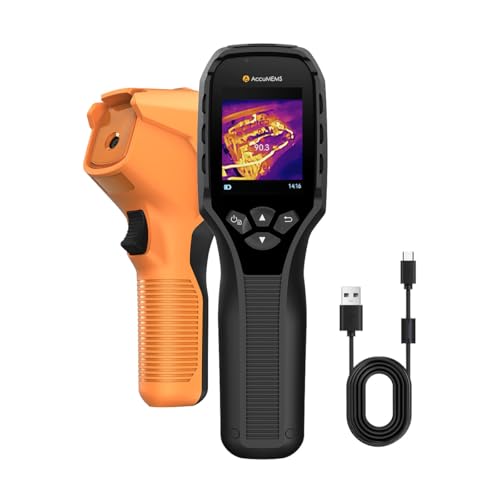
- Up to 14 hours of battery life
- 50b0 wide field of view for faster scanning
- Thermal imaging plus thermometer mode
Best For: Long inspection sessions where battery life, portability, and quick anomaly detection matter
Compact Handheld Infrared Inspector
FLIR TG165-X Thermal Imaging Camera

- 80x60 IR with MSX image enhancement
- Bullseye laser helps target the measurement area
- IP54 rugged design with -25°C to 300°C range
Best For: quick building, HVAC, and electrical spot checks
Smart Fusion Energy Audit Cam

- Dual-light fusion shows thermal data with visual edges
- 240x240 TISR with 25Hz scanning and <40mK sensitivity
- Built-in storage, LED light, and PDF report export
Best For: home inspections and guided energy-audit reporting
Phone-Linked Thermal Scout

- Wireless Bluetooth works with iOS and Android
- 80x60 native IR upscaled to 240x180 super resolution
- MSX detail overlay plus 2-meter drop rating
Best For: tight-space inspections with a smartphone workflow
Professional Handheld Thermal – FLIR E5-XT WiFi Thermal Camera
If you want an infrared inspection camera for energy audits that feels built for fieldwork, the FLIR E5-XT is a strong option. It combines 160 × 120 thermal resolution with MSX detail enhancement, making it easier to spot heat loss, hidden faults, and problem areas during routine building checks.
Best For: Contractors and energy auditors who want a dedicated handheld thermal camera with cloud sharing.
Pros:
- 160 × 120 thermal resolution with MSX for clearer, easier-to-read images.
- Wide temperature range from -20°C to 400°C for building and electrical diagnostics.
- FLIR Ignite cloud support for storing, editing, and sharing images.
- Rechargeable Li-Ion battery and included hard transport case for jobsite use.
Cons:
- Lower thermal resolution than some newer super-resolution models.
- Built as a dedicated camera, so it is less pocketable than smartphone add-ons.
Overall, the E5-XT is a practical choice when you want a dependable handheld tool with proven FLIR imaging and simple cloud workflow. It is best suited to users who value usability, documentation, and professional serviceability over the smallest form factor.
Mobile Thermal Accessory – FLIR ONE Pro LT Micro-USB
The FLIR ONE Pro LT is a compact infrared inspection camera for energy audits when you want to use a smartphone instead of carrying a full-sized device. It records 4,800-pixel IR images, includes VividIR and MSX image processing, and adds pro-focused app tools for finding heat loss, electrical issues, and water damage.
Best For: Smartphone users who want a lightweight thermal camera for quick inspections and reporting.
Pros:
- Very compact and lightweight for easy mobile use.
- VividIR and MSX help improve image quality and visibility.
- OneFit connector extends to secure the camera even with a case on the phone.
- FLIR Tools Mobile App supports spot meters, level/span controls, and reporting.
Cons:
- Temperature range is narrower than many handheld inspection cameras.
- Depends on a compatible smartphone, so it is not a standalone tool.
This is a good fit if your energy audit workflow benefits from fast phone-based capture and basic reporting. It trades standalone convenience for portability and a lower-friction way to document heat-related problems.
Value Super-Resolution Thermal – SUNANT 240×240 Thermal Camera
This infrared inspection camera for energy audits is aimed at buyers who want more resolution and a broad temperature range without moving to a premium brand. The SUNANT camera starts with a 96×96 IR sensor and uses real-time super resolution up to 240×240, while its 25Hz refresh rate helps keep live viewing smooth.
Best For: Budget-minded inspectors, HVAC techs, and homeowners who want strong feature coverage.
Pros:
- Super-resolution up to 240×240 for clearer thermal detail in live view and capture.
- Wide temperature range from -4°F to 1022°F with ±2°C or ±2% accuracy.
- Adjustable emissivity from 0.01 to 1.00 for different surface types.
- Hot/cold spot detection, LED light, image storage, and USB transfer included.
Cons:
- Base IR resolution is 96×96 before super-resolution processing.
- Less brand history and ecosystem depth than established FLIR models.
For users focused on value and feature count, this model covers a lot of ground for inspection and troubleshooting. It looks especially useful when you need broad temperature capability and helpful on-screen diagnostics in one handheld unit.
Pocket Pro Thermal – FLIR C5 Compact Thermal Camera
The FLIR C5 is a compact infrared inspection camera for energy audits when you want a pocketable tool with straightforward reporting. It pairs 160×120 true thermal imaging with MSX and FLIR Ignite cloud connectivity, making it easy to document hidden faults and share results from the field.
Best For: Inspectors who want a compact FLIR camera with cloud upload and image documentation.
Pros:
- 160×120 true thermal imaging with MSX for clearer inspection images.
- Measures from -20°C to 400°C for common building and troubleshooting tasks.
- FLIR Ignite cloud support helps upload, organize, and share reports.
- Pocket-sized design with LED flashlight and included case.
Cons:
- Screen size and pocket form factor may feel limited for extended review.
- Thermal resolution is solid, but not as high as newer super-resolution cameras.
The C5 is a smart middle ground for users who want FLIR reliability in a compact package. It is especially appealing if your workflow depends on image capture, quick documentation, and cloud sharing more than large-screen analysis.
Compact Touchscreen Thermal Imager – FNIRSI TDM-120 for HVAC & Building Checks
If you want an infrared inspection camera for energy audits that balances detail with easy handling, the FNIRSI TDM-120 is built for practical on-site use. Its 120×90 sensor, 25Hz refresh rate, and adjustable emissivity make it a solid pick for spotting hot spots, heat loss clues, and electrical or HVAC anomalies during routine inspections.
Best For: Technicians and inspectors who want a compact thermal imager with touchscreen controls and straightforward documentation.
Pros:
- 120×90 IR resolution helps reveal thermal patterns and problem areas more clearly.
- 2.8″ touchscreen makes parameter changes and image playback easier in the field.
- Temperature range from -4b0F to 752b0F supports HVAC, building, and electrical checks.
- 32GB SD card and USB export make it simple to save and review inspection snapshots.
Cons:
- Resolution is lower than premium thermal cameras.
- Uses a smaller 2.8″ display, which may feel limited for some users.
- Best suited to general inspection work rather than highly specialized imaging needs.
This is a practical, easy-to-carry option for routine thermal troubleshooting, especially when you need on-device controls and simple recordkeeping more than advanced analytics.
Phone-Mounted Inspection Cam – FLIR ONE Pro for iPhone 14 and Older
For buyers who want an infrared inspection camera for energy audits without carrying a full handheld unit, the FLIR ONE Pro turns a compatible iPhone into a thermal tool. It plugs into Lightning-port iPhones, uses MSX and VividIR to sharpen detail, and includes app-based inspection guides that are helpful when checking for air leaks, moisture buildup, and other home issues.
Best For: iPhone users with Lightning ports who want a compact, app-guided thermal inspection solution.
Pros:
- Plugs directly into supported iPhones with Lightning ports for quick setup.
- VividIR upscales thermal detail to 480×360 from 160×120 native IR.
- MSX merges thermal and visual images to make details easier to interpret.
- App includes step-by-step inspection guides for common home findings.
Cons:
- Limited to iPhone 14 and older models with a Lightning port.
- Accuracy is specified only within certain temperature and scene ranges.
- Not a standalone handheld camera, so it depends on a smartphone.
Its biggest advantage is convenience: you get guided thermal inspection features in a very small package, making it a strong fit for simple energy and home diagnostics on a compatible iPhone.
Long-Run Thermal Scanner – GT14S for Large-Surface Inspections
If your priority is a practical infrared inspection camera for energy audits with long runtime and broad coverage, the GT14S is designed for extended field use. It combines thermal imaging with thermometer mode, offers a 50b0 wide field of view, and includes custom alarms plus level/span adjustments to help you identify abnormal heat patterns quickly.
Best For: Inspectors who need a lightweight thermal camera for long sessions and fast anomaly detection.
Pros:
- Up to 14 hours of runtime supports full-day inspections.
- 50b0 wide field of view helps scan larger surfaces faster.
- Thermal imaging plus thermometer mode gives both visual and point readings.
- Custom high/low alarms and level/span controls help isolate problem spots.
Cons:
- Button-based controls may feel less modern than a touchscreen interface.
- Compact build is useful for portability, but the smaller form factor may not suit every hand.
- Best for general anomaly spotting rather than advanced analysis features.
Overall, the GT14S is a strong pick when you need endurance, broad scene coverage, and simple tools for catching thermal issues during energy audits or maintenance checks.
Compact Handheld Infrared Inspector – FLIR TG165-X Thermal Imaging Camera
If you want an infrared inspection camera for energy audits that’s simple to carry and quick to read, the FLIR TG165-X is built around fast spot checks. Its 80×60 IR resolution, MSX image enhancement, and bullseye laser help you identify temperature trouble areas on walls, ducts, and electrical components without a steep learning curve.
Best For: quick building, HVAC, and electrical energy-audit spot checks where portability and easy interpretation matter.
Pros:
- 80×60 IR sensor with MSX helps sharpen thermal images with visible detail.
- Bullseye laser shows the measurement area for faster targeting.
- Wide temperature range from -25°C to 300°C suits many audit tasks.
- IP54 design adds protection against dust, dirt, and oil.
Cons:
- Lower native resolution than higher-end thermal imagers.
- Best suited to spot inspection rather than detailed analysis.
Overall, the TG165-X is a practical choice when you need a rugged, straightforward tool for identifying hot and cold spots during routine energy inspections. It focuses on speed, durability, and easy viewing rather than advanced reporting features.
Smart Fusion Energy Audit Cam – Dual-Light Thermal Camera
This infrared inspection camera for energy audits adds dual-light fusion and 240×240 TISR resolution, making it easier to connect heat patterns with real-world details. It is designed to help you spot insulation gaps, water leaks, overheating circuits, and HVAC issues with clearer context than a basic thermal-only view.
Best For: home inspectors, contractors, and property owners who want guided thermal checks with reporting support.
Pros:
- Dual-light fusion blends infrared and visual images for clearer edge detail.
- 240×240 TISR output improves on the 96×96 IR sensor.
- Smart scene modes simplify HVAC, electrical, water pipe, and floor heating checks.
- Built-in 8GB storage and PC software support PDF report export.
Cons:
- More feature-rich than a basic spot thermometer, so it may take extra setup time.
- Bulkier than a smartphone add-on style camera.
For buyers who want an easier path to documenting findings, this model stands out with preset inspection modes and report-friendly storage. It balances practical field protection with the kind of thermal detail that helps during energy audits.
Phone-Linked Thermal Scout – FLIR Edge Smartphone Camera
For an infrared inspection camera for energy audits that works with the phone you already carry, the FLIR Edge is a flexible option. It connects wirelessly to iOS and Android devices, uses MSX to merge thermal and visual detail, and upsizes images to 240×180 super resolution from an 80×60 native sensor.
Best For: technicians and DIY users who want a wireless smartphone thermal camera for tight-access inspections.
Pros:
- Wireless Bluetooth connection works with both iOS and Android devices.
- 240×180 super resolution provides more detail than the 80×60 native IR image.
- MSX overlays visual detail to make thermal shapes easier to interpret.
- Lightweight, jobsite-rated design with a 2-meter drop rating.
Cons:
- Depends on a compatible smartphone or tablet for viewing and workflow.
- Battery life is listed at about 2 hours.
The Edge is a strong pick if you value mobility and want to inspect tight spaces, corners, and hard-to-reach areas from your phone. Its cloud support also makes it useful when you need to organize or share images after the audit.
How We Picked the Best Infrared Inspection Camera for Energy Audits
For an Infrared Inspection Camera for Energy Audits, we prioritized thermal resolution, temperature range, refresh rate, usability, and image-enhancement features that help reveal building-envelope issues more clearly. We also looked at portability, device compatibility, and whether the camera is easy to use during quick walkthroughs or longer inspection sessions.
Quick Comparison
Higher-resolution models are generally better for identifying smaller problem areas, while entry-level cameras can still be useful for basic leak detection and temperature contrast checks. Smartphone add-ons are convenient and affordable, while standalone units tend to offer better workflow, durability, and fewer compatibility headaches.
Key Buying Factors for an Infrared Inspection Camera for Energy Audits
Resolution and Image Clarity
Thermal resolution affects how much detail you can capture in walls, ceilings, windows, and electrical components. For energy audits, clearer imagery helps distinguish actual defects from background noise. MSX, visual overlay, or edge enhancement can also make interpretation easier.
Temperature Range and Sensitivity
Look for a camera that covers common building and electrical inspection temperatures. A wider range is useful, but sensitivity and consistency matter just as much when comparing surface temperature differences during HVAC or envelope checks.
Workflow and Compatibility
Some users will prefer a dedicated handheld camera, while others may want a smartphone-based option for convenience. If you inspect multiple properties, battery life, cloud storage, and app stability can be just as important as specs.
Refresh Rate and Field Use
A faster refresh rate makes it easier to scan large surfaces and moving targets smoothly. This is especially helpful when checking ducts, outlets, breaker panels, and exterior walls without jerky image lag.
Durability and Portability
Energy audits often involve attics, basements, crawl spaces, and mechanical rooms, so a compact camera with a sturdy build can save time and reduce hassle.
Who Should Buy Which Infrared Inspection Camera for Energy Audits?
If you want the most balanced choice for frequent inspections, choose a mid- to high-tier standalone camera with strong resolution and good software features. If you mainly need a budget-friendly tool for occasional home walkthroughs, a smartphone thermal camera may be enough. For contractors, auditors, and facilities teams who need reliable field use and better reporting, a dedicated thermal imager is usually the smarter long-term investment.
For buyers comparing several models, focus on the combination of image quality, ease of use, and how well the camera fits your inspection workflow—not just the highest spec on paper.