Choosing the right mount can make or break your images. The best motorized astrophotography mounts keep your target steady, reduce star trailing, and match your camera or telescope setup without adding unnecessary bulk.
In this roundup, we focus on options for beginners, mobile shooters, and serious deep-sky imagers so you can find a tracker or equatorial mount that fits your budget and imaging goals.
Best 10 Motorized Astrophotography Mounts Picks for 2026
Portable Wide-Field Tracker
Sky-Watcher Star Adventurer 2i Pro Pack
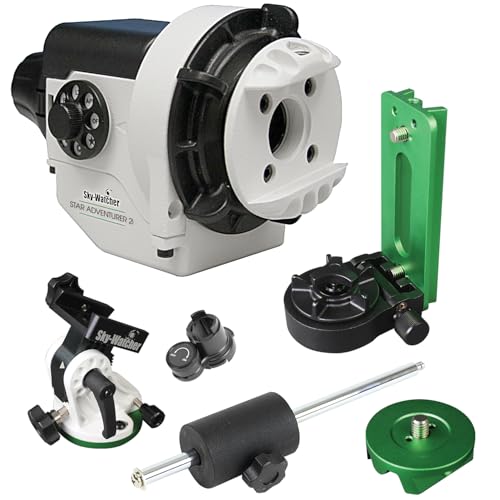
- Motorized portable tracking platform
- Wi‑Fi smartphone control with SAM Console
- Works with existing photographic tripods
Best For: Travelers and nightscape shooters who want a lightweight tracking platform with app control.
App-Controlled GOTO Mount
iEXOS-100-2 PMC-Eight Tracker System

- PMC-Eight system with eight independent CPUs
- ExploreStars app for Apple, Android, and Windows
- Quiet stepper motor belt drives with dual-axis worm gears
Best For: Astrophotographers who want app-driven GOTO control and precise motorized positioning.
Strainwave Imaging Mount

- Smooth strain wave drive tracking
- Wi‑Fi and Bluetooth for wireless control
- EQ and AZ modes with built-in cable management
Best For: Imaging setups that need a compact high-torque mount with wireless control.
Open-Source Star Tracker Mount
TeSeek Equatorial Mount Star Tracker

- Open-source equatorial design with dual-core control chip
- Supports stellar, moon, and custom rotation speeds
- Powered by Type-C and usable in both hemispheres
Best For: Users who want a compact, app-free tracker for camera-based astrophotography and time-lapse work.
Strainwave GoTo Mount Kit
Sky-Watcher Wave 100i Pro with Tripod

- Strainwave GoTo head with dual saddle
- Includes EQ6 steel tripod and extension tube
- Padded carry case and two-year warranty
Best For: Imaging-focused observers wanting a sturdy, portable mount kit
Portable Star Tracker
iOptron SkyTracker Pro Camera Mount

- R.A. automatic tracking for cameras and cellphones
- Includes polar scope and padded bag
- 6.6 lb payload with USB charging
Best For: Lightweight camera users who want a compact star tracker
Computerized Imaging Mount

- Belt-driven GoTo tracking with quiet slewing
- 44-pound payload for heavier optical tubes
- Includes polar scope and 42,000+ object database
Best For: Advanced users needing a high-capacity GoTo equatorial mount
Beginner-Friendly Portable Tracker
OrionU Star Tracking Equatorial Mount
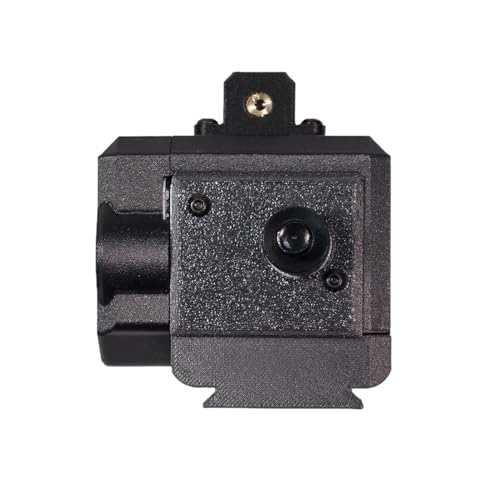
- Single-axis tracking for DSLR and mirrorless setups
- 4 kg axial load support with reinforced steel shaft
- Runs from 5V power banks for portable use
Best For: Beginners needing a lightweight field tracker
Cold-Weather Deep-Sky Option
Star Tracking Equatorial Mount
- Built for deep-sky astrophotography and time-lapse
- Alignment pointer is designed for use down to -10°C
- Lightweight carbon fiber reinforced PETG body
Best For: Night shooters working in cold conditions
Portable Wide-Field Tracker – Sky-Watcher Star Adventurer 2i Pro Pack
If you want a compact option in motorized astrophotography mounts, the Sky-Watcher Star Adventurer 2i Pro Pack is built for portable nightscape tracking, wide-field astrophotography, time-lapse video, and even telescopic use. Its modular design works with existing photographic tripods, and the upgraded Wi‑Fi control adds convenient smartphone operation through the free SAM Console app.
Best For: Travelers and nightscape shooters who want a lightweight tracking platform with app control.
Pros:
- Motorized portable tracking platform for Milky Way, eclipse, and other astronomical subjects
- Modular design integrates with existing photographic tripods
- Wi‑Fi support enables smartphone control via the SAM Console app
- Deluxe equatorial base helps with polar alignment
Cons:
- Built for wide-field and portable use rather than heavy imaging rigs
- Requires polar alignment for best results
For buyers prioritizing portability and straightforward tracking, this is a practical entry point into motorized astrophotography mounts. It focuses on ease of use, flexible tripod compatibility, and useful app control without adding unnecessary bulk.
App-Controlled GOTO Mount – iEXOS-100-2 PMC-Eight Tracker System
The iEXOS-100-2 is a feature-rich choice in motorized astrophotography mounts, combining the Explore Scientific PMC-Eight system with quiet precision stepper motor belt drives and app-based GOTO control. It is designed for users who want responsive operation, clutched RA and declination axes, and a setup workflow that supports alignment and object navigation from a tablet.
Best For: Astrophotographers who want app-driven GOTO control and precise motorized positioning.
Pros:
- PMC-Eight system uses eight independent CPUs for responsive performance
- ExploreStars app supports Apple, Android, and Windows tablets
- Quiet precision stepper motor belt drives with clutched dual-axis worm gears
- Polar alignment sight hole and precise altitude control simplify setup
Cons:
- More complex than a basic star tracker
- Designed around tablet-based control, so it may not suit users who want a very simple manual setup
This mount stands out if you want more automation and smarter control than a basic tracker. The combination of app guidance, GOTO capability, and motorized dual-axis control makes it a strong fit for users building a more capable imaging setup.
Strainwave Imaging Mount – Sky-Watcher Wave 150i Pro
The Sky-Watcher Wave 150i Pro brings strain wave drive technology to motorized astrophotography mounts, offering smooth and precise tracking in a compact head. It supports both EQ and AZ modes, includes built-in cable management, and adds Wi‑Fi and Bluetooth control for use with smartphones, tablets, and third-party platforms like ASI Air.
Best For: Imaging setups that need a compact high-torque mount with wireless control.
Pros:
- Strain wave drive design delivers smooth, precise tracking
- Dual EQ and AZ tracking modes add flexibility
- Built-in cable management helps keep the setup organized
- Wi‑Fi and Bluetooth support advanced control options
Cons:
- Optional counterweight kit is needed for the highest payload rating
- More advanced feature set may be more than casual users need
If you want a compact mount built for modern imaging workflows, this model offers a strong mix of precision, connectivity, and payload versatility. It is especially appealing for users who value wireless control and a cleaner cable layout around the telescope.
Open-Source Star Tracker Mount – TeSeek Equatorial Mount Star Tracker
Equatorial Mount Star Tracker with Latitude Adjustment Base for Astrophotography
Check Price On AmazonThis TeSeek option is a more DIY-leaning entry among motorized astrophotography mounts, built around an open-source equatorial design with stellar, moon, and custom rotation speeds. It also supports both northern and southern hemispheres, runs without an app, and can be powered from a power bank through its Type-C port.
Best For: Users who want a compact, app-free tracker for camera-based astrophotography and time-lapse work.
Pros:
- Open-source design with EESP32S dual-core main control chip
- Supports stellar, moon, and custom rotation speeds
- Works in both northern and southern hemispheres
- Can be powered by a power bank through the Type-C port
Cons:
- Camera connection requires a ball head for use as described
- No built-in battery
- Accessory compatibility may require extra adapters, such as a 1/4 to 3/8 sleeve
For buyers who want a compact tracker with straightforward operation, this mount keeps the feature set focused on practical camera use. Its open-source design and portable power options make it appealing for experimentation and travel-friendly setups.
Strainwave GoTo Mount Kit – Sky-Watcher Wave 100i Pro with Tripod
If you want a motorized astrophotography mount that feels stable and travel-ready, the Sky-Watcher Wave 100i Pro kit is built around a strainwave head, GoTo control, and a heavy-duty steel tripod setup. It is aimed at users who want an equatorial imaging mount with solid support, a dual-saddle design, and the included extension tube for better tripod clearance.
Best For: Imaging-focused observers who want a rock-solid, portable strainwave mount kit with tripod included.
Pros:
- Strainwave GoTo head for motorized tracking and dual-saddle mounting.
- Includes a 2-inch steel leg EQ6 tripod plus adapter and extension tube.
- Packaged with a padded carry case for easier transport.
- Two-year limited warranty adds some ownership confidence.
Cons:
- Manual focus is listed in the supplied details, so it is not a camera-side automation product.
- Heavier tripod-based setup may be less convenient than a compact camera tracker.
This is a strong option if you want a full mount kit rather than just a head-only solution. The emphasis here is on stability, portability, and imaging-friendly mounting rather than the smallest possible footprint.
Portable Star Tracker – iOptron SkyTracker Pro Camera Mount
The iOptron SkyTracker Pro is a compact motorized astrophotography mount for cameras and cellphones when you need simple tracking in a small package. Its R.A. automatic tracking, sidereal and lunar/solar modes, and included polar scope make it a practical choice for wide-field night sky work and short-exposure shooting.
Best For: DSLR and camera users who want a lightweight tracker for portable night-sky imaging.
Pros:
- Tracks in sidereal, 1/2 celestial, solar, and lunar modes.
- Polar scope is included for alignment help.
- Micro USB charging and a padded bag improve portability.
- Supports up to 6.6 lbs, which fits many camera setups.
Cons:
- 6.6 lb payload limits it to lighter imaging rigs.
- Maximum shutter speed is listed as 30 seconds in the supplied details.
This mount makes the most sense if you want a grab-and-go tracker instead of a full equatorial rig. It is compact, rechargeable, and built for basic automatic R.A. tracking rather than heavy telescope use.
Computerized Imaging Mount – Sky-Watcher EQ6-R Pro GoTo
The Sky-Watcher EQ6-R Pro is a computerized motorized astrophotography mount built for accurate GoTo tracking, heavy payloads, and visual or imaging use. With belt-driven stepper motors, an illuminated polar finderscope, and a 42,000-plus object database, it is set up for users who want a full-featured German equatorial mount for larger telescope systems.
Best For: Astrophotographers and advanced observers needing a high-capacity GoTo equatorial mount.
Pros:
- Belt-driven stepper motors are designed for quiet slewing and reduced periodic error.
- 44-pound payload capacity suits many larger optical tube setups.
- Includes an illuminated polar finderscope for alignment.
- SynScan hand controller offers a 42,000-plus object database.
Cons:
- 44-pound mount weight makes it less convenient for ultra-portable setups.
- Runs on 12V power, so it needs the right external supply.
This mount is the most full-featured option in the group for serious tracking and heavier gear. If you need a computerized equatorial platform that can support bigger imaging rigs, this one is clearly positioned for that role.
Beginner-Friendly Portable Tracker – OrionU Star Tracking Equatorial Mount
If you want a compact entry point into motorized astrophotography mounts, this OrionU star tracker is built around simple single-axis tracking and practical field use. Its reinforced steel axis, high-brightness alignment pointer, and 5V power-bank-friendly control system make it a sensible option for DSLR and mirrorless shooters starting out with long exposures.
Best For: Beginners who want a portable, easy-to-power star tracker for DSLR or mirrorless astrophotography.
Pros:
- Reinforced dual-screw steel shaft supports up to 4 kg axial loads.
- High-brightness alignment pointer is designed to stay visible in cold conditions.
- ESP32 dual-core control runs smoothly from 5V power banks.
- Carbon fiber composite body keeps the unit lightweight for travel.
Cons:
- Single-axis design is more limited than multi-axis tracking systems.
- Best suited to lighter DSLR and mirrorless setups rather than heavy rigs.
This is a straightforward travel-friendly tracker that focuses on stability, portability, and easier alignment rather than advanced automation. For beginner astrophotography and time-lapse work, it covers the essentials without adding much setup complexity.
Cold-Weather Deep-Sky Option – Star Tracking Equatorial Mount
Among motorized astrophotography mounts, this star tracking equatorial mount is geared toward deep-sky imaging and time-lapse work with a focus on practical stability. It uses a dual-screw steel shaft, a bright star pointer for alignment in cold weather, and ESP32 dual-core control powered by low-voltage 5V sources for extended sessions outdoors.
Best For: Deep-sky and time-lapse shooters who want a compact mount that handles cold-night alignment well.
Pros:
- Dual-screw steel shaft is engineered for stable support up to 4 kg.
- Bright pointer is designed to stay usable down to -10°C.
- ESP32 dual-core control works with 5V power sources.
- Carbon fiber reinforced PETG body keeps the mount lightweight and durable.
Cons:
- Product details are sparse on accessories and setup extras.
- Weight support is limited to lighter astrophotography rigs.
This model stands out most for users who prioritize reliable alignment and simple power needs during cold-weather observing. It looks like a focused, no-frills tracker for portable deep-sky and time-lapse sessions.
Versatile Tripod-Mount Tracker – XMalNexity Star Tracking Equatorial Mount
This XMalNexity tracker is a practical pick if you want one of the more versatile motorized astrophotography mounts for travel and tripod-based shooting. It combines a reverse-load-resistant dual-screw steel shaft, a bright star pointer for low-temperature alignment, and a standard 3/8-inch threaded output for broad tripod compatibility.
Best For: Photographers who want a compact tracker that mounts easily to a wide range of tripods.
Pros:
- Dual-screw steel shaft is designed to resist loosening under reverse load.
- High-brightness star pointer remains visible in temperatures as low as -10°C.
- ESP32 dual-core control supports 5V mobile power sources.
- Standard 3/8-inch threaded output improves tripod compatibility.
Cons:
- Maximum weight recommendation is limited to 500 g.
- Best suited to compact camera or telescope setups rather than larger rigs.
If you need a simple, tripod-friendly tracker for lightweight astrophotography or time-lapse work, this one checks the right boxes. Its compatibility and power flexibility make it a solid field tool, provided your setup stays within the stated weight limit.
How We Picked These Motorized Astrophotography Mounts
We focused on mounts that solve real imaging problems: tracking accuracy, payload capacity, portability, alignment support, and ease of setup in the field. We also favored models with clear use cases, from lightweight DSLR tracking to full GoTo telescope mounts.
Because Motorized Astrophotography Mounts vary widely, we prioritized designs that give buyers a sensible upgrade path rather than features that look impressive on paper but add complexity without improving image quality.
Quick Comparison
For travel and wide-field work, compact star trackers are usually the simplest choice. For longer focal lengths, heavier cameras, or guided deep-sky imaging, a sturdier equatorial mount is the better fit. If you want the most flexibility, look for models with dual-axis tracking, solid polar alignment tools, and payload headroom above your current gear.
Key Buying Factors for Motorized Astrophotography Mounts
Payload and Rig Weight
Match the mount to the total weight of your camera, lens, telescope, dovetail, and accessories. Staying well under the stated payload limit usually improves tracking stability and reduces vibration.
Tracking Type and Accuracy
Single-axis trackers work well for wide-field lenses and short exposures. Dual-axis or equatorial mounts are better when you need longer exposures, longer focal lengths, or more precise framing over time.
Alignment and Polar Setup
Good polar alignment matters more than many beginners expect. Built-in polar scopes, latitude adjustments, and easy altitude/azimuth controls can save time and improve results, especially with Motorized Astrophotography Mounts used in the field.
Portability and Power
If you travel often, weight and pack size matter as much as performance. Also check power options, since some mounts are designed for battery use while others are better suited to AC or external field power.
Control, Connectivity, and Expansion
Wi-Fi, Bluetooth, hand controllers, and app support can simplify setup, but only if they are reliable. For more advanced rigs, consider whether the mount supports guiding, GoTo operation, or future upgrades.
Who Should Buy Which Motorized Astrophotography Mounts?
Beginners and travel shooters should lean toward compact star trackers that are fast to set up and easy to carry. DSLR and mirrorless users shooting wide-field Milky Way scenes will usually get the most value from a lighter tracker with strong alignment tools.
If you plan to image galaxies, nebulae, or use a telescope, choose a more robust equatorial or GoTo mount with higher capacity and better tracking precision. In short, pick the lightest mount that still comfortably handles your current and near-future gear, and you’ll get the best balance of convenience and image quality.