Choosing among NAS enclosures with 2.5GbE is easier when you start with your storage needs, network hardware, and expected workload. The models in this roundup range from compact two-bay systems to expandable six-bay and rackmount options.
We’ve compared drive capacity, processor performance, memory, expansion options, networking, and practical features to help you find the right NAS for backups, media libraries, creator workflows, and small-office file sharing.
Best 10 Nas Enclosures with 2 5gbe Picks for 2026
Top Creator Pick
Asustor Lockerstor 6 Gen2+ 6-Bay NAS
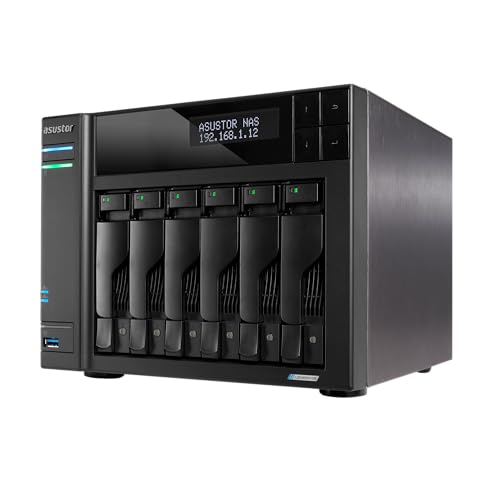
- Dual 5GbE with 10GbE expansion readiness
- Six bays plus four M.2 NVMe slots
- 8GB RAM for demanding workflows
Best For: Video creators and small businesses needing high-speed hybrid storage
Best 4-Bay Value
QNAP TS-464-8G Dual 2.5GbE NAS

- Dual 2.5GbE networking for faster file sharing
- Four hot-swappable drive bays
- 8GB RAM and dual M.2 NVMe slots
Best For: Home and small-office storage with 2.5GbE networking
Most Versatile
Beelink Me Pro N150 NAS Mini PC

- 5GbE plus 2.5GbE dual LAN
- Two HDD bays and three M.2 slots
- 16GB LPDDR5 and compact mini-PC design
Best For: Compact private clouds, media libraries, and flexible home servers
Best Compact NAS
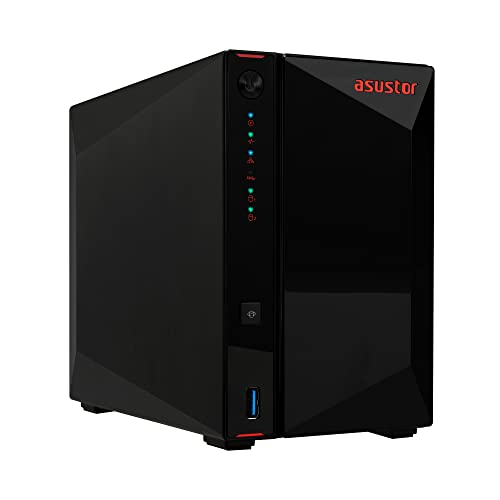
- Dual 2.5GbE with link aggregation
- Four M.2 NVMe slots
- Upgradeable DDR4 memory up to 16GB
Best For: Compact creator and media-storage setups
Best Compact 2.5GbE NAS

- Dual 2.5GbE networking
- 8GB DDR4 RAM
- Two M.2 NVMe slots
Best For: Home users and small teams needing fast two-bay storage
Best High-Performance Creator NAS

- Dual 10GbE ports
- Up to 64GB RAM
- Four bays plus SSD expansion
Best For: Creators and offices managing large files and demanding workloads
Best Short-Depth Rack NAS

- Dual 2.5GbE ports
- Compact 11.51-inch depth
- Four-bay rackmount design
Best For: Small businesses and edge storage in shallow rack spaces
Best Business-Ready 6-Bay

- Six bays with flexible RAID support
- Dual 2.5GbE ports with up to 5Gbps link aggregation
- 8GB DDR5, NVMe slots, and business backup tools
Best For: Small offices and demanding multi-user storage setups
Best Media-Focused 2-Bay

- Dual 2.5GbE ports combine for up to 5Gbps
- Two HDD bays plus two M.2 NVMe slots
- 4K HDMI playback and automatic media scraping
Best For: Home media libraries and compact hybrid storage
Best High-Speed Performance

- 10GbE plus 5GbE networking with up to 15Gbps aggregation
- Five SATA bays and three M.2 slots
- Ryzen 7 processor with up to 96GB DDR5 RAM
Best For: Power users and high-throughput multi-user workflows
Top Creator Pick – Asustor Lockerstor 6 Gen2+ 6-Bay NAS
For shoppers comparing NAS enclosures with 2 5GbE, the Asustor Lockerstor 6 Gen2+ stands out with dual 5GbE networking, six drive bays, and four M.2 NVMe slots. Its Intel quad-core platform and 8GB of RAM are well suited to demanding media and business workflows.
Best For: Video creators, small businesses, and users building a high-speed hybrid HDD/SSD storage system.
Pros:
- Dual 5GbE ports support fast transfers, link aggregation, and 10GbE expansion.
- Six-bay design combines large-capacity SATA storage with SSD performance.
- Four M.2 NVMe slots can provide caching or high-speed storage acceleration.
- 8GB DDR4 memory supports multitasking, media streaming, synchronization, and backups.
Cons:
- Diskless design requires separate drives.
- The larger six-bay chassis may be more storage than casual users need.
This is the strongest match here for users specifically seeking dual 5GbE and substantial expansion. It is especially compelling for creator workloads where fast networking, large storage capacity, and NVMe acceleration work together.
Best 4-Bay Value – QNAP TS-464-8G Dual 2.5GbE NAS
The QNAP TS-464-8G is a practical four-bay option for shoppers researching NAS enclosures with 2 5GbE, although its dual network ports are 2.5GbE rather than 5GbE. It pairs an Intel quad-core processor with 8GB of RAM, NVMe slots, and fast USB connectivity.
Best For: Home users, teams, and small offices that need dependable multi-drive storage and faster-than-gigabit networking.
Pros:
- Dual 2.5GbE ports accelerate file sharing and large transfers.
- Four drive bays provide flexible capacity and hot-swappable storage.
- Dual M.2 PCIe Gen3x2 slots support cache acceleration or SSD storage pools.
- USB 3.2 Gen 2 ports support transfers of up to 10Gb/s with compatible devices.
Cons:
- Network ports do not reach the 5GbE speed requested by the target category.
- Diskless enclosure requires separately purchased drives.
The TS-464-8G is a sensible mainstream alternative when dual 2.5GbE is sufficient. Its four-bay layout, included memory, and NVMe support make it versatile for backups, personal media, and shared files.
Most Versatile – Beelink Me Pro N150 NAS Mini PC
The Beelink Me Pro takes a different approach to NAS enclosures with 2 5GbE by combining a compact mini PC with NAS storage. It includes one 5GbE and one 2.5GbE port, a 1TB SSD, two SATA bays, three M.2 slots, and 16GB of LPDDR5 memory.
Best For: Users who want a compact private cloud, media library, soft router, and general-purpose mini PC in one system.
Pros:
- 5GbE plus 2.5GbE networking supports fast transfers and advanced network configurations.
- Two HDD bays and three M.2 slots offer flexible storage expansion.
- 16GB LPDDR5 memory and an Intel N150 processor support multitasking and server tasks.
- Compact metal design supports dual 4K displays and 24/7 operation.
Cons:
- It has only one 5GbE port, not dual 5GbE connectivity.
- Its two-bay storage layout provides less traditional NAS capacity than larger enclosures.
- Memory is listed as non-upgradable, with a 16GB maximum.
This is a strong choice when space and flexibility matter more than a conventional NAS interface. Its integrated PC features, mixed storage options, and 5GbE connectivity make it particularly adaptable for home servers and media use.
Best Compact NAS – Asustor AS5402T 2-Bay NAS
For buyers exploring NAS enclosures with 2 5GbE, the Asustor AS5402T is a compact alternative with dual 2.5GbE ports rather than dual 5GbE. It combines an Intel N5105 processor, upgradeable DDR4 memory, four M.2 NVMe slots, and HDMI output in a two-bay enclosure.
Best For: Content creators, video editors, and home users who need fast networking and SSD acceleration in a smaller NAS.
Pros:
- Dual 2.5GbE ports support high-speed transfers and link aggregation.
- Four M.2 NVMe slots support caching or full-flash storage.
- Memory can be expanded from 4GB to 16GB DDR4.
- HDMI 2.0b and hardware transcoding support direct media and 4K playback.
Cons:
- It does not provide the requested dual 5GbE connectivity.
- Two drive bays limit bulk-storage capacity compared with four- and six-bay models.
- The supplied configuration includes 4GB of RAM, less than the larger Asustor model.
The AS5402T makes sense for users who want a space-efficient creator NAS and can work within 2.5GbE limits. Its unusually generous four-slot NVMe layout gives it strong flexibility for cache or all-flash configurations.
Best Compact 2.5GbE NAS – QNAP TS-264-8G-US
The QNAP TS-264-8G-US is a practical choice for shoppers comparing NAS enclosures with 2 5gbe connectivity in a compact two-bay format. Its dual 2.5GbE ports, 8GB of DDR4 memory, and Intel Celeron quad-core processor support faster file sharing, backups, and large media transfers.
Best For: Home users, small teams, and media-focused setups needing a compact two-bay NAS with fast networking and NVMe expansion.
Pros:
- Dual 2.5GbE ports support faster transfers than standard Gigabit Ethernet.
- Dual M.2 PCIe Gen3x1 slots can provide cache acceleration or SSD storage pools.
- Multiple USB 3.2 Gen 2 ports support fast transfers to compatible drives and expansion enclosures.
- PCIe Gen3 x2 expansion slot adds flexibility for compatible network or QM2 cards.
Cons:
- Only two drive bays are available.
- Drives are not included.
- The processor is designed for efficient NAS workloads rather than high-end workstation performance.
With 8GB of RAM and several upgrade paths, the TS-264-8G-US offers a balanced feature set for users who want fast local file access without moving to a larger enclosure.
Best High-Performance Creator NAS – UGREEN NAS DXP4800 GT
The UGREEN NAS DXP4800 GT is a strong option for creators and office teams evaluating NAS enclosures with 2 5gbe networking, especially when higher-speed connectivity is a priority. Its dual 10GbE ports, Ryzen Embedded processor, expandable memory, and four-bay design suit demanding transfers, media workflows, and multitasking.
Best For: Creators, tech enthusiasts, and small offices handling large media libraries, backups, Docker apps, surveillance footage, or multi-user workloads.
Pros:
- Dual 10GbE ports can provide high transfer speeds and aggregate bandwidth with compatible networking equipment.
- AMD Ryzen Embedded R2514, 8GB RAM, and support for up to 64GB enable demanding multitasking.
- Four drive bays, two M.2 slots, and support for certain U.2 NVMe drives provide substantial expansion capacity.
- Built-in SD backup, USB connectivity, HDMI, and surveillance features support creator and office workflows.
Cons:
- Drives are not included.
- Full networking performance depends on compatible 10GbE equipment and configuration.
- Its broad feature set may be more than needed for basic file storage.
The DXP4800 GT is the most expansive option here, combining fast networking with substantial storage potential and software support for media, virtualization, containers, and local surveillance.
Best Short-Depth Rack NAS – QNAP TS-433eU
The QNAP TS-433eU is a compact rackmount choice for shoppers comparing NAS enclosures with 2 5gbe networking in space-constrained installations. This diskless four-bay model combines dual 2.5GbE ports with a short 11.51-inch chassis, making it suitable for edge storage and smaller rack environments.
Best For: Small businesses and edge deployments that need four-bay rackmount storage in a short-depth enclosure.
Pros:
- Dual 2.5GbE ports support faster file sharing and large transfers.
- Short 11.51-inch chassis fits space-limited rack installations.
- Four-bay design provides more drive capacity than a two-bay NAS.
- Built-in NPU accelerates face recognition and subject identification in QuMagie.
Cons:
- Only 4GB of onboard RAM is provided.
- ARM processor may be less suitable for demanding applications than higher-powered x86 alternatives.
- Drives are not included.
For organizations that need rackmount storage without a long chassis, the TS-433eU emphasizes installation flexibility, dual 2.5GbE connectivity, and practical backup features such as Google Workspace and Microsoft 365 support.
Best Business-Ready 6-Bay – TerraMaster F6-424
For buyers comparing NAS enclosures with 2 5gbe, the TerraMaster F6-424 combines six drive bays with dual 2.5GbE ports that can be linked for up to 5Gbps of network bandwidth. Its Intel N95 processor, 8GB of upgradeable DDR5 memory, and dual M.2 NVMe slots make it a practical choice for demanding home users and small offices.
Best For: Small businesses and multi-user households needing expandable storage, SSD caching, and built-in backup tools.
Pros:
- Six bays support RAID 0/1/5/6/10, JBOD, Single, TRAID, and TRAID+ configurations.
- Dual 2.5GbE ports support link aggregation for up to 5Gbps of bandwidth.
- Includes 8GB DDR5 memory, dual M.2 NVMe slots, and two USB 3.2 10Gbps ports.
- Business Backup Suite adds centralized, cloud, off-site, synchronization, and snapshot options.
Cons:
- It is diskless, so hard drives or SSDs must be purchased separately.
- The enclosure uses plastic construction.
The F6-424 is a well-rounded six-bay enclosure for users who value business-oriented backup features and flexible RAID options. Its dual 2.5GbE setup is useful for concurrent file access, though achieving the stated link-aggregation speeds depends on compatible network equipment.
Best Media-Focused 2-Bay – ORICO MetaHome CS200Pro
The ORICO MetaHome CS200Pro is a compact option for shoppers seeking NAS enclosures with 2 5gbe. Its two 2.5GbE ports can combine for 5Gbps transfers, while dual HDD bays and dual M.2 NVMe slots support a mix of bulk storage and SSD caching.
Best For: Home media libraries, remote access, and users who want direct 4K playback through HDMI.
Pros:
- Two 2.5GbE ports support combined transfer speeds of up to 5Gbps.
- Supports two HDDs plus two M.2 NVMe SSDs for hybrid storage.
- 4K HDMI output and automatic movie scraping create a TV-friendly media library.
- AI photo albums can organize images by people, scenes, and locations.
Cons:
- Its two-bay HDD design offers less traditional storage expansion than larger NAS models.
- The enclosure is diskless and has an 18-month manufacturer warranty.
- Some web-based OS functionality was still under development according to the supplied notes.
The CS200Pro stands out as a media-centric NAS rather than a high-capacity business appliance. Its HDMI output, photo organization, and hybrid HDD/SSD layout make it appealing for home entertainment, provided two-bay capacity is sufficient.
Best High-Speed Performance – MINISFORUM N5 Air
The MINISFORUM N5 Air is a performance-oriented choice among NAS enclosures with 2 5gbe, pairing one 10GbE port with one 5GbE port for link aggregation up to 15Gbps. It also offers five SATA bays, three M.2 slots, a Ryzen 7 processor, and substantial memory expansion for demanding workflows.
Best For: Power users, creative teams, and advanced home labs handling large files, multiple users, and high-speed networking.
Pros:
- AMD Ryzen 7 255 provides 8 cores and 16 threads with boost speeds up to 4.9GHz.
- Five SATA bays support up to 174TB, alongside three M.2 slots for SSD storage.
- One 10GbE and one 5GbE port support link aggregation up to 15Gbps.
- Supports up to 96GB DDR5 RAM, dual USB4, HDMI 8K, PCIe x16, and OCuLink expansion.
Cons:
- The system is more feature-rich and potentially complex than a basic NAS enclosure.
- It is diskless apart from the included 64GB system SSD.
- The OCuLink interface does not support hot-swapping.
The N5 Air is the strongest fit here for users prioritizing CPU power, expansion, and network throughput. Its 10GbE/5GbE combination goes beyond the typical dual-2.5GbE design, while the five bays and extensive expansion options leave room for demanding storage and virtualization-style setups.
How We Picked the Best Nas Enclosures with 2 5gbe
We selected systems across several use cases rather than ranking them by bay count alone. The comparison considers drive capacity, CPU performance, included memory, upgrade potential, network connectivity, storage expansion, operating-system features, and overall suitability for home or business use.
Because “dual 2.5GbE” can mean different things across product listings, verify the exact port configuration before buying. Some models include two 2.5GbE ports, while others combine 2.5GbE with 5GbE or 10GbE connectivity. Actual throughput also depends on your switch, cables, client devices, RAID configuration, and hard drives or SSDs.
Quick Comparison
- Best for larger home media libraries: Six-bay models such as the Asustor Lockerstor 6 Gen2+ and TerraMaster F6-424 offer room for expansion.
- Best compact options: Two-bay systems such as the Asustor AS5402T and QNAP TS-264 are easier to place and configure.
- Best for creators and power users: The UGREEN, MINISFORUM, and higher-end Asustor models provide stronger expansion and faster networking potential.
- Best for rack installations: The short-depth QNAP TS-433eU is designed for compact server cabinets and edge deployments.
- Best flexible DIY-style platform: The Beelink Me Pro and similar mini-PC NAS designs can suit users who want multiple SSD options and more control over software.
Key Buying Factors for NAS Enclosures with 2.5GbE
Drive Bays and Redundancy
Two-bay NAS systems are compact and can support mirrored RAID for basic drive failure protection. Four- and six-bay models provide more usable capacity, better RAID flexibility, and room to expand without replacing every drive at once. Remember that RAID is not a backup; maintain a separate copy of important files.
Networking and Real-World Speed
Dual 2.5GbE can support link aggregation, separate traffic paths, or failover, but it will not automatically double transfer speeds to one client. Look for a compatible multi-gigabit switch and client devices with 2.5GbE, 5GbE, or faster ports. SSD caching and faster storage can also help with demanding workloads.
CPU, Memory, and Applications
Basic file serving and backups require modest hardware, while Plex transcoding, virtual machines, containers, surveillance, and large photo catalogs benefit from a stronger CPU and more RAM. Check whether memory is upgradeable and whether the NAS operating system supports the applications you plan to run.
Expansion and Connectivity
M.2 slots can provide SSD caching or fast storage pools, while HDMI outputs may be useful for direct media playback or local administration. USB ports, PCIe expansion, 10GbE support, and drive compatibility are worth checking before purchase.
Who Should Buy Which Nas Enclosures with 2 5gbe?
Choose a two-bay model if you need a straightforward backup target, private cloud, or small media library. Move to four bays if you need more capacity, flexible RAID, or shared storage for several users. Six-bay systems are better suited to growing media collections, business files, and longer-term expansion.
Creators should prioritize fast networking, SSD support, upgradeable memory, and strong application performance. Home users may prefer a quieter, simpler enclosure with an established software ecosystem. Small businesses and IT professionals should focus on warranty coverage, remote administration, backup integration, drive compatibility, and rack or desktop installation requirements.