The best oscilloscopes for classrooms make waveform analysis easier to demonstrate, measure, and repeat across student lab stations. The right choice depends on whether you prioritize simple controls, multiple channels, portability, or advanced measurement features.
This roundup compares ten classroom-friendly options across several budgets and skill levels, including full-size digital scopes, handheld instruments, and multifunction tools.
Best 10 Oscilloscopes for Classrooms Picks for 2026
Advanced Classroom Lab Scope
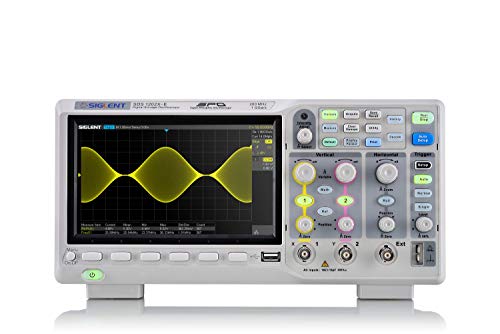
- 200 MHz bandwidth and two channels
- Up to 1 GSa/s sampling with 14 Mpts record length
- Serial-bus triggering and decoding
Best For: Advanced electronics, embedded-systems, and communications labs
Budget-Friendly Teaching Scope

- 150 MHz bandwidth and two channels
- Arbitrary waveform output included
- 14 trigger modes plus serial-protocol decoding
Best For: Budget-conscious general electronics and education labs
Portable Touchscreen Scope

- 7-inch touchscreen and 2.16-pound portable design
- 1 GSa/s sampling with 100 MHz bandwidth
- Battery power, FFT, and Lissajous display
Best For: Mobile demonstrations and introductory waveform instruction
Four-Channel Classroom Workhorse

- Four channels with 110 MHz bandwidth
- 1 GS/s sampling and 7-inch display
- 30 automatic measurements plus USB and LABVIEW support
Best For: Multi-signal electronics labs and measurement training
Best All-in-One Classroom Pick
FNIRSI 2C53P 3-in-1 Oscilloscope

- 50 MHz bandwidth and 250 MS/s sampling
- Multimeter and DDS generator built in
- Touchscreen, FFT, and X-Y analysis
Best For: Classrooms needing a versatile portable lab instrument
Best Desktop Lab Scope
RIGOL DS1202Z-E Digital Oscilloscope

- 200 MHz bandwidth and 1 GSa/s sampling
- 24 Mpts memory and 30,000 wfms/s capture
- Serial decoding plus USB and LAN connectivity
Best For: Dedicated electronics labs and embedded-systems lessons
Best Budget Portable Option
FNIRSI DSO-510 Handheld Oscilloscope

- 10 MHz bandwidth and 48 MS/s sampling
- DDS output with 13 waveform types
- Compact design with one-key AUTO
Best For: Introductory labs and portable classroom demonstrations
Best Portable Starter
FNIRSI DSO152 Handheld Oscilloscope

- 200 kHz bandwidth and 2.5 MS/s sampling
- One-key AUTO setup with three trigger modes
- Lightweight design with about four-hour battery life
Best For: Portable introductory electronics demonstrations
Best All-in-One Lab Tool
3-in-1 Handheld Oscilloscope with Signal Generator

- 15 MHz bandwidth and 60 MS/s sampling
- Includes multimeter and DDS signal generator
- SD card waveform storage and up to eight-hour battery
Best For: Multi-purpose electronics lab activities
Best Hands-On Learning Kit

- DIY assembly supports electronics instruction
- 2.4-inch color TFT and 1 MSPS sampling
- ARM platform can support custom development
Best For: Hands-on oscilloscope construction and electronics training
Advanced Classroom Lab Scope – Siglent SDS1202X-E
For classrooms that need broad signal-analysis capability, the Siglent SDS1202X-E is a strong choice among oscilloscopes for classrooms. It combines 200 MHz bandwidth, two channels, up to 1 GSa/s real-time sampling, and a record length of up to 14 Mpts.
Best For: Electronics labs teaching waveform analysis, serial communications, and embedded systems.
Pros:
- 200 MHz bandwidth with two channels.
- Up to 1 GSa/s real-time sampling and 14 Mpts record length.
- Supports triggering and decoding for I2C, SPI, UART, RS232, CAN, and LIN.
Cons:
- Its 5.5-pound weight and listed 10 x 15 x 17-inch dimensions make it less portable than compact classroom scopes.
- Its advanced serial-bus features may be more capability than introductory courses require.
The SDS1202X-E suits instructional environments where students will move beyond basic voltage and time measurements into longer captures and digital-bus work.
Budget-Friendly Teaching Scope – Hantek DSO2D15 150MHz
The Hantek DSO2D15 is a cost-conscious option for instructors comparing oscilloscopes for classrooms. Its 150 MHz bandwidth, two channels, arbitrary waveform output, and multiple trigger modes cover a wide range of hands-on lab exercises.
Best For: General electronics instruction, commissioning practice, and education-focused labs.
Pros:
- Cost-effective design for classroom equipment budgets.
- 150 MHz bandwidth with two channels.
- Includes arbitrary waveform output, 14 trigger modes, and five serial-protocol trigger and decode functions.
Cons:
- Only two channels are available for demonstrations requiring more simultaneous inputs.
- The supplied notes do not specify sampling rate or record length.
This model offers useful functionality without positioning itself as a premium instrument, making it a practical starting point for programs that need several lab stations.
Portable Touchscreen Scope – FNIRSI 1013D 100MHz
The FNIRSI 1013D stands out among oscilloscopes for classrooms that need a portable, easy-to-use instrument. It has a 7-inch touchscreen, two channels, 100 MHz bandwidth, 1 GSa/s sampling, and a rechargeable 6000 mAh battery rated for up to four hours of use.
Best For: Mobile demonstrations, introductory waveform lessons, and classrooms that value touchscreen operation.
Pros:
- Portable 2.16-pound design with a 7-inch, 800 x 480 display.
- Touch, cursor, and automatic measurement features simplify waveform reading.
- Includes Lissajous display, FFT viewing, and storage for screenshots and waveform data.
- Built-in high-voltage protection is specified for continuous voltages up to 400 V.
Cons:
- Two channels may limit experiments involving several simultaneous signals.
- Battery use is listed at up to four hours, so regular charging may be needed for extended lab sessions.
Its integrated screen, battery power, and measurement aids make the 1013D especially convenient when equipment must move between classrooms or demonstration stations.
Four-Channel Classroom Workhorse – HANMATEK DOS1104 4-Channel
The HANMATEK DOS1104 is designed for classroom exercises that benefit from more simultaneous inputs. This four-channel oscilloscope provides 110 MHz bandwidth, 1 GS/s sampling, a 7-inch display, automatic measurements, and USB storage features.
Best For: Multi-signal laboratory exercises, measurement training, and courses using four-channel demonstrations.
Pros:
- Four channels support comparisons across more signals than two-channel models.
- 110 MHz bandwidth, 1 GS/s sampling, and at least 20K sampling points per acquisition.
- Offers 30 automatic measurement functions, cursor measurements, and automatic range.
- Supports USB storage, LABVIEW communication, secondary development, and SCPI specifications.
Cons:
- The supplied notes do not specify battery operation; the unit is powered by DC.
- Its broader measurement and software features may require more instruction for beginners.
With four inputs and extensive measurement and connectivity options, the DOS1104 is a flexible fit for shared lab benches where students need to observe multiple waveforms at once.
Best All-in-One Classroom Pick – FNIRSI 2C53P 3-in-1 Oscilloscope
For classrooms that need more than basic waveform viewing, the FNIRSI 2C53P combines a two-channel, 50 MHz oscilloscope with a multimeter and DDS signal generator. Its touchscreen, one-key auto setup, and analysis tools make it a versatile option for demonstrations and hands-on labs involving both analog and digital signals.
Best For: Classrooms wanting one compact instrument for oscilloscope, multimeter, and signal-generator activities.
Pros:
- Combines a 50 MHz, 250 MS/s two-channel oscilloscope with a 19,999-count multimeter.
- Built-in DDS generator outputs 12 waveforms up to 10 MHz.
- Includes X-Y mode, FFT analysis, waveform storage, and export functions.
- Portable design with a 4.3-inch touchscreen and approximately four-hour battery life.
Cons:
- Battery life is listed at about four hours, so extended lab sessions may require recharging.
- The compact handheld format may offer less bench-oriented workspace than a full-size desktop scope.
The 2C53P is especially useful when classroom budgets or bench space are limited. Its combination of measurement, generation, and analysis features supports a broad range of introductory electronics exercises in one device.
Best Desktop Lab Scope – RIGOL DS1202Z-E Digital Oscilloscope
The RIGOL DS1202Z-E is a strong choice for classrooms building a dedicated electronics bench. With two channels, 200 MHz bandwidth, 1 GSa/s sampling, deep memory, and a large 7-inch display, it is suited to detailed demonstrations, longer waveform captures, and embedded-systems troubleshooting.
Best For: Electronics education labs that prioritize desktop operation, detailed captures, and serial-bus instruction.
Pros:
- Provides 200 MHz bandwidth, two analog channels, and up to 1 GSa/s real-time sampling.
- Deep memory up to 24 Mpts supports longer captures at higher sample rates.
- Supports waveform recording and playback, plus RS232/UART, I2C, and SPI trigger and decoding.
- Includes a 7-inch WVGA display, USB connections, LAN, and a three-year main-unit warranty.
Cons:
- Its desktop form factor is less portable than the handheld alternatives in this roundup.
- The broader feature set may be more than beginners need for simple introductory measurements.
For a shared classroom bench, the DS1202Z-E offers the strongest capture and connectivity capabilities of these three options. It is particularly well suited to lessons that move from basic waveforms into digital communications and intermittent-event analysis.
Best Budget Portable Option – FNIRSI DSO-510 Handheld Oscilloscope
The FNIRSI DSO-510 is a compact entry-level option for oscilloscopes for classrooms where portability and straightforward operation matter most. It combines a 10 MHz oscilloscope with a DDS signal generator, one-key auto setup, waveform-saving features, and Type-C charging in a small handheld package.
Best For: Introductory demonstrations, mobile classroom kits, and basic signal-measurement exercises.
Pros:
- Portable 10 MHz oscilloscope with 48 MS/s sampling and measurements up to 400 V.
- DDS generator provides 13 waveform types with output up to 50 KHz.
- One-key AUTO and infinite afterglow simplify signal viewing and capture.
- Supports waveform scaling, movement, image saving, and exporting.
Cons:
- Its 10 MHz bandwidth and 48 MS/s sampling rate are more limited than the other listed scopes.
- The 2.8-inch, 320×240 display provides less viewing area for group demonstrations.
- The built-in 1000mAh battery is smaller than the 2C53P’s battery.
The DSO-510 makes sense when students need a simple instrument they can carry between workstations. Its lower bandwidth is best matched to foundational signal exercises rather than advanced high-frequency or embedded-debugging work.
Best Portable Starter – FNIRSI DSO152 Handheld Oscilloscope
For classrooms seeking compact oscilloscopes for classrooms, the FNIRSI DSO152 offers a straightforward way to demonstrate waveform measurement without a lengthy setup. Its 200 kHz bandwidth, 2.5 MS/s real-time sampling, 2.8-inch display, and one-key auto setup suit introductory electronics lessons and portable lab activities.
Best For: Portable classroom demonstrations, introductory electronics, and basic maintenance training.
Pros:
- One-key AUTO setup quickly displays measured waveforms.
- Full Auto, Normal, and Single trigger modes support periodic and aperiodic signals.
- Lightweight assembled design avoids a student soldering or assembly step.
- Built-in 1000 mAh battery provides about four hours of continuous use.
Cons:
- Its 200 kHz bandwidth and 2.5 MS/s sampling rate are oriented toward basic, lower-frequency work.
- The 2.8-inch, 320×240 display is compact for group viewing.
The DSO152 is a practical choice when portability and ease of use matter more than advanced laboratory bandwidth. It can help instructors move quickly between benches or demonstrations, though larger classes may benefit from an external display or a bench oscilloscope.
Best All-in-One Lab Tool – 3-in-1 Handheld Oscilloscope with Signal Generator
Among oscilloscopes for classrooms, this 3-in-1 handheld model stands out for combining waveform viewing, multimeter testing, and signal generation. The 15 MHz bandwidth, 60 MS/s sampling rate, SD card storage, and built-in DDS generator give instructors more options for demonstrations and student troubleshooting exercises.
Best For: Electronics labs that need an oscilloscope, multimeter, and signal source in one portable instrument.
Pros:
- Combines a 15 MHz oscilloscope, 4000-count True RMS multimeter, and DDS signal generator.
- Stores, views, and analyzes waveforms using an SD card.
- Supports Auto, Normal, and Single trigger modes plus one-key waveform stabilization.
- 2000 mAh battery provides up to eight hours of continuous use.
Cons:
- The 3.2-inch display may be small for instructor-led viewing by a large group.
- Its signal generator output is limited to a 0–100 kHz frequency range.
- The product combines several functions, so students may need orientation before using every mode.
This model offers the broadest classroom toolkit of the three products. Its integrated measurement and signal-generation features can reduce equipment swapping, while SD storage supports later review; however, a dedicated bench setup may still be preferable for large shared demonstrations.
Best Hands-On Learning Kit – DSO 138 DIY Oscilloscope Kit
The DSO 138 is a strong fit for classrooms where building the instrument is part of the lesson. This DIY oscilloscope kit includes a 2.4-inch color TFT display, ARM Cortex-M3 processor, probe, and components that let students explore oscilloscope structure, signal measurement, and basic electronics assembly.
Best For: Electronics teaching and training courses focused on assembly, circuit principles, and low-frequency signal observation.
Pros:
- DIY format gives students direct experience with oscilloscope construction.
- Included components support in-line and chip-component training.
- ARM Cortex-M3 platform can be adapted for development projects such as a millivoltmeter or data recorder.
- Useful for observing audio, video synchronization, infrared, and low-frequency switching signals.
Cons:
- Students must assemble the kit, adding time and potential troubleshooting requirements.
- Its 1 MSPS sampling rate is intended for the lower-frequency applications described in the notes.
- The 2.4-inch display is compact for demonstrations to a full class.
This kit is less about immediate plug-and-play measurement and more about understanding how an oscilloscope works. It can be particularly valuable in structured electronics training, provided the class has the time, supervision, and skills needed for assembly.
How We Picked the Best Oscilloscopes for Classrooms
We compared these instruments by bandwidth, channel count, sampling rate, display usability, portability, included functions, and likely classroom value. We also considered how easily an instructor can demonstrate measurements while students operate the controls themselves. A higher specification is not automatically better if the interface is difficult to understand or the scope exceeds the needs of the curriculum.
For introductory electronics, low-cost handheld models and multifunction instruments can cover basic waveform viewing, voltage checks, and signal-generation exercises. More advanced labs may benefit from 150MHz or 200MHz bandwidth, two or four independent channels, deeper memory, and more capable triggering.
Quick Comparison
Two-channel scopes are a practical default for most classrooms because they let students compare an input and output signal at the same time. Four-channel models are better for lessons involving multiple stages, timing relationships, or three-phase and digital systems. Handheld devices save bench space and simplify demonstrations, while benchtop models generally offer larger controls, clearer displays, and more comfortable long-session use.
Several selections combine an oscilloscope with a multimeter and DDS signal generator. These can provide excellent value for individual learners or compact lab stations, although their smaller screens and fewer dedicated controls may require more instructor guidance.
Key Buying Factors for Oscilloscopes for Classrooms
Bandwidth and Sampling Rate
Choose bandwidth based on the fastest signals students will examine. Around 10MHz to 15MHz is suitable for basic demonstrations, while 50MHz to 100MHz supports broader analog and digital coursework. Models rated at 150MHz or 200MHz provide more headroom for advanced labs. Sampling rate should also be high enough to represent the waveform accurately, especially when examining short pulses.
Channels and Triggering
Two channels cover many circuit exercises, but four channels can reduce the need to rewire complex setups. Reliable edge triggering, adjustable trigger level, and stable waveform capture are more useful in teaching than headline specifications alone.
Controls, Display, and Durability
A clear display and dedicated knobs help beginners learn faster. Touchscreens can be convenient, but physical controls are often easier during live instruction. Look for accessible menus, protected inputs, rechargeable operation where appropriate, and probes or accessories that can withstand frequent student use.
Connectivity and Extra Functions
USB storage, waveform recording, math functions, automatic measurements, and signal generation can support demonstrations and lab reports. Integrated multimeters are useful for compact workstations, but verify the accuracy, safety ratings, and operating limits before assigning them to mains-related activities.
Who Should Buy Which Oscilloscopes for Classrooms?
Choose an affordable handheld or DIY kit for introductory demonstrations, student projects, and basic low-voltage circuits. A multifunction model is a strong option when one station needs an oscilloscope, meter, and signal generator. Select a two-channel 100MHz to 200MHz benchtop scope for general electronics teaching and a four-channel model when students regularly compare several signals at once. For advanced programs, prioritize bandwidth, sampling performance, memory, triggering, and a comfortable interface over the lowest purchase price.