Choosing the right charger can make race-day preparation faster, safer, and more predictable. The best setup depends on your battery chemistry, cell count, connector, charging speed, and whether you need portability or pit-lane power.
This roundup covers 10 options for RC racers, including high-output AC/DC chargers, versatile balance chargers, NiMH/NiCd delta-peak models, and simple USB solutions for compatible 2S and 7.4V packs.
Best 10 Rc Battery Chargers for Racing Picks for 2026
High-Power Pick
HTRC 150W Multi-Chemistry Charger
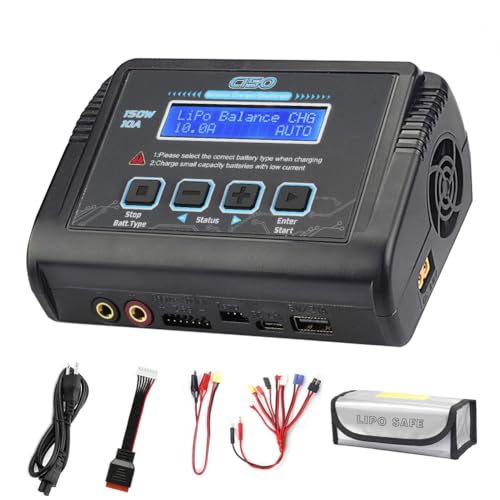
- Up to 150W and 10A charging
- Supports lithium, NiMH/NiCd, PB, and smart batteries
- Includes balancing and battery diagnostics
Best For: Multi-battery racing setups needing broad compatibility
NiMH/NiCd Specialist

- Charges 7.2V–12V NiMH/NiCd packs
- Selectable 0.9A or 1.8A output
- Includes Tamiya and alligator-clip adapters
Best For: Simple charging of compatible NiMH or NiCd RC packs
Dual-Port Pick

- Two independent 15W charging channels
- Supports 1S–3S LiPo packs at 1.2A
- Includes balancing and multiple safety protections
Best For: Small LiPo racing packs that need simultaneous charging
Simple USB Option
BaiWeiDun 7.4V XH-3Pin Charger

- USB-powered cable for 7.4V batteries
- Uses an XH-3-pin plug
- Includes overload and short-circuit protection
Best For: Portable charging of matching 7.4V RC toy batteries
Versatile Balance Pick
B6 80W Multi-Chemistry Charger

- Supports LiPo, Li-ion, LiFe, Pb, NiMH, and NiCd packs
- Balance function with up to 80W output
- Compatible with several common RC connectors
Best For: Racers charging varied battery types
Portable Trackside Option
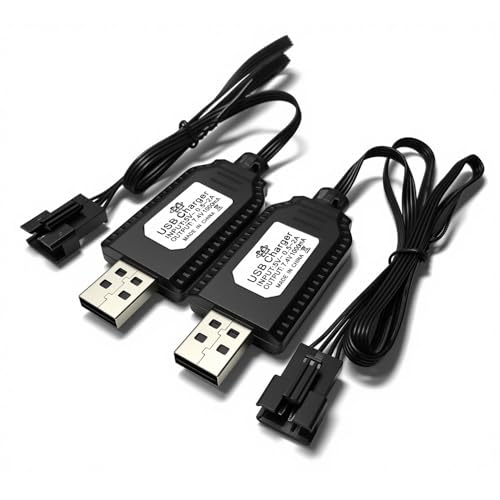
- Charges compatible 7.4V batteries at 1000mA
- USB-powered and compact for travel
- Includes over-voltage, over-current, and short-circuit protection
Best For: Portable charging of compatible SM-4PIN packs
NiMH/NiCd Racing Pick
Delta Peak Charger for 3-9 Cell Packs

- Charges 3.6V-10.8V NiMH/NiCd battery packs
- Delta-peak detection with automatic shutoff
- Includes Tamiya adapters and HXT banana plug
Best For: RC racers using NiMH or NiCd packs
Best Portable 2S Option
USB 7.4V 2-in-1 Balance Charger

- Charges two compatible 2S LiPo packs at once
- USB-powered for field-friendly use
- Lightweight with built-in circuit protection
Best For: Portable charging of 7.4V 1A 2S LiPo batteries with XH-3P plugs
Best NiMH/NiCd Choice

- Supports 3–9-cell NiMH/NiCd packs
- Automatically stops at full charge
- Includes Tamiya, JST, T Plug, and other adapters
Best For: NiMH or NiCd RC packs from 3.6V to 10.8V
Best Versatile Racing Charger

- Charges 1–6S lithium packs at up to 10A
- Supports multiple battery chemistries
- Offers AC/DC input and extensive protections
Best For: Racers with varied battery types or higher-output charging needs
High-Power Pick – HTRC 150W Multi-Chemistry Charger
For racers who need flexibility across battery types, this HTRC model is one of the more capable rc battery chargers for racing. It delivers up to 150W and 10A, supports common lithium packs up to 6S, and includes balance, discharge, metering, and internal-resistance functions.
Best For: Racers using multiple battery chemistries and pack sizes who want one feature-rich charger.
Pros:
- Supports 1S–6S LiPo, Li-ion, LiFe, and LiHV packs, plus NiMH/NiCd and PB batteries.
- AC/DC dual input with up to 150W output and 10A charging current.
- Includes cell-voltage display, internal-resistance checking, balancing, and adjustable end voltage.
- Works with several connector types and includes a USB output.
Cons:
- Only one charging port is provided.
- AC and DC inputs must not be used at the same time.
- Adjustable terminal-voltage controls require expert handling.
This is the strongest all-around option here for a racing setup that changes batteries frequently. Its broad compatibility and diagnostics are useful, but beginners should carefully select the correct battery chemistry and charging mode.
NiMH/NiCd Specialist – Tenergy Smart RC Pack Charger
If your race batteries are NiMH or NiCd rather than LiPo, this Tenergy unit offers a straightforward alternative among rc battery chargers for racing. It automatically detects compatible 7.2V–12V packs and provides selectable 0.9A or 1.8A charging.
Best For: RC racers with compatible NiMH or NiCd battery packs and Tamiya-style connectors.
Pros:
- Supports 7.2V, 8.4V, 9.6V, 10.8V, and 12V NiMH/NiCd packs.
- Offers 0.9A and 1.8A charging options for different pack capacities.
- Includes standard Tamiya, mini Tamiya adapter, and alligator-clip adapter.
- Simple red/green LED status indicators make operation easy to follow.
Cons:
- Designed for NiMH and NiCd batteries, not LiPo packs.
- Single-port design limits simultaneous charging.
- Charging current is less powerful than advanced racing chargers.
This is a practical choice for older or entry-level RC platforms that still use NiMH or NiCd packs. Its automatic voltage detection and included adapters keep setup simple, though compatibility should be confirmed before purchase.
Dual-Port Pick – OVONIC D15 Dual LiPo Charger
OVONIC D15 Dual LiPo Charger AC 15W 1.2A for 1S-3S (3.7V, 7.4V, 11.1V) LiPo RC Batteries
Check Price On AmazonFor racers who want to charge two small LiPo packs at once, the OVONIC D15 is a compact option among rc battery chargers for racing. It has two independent 15W channels, supports 1S–3S LiPo batteries, and uses LED alerts and multiple protections to simplify charging.
Best For: Racers running 1S–3S LiPo packs who value simultaneous charging in a compact design.
Pros:
- Charges two LiPo batteries simultaneously through independent channels.
- Supports 1S–3S packs at up to 1.2A per channel.
- Provides high-accuracy balancing and abnormal-battery detection.
- Includes overvoltage, overtemperature, overcharge, overcurrent, and short-circuit protection.
Cons:
- Limited to LiPo batteries from 1S through 3S.
- Its 15W-per-channel output is modest for larger racing packs.
- Uses AC input rather than the more flexible AC/DC design of some chargers.
The D15 makes sense for racers with smaller LiPo packs who want two charging channels without a bulky workstation charger. It is less suitable for high-capacity or higher-cell-count batteries.
Simple USB Option – BaiWeiDun 7.4V XH-3Pin Charger
This BaiWeiDun cable is a basic, portable choice for specific 7.4V battery packs. Among rc battery chargers for racing, it is best viewed as a lightweight charging cable for RC cars, planes, boats, and similar toys rather than a configurable pit charger.
Best For: Users charging compatible 7.4V packs with an XH-3-pin connector from a USB power source.
Pros:
- Compact USB-powered design is easy to carry.
- Designed for 7.4V batteries with an XH-3-pin plug.
- Provides overvoltage, overload, and short-circuit protection.
- Red/green indicator shows charging and full-charge status.
Cons:
- Compatibility is limited to 7.4V batteries with the correct XH-3-pin connection.
- It does not offer adjustable charging modes or multi-chemistry support.
- USB input is less powerful than dedicated racing chargers.
Choose this cable for convenience and portability when your battery matches its voltage and connector requirements. For frequent racing or varied packs, a balance charger with broader controls will be more capable.
Versatile Balance Pick – B6 80W Multi-Chemistry Charger
For racers who need flexible rc battery chargers for racing, this B6-style charger supports several battery chemistries and common RC connector types. Its balance function and 80W output make it a practical choice for hobbyists managing varied packs.
Best For: RC racers and hobbyists charging multiple battery types from one charger.
Pros:
- Supports LiPo, Li-ion, LiFe, LiHV, Pb, NiMH, and NiCd batteries.
- Balance-charging capability for compatible battery packs.
- Works with Tamiya, JST, HiTec, EC3, Deans, XT60, and bare leads.
- Includes a 12-month warranty and 110V AC power supply.
Cons:
- Listed connectors and leads are compatibility references and are not included.
- Its 110V input may be less convenient for users needing international voltage support.
This is the most adaptable option in the group, especially if your racing setup includes different battery chemistries or connector styles. Confirm that the required charging leads are available separately before buying.
Portable Trackside Option – SM-4P USB Charger 2-Pack
This compact USB charger is a straightforward choice for racers using 7.4V batteries with SM-4PIN connectors. For portable rc battery chargers for racing, its two-pack format and 5V USB input suit home, pit-table, or travel charging needs.
Best For: RC users with compatible 7.4V packs who want a lightweight USB-powered backup or travel charger.
Pros:
- Designed for 7.4V batteries with an SM-4PIN plug.
- Includes two chargers for a spare or second charging location.
- Built-in over-voltage, over-current, and short-circuit protection.
- LED changes from red while charging to green when full.
Cons:
- Limited to 7.4V batteries and a specific SM-4PIN connector.
- Provides 1000mA output through a USB 5V input rather than adjustable charging settings.
This charger prioritizes convenience over broad battery support. It is a sensible addition to a racing kit when your batteries match the voltage and connector requirements, but it is not a universal balance charger.
NiMH/NiCd Racing Pick – Delta Peak Charger for 3-9 Cell Packs
For racers still using NiMH or NiCd packs, this delta-peak charger offers automatic shutoff across 3-9 cell batteries. It is a focused option among rc battery chargers for racing, with included Tamiya adapters and a universal 100-240V AC input.
Best For: RC car and airsoft users charging 3.6V to 10.8V NiMH or NiCd battery packs.
Pros:
- Supports 3-9 cell NiMH/NiCd packs from 3.6V to 10.8V.
- Delta-peak detection automatically stops charging when the pack is full.
- Includes standard Tamiya, mini-Tamiya adapter, and HXT 4.0mm banana plug connections.
- Universal 100-240V AC input and a 12-month warranty.
Cons:
- Not designed for LiPo, Li-ion, or other lithium-based battery packs.
- Charging can take up to six hours.
- Single-port design limits simultaneous charging.
This charger makes the most sense for older or dedicated NiMH/NiCd racing equipment. Its automatic cutoff and included adapters simplify routine charging, while the six-hour maximum charge time is worth considering for race-day preparation.
Best Portable 2S Option – USB 7.4V 2-in-1 Balance Charger
For racers using compatible 2S LiPo packs, this compact USB model is a convenient entry in rc battery chargers for racing. It charges two 7.4V batteries at once, weighs 31g, and can run from a phone charger, power bank, computer, or another USB port.
Best For: Portable charging of 7.4V 1A 2S LiPo batteries with XH-3P plugs, particularly packs from above 500mAh to below 2000mAh.
Pros:
- Charges two compatible 2S 7.4V LiPo batteries simultaneously.
- USB-powered design supports convenient field charging.
- Includes over-voltage, overload, overheating, and overcharge protection.
- Lightweight 31g design is easy to carry.
Cons:
- Only works with 7.4V 1A 2S LiPo batteries.
- Requires an XH-3P plug and a suitable USB power source.
- Not intended for higher-cell-count packs or other battery chemistries.
This is a practical choice when portability and charging two compatible packs matter more than broad battery support or high output power. Check your battery voltage, capacity, and connector before ordering.
Best NiMH/NiCd Choice – Delta Peak RC Battery Charger
This delta-peak model is a specialized option among rc battery chargers for racing when your vehicle uses NiMH or NiCd packs. It supports 3–9-cell batteries, automatically stops when charging is complete, and includes several common hobby connectors.
Best For: NiMH or NiCd battery packs from 3.6V to 10.8V used in RC cars, trucks, aircraft, airsoft equipment, and similar hobbies.
Pros:
- Delta-peak detection automatically stops charging and turns the LED green.
- Supports 3–9 NiMH/NiCd cells and includes multiple connector adapters.
- Offers a 100–240V AC input for broad household use.
- Provides trickle charging after the main charge cycle.
Cons:
- Must not be used with lithium batteries.
- Must not charge packs with fewer than three NiMH cells.
- Maximum charging time is listed as six hours, so it is less suited to rapid turnaround.
Choose this charger only if your racing setup uses compatible NiMH or NiCd packs. Its connector selection is useful for older or varied hobby equipment, but lithium-powered race vehicles require a different charger.
Best Versatile Racing Charger – 100W 10A 1–6S Smart Charger
For racers who need flexibility across multiple battery types, this 100W model is one of the more capable rc battery chargers for racing. It accepts AC or DC input, charges LiPo packs from 1S to 6S at up to 10A, and also supports LiHV, LiFe, NiMH, NiCd, and lead-acid batteries.
Best For: RC racers who use several battery chemistries or want a high-output charger for compatible 1–6S lithium packs.
Pros:
- Provides up to 100W charging power and 10A charging current.
- Supports LiPo, LiHV, LiFe, NiMH, NiCd, and Pb batteries.
- AC100–240V and DC11–18V inputs support indoor and outdoor use.
- Includes protection against overcurrent, overvoltage, short circuits, overheating, reverse polarity, and leakage.
Cons:
- Its broad feature set and 380g weight make it less compact than a simple USB charger.
- Outdoor operation requires a suitable DC11–18V power source.
- The claimed fast charge depends on the battery and charging setup.
This is the strongest all-around pick of the three for a mixed RC collection or frequent racing sessions. Its 1–6S support, balance lead, and dual-input design provide useful room to grow, provided your packs and power source match the specifications.
How We Picked the Best Rc Battery Chargers for Racing
We focused on the features that matter most at the track: compatibility with common RC battery chemistries, support for relevant cell counts, charging output, balance-charging capability, portability, connector convenience, and practical safety features. The list includes chargers for both LiPo and NiMH/NiCd users, because racing setups vary widely by vehicle class and budget.
We also separated simple single-purpose chargers from adjustable hobby chargers. A USB cable may be ideal for a beginner or backup kit, while a programmable balance charger is usually the better long-term choice for racers who use multiple packs.
Quick Comparison
| Charger Type | Best For | Key Advantage |
|---|---|---|
| High-power AC/DC balance charger | Frequent racers and multi-pack owners | Fast, adjustable charging |
| Compact LiPo balance charger | 2S–3S recreational and club racing | Balanced charging in a small package |
| NiMH/NiCd delta-peak charger | Brushed RC and airsoft battery packs | Automatic charge termination |
| USB 7.4V or 2S charger | Portable backups and beginners | Low cost and easy transport |
Key Buying Factors for Rc Battery Chargers for Racing
Battery Chemistry and Cell Count
Match the charger to the pack. LiPo, Li-ion, LiFe, NiMH, NiCd, and lead-acid batteries require different charging profiles. For LiPo racing packs, confirm the charger supports the exact cell count, such as 2S, 3S, or 4S, and use balance mode when available.
Power and Charging Speed
Output wattage and amperage determine how quickly a pack can charge. A 10A charger may not deliver 10A at every voltage, so check the wattage limit as well. Higher-power AC/DC models are more useful when charging large packs or preparing several batteries between heats.
Balance Charging and Safety
Balance charging helps keep LiPo cell voltages aligned. Look for cell monitoring, overcharge protection, incorrect-polarity protection, and clear status displays. Never charge a damaged, swollen, or unusually hot battery, and always use a suitable fire-resistant charging setup.
Connectors and Power Source
Verify both the main output connector and balance plug. XH-3P is common on many 2S packs, but adapters may still be required. USB chargers are convenient, while AC/DC units offer more consistent power and greater flexibility at a racing pit.
Who Should Buy Which Rc Battery Chargers for Racing?
Beginners: Choose a simple, correctly matched USB or compact balance charger if you use one compatible 2S or 7.4V pack.
NiMH racers: Select a delta-peak charger designed for your pack voltage and connector. This is a practical choice for many brushed vehicles and older racing platforms.
Competitive racers: Choose a programmable balance charger with higher wattage, adjustable current, and support for your current and future battery types.
Traveling racers: A compact USB model can work well as a backup, but confirm that the power adapter or power bank can provide adequate output and that the charger matches your battery exactly.