Backing an RV is hard enough without guessing what is beside the trailer or hidden behind it. The right camera setup can make tight campsites, lane changes, and hitching easier to judge—but rear-only and multi-camera systems solve different problems.
These 10 options span magnetic wireless cameras, solar-powered kits, and wired multi-view systems. Start with the blind spots you need to see, then choose the installation and monitor that fit your rig.
Best 10 Rv Backup Camera for Blind Spots Picks for 2026
Best Rear-and-Side Coverage
AUTO-VOX Wireless RV Camera System

- Rear and both side views
- 7.2-inch triple-split monitor
- DVR with included 32GB card
Best For: Monitoring both sides and the rear of a long RV
Best Adjustable Magnetic Option

- Rotating, tilting 140-degree lens
- Magnetic mount and battery power
- 7-inch touchscreen supports four cameras
Best For: Repositioning one camera to suit different towing setups
Best Wired Four-Camera Kit
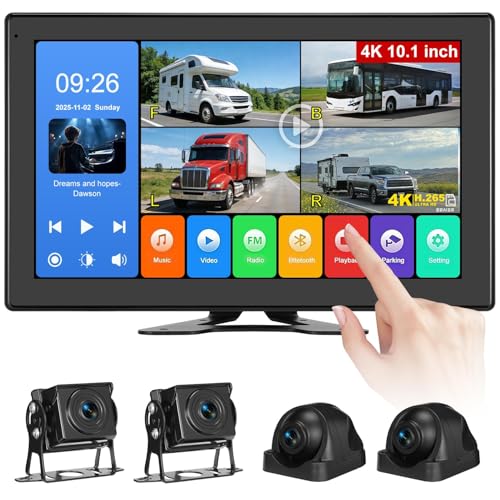
- Four cameras and cables included
- 10.1-inch quad-view touchscreen
- 1080p camera footage with DVR
Best For: Larger rigs needing multiple wired views at once
Best Wired Four-Camera System
VOONOA 10.36-Inch Quad-View RV Camera

- Four included 1080p cameras
- 10.36-inch quad-split touchscreen
- Four-channel DVR recording
Best For: Wired rear-and-side coverage with cameras included
Best No-Drill Setup
NorthKe Solar Magnetic Four-Camera System

- Four magnetic, solar-assisted cameras
- 10.1-inch quad-split monitor
- DVR with included 32GB card
Best For: Repositionable rear-and-side views without drilling
Best Alert-Equipped Option
Xroose Wireless Camera With BSD Alerts

- Switchable BSD and human-detection alerts
- 150-degree view with 6X zoom
- Four-channel expandable; extras sold separately
Best For: Detection alerts with optional future side cameras
Best Wired Dual View
Rohent R4 7-Inch Split-Screen System

- Two 170° cameras with split-screen viewing
- Wired 1080P connection
- IR night vision and adjustable parking lines
Best For: Simultaneous rear and side or front views
Best Portable Magnetic Option

- Removable, rubber-coated magnetic mount
- 33-foot stated wireless range
- Solar-assisted battery with USB-C charging
Best For: Temporary setups on smaller RVs and trailers
Best Longer-Range Magnetic Pick

- 56-foot stated wireless link
- 170° lens and 7-inch monitor
- Magnetic mount with solar and USB-C charging
Best For: Removable rear views on longer trailers
Best Rear-and-Side Coverage – AUTO-VOX Wireless RV Camera System
If you need an rv backup camera for blind spots on a long rig, this AUTO-VOX system shows the rear and both sides on a 7.2-inch monitor. Switch between a full-screen view and split views when backing into a campsite or changing lanes.
Best For: RV owners who want rear and side views together without running video cables to the monitor.
Pros:
- Rear and side coverage with triple-split viewing.
- 1080p video, infrared night vision, and dual antennas; wireless signal is tested to 500 feet.
- Built-in DVR records to an included 32GB card.
Cons:
- The 7.2-inch screen may feel compact when showing three views at once.
- The monitor requires USB or 12V power.
This is the most direct fit here for checking both adjacent sides and the space behind your RV at the same time. Its included recording card is a useful extra if you want footage saved automatically.
Best for Furrion Pre-Wiring – WOOCARTY A11 Wireless Camera
For a pre-wired RV, this rv backup camera for blind spots offers a straightforward starting point: its camera connects to a Furrion pre-wired power jack, while video reaches the 7-inch monitor wirelessly. It is not compatible with Furrion’s camera system, despite using its pre-wired mounting location.
Best For: Owners with a Furrion pre-wired RV who want one rear camera now and the option to add more later.
Pros:
- Uses Furrion pre-wired locations without extra drilling on equipped RVs.
- Magnetic mounting, 1080p video, infrared night vision, and an IP69K weather rating.
- Monitor supports up to four cameras, plus parking lines, dimming, and zoom.
Cons:
- Only one camera is included, so side coverage requires additional cameras.
- Camera and monitor still need power; some newer GM vehicles may need a separately sold PWM filter or adapter.
Check your RV’s wiring and your tow vehicle’s lighting setup before ordering. With the included camera alone, expect a rear view rather than complete coverage of both side blind spots.
Best Adjustable Magnetic Option – AR1 Solar Backup Camera
If camera placement changes between trips, this rv backup camera for blind spots gives you a magnetic mount and a lens that rotates 360 degrees horizontally and tilts 180 degrees vertically. Its 140-degree view can be aimed toward the area you most need to watch while towing or reversing.
Best For: RV and trailer owners who want repositionable, wire-free camera mounting on a metal surface.
Pros:
- Adjustable 140-degree camera makes it easier to tailor the viewing angle.
- 7-inch 1080p touchscreen supports split views and up to four cameras.
- IP69K-rated camera includes infrared night vision; the battery has solar-assisted charging.
Cons:
- Solar power is supplemental; the supplied charger is recommended as the primary charging method.
- DVR recording requires a microSD card, and non-metal mounting may require an extra plate.
The adjustable mount is its strongest reason to buy, especially if a fixed rear angle misses the spot you care about. For simultaneous views of multiple blind spots, budget for additional cameras.
Best Wired Four-Camera Kit – Venluna 10.1-Inch RV System
For buyers who prefer a wired rv backup camera for blind spots, the Venluna kit includes four cameras and cables for showing multiple angles on one 10.1-inch touchscreen. The monitor supports single, dual, triple, or quad views, so you can keep the most useful angles visible while maneuvering.
Best For: Larger RVs and trailers where four-camera coverage matters more than quick installation.
Pros:
- Includes four cameras and cables measuring 66 feet, 33 feet, 33 feet, and 16.5 feet.
- 10.1-inch 4K touchscreen displays footage from 1080p cameras in up to four views.
- Four-channel DVR, adjustable parking lines, and wired video without wireless signal delay.
Cons:
- Running four camera cables requires more installation work than a wireless setup.
- The 4K specification describes the monitor; camera footage is 1080p.
Choose this kit if you are ready to route cables and want several views available from the start. Its large display is especially useful when watching four camera feeds at once.
Best Wired Four-Camera System – VOONOA 10.36-Inch Quad-View RV Camera
If you want an rv backup camera for blind spots that shows the rear and both sides at once, this VOONOA system includes four 1080p cameras and a 10.36-inch quad-split touchscreen. Its wired connections suit buyers who prioritize a direct camera-to-monitor setup over quick installation.
Best For: RV owners who want included side cameras, a large display, and four-channel recording.
Pros:
- Includes two rear/front-view cameras and two side-view cameras.
- Quad-split touchscreen displays multiple views; built-in DVR records four channels.
- IP69K-rated cameras offer infrared night vision rated for at least 50 feet.
Cons:
- Wired cameras require routing cables to the monitor.
- The 10.36-inch display needs adequate mounting space.
This is the most complete out-of-box side-view setup of the three, provided you are comfortable with a wired installation.
Best No-Drill Setup – NorthKe Solar Magnetic Four-Camera System
For an rv backup camera for blind spots without drilling camera mounts or running camera-to-monitor cables, this NorthKe system pairs four solar-assisted magnetic cameras with a 10.1-inch monitor. The monitor supports up to four views at once, making it practical for watching the rear and sides.
Best For: RV and trailer owners who want repositionable cameras and a no-drill installation.
Pros:
- Four magnetic cameras have 15,000mAh rechargeable batteries and solar panels.
- 10.1-inch IPS monitor supports single through quad-split views.
- Built-in DVR includes a 32GB SD card; cameras offer 1080p video and infrared night vision.
Cons:
- Camera batteries may still need USB charging when sunlight is insufficient.
- The stated 328-foot wireless range is for an unobstructed line of sight.
Choose this when flexible placement matters most, while planning to check charge levels and camera attachment before trips.
Best Alert-Equipped Option – Xroose Wireless Camera With BSD Alerts
If you want an rv backup camera for blind spots with on-screen and audible warnings, this Xroose model adds switchable blind-spot detection and AI human-detection alerts to its 1080p camera feed. Its 7-inch monitor can show additional views, but extra cameras are sold separately.
Best For: Drivers who prioritize detection alerts and may add cameras for broader coverage later.
Pros:
- Switchable BSD and AI human-detection features provide visual and audible alerts.
- 150-degree view, adjustable parking guidelines, and 6X zoom aid reversing and hitch checks.
- Supports up to four camera channels with single, split, or quad display and loop recording.
Cons:
- Side-view cameras are sold separately, so the included setup does not provide side coverage.
- The camera still requires a wired power connection to vehicle lights.
This is the alert-focused choice rather than a ready-made four-camera kit; budget for additional cameras if side views are your main goal.
Best Wired Dual View – Rohent R4 7-Inch Split-Screen System
If you want an rv backup camera for blind spots that shows two viewpoints at once, this wired Rohent system pairs two 170° cameras with a 7-inch split-screen monitor. You can position the cameras for rear and front or side coverage to suit your setup.
Best For: RV owners who want simultaneous views and are willing to run video cables.
Pros:
- Wired 1080P feeds avoid wireless signal interference.
- Two weatherproof cameras provide flexible coverage.
- IR night vision, adjustable parking lines, and image-flip options add versatility.
Cons:
- Installation requires routing cables between the cameras and monitor.
- Camera placement depends on the included cable lengths and your vehicle layout.
The split screen is the main reason to choose this kit: it lets you watch two potential blind spots without switching views. Check your planned camera locations against the cable lengths before buying.
Best Portable Magnetic Option – Pemacom Solar Backup Camera
For an rv backup camera for blind spots without permanent wiring, this Pemacom model uses a rubber-coated magnetic mount and a rechargeable, solar-assisted battery. Its stated wireless range is up to 33 feet, so it is a better fit for smaller RVs and trailers than for longer rigs.
Best For: Drivers who want a removable camera for a small RV, camper, or trailer.
Pros:
- Magnetic mounting avoids drilling and makes repositioning simple.
- 15,000mAh battery, 5W solar panel, and USB-C charging offer multiple power options.
- Supports a second video channel and includes parking-assist lines.
Cons:
- The stated 33-foot transmission range may not suit a long RV or trailer.
- A second camera is needed to use both video channels.
- Battery life depends on charging and use conditions.
This is a practical choice if you move a camera between vehicles or prefer not to drill. Measure the distance from your planned camera position to the monitor before relying on its wireless range.
Best Longer-Range Magnetic Pick – 170° Solar RV Camera
If you need an rv backup camera for blind spots on a longer trailer but want to skip cable routing, this wireless model combines a 170° lens, a magnetic mount, and a 7-inch monitor. Its stated 56-foot link gives you more placement room than a shorter-range wireless setup.
Best For: RV and trailer owners seeking a removable rear-view camera with a longer stated wireless range.
Pros:
- Magnetic, rubber-backed base installs without drilling and can be moved between vehicles.
- 170° lens and 1080P video provide a broad rear view.
- Solar charging, USB-C backup charging, and an IP69K-rated camera suit outdoor use.
Cons:
- The magnetic base needs a suitable metal mounting surface.
- Wireless performance and solar charging can vary with placement and conditions.
The combination of wide-angle coverage and a stated 56-foot connection makes this worth considering for longer setups. Confirm you have a suitable mounting spot and a reliable signal at your intended camera position.
How We Picked the Best Rv Backup Camera for Blind Spots
We grouped the 10 selected systems by the decisions that matter most in an RV: rear versus side coverage, wired versus wireless installation, monitor size and split-screen support, and features such as recording or blind-spot alerts. Product names and stated specifications are a starting point, not proof of real-world range or image quality. Before buying, confirm the camera count, mounting hardware, power source, and vehicle compatibility on the current listing.
Quick Comparison: Which Setup Fits Your Rig?
For side and rear visibility: Start with a multi-camera kit such as the AUTO-VOX rear-and-side system or a quad-view system. Check how many cameras are included and whether the monitor can show the views you want simultaneously.
For a simpler rear view: A dual-camera split-screen kit may cover the trailer rear and a second priority angle without the complexity of four cameras. A single magnetic camera is quicker to move between vehicles, but it cannot show multiple blind spots at once.
For installation flexibility: Magnetic wireless and solar-powered choices can reduce cable routing. Wired systems take more planning but avoid reliance on a wireless video link. If your RV is Furrion pre-wired, verify the exact connector and power compatibility rather than assuming any wireless kit will plug in.
Key Buying Factors for an Rv Backup Camera for Blind Spots
Camera Placement and Field of View
Map the areas you cannot see from the driver’s seat before choosing a kit. A rear camera helps with reversing and following distance; side cameras are more relevant for lane changes and turning. Adjustable lenses help aim the image, but a wide view can make objects appear farther away. Confirm that the kit supports the mounting positions you need.
Monitor and Video Behavior
A 7-inch display saves dashboard space, while a roughly 10-inch display gives split views more room. Check whether split-screen, quad-view, and recording work with the number of cameras you plan to connect. A listed 4K screen does not necessarily mean every camera records in 4K; compare camera and monitor resolutions separately. Night-vision claims also deserve a close look if you often arrive after dark.
Power, Signal, and Durability
Wireless cameras still need power unless they use a battery or solar charging. Consider how you will recharge a magnetic camera, especially during long trips or poor sunlight. For wireless kits, check stated range against your RV length and look for a practical return policy: trailer construction and interference can affect the signal. Waterproof ratings help, but secure mounting and protected cable connections matter too.
Who Should Buy Which Rv Backup Camera for Blind Spots?
Choose rear-and-side or quad-camera coverage if lane-change and turning blind spots are your main concern. Pick a dual-view system if you need two fixed angles and a simpler display. Choose a magnetic wireless camera for occasional backing help or use across multiple vehicles, provided you can manage charging. Consider a wired kit when you are comfortable routing cables and want to avoid wireless-link concerns. Treat BSD alerts, AI detection, zoom, and DVR as useful extras—not substitutes for properly placed cameras, mirrors, and a spotter when space is tight.