Choosing among streaming encoders with HDMI can be difficult because similar-looking models vary widely in resolution, protocol support, audio handling, and production features. The right encoder should match your camera or switcher, streaming platform, network, and desired workflow.
Our roundup covers compact 1080p units, 4K HDMI encoders, professional Magewell and Blackmagic options, and models with features such as NDI, PoE, loop-through, recording, and SRT support.
Best 10 Streaming Encoders with Hdmi Picks for 2026
Best Multi-Protocol Value
URayCoder 4K HDMI Streaming Encoder

- 4K H.265/H.264 encoding
- Up to four simultaneous protocol outputs
- Lifetime warranty and support
Best For: Multi-platform streaming on a flexible budget
Best All-in-One Production Hub

- HDMI and SDI inputs with source mixing
- Streams to up to six destinations
- Records while streaming
Best For: Professional mixed-source live production
Best Customizable HDMI-to-IP Encoder
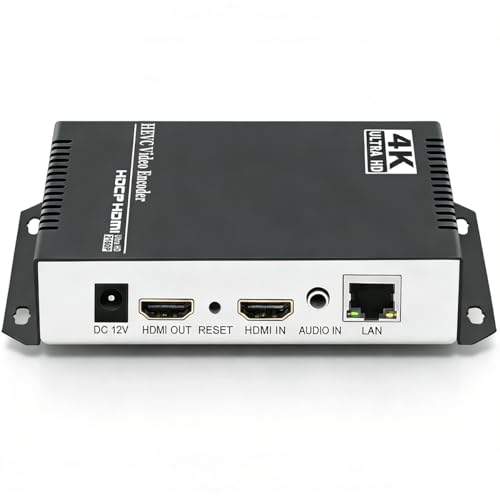
- 4K H.265/H.264 encoding
- Four simultaneous protocol outputs
- Built-in branding and video adjustments
Best For: Custom HDMI-to-Ethernet streaming workflows
Best HDMI Workflow Upgrade
Magewell Ultra Encode HDMI Plus

- 4K HDMI encoding with loop-through
- 128GB recording storage included
- PoE, Wi-Fi, and NDI|HX support
Best For: HDMI production with monitoring and recording
Best Multi-Protocol HDMI Encoder
URayCoder HEVC HDMI-to-IP Encoder

- 1080p60 H.265/H.264 encoding
- Up to four protocol-based outputs
- Overlay, audio, and stream customization
Best For: Multi-platform 1080p streaming and IPTV workflows
Best 4K Broadcast Encoder
Blackmagic Design Streaming Encoder 4K
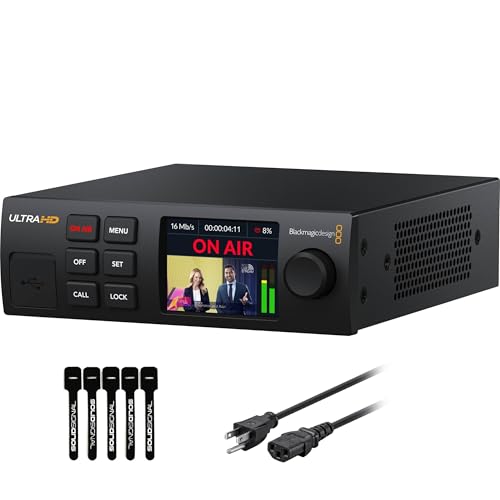
- Up to 2160p60 H.264/H.265 streaming
- 12G-SDI input with HDMI monitoring
- Ethernet and mobile auto-failover
Best For: Professional 4K SDI production and resilient live streams
Best 4K30 HDMI Encoder
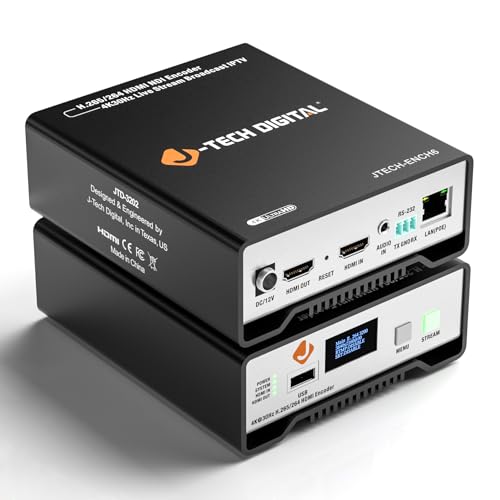
- 4K@30Hz HDMI input and loop-out
- NDI|HX2 plus broad protocol support
- Analog audio embedding and USB recording
Best For: 4K30 events, NDI workflows, and HDMI distribution
Best 1080p60 All-Rounder
Browser-Managed H.265/H.264 Encoder

- 1080p60 hardware encoding
- Broad protocol support
- Compact browser-based setup
Best For: Live events, IPTV, monitoring, and digital signage
Best Mini Recording Option

- Records to USB or TF card
- HDMI loop-out and audio I/O
- Supports cropping and OSD overlays
Best For: Classrooms, conference rooms, and compact installations
Best 4K Input Flexibility
URayCoder Multi-Protocol Encoder

- Supports 4K at 30 fps
- Up to four protocol outputs
- Extensive video and audio controls
Best For: IPTV, enterprise streaming, and multi-platform broadcasts
Best Multi-Protocol Value – URayCoder 4K HDMI Streaming Encoder
If you need streaming encoders with hdmi for flexible online distribution, the URayCoder UHE265-1L-4K offers a broad protocol list and 4K input/output support. It can encode HDMI sources in H.265 or H.264, while providing tools for overlays, audio selection, and stream customization.
Best For: Multi-platform streaming and users who need extensive protocol compatibility with a lifetime warranty.
Pros:
- Supports 4K at up to 30fps and up to 120fps at 2K and lower resolutions.
- Can output up to four streams using different protocols simultaneously.
- Includes text, logo, timestamp, cropping, rotation, and audio customization options.
- Offers lifetime warranty and technical support.
Cons:
- Only one HDMI port is listed.
- 4K encoding is limited to 30fps.
- The extensive configuration options may be more than casual users need.
This is a feature-rich choice for broadcasters, streamers, and integrators who want protocol flexibility without adding a separate multi-platform device. Its 4K30 ceiling makes it better suited to standard UHD production than high-frame-rate 4K workflows.
Best All-in-One Production Hub – Magewell Ultra Encode AIO 4K
For production teams comparing streaming encoders with hdmi, the Magewell Ultra Encode AIO stands out by combining HDMI and SDI inputs, dual-input layouts, recording, and multi-destination streaming. It is designed for more demanding live workflows where source flexibility and onboard processing matter.
Best For: Live production setups that use HDMI, SDI, recording, overlays, and several streaming destinations.
Pros:
- Accepts HDMI and SDI sources and supports picture-in-picture or side-by-side mixing.
- Supports HDMI up to 4096×2160p60 and SDI up to 4096×2160p30.
- Streams to up to six destinations using protocols including RTMP, SRT, NDI|HX, and HLS.
- Can record to SD cards, USB storage, or network drives while streaming.
Cons:
- Its 3.6-pound rack-mountable design is less compact than basic encoder boxes.
- The broader feature set may be excessive for simple HDMI-to-stream tasks.
- The listed manufacturer warranty is two years rather than lifetime.
The Ultra Encode AIO is the most versatile option here for mixed-source production. Choose it when SDI support, dual-input composition, recording, and up to six destinations justify a more substantial professional device.
Best Customizable HDMI-to-IP Encoder – URayCoder HEVC 4K Encoder
This URayCoder model is a practical option among streaming encoders with hdmi when you want to convert an HDMI source into network video for YouTube, Facebook, OBS, or other servers. It supports H.265 and H.264, multiple delivery protocols, and detailed branding controls.
Best For: HDMI-to-Ethernet streaming with customizable overlays and broad server compatibility.
Pros:
- Supports 4K input and output at up to 30fps, with higher frame rates at lower resolutions.
- Handles RTSP, RTMPS, HLS, UDP, SRT, WebRTC, and other listed protocols.
- Can send up to four video streams with different protocols simultaneously.
- Supports logos, captions, timestamps, cropping, mirroring, and line-in audio.
Cons:
- The available details identify HDMI connectivity but do not list HDMI loop-through.
- 4K operation is limited to 30fps.
- Its advanced customization may require more setup than a basic plug-and-play streamer.
Compared with simpler HDMI encoders, this model is appealing when branding and protocol choices are central to the workflow. It is a strong fit for fixed installations and online video systems that need several simultaneous outputs.
Best HDMI Workflow Upgrade – Magewell Ultra Encode HDMI Plus
The Magewell Ultra Encode HDMI Plus is one of the more complete streaming encoders with hdmi for production environments that need local monitoring, recording, and network flexibility. Its loop-through output lets the incoming HDMI signal continue to a display or switcher while the encoder streams.
Best For: HDMI-based live production, education, corporate AV, events, and mobile-capable deployments.
Pros:
- Encodes HDMI up to 4096×2160p30 and provides HDMI loop-through.
- Supports RTMP, RTMPS, SRT, NDI|HX, HLS, and TS over UDP/RTP.
- Records while streaming to 128GB internal storage, USB, or network locations.
- Includes Gigabit Ethernet with PoE, Wi-Fi, and support for USB 4G/5G modems.
Cons:
- 4K input is limited to 30fps.
- 4G/5G USB modems are not supplied.
- The listed manufacturer warranty is two years.
This is a particularly practical choice when pass-through monitoring and recording are as important as streaming. It offers a compact HDMI-focused design while still fitting into NDI|HX and other IP production workflows.
Best Multi-Protocol HDMI Encoder – URayCoder HEVC HDMI-to-IP Encoder
For shoppers comparing streaming encoders with hdmi, the URayCoder UHE265-1S is a flexible 1080p hardware option with H.265/H.264 encoding, HDMI or line-in audio, and broad network-protocol support. It is designed for platforms and workflows including YouTube, Facebook, OBS, IPTV, and NVR systems.
Best For: Multi-platform 1080p streaming, IPTV distribution, and users who need customizable overlays and multiple output protocols.
Pros:
- Supports 1920×1080 input and output at up to 60 fps with H.265 or H.264 encoding.
- Offers RTSP, RTMP/RTMPS, SRT, HLS, UDP, ONVIF, FLV, and other protocol options.
- Can output up to four streams using different protocols and supports text, logos, timestamps, and video adjustments.
- Accepts HDMI-embedded or 3.5mm line-in audio and includes lifetime free warranty and technical support.
Cons:
- It is limited to 1080p rather than 4K input or output.
- Its extensive configuration options may be more than casual users need.
The URayCoder is a strong choice when protocol flexibility and branding tools matter more than 4K resolution. Its network-focused design and multi-stream capability make it practical for varied distribution setups.
Best 4K Broadcast Encoder – Blackmagic Design Streaming Encoder 4K
Among streaming encoders with hdmi, the Blackmagic Design Streaming Encoder 4K stands out as a broadcast-oriented solution with 12G-SDI input, HDMI monitoring, and encoding up to 2160p60. It can stream through SRT or RTMP without requiring a dedicated encoding computer.
Best For: Professional 4K live production, SDI camera workflows, and setups that need mobile-internet failover or remote production features.
Pros:
- Supports H.264 and H.265 streaming up to 2160p60 through SRT or RTMP.
- Includes 12G-SDI input and loop output with Teranex automatic standards conversion.
- Provides HDMI and SDI monitor outputs, dual USB-C webcam outputs, and a built-in LCD control panel.
- Offers Ethernet plus USB-C smartphone tethering with automatic failover, along with captions, timecode, REST API, tally, and talkback features.
Cons:
- The primary video input is SDI rather than HDMI.
- Its professional feature set may be excessive for simple home streaming.
- The supplied warranty is one year.
This encoder is best suited to production teams that already use SDI equipment and need dependable 4K delivery. Its HDMI output is intended for monitoring or downstream use, while the broader feature set supports broadcast-style control and redundancy.
Best 4K30 HDMI Encoder – J-Tech Digital JTECH-ENCH6
The J-Tech Digital JTECH-ENCH6 is a practical pick among streaming encoders with hdmi for users who want up to 4K at 30 Hz, HDMI loop-through, and NDI|HX2 support. Its LCD panel and dedicated stream button also make basic operation easier during live events.
Best For: 4K30 HDMI capture and distribution, NDI-enabled workflows, and events requiring analog audio embedding or local stream recording.
Pros:
- Supports HDMI input, loop-out, and encoded streaming at up to 4K@30Hz.
- Offers H.264, H.265, MJPEG, NDI|HX2, UDP, HTTP, RTSP, RTMP, and ONVIF options.
- Can combine HDMI video with analog audio and includes a USB port for recording streams to storage.
- LCD status display and a physical stream start/stop button simplify monitoring and operation.
Cons:
- 4K@30Hz operation requires selecting the appropriate 3840×2160@30 EDID setting in the web interface.
- It does not provide 4K60 support based on the supplied specifications.
- The warranty is one year, although lifetime technical support is included.
With HDMI loop-out, flexible protocols, and audio embedding, the J-Tech Digital is well matched to event and installation workflows. It offers more resolution than a typical 1080p encoder while keeping hands-on stream controls straightforward.
Best 1080p60 All-Rounder – Browser-Managed H.265/H.264 Encoder
For streaming encoders with hdmi, this UNISHEEN model is a practical choice when you want smooth 1080p60 output, broad network protocol support, and browser-based configuration without dedicated PC software.
Best For: Live events, IPTV distribution, remote monitoring, and digital signage setups that need compact 24/7 operation.
Pros:
- Hardware H.265/H.264 encoding supports 1080p60.
- Works with RTMP(S), RTSP, SRT, HLS, WebRTC, and additional protocols.
- Includes HDMI embedded audio, 3.5mm audio input, and OSD overlays.
- Compact design with a 1-year limited warranty and online technical support.
Cons:
- Advanced setup requires basic networking knowledge.
- It has one HDMI port and requires a 12V DC power source.
This encoder stands out for its balance of frame rate, protocol flexibility, and simple browser management. It is especially suitable for installations where reliable network delivery matters more than local recording or HDMI loop-through.
Best Mini Recording Option – ORIVISION EH1211 HDMI Encoder
Among streaming encoders with hdmi, the ORIVISION EH1211 is notable for combining HDMI loop-out, local recording, cropping, and multiple network protocols in a compact enclosure. Its maximum supported input and output resolution is 1080p at 30 Hz.
Best For: Classrooms, conference rooms, digital signage, and mobile installations that benefit from local recording or flexible video routing.
Pros:
- Supports recording HDMI input or RTSP streams to USB storage or a TF card.
- Provides HDMI loop-out plus 3.5mm audio input and output.
- Supports RTSP, RTMP(S), SRT, HLS, HTTP, ONVIF, and multicast workflows.
- Offers cropping, rotation, mirror flip, and customizable OSD overlays.
Cons:
- Maximum resolution is 1080p at 30 Hz.
- Only one simultaneous output channel can reach 1080p30.
- Network configuration may require adjusting computer IP settings if the web interface becomes unresponsive.
The EH1211 is a versatile small-format encoder for users who need more than basic streaming. Local recording and HDMI loop-out add useful flexibility, though it is better suited to 30 fps workflows than high-frame-rate production.
Best 4K Input Flexibility – URayCoder Multi-Protocol Encoder
For streaming encoders with hdmi that need 4K source compatibility, this URayCoder model supports 4K input and output at up to 30 fps, while also handling lower-resolution sources at higher frame rates. It can deliver multiple protocol outputs for varied distribution needs.
Best For: IPTV, enterprise streaming, multi-platform broadcasts, and workflows using 4K HDMI sources or ONVIF/NVR equipment.
Pros:
- Supports 4K resolution at up to 30 fps and up to 120 fps at 2K or lower.
- Can output up to four streams using different protocols.
- Supports RTMP(S), SRT, HLS, WebRTC, ONVIF, UDP/RTP, and more.
- Includes cropping, rotation, mirroring, overlays, and HDMI or line-in audio options.
Cons:
- 4K operation is limited to 30 fps.
- Its broad customization options may be more than a simple single-platform stream requires.
This is the strongest fit of the three for 4K-source compatibility and simultaneous distribution. Its multi-stream architecture and customization controls make it more appropriate for advanced or organizational setups than for basic one-platform broadcasting.
How We Picked the Best Streaming Encoders with Hdmi
We focused on the features that most affect real-world streaming reliability and setup flexibility. Each selected encoder accepts HDMI video, with several models also supporting 4K input or output workflows. We compared codec options, maximum frame rates, supported streaming protocols, network connectivity, audio capabilities, monitoring features, and suitability for different production environments.
We also considered practical extras such as HDMI loop-through, NDI support, Power over Ethernet, onboard recording, multi-input mixing, and compatibility with common destinations including YouTube, Facebook Live, IPTV systems, media servers, and custom RTMP or SRT endpoints. Because feature lists can vary by firmware and resolution, verify current specifications before purchase.
Quick Comparison
| Best For | Features to Prioritize |
|---|---|
| Simple single-camera streaming | HDMI input, H.264/H.265, RTMP, easy web setup |
| 4K production | 4K HDMI support, adequate frame rate, reliable Ethernet |
| Professional live production | NDI, SRT, recording, loop-through, monitoring, redundant workflow options |
| Installed IPTV systems | RTSP, UDP, HLS, multicast support, stable network management |
| Remote or difficult network environments | SRT, HEVC compression, low-latency controls, dependable Ethernet |
Key Buying Factors for Streaming Encoders with Hdmi
Resolution, Frame Rate, and Codec
Confirm whether you need 1080p or 4K encoding, and check the supported frame rate rather than relying only on a headline resolution. H.264 offers broad compatibility, while H.265 can reduce bandwidth at similar quality but may not work with every destination or decoder.
Protocol Compatibility
RTMP is widely supported by social platforms, while RTMPS adds encrypted delivery where available. RTSP and UDP are useful for local networks and IPTV, HLS suits browser-oriented distribution, and SRT is valuable for more resilient contribution over unpredictable connections. NDI can simplify routing within compatible production networks.
Inputs, Audio, and Monitoring
Check HDMI version, HDCP behavior, embedded audio support, external audio options, and whether the encoder provides loop-through. Loop-through is especially useful when you need to send the same source to a confidence monitor, switcher, or recorder without adding a distribution device.
Network and Installation Features
Wired Ethernet is generally preferable to Wi-Fi for fixed streaming installations. PoE can reduce cabling, but confirm the required power standard and switch compatibility. For long sessions, prioritize thermal design, status monitoring, firmware support, and a configuration interface that is easy to manage.
Who Should Buy Which Streaming Encoders with Hdmi?
Choose a compact 1080p HDMI encoder if you need an affordable camera-to-platform setup for webinars, classrooms, houses of worship, or occasional live broadcasts. A 4K model is better for higher-resolution sources, future-proofing, or workflows that need 4K pass-through even when the stream itself is downscaled.
Production teams should favor models with NDI, loop-through, recording, SRT, or multiple inputs, while IPTV and surveillance-style deployments should prioritize RTSP, UDP, HLS, multicast behavior, and remote administration. If dependable delivery matters more than the lowest price, select a unit with the protocols and monitoring tools that match your network rather than paying for unused resolution.