Choosing the right telescope for astrophotography depends on your target objects, imaging style, and how much setup time you want to spend. Some buyers want a smart, app-controlled system that makes deep-sky capture easy, while others prefer a more traditional optical tube with better upgrade flexibility.
This roundup highlights 10 strong picks across compact smart telescopes, computerized GoTo models, and capable optical tubes for more ambitious imaging plans.
Best 10 Telescopes for Astrophotography Picks for 2026
Smart Beginner Pick
ZWO Seestar S30 Pro Smart Telescope
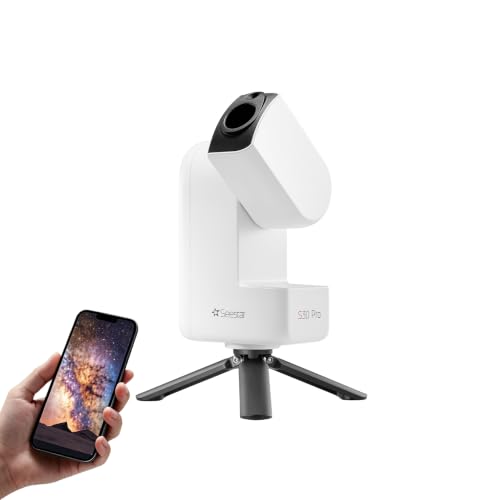
- App-controlled with automatic GOTO and tracking
- Apochromatic optics plus light pollution filters
- Dual-camera imaging with one-tap capture modes
Best For: Beginners wanting an easy smart telescope for travel and urban astrophotography
Classic GoTo Upgrade
Celestron NexStar 5SE Schmidt-Cassegrain

- GoTo mount with 40,000+ object database
- Built-in wedge helps with entry-level imaging
- 5-inch compact Schmidt-Cassegrain optics
Best For: Users stepping up to a computerized telescope that can also do beginner astroimaging
Optics-First Refractor
SVBONY SV503 102mm ED Telescope

- 102mm ED refractor with f/7 focal length
- Dual-speed focuser and 360° field rotator
- ED glass reduces chromatic aberration
Best For: Astrophotographers building a traditional refractor imaging setup
Ultra-Portable Smart Scope
DWARFLAB Dwarf Mini Smart Telescope

- Weighs just 1.85 lb for travel-friendly use
- App control with Auto GOTO and sky atlas
- EQ mode and cloud processing aid imaging
Best For: Travelers and casual users who want a tiny smart telescope for astrophotography
Premium Wide-Field Pick
SVBONY SV555 APO Astrophotography Telescope

- Petzval triplet APO design with flat-field performance
- Full-frame compatible for DSLR, mirrorless, and astro cameras
- EAF-ready package with filter holder and rotatable tube
Best For: Deep-sky and wide-field imaging with full-frame cameras
GoTo Visual Helper
Celestron NexStar 127SLT GoTo Telescope

- Computerized GoTo with 40,000+ object database
- 127mm Maksutov-Cassegrain optics for sharp contrast
- Compact and portable with quick SkyAlign setup
Best For: Beginners wanting easy target finding and basic lunar/planet imaging
Planetary Imaging OTA
SVBONY MK127 Maksutov-Cassegrain OTA

- 127mm f/11.8 Mak with high-reflectivity coatings
- Dual-speed focuser for precise fine tuning
- Includes 0.65x reducer and dual eyepiece interfaces
Best For: Planetary imaging and compact OTA-based astrophotography
Best with Extra Features
DWARFLAB Dwarf 3 Smart Telescope

- 3 lb portable design for travel and quick setup
- Dual lens system for night sky and daytime imaging
- 4K auto-tracking with app-based cloud processing
Best For: travelers and beginners who want a compact smart astrophotography setup
Classic GoTo Powerhouse

- 8-inch Schmidt-Cassegrain optics for bright, detailed views
- GoTo mount with 40,000+ object database
- SkyAlign setup and accessory upgrade compatibility
Best For: adults seeking a computerized, high-aperture telescope for viewing and astroimaging
App-Guided Deep-Sky Dobsonian
Celestron StarSense Explorer 150mm

- Phone-guided StarSense Explorer app for easy target finding
- 150mm reflector for bright Moon, planet, and deep-sky views
- Simple tabletop Dobsonian base with manual operation
Best For: beginners who want app-guided observing and easy visual target finding
Smart Beginner Pick – ZWO Seestar S30 Pro Smart Telescope
If you want telescopes for astrophotography that make setup feel simple, the ZWO Seestar S30 Pro is built for quick starts and easy results. Its app-controlled workflow, automatic GOTO targeting, and tracking let you move from power-on to imaging with very little learning curve, while the built-in light pollution filters and apochromatic optics help improve clarity in brighter skies.
Best For: Beginners who want a compact smart telescope for one-tap astrophotography and travel-friendly use.
Pros:
- Automatic GOTO and tracking reduce setup complexity
- App control and one-tap imaging are beginner-friendly
- Apochromatic optics and light pollution filters help in urban areas
- Dual-camera imaging adds 4K-quality detail for wide-field shots
Cons:
- Stationary use is recommended for deep-sky imaging
- Smart workflow may be less flexible than a traditional OTA setup
This is a strong choice if convenience matters more than manual control. For casual deep-sky work, Milky Way captures, and portable observing, the S30 Pro focuses on making astrophotography approachable without sacrificing core imaging features.
Classic GoTo Upgrade – Celestron NexStar 5SE Schmidt-Cassegrain
For buyers comparing telescopes for astrophotography, the Celestron NexStar 5SE offers a compact Schmidt-Cassegrain design with computerized GoTo convenience. The 5-inch aperture is a practical step up for lunar, planetary, and some deep-sky targets, and the built-in wedge adds useful support for entry-level imaging by reducing field rotation during long exposures.
Best For: Observers who want a compact computerized telescope that can also support entry-level astroimaging.
Pros:
- Fully automated GoTo mount with a 40,000+ object database
- SkyAlign simplifies setup without needing star chart expertise
- Built-in wedge supports polar alignment for astroimaging
- Compact 5-inch Schmidt-Cassegrain optics for portable use
Cons:
- Manual focus only
- Entry-level imaging support is helpful, but not as specialized as a dedicated astrograph
The NexStar 5SE is a good middle ground for people who want easy GoTo observing now and room to grow later. It is especially appealing if you want a familiar all-in-one telescope that can handle both visual sessions and introductory astrophotography.
Optics-First Refractor – SVBONY SV503 102mm ED Telescope
If you care most about image quality in telescopes for astrophotography, the SVBONY SV503 is built around a 102mm ED refractor with an f/7 focal ratio and full multi-coating. The S-FPL51 ED glass is designed to reduce chromatic aberration, while the dual-speed focuser and 360° field rotator make camera setup and critical focus much easier.
Best For: Astrophotographers who want a refractor OTA with strong color correction and camera-friendly controls.
Pros:
- S-FPL51 ED glass helps minimize color fringing
- Dual-speed focuser supports precise critical focus
- 360° field rotator helps align the camera without rotating the tube
- 90mm focus travel gives flexibility with accessories
Cons:
- OTA-only design means you still need a suitable mount and imaging accessories
- No finderscope included
This is the most imaging-focused option in the group if you already have or plan to build a more traditional astrophotography rig. It emphasizes optical quality and fine control, which is exactly what many refractor-based setups need.
Ultra-Portable Smart Scope – DWARFLAB Dwarf Mini Smart Telescope
Among telescopes for astrophotography, the DWARFLAB Dwarf Mini stands out for portability first. At just 1.85 pounds, it is easy to pack for hiking, camping, or dark-sky trips, while app control, Auto GOTO, and built-in sky atlas tools help you get from unboxing to capturing images in minutes.
Best For: Travelers and beginners who want a lightweight smart telescope with advanced imaging modes.
Pros:
- Ultra-light 1.85 lb design is easy to carry anywhere
- App control and built-in sky atlas simplify use
- EQ mode supports longer deep-sky exposures up to 90 seconds
- Built-in light pollution filters and cloud processing help improve results
Cons:
- Small 30mm objective limits light-gathering compared with larger scopes
- Best suited to smart imaging rather than traditional eyepiece-based observing
If portability is your top priority, this is one of the easiest ways to take astrophotography on the road. It combines compact hardware with automated imaging features, making it a practical grab-and-go option for casual and family use.
Premium Wide-Field Pick – SVBONY SV555 APO Astrophotography Telescope
If you want a telescope for astrophotography that leans toward wide-field imaging, the SVBONY SV555 is built around a Petzval triplet APO design with a flat field and reduced coma and chromatic aberration. It also supports full-frame sensors, so it suits DSLR, mirrorless, and astronomy cameras when you want clean star images across a larger frame. The variable aperture and included EAF-ready hardware make it a flexible OTA for field work.
Best For: Deep-sky and wide-field astrophotographers using full-frame or mirrorless cameras who want a flat, portable imaging setup.
Pros:
- Petzval triplet APO design helps deliver a flat field and better image clarity.
- Full-frame compatibility supports 44mm sensors without vignetting.
- Variable F4.5 to F22 aperture adds flexibility for different shooting conditions.
- Includes EAF adapter support, 2-inch filter holder, and a 360° rotatable tube.
Cons:
- No eyepiece is included, so it is aimed at camera-based use rather than visual observing.
- Manual focusing is standard unless you add compatible EAF gear.
- At 3.8 kg, it is portable but still a solid OTA to mount and balance.
This is the most imaging-focused option in the group, especially if your priority is sharp stars, flat corners, and camera compatibility. It is best treated as a dedicated astrophotography OTA rather than a general-purpose visual telescope.
GoTo Visual Helper – Celestron NexStar 127SLT GoTo Telescope
The Celestron NexStar 127SLT is a computerized Maksutov-Cassegrain telescope that prioritizes easy target finding over a pure imaging-first design. For telescopes for astrophotography, its 127mm aperture and high-contrast optics can be useful for lunar and planetary work, while the GoTo mount and 40,000+ object database help you get on target quickly. It is compact enough for backyard sessions and travel, with SkyAlign making setup fast.
Best For: Beginners and casual observers who want a GoTo telescope that can support basic Moon and planet imaging.
Pros:
- Computerized GoTo mount with a 40,000+ object database simplifies finding targets.
- 127mm Maksutov-Cassegrain optics provide sharp, high-contrast views.
- SkyAlign setup is designed to get you observing in minutes.
- Portable build works well for backyard use or travel.
Cons:
- Alt-azimuth mount is less ideal for long-exposure deep-sky imaging.
- Manual focus and included eyepieces indicate a visual-first setup.
- Better suited to Moon and planets than wide-field astrophotography.
This model makes sense if you want assistance finding objects and plan to shoot bright targets rather than chase long exposures. It is more of an easy-entry GoTo telescope that can double for simple imaging than a dedicated astrophotography platform.
Planetary Imaging OTA – SVBONY MK127 Maksutov-Cassegrain OTA
The SVBONY MK127 is an OTA-style Maksutov-Cassegrain that fits well into telescope shopping for astrophotography when you want a compact, high-contrast platform. Its 127mm aperture, f/11.8 focal ratio, 99% high-reflectivity dielectric coatings, and dual-speed focuser are all aimed at producing tack-sharp results with careful focusing. The included 0.65x flat-field reducer and 2-inch/1.25-inch interfaces add useful flexibility for imaging and observing.
Best For: Astrophotographers who want a compact OTA for planetary work and targeted deep-sky imaging with accessories.
Pros:
- 127mm aperture and f/11.8 optics favor contrast and detail.
- Dual-speed focuser supports precise fine-tuning.
- Includes a 0.65x flat-field reducer for improved edge performance and smaller star points.
- 2-inch and 1.25-inch eyepiece interfaces plus dovetail mounting add setup flexibility.
Cons:
- No eyepiece is included, so you will need accessories to use it visually.
- Manual focus and OTA-only design mean you must supply a mount.
- The long focal ratio is less forgiving for wide-field deep-sky imaging.
This is a strong choice if you want a compact Mak OTA with imaging-oriented extras rather than a bundled beginner kit. It is best matched to users who already have a mount and want to build a more controlled astrophotography setup.
Best with Extra Features – DWARFLAB Dwarf 3 Smart Telescope
If you want telescopes for astrophotography that are easy to carry and quick to set up, the DWARFLAB Dwarf 3 is built around convenience. Its 3 lb portable design, app-controlled operation, and built-in processing make it a practical choice for capturing sky scenes without a PC or complex software.
Best For: beginners and travelers who want a lightweight, app-driven astrophotography camera for both night sky and daytime imaging.
Pros:
- Only 3 lb and sized to fit in a standard backpack for travel.
- Dual imaging system handles telephoto targets, Milky Way shots, and star trails.
- 4K auto-tracking helps follow stars, planets, and moving subjects.
- Cloud-powered processing through the app simplifies final image enhancement.
Cons:
- Smaller 35mm objective lens than traditional large-aperture telescopes.
- Designed around app workflows, so it may not suit users who prefer manual imaging control.
- Best results depend on using the dedicated app and connected devices.
This is a strong fit if portability and automation matter more than a classic telescope experience. It trades size and manual flexibility for a fast, beginner-friendly path into astrophotography.
Classic GoTo Powerhouse – Celestron NexStar 8SE
For buyers comparing telescopes for astrophotography, the Celestron NexStar 8SE stands out with an 8-inch Schmidt-Cassegrain optical tube and a fully computerized GoTo mount. It is aimed at users who want a capable, compact telescope that can find and track targets automatically while delivering strong light-gathering performance.
Best For: adults who want a high-aperture computerized telescope for visual observing and entry into astroimaging.
Pros:
- 8-inch aperture gathers plenty of light for lunar, planetary, and deep-sky views.
- Fully automated GoTo mount with a 40,000+ object database.
- SkyAlign gets the mount aligned quickly using three bright objects.
- Compatible with Celestron accessories as your setup grows.
Cons:
- Heavier and larger than compact smart telescope options.
- Manual focus means it is not a fully automated imaging system.
- Power sources are required but not included.
This model is best if you want a traditional telescope with serious aperture and computerized object location. It is more of a step-up platform than a grab-and-go imaging tool, but it offers a strong foundation for ambitious observing and astroimaging.
App-Guided Deep-Sky Dobsonian – Celestron StarSense Explorer 150mm
If you want telescopes for astrophotography-adjacent observing with simple navigation, the Celestron StarSense Explorer 150mm uses your smartphone to help you find targets fast. The app-powered sky recognition system makes it easier to locate planets, nebulae, galaxies, and star clusters, while the 150mm reflector provides bright views through a straightforward tabletop Dobsonian setup.
Best For: beginners who want a phone-guided telescope for easy object finding and strong visual views of the Moon, planets, and deep-sky targets.
Pros:
- StarSense Explorer app uses sky recognition to guide you to targets.
- Curated target list is based on your time and location.
- 150mm reflector with high-reflectivity coatings delivers vivid views.
- Tabletop Dobsonian base keeps the setup simple and manual.
Cons:
- Manual mount means it does not provide automatic tracking.
- Designed around smartphone use, so it is less independent than fully computerized systems.
- Tabletop form factor may require a suitable stable surface.
This is a practical pick for users who want help finding objects without giving up a simple, hands-on telescope. It is strongest as an easy-to-use visual scope rather than a dedicated automated imaging rig.
How We Picked These Telescopes for Astrophotography
We focused on models that offer a practical balance of optics, tracking, ease of use, and portability. For Telescopes for Astrophotography, that means looking beyond aperture alone and considering mount stability, focal length, field of view, and how easy the system is to align and control.
We also prioritized options that fit different experience levels, from smart telescopes that simplify capture to traditional designs that appeal to buyers who want more control over their imaging workflow.
Quick Comparison
Smart telescopes are the easiest path for fast results and minimal setup. Computerized Schmidt-Cassegrain and Maksutov-Cassegrain models tend to offer longer focal lengths that suit the Moon, planets, and smaller deep-sky targets. Refractors are often preferred for wide-field astrophotography because they can be lighter, simpler to manage, and well suited to sharp star fields.
If portability matters most, compact smart models and smaller GoTo systems are easier to transport and deploy. If image scale and reach are the priority, larger aperture tubes and longer focal length options generally offer more potential, assuming you have a stable mount and solid tracking.
Key Buying Factors for Telescopes for Astrophotography
Optical Design
Refractors are commonly favored for wide-field imaging and lower maintenance. Schmidt-Cassegrain and Maksutov-Cassegrain telescopes can be strong for lunar, planetary, and higher-magnification work. Dobsonian-style systems are typically better visual tools unless paired with imaging-friendly tracking and careful expectations.
Mount and Tracking
For astrophotography, a reliable mount matters as much as the telescope. Computerized GoTo systems and smart telescopes reduce the learning curve, while steadier mounts help keep stars round during exposures. If the mount is undersized, even a good optical tube can underperform.
Focal Length and Target Type
Shorter focal lengths are easier for large nebulae and star fields. Longer focal lengths are better for planets, the Moon, and compact deep-sky objects, but they demand more accurate tracking and precise alignment.
Portability and Setup Time
If you plan to image from backyards, travel sites, or quick sessions, compact systems are often the best fit. Buyers who are comfortable with a longer setup can get more flexibility from traditional telescope and mount combinations.
Who Should Buy Which Telescopes for Astrophotography?
If you want the simplest entry into imaging, choose a smart telescope with app control. If you want a versatile all-around system, a computerized Schmidt-Cassegrain or Maksutov-Cassegrain is a solid middle ground. If wide-field performance and easier handling matter most, a refractor is often the most practical choice.
For buyers comparing Telescopes for Astrophotography by value, the best option is usually the one that matches your target objects, your experience level, and how often you will actually use it.