Choosing one of the best telescopes for children is about more than magnification. The right pick should be easy to set up, stable enough to use, and forgiving for first-time skywatchers.
In this roundup, we focus on kid-friendly models that balance portability, value, and usability so young astronomers can spend less time fiddling and more time looking up.
Best 10 Telescopes for Children Picks for 2026
Beginner Space Starter
Kids 8-12 Telescope with Tripod

- 50mm aperture with 20x–100x magnification
- Includes tripod, finder scope, eyepieces, and lunar filter
- Lightweight beginner kit for ages 8–12
Best For: Kids ages 8–12 starting their first astronomy kit
Creative Moon Explorer
Portable Telescope Kit with Backpack

- 80mm aperture with 500mm focal length
- Includes moon booklet, log, stickers, and backpack
- Phone adapter and Barlow lens add flexibility
Best For: Kids who want a hands-on moon kit with learning extras
Hands-On STEM Viewer

- Designed for ages 6–12 with STEM learning in mind
- Includes tripod, finderscope, eyepieces, and Barlow lens
- Portable beginner kit for screen-free activities
Best For: Younger kids who want a simple STEM telescope toy
Travel Sky Scanner
70mm Refractor with Bag and Remote

- 70mm aperture with fully coated optics
- Includes carry bag, phone adapter, and wireless remote
- Portable setup with adjustable tripod
Best For: Beginners who want a travel-friendly telescope with phone support
STEM Starter Pick
Telescope for Kids, 50mm 100x Beginner Telescope with Tripod

- 50mm beginner scope with tripod and finderscope
- Includes 2 eyepieces, Barlow lens, and Moon guide
- Built for STEM learning and hands-on play
Best For: Kids ages 6-12 who want a first telescope that feels educational and easy to use
Travel-Friendly Explorer
Refractor Telescope with Finder Scope for Kids & Astronomy Beginners

- 18X to 135X viewing with 3 interchangeable eyepieces
- Finder scope plus moon and star maps for beginners
- Includes erecting eyepiece for landscape viewing
Best For: Kids and astronomy beginners who want a portable telescope with extra learning tools
High-Magnification Space Gift
Telescope for Kids, 60mm 90x Beginner Telescope with Tripod

- 60mm aperture with 18x-90x magnification
- Includes tripod, finderscope, eyepieces, and Barlow lens
- Multi-coated optics and astronaut sticker add kid appeal
Best For: Kids ages 6-12 who want a brighter beginner telescope for backyard and Moon viewing
Explorer-Ready Kids Telescope
70mm Aperture Refractor for Families
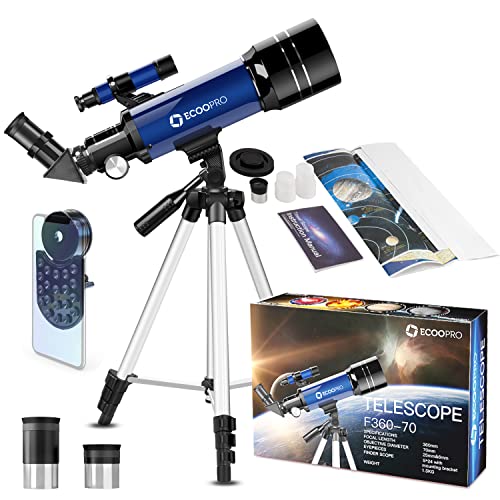
- 70mm aperture with multi-coated optics for brighter views
- Two eyepieces plus 5x24 finderscope for easier locating
- Tool-free setup and adjustable tripod simplify beginner use
Best For: Kids and families who want one telescope for moon, birds, and backyard viewing
Creative Starter Scope
60mm Kids Telescope with DIY Stickers

- DIY stickers add a fun, customizable build experience
- 18x-90x magnification and 60mm aperture for beginners
- Includes tripod, finderscope, eyepieces, and Barlow lens
Best For: Kids ages 6-12 who like creative projects and beginner astronomy
NASA Lunar Beginner Telescope

- Moon-focused design helps kids observe lunar details
- Includes two eyepieces, finder scope, and tabletop tripod
- NASA-branded gift with an educational learning guide
Best For: Kids ages 8-12 who want a beginner telescope focused on the Moon
Beginner Space Starter – Kids 8-12 Telescope with Tripod
If you’re comparing telescopes for children, this beginner refractor is built around simple setup, easy focusing, and a compact starter kit. The 50mm aperture and 20x–100x magnification make it a practical first telescope for the Moon and bright planets, while the included tripod, finder scope, and eyepieces help kids get started without a lot of guesswork.
Best For: Kids ages 8–12 who want a straightforward first telescope for moon viewing and beginner astronomy.
Pros:
- Easy to set up and designed for first-time use
- 50mm aperture with 20x–100x magnification for beginner sky viewing
- Includes tripod, finder scope, eyepieces, and lunar filter
- Lightweight, portable build for backyard use or camping trips
Cons:
- Manual focus means kids may need a little patience
- Small aperture is best for the Moon and bright objects, not deep-sky detail
Overall, this is a solid starter option if you want telescopes for children that emphasize learning, portability, and a complete first kit. It fits well as an educational gift for kids who are just beginning to explore astronomy.
Creative Moon Explorer – Portable Telescope Kit with Backpack
This telescope kit stands out among telescopes for children because it mixes moon observing with hands-on learning and personalization. The 80mm aperture and 500mm focal length give it more light-gathering ability than smaller beginner models, and the included booklet, observation log, sticker packs, and backpack make it feel more like a complete activity kit than just a telescope.
Best For: Kids 8–12 who want a more interactive astronomy kit with learning materials and room to personalize.
Pros:
- 80mm aperture for clearer views of the Moon and distant landscapes
- Includes moon booklet, observation log, phone adapter, and backpack
- Themed sticker packs add a fun creative element
- 20X–150X magnification with Barlow lens for beginner exploration
Cons:
- Manual focus may take practice for younger users
- Heavier than ultra-basic kids’ starter telescopes
For families who want a telescope that encourages both observing and learning, this is a strong choice. The bundled accessories make it especially appealing for kids who like guided activities and a more personalized setup.
Hands-On STEM Viewer – Beginner Kids Telescope Kit
If you want telescopes for children that focus more on play-based learning than advanced optics, this beginner kit is a good fit. It’s designed for ages 6–12 and comes with a tripod, finderscope, eyepieces, and a Barlow lens, giving kids a simple way to assemble the pieces and try basic observing as part of a screen-free STEM activity.
Best For: Younger kids ages 6–12 who want a fun, educational telescope toy for hands-on learning.
Pros:
- STEM-focused design encourages curiosity and independent play
- Includes tripod, finderscope, 2 eyepieces, and Barlow lens
- Portable and easy to bring to backyard or camping activities
- Good gift option for birthdays, holidays, and screen-free play
Cons:
- Fixed mount is less flexible than an adjustable tripod setup
- Best suited to beginner use rather than serious astronomy
This is a practical choice if you want a kid-friendly telescope toy that keeps the emphasis on discovery and hands-on fun. It works best as an introduction to astronomy rather than a high-powered observing tool.
Travel Sky Scanner – 70mm Refractor with Bag and Remote
Among telescopes for children, this refractor is a versatile pick if you want something that can handle both moon viewing and easy travel. The 70mm aperture and 400mm focal length provide a balanced beginner setup, while the included phone adapter, wireless remote, carry bag, and adjustable tripod make it more convenient for family outings and quick observing sessions.
Best For: Kids and beginners who want a portable telescope with smartphone support and easy storage.
Pros:
- 70mm aperture with fully coated optics for clearer views
- Includes two eyepieces and a 3x Barlow lens
- Phone adapter and wireless remote support simple imaging
- Carry bag and adjustable tripod make it travel-friendly
Cons:
- Manual focus requires a bit of practice
- Best for moon and bright targets rather than deep-sky detail
This model makes sense for families who want a beginner telescope that is easy to pack up and bring along. The added smartphone accessories give it a useful edge for kids who enjoy taking pictures through the scope.
STEM Starter Pick – Telescope for Kids, 50mm 100x Beginner Telescope with Tripod
If you’re comparing telescopes for children, this beginner set is built to make first-time stargazing feel simple and fun. The 50mm scope, tripod, finderscope, and included eyepieces give kids a hands-on way to explore the Moon and practice setting up their own gear.
Best For: Kids ages 6-12 who want an educational first telescope with easy setup and family-friendly play.
Pros:
- Includes a complete beginner kit with tripod, finderscope, 2 eyepieces, and Barlow lens
- Designed as a STEM toy that encourages curiosity, creativity, and problem-solving
- Moon observation guide adds simple activities for interactive learning
- Works well for parent-child time, camping trips, and screen-free play
Cons:
- Made for beginner learning rather than advanced astronomy use
- Best suited to guided use, especially for younger children
Overall, this is a strong pick if you want a child-friendly telescope that treats astronomy as an activity, not just a gadget. It leans more toward learning and exploration than serious skywatching, which is exactly what many families want in a first telescope.
Travel-Friendly Explorer – Refractor Telescope with Finder Scope for Kids & Astronomy Beginners
When shopping for telescopes for children, this refractor model stands out for its brighter, crisp images and beginner-friendly accessory set. The finder scope, three eyepieces, erecting eyepiece, and moon mirror make it easy to switch between sky viewing and landscape viewing.
Best For: Young astronomy beginners who want a portable telescope with multiple viewing options and guided learning tools.
Pros:
- High-quality optics are designed to deliver brighter, crisp images
- Includes 3 interchangeable eyepieces for 18X to 135X magnification
- Finder scope helps target objects faster and easier
- Moon map and star map support easy beginner exploration
Cons:
- Table-top tripod is sturdy, but not as full-sized as larger setups
- Features are geared toward beginners rather than advanced users
This is a practical choice if you want a compact telescope that helps kids learn the basics without a steep learning curve. The extra accessories make it especially useful for families who want both moon viewing and simple travel-friendly observing.
High-Magnification Space Gift – Telescope for Kids, 60mm 90x Beginner Telescope with Tripod
If you want telescopes for children that feel a little more complete right out of the box, this 60mm beginner scope is a strong option. It combines a larger aperture, flexible magnification, and a stable tripod with a fun astronaut sticker that gives the set a kid-friendly space theme.
Best For: Kids ages 6-12 who want a brighter beginner telescope for Moon viewing and backyard stargazing.
Pros:
- 60mm aperture and 18x-90x magnification for viewing the Moon, planets, and stars
- Includes tripod, finderscope, 2 eyepieces, and a Barlow lens
- Multi-coated optics are designed for bright, sharp images with reduced distortion
- Astronaut sticker adds a fun space-themed detail kids can enjoy
Cons:
- Still a beginner telescope, so it’s not intended for advanced astronomy
- Lightweight design is better for easy use than heavy-duty observing
This model is a good fit if you want a simple but feature-rich starter telescope with a bit more viewing flexibility. It balances education, play, and practical accessories in a way that makes it easy for kids to get excited about stargazing.
Explorer-Ready Kids Telescope – 70mm Aperture Refractor for Families
If you want telescopes for children that can do more than just point at the Moon, this 70mm refractor is a practical all-around pick. The fully multi-coated optics, 5×24 finderscope, and included eyepieces are geared toward beginners who want bright, easy-to-find views without a complicated setup.
Best For: Kids and families who want a beginner-friendly telescope for moon viewing, backyard stargazing, and daytime nature watching.
Pros:
- 70mm aperture and multi-coated optics help deliver bright, sharp views.
- Includes two Kellner eyepieces and a 5×24 finderscope for flexible, easier observing.
- Quick-release, tool-free setup makes it fast to start using.
- Adjustable aluminum tripod adds stability for kids and beginners.
Cons:
- Manual focus means younger children may need help getting the clearest view.
- Best viewing will still depend on steady hands and calm conditions.
Overall, this is a versatile starter scope for kids who may want one telescope for both astronomy and daytime exploration. The included accessories and simple assembly make it a strong gift option for families looking for a useful beginner kit.
Creative Starter Scope – 60mm Kids Telescope with DIY Stickers
For telescopes for children that blend science with a little creativity, this 60mm beginner scope stands out thanks to its DIY cute and alphabet sticker set. It pairs a kid-friendly 18x-90x zoom range with a complete starter kit, so new observers can begin learning the sky while personalizing their telescope.
Best For: Kids ages 6-12 who want a fun, customizable telescope for beginner stargazing and hands-on play.
Pros:
- DIY stickers let kids decorate and personalize the telescope.
- 60mm aperture and 18x-90x magnification suit beginner moon and sky viewing.
- Includes tripod, finderscope, two eyepieces, and a Barlow lens.
- Multi-coated optics and a stable tube design support clearer viewing.
Cons:
- Manual focus means it is not fully hands-off for younger users.
- As a beginner scope, it is better for casual viewing than advanced astronomy.
This is a strong pick if you want a gift that feels interactive as well as educational. The sticker customization makes it especially appealing for kids who enjoy creative projects alongside science activities.
NASA Lunar Beginner Telescope – 90x Moon Scope for Kids
If your main goal is moon viewing, this NASA Lunar Telescope is one of the more focused telescopes for children in this roundup. It is built for beginners, with a finder scope, two eyepieces, and a tabletop tripod that help kids and parents locate the Moon and scan its surface more easily.
Best For: Kids ages 8-12 who mainly want an easy-to-use telescope for moon observation and space-themed gifting.
Pros:
- Designed to help children see the Moon in detail.
- Includes low-power and high-power eyepieces plus a finder scope.
- Tabletop tripod and smooth mount system support steadier viewing.
- NASA branding and educational guide add gift appeal.
Cons:
- More specialized for lunar viewing than for broad all-purpose use.
- Tabletop tripod may be less flexible than a full-size stand.
This is a good choice when you want a simple, space-themed starter scope rather than a do-everything model. Its beginner-friendly design and moon-first approach make it easy for kids to start observing with less frustration.
How We Picked These Telescopes for Children
We looked for beginner-friendly telescopes that make astronomy approachable for kids and families. Priority went to simple assembly, manageable size, decent optical specs for the price, and accessories that help first-time users find and track objects more easily.
We also favored models that are portable enough for home use, trips, and backyard observing. For Telescopes for Children, practical handling matters more than chasing the highest magnification on the box.
Quick Comparison: What Matters Most
Most buyers should compare aperture, focal length, mount stability, and included extras. A larger aperture can collect more light, while a sturdier tripod can improve the viewing experience more than a big magnification claim. Finder scopes, multiple eyepieces, and carry bags can also make a real difference for beginners.
Key Buying Factors for Telescopes for Children
Aperture and Image Brightness
For kids, a modest aperture is often enough to view the Moon, bright planets, and some star clusters. Bigger apertures can improve brightness and detail, but they also tend to increase size and weight.
Magnification Claims
Very high magnification can look impressive, but it is not always useful. Lower, realistic magnification usually produces steadier, brighter views and is easier for children to manage.
Mount and Stability
A shaky mount can frustrate beginners quickly. Look for a tripod or mount that feels stable, adjusts smoothly, and holds position without constant readjustment.
Ease of Setup
Simple assembly and clear instructions are important for Telescopes for Children. The faster a child can get from box to first view, the more likely they are to stay interested.
Portability and Accessories
If you plan to move the telescope between rooms, the yard, or travel destinations, portability matters. Helpful extras include a finder scope, carrying case, multiple eyepieces, and a phone adapter if your child enjoys sharing views.
Who Should Buy Which Telescopes for Children?
If you want the easiest entry point, choose a lightweight, straightforward beginner scope with a stable tripod. If your child is especially interested in lunar observing or wants more detail, consider a model with a larger aperture and a finder scope.
Families who want something for both kids and adults should look for a slightly more versatile refractor with a broader viewing range. For younger beginners, the best choice is usually the one that is simplest to align, easiest to move, and most likely to be used often.