A variable ND filter gives photographers and videographers faster control over shutter speed, aperture, and exposure in bright conditions. The right model can help create cinematic motion blur, preserve a preferred aperture, and reduce the need to swap fixed filters.
We compared 10 popular options across strength range, color performance, handling, thread sizes, and practical features so you can choose a filter that fits your camera, lens, and shooting style.
Best 10 Variable Nd Filter Picks for 2026
Best for Neutral Color
NiSi Swift True Color 1-5 Stop VND

- 1-5 stop control without the “X” effect
- True Color coating for natural hues
- Thin frame with 86mm front thread
Best For: Color-conscious photographers and Swift System users
Best for Standard Daylight

- 2-5 stop ND4-ND32 range
- Hard-stop design reduces cross-polarization risk
- Protective multi-coated optical glass
Best For: 72mm outdoor and daylight shooting
Best 2-in-1 Option
K&F Concept True Color ND2-32 CPL

- Variable ND and CPL in one filter
- 1-5 stop range with no black “X”
- 28-layer waterproof, scratch-resistant coating
Best For: Landscapes, water, glass, and reflection control
Best for Broad Exposure Control

- Wide 2-8 stop adjustment range
- Useful for video, landscapes, and long exposures
- ColorCore glass with 10-year warranty
Best For: 67mm users needing extensive daylight control
Best Value Variable ND Filter

- 1–9 stops of adjustable light reduction
- Eight-layer-coated AGC optical glass
- Slim 7.4mm 82mm frame
Best For: Photographers seeking maximum adjustment range
Best 2-in-1 Variable ND Filter

- Combines variable ND and circular polarization
- 1–5 stops of adjustable light reduction
- Self-locking design targets cross shadows
Best For: Shoots involving bright light and reflective surfaces
Best Professional Variable ND Filter
PolarPro Peter McKinnon 2-5 Stop

- Hard stops for repeatable 2–5-stop control
- Designed to prevent cross-polarization and vignetting
- Includes Defender360 protective case
Best For: Professional video and cinematic shutter-speed control
Compact 52mm Control
K&F CONCEPT 52mm Variable ND2-400
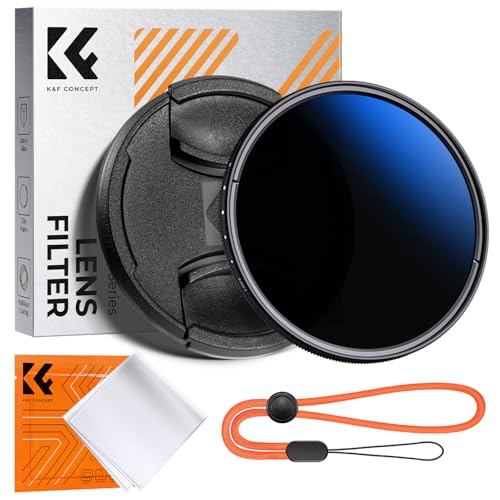
- 1-9 stops of adjustable light reduction
- 18-layer AGC optical glass coatings
- Includes cap and cleaning cloth
Best For: 52mm lens users seeking a compact variable ND kit
Ultra-Slim 72mm Range
K&F CONCEPT 72mm Variable ND2-400

- ND2-ND400 adjustment across 1-9 stops
- 18-layer coated AGC optical glass
- Slim 7.4mm frame with textured grip
Best For: 72mm lens users needing flexible exposure control
Precision 82mm Video Control
K&F CONCEPT Nano-X 82mm Side Lever ND2-400
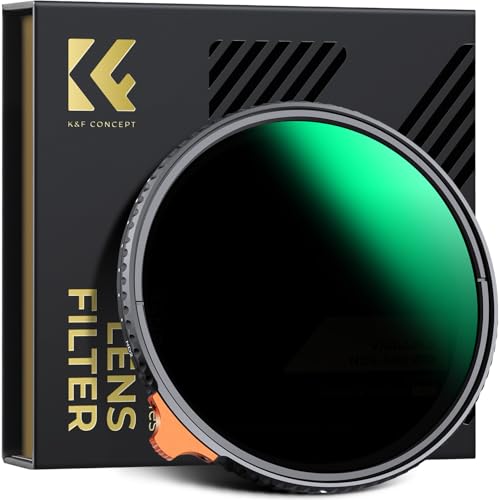
- Marked ND2-ND400 settings with side lever
- 28-layer Japanese AGC glass coatings
- Designed to avoid vignetting at 16mm
Best For: 82mm video and ultra-wide-angle setups
Best for Neutral Color – NiSi Swift True Color 1-5 Stop VND
The NiSi Swift True Color is a practical variable nd filter for photographers who want adjustable light control with natural-looking color. Its 1-5 stop range, thin frame, and larger 86mm front thread are suited to wide-angle and telephoto lenses 35mm and longer.
Best For: Photographers and videographers who prioritize neutral color rendering, smooth exposure adjustments, and compatibility with the NiSi Swift System.
Pros:
- True Color coating helps prevent unwanted yellow tint and color distortion.
- 1-5 stop adjustment is designed to avoid the “X” effect.
- Thin frame and 86mm front thread help reduce vignetting.
- 20-layer nano coating resists water, oil, dust, and fingerprints.
Cons:
- It is limited to lenses with an 82mm filter thread unless a suitable adapter is used.
- The Swift expansion system requires additional filters sold separately.
This is a well-rounded choice when accurate color and a clean, expandable filter setup matter. The included cap and case also make it convenient for regular field use.
Best for Standard Daylight – Freewell 72mm Hard Stop VND
The Freewell Standard Day variable nd filter provides 2-5 stops of light reduction, making it a focused option for cloudy through normally sunny conditions. Its hard-stop design is intended to prevent cross-polarization while maintaining a straightforward shooting workflow.
Best For: Outdoor photographers and filmmakers using 72mm lenses in typical daytime lighting.
Pros:
- 2-5 stop range corresponds to ND4-ND32 for standard daylight use.
- Hard stops help eliminate cross-polarization issues.
- Waterproof, dustproof, scratch-resistant, and oilproof coatings add practical protection.
- Includes a storage case, lens cover, and cleaning cloth.
Cons:
- It is designed for 72mm filter threads only.
- The 2-5 stop range may be less suitable than a broader VND for very bright conditions.
Choose this Freewell when predictable daylight control and a hard-stop design are more important than maximum range. It is a sensible, purpose-built filter for standard outdoor shooting.
Best 2-in-1 Option – K&F Concept True Color ND2-32 CPL
The K&F Concept True Color combines a variable nd filter with a polarizer in one 82mm accessory. It can reduce incoming light from 1-5 stops while helping manage reflections from non-metallic surfaces such as water and glass.
Best For: Landscape photographers and hybrid shooters who want adjustable exposure control plus polarization without carrying separate filters.
Pros:
- Combines variable ND and CPL functions in one filter.
- 1-5 stop rotation uses self-locking technology and is designed to avoid black “X” crosses.
- 28-layer coating provides waterproof and scratch-resistant protection.
- True color titanium coating helps reduce yellowing and color shift.
Cons:
- It requires an 82mm lens thread and an 86mm lens cap.
- Its combined ND/CPL design may be unnecessary for users who only need neutral density.
This filter is especially useful when reflections and exposure both need attention. Verify your lens thread and plan for the separately specified 86mm cap before ordering.
Best for Broad Exposure Control – Tiffen 67mm 2-8 Stop VND
The Tiffen 67mm variable nd filter covers a broad 2-8 stop range, giving photographers and filmmakers flexible control in bright conditions. Its rotating ring is designed for manual adjustment, helping maintain wide apertures, long exposures, or motion blur without swapping filters.
Best For: Video, landscapes, long exposures, and shooters who want one filter to cover a wide range of daylight exposure needs.
Pros:
- 2-8 stop range offers more exposure control than the narrower options here.
- Supports shallow depth of field, silky water, moving clouds, and cinematic motion blur.
- ColorCore glass technology and a smooth rotating ring support manual adjustment.
- Backed by a 10-year manufacturer warranty.
Cons:
- It fits cameras and lenses with a 67mm filter thread only.
- The supplied notes do not specify a hard-stop mechanism or a no-“X” design.
The Tiffen is the strongest fit when maximum adjustment range is the priority. Its established ColorCore construction and long warranty add reassurance for frequent photography or video use.
Best Value Variable ND Filter – K&F Concept ND2-400
If you want broad exposure control at an accessible price, this variable ND filter offers adjustable light reduction from 1 to 9 stops. Its 82mm thread, slim frame, and multi-coated optical glass make it a practical option for varied outdoor shooting, though the maximum setting may produce the familiar X-shaped pattern on some lens and focal-length combinations.
Best For: Photographers who need a wide 1–9-stop adjustment range for compatible 82mm lenses.
Pros:
- Provides adjustable 1–9-stop light reduction with a 360-degree rotating ring.
- Uses AGC optical glass with eight multi-layer coatings to reduce reflections and glare.
- Slim 7.4mm CNC-patterned frame supports easier handling and attachment.
Cons:
- The maximum setting can create an X-shaped black cross effect with certain lenses and focal lengths.
- Requires an 86mm lens cap rather than a standard 82mm cap.
- It is not water resistant.
This K&F Concept model is a flexible choice when maximum range matters more than avoiding the potential artifacts associated with extreme variable-ND settings. Confirm your lens thread before ordering.
Best 2-in-1 Variable ND Filter – NEEWER ND2-ND32 & CPL
This variable ND filter combines 1–5 stops of light reduction with a circular polarizer, giving you exposure control and the ability to reduce reflections from water or glass. Its self-locking design is intended to prevent dark cross shadows and vignetting, including when used with wide-angle lenses.
Best For: Hybrid shooters who want variable ND and CPL functions in one 67mm filter.
Pros:
- Combines ND2–ND32 light reduction with circular polarization.
- Self-locking technology is designed to avoid dark cross shadows and vignetting.
- HD optical glass has 30 layers of nano coating for reduced flare and added resistance to water, oil, dust, and scratches.
- CNC-machined aluminum alloy frame has a non-slip texture and etched adjustment marks.
Cons:
- Its 1–5-stop range is narrower than some variable ND filters.
- Requires a 72mm lens cap or hood, sold separately.
- Compatibility is limited to lenses with a 67mm thread.
Choose this NEEWER filter if reflection control is as important as exposure reduction. It is especially useful for bright scenes involving water, glass, or shiny surfaces, provided your lens uses the required 67mm thread.
Best Professional Variable ND Filter – PolarPro Peter McKinnon 2-5 Stop
For controlled video exposure, this professional-oriented variable ND filter uses hard stops from 2 to 5 stops to support repeatable shutter-speed adjustments. Cinema-grade quartz glass, 16-layer coatings, and a hard-stop system are designed for color accuracy, reduced cross-polarization, and clean results across a wide focal-length range.
Best For: DSLR and mirrorless video creators who prioritize consistent cinematic exposure control.
Pros:
- Offers precise 2–5-stop adjustment with tactile hard stops.
- Designed to avoid cross-polarization and vignetting, with zero vignetting down to 16mm according to the supplied notes.
- Uses cinema-grade quartz glass and 16-layer coatings for color accuracy and anti-reflection performance.
- Includes a microfiber cloth and rugged magnetic Defender360 case.
Cons:
- Only fits lenses with an 82mm thread.
- Does not work with lens hoods or standard lens caps, although a custom lens cap is included.
- It is not water resistant.
The PolarPro is the strongest match for filmmakers who value tactile, repeatable adjustments and premium handling over a wider variable range. Its 2–5-stop setting is purpose-built for controlled video work rather than maximum light reduction.
Compact 52mm Control – K&F CONCEPT 52mm Variable ND2-400
This 52mm variable ND filter provides adjustable light reduction from 1 to 9 stops, giving photographers and videographers practical control over exposure in changing conditions. Its slim frame, 18-layer coatings, and included cap and cleaning cloth make it a convenient option for compatible lenses.
Best For: 52mm lens users who want an all-in-one variable ND filter kit for everyday shooting.
Pros:
- Offers 1-9 stops of adjustable light reduction with 360-degree rotation.
- Uses AGC optical glass with 18 multi-layer coatings to reduce reflections and glare.
- Includes a fitted filter cap and microfiber cleaning cloth.
- At 7.4mm thick, the CNC-patterned frame is slim and easy to rotate.
Cons:
- High settings may produce a temporary X-shaped cross pattern with some lenses and focal lengths.
- Compatibility is limited to lenses with 52mm filter threads.
- The filter is not water resistant.
This is a well-equipped choice when you need flexible exposure control on 52mm lenses. Confirm the lens thread size before ordering, and be aware of the possible cross-pattern effect at the highest settings.
Ultra-Slim 72mm Range – K&F CONCEPT 72mm Variable ND2-400
This 72mm variable ND filter covers ND2 through ND400, allowing 1 to 9 stops of adjustment for managing exposure across different shooting situations. The ultra-slim 7.4mm frame and multi-coated optical glass are designed for convenient use with compatible 72mm lenses.
Best For: Photographers and videographers using 72mm lenses who want broad variable light control in a slim filter.
Pros:
- Provides 1-9 stops of adjustable neutral-density control.
- Features AGC optical glass with 18 multi-layer coatings to reduce glare and reflections.
- The 7.4mm slim frame has a CNC-patterned grip for easier attachment and rotation.
- Its surface uses an oxidized sandblasting process to minimize stray reflections on the metal frame.
Cons:
- High stop settings may create a temporary X-shaped cross pattern with certain lenses and focal lengths.
- It fits 72mm lens threads only, so thread size should be checked before purchase.
- A 77mm lens cap is required for this filter.
For 72mm systems, this model balances a wide adjustment range with a slim build. Its separate lens-cap requirement is worth planning for, especially if you want a complete protection setup.
Precision 82mm Video Control – K&F CONCEPT Nano-X 82mm Side Lever ND2-400
This 82mm variable ND filter is built for precise adjustment, with marked settings from ND2 to ND400 and a side lever-style frame for controlling stops during shooting. Its 28-layer Japanese AGC glass, protective coatings, and slim design make it a strong option for demanding outdoor and wide-angle setups.
Best For: 82mm lens users, especially video shooters and ultra-wide-angle users who value marked, tool-assisted adjustment.
Pros:
- Offers 1-9 stops of adjustment with marked settings and 360-degree rotation.
- Uses Japanese AGC optical glass with 28 multi-layer coatings.
- Hydrophobic, oil-proof, and scratch-resistant coatings support outdoor use.
- The 7.4mm ultra-slim frame is designed to avoid vignetting at a 16mm focal length.
Cons:
- It is compatible only with lenses using 82mm filter threads.
- An 86mm lens cap is required.
- Packaging may vary between old and new versions.
This is the most feature-focused option of the three for 82mm lenses, combining precise markings with durable protective coatings. It is particularly appealing for video and wide-angle work, provided you have the required larger lens cap.
How We Picked the Best Variable Nd Filters
We focused on the features that matter most in real-world photography and video: usable light reduction, optical consistency, color neutrality, build quality, adjustment control, and compatibility with common lens sizes. We also considered whether each filter uses hard stops, includes polarization, offers a slim profile, or covers a particularly broad exposure range.
A Variable Nd Filter is most useful when changing light levels make fixed filters inconvenient. However, wider ranges can increase the risk of uneven exposure or an X-shaped pattern at extreme settings, so the maximum advertised range should not be the only deciding factor.
Quick Comparison
| Best For | Recommended Type | What to Look For |
|---|---|---|
| General photography | 2–5-stop VND | Natural color and smooth adjustment |
| Bright outdoor video | 2–5 or 2–8-stop VND | Reliable control and clear markings |
| Maximum flexibility | 1–9-stop VND | Broad range, careful framing at high density |
| Landscape and reflective scenes | VND with CPL | Exposure reduction plus glare control |
| Fast-paced production | Hard-stop or side-lever model | Repeatable settings and quick operation |
Key Buying Factors for a Variable Nd Filter
Density Range
Two to five stops is a practical range for many daylight shoots and usually offers straightforward adjustment. Filters covering one to nine stops provide more flexibility, but they require greater care near the strongest settings.
Color and Image Quality
Look for descriptions such as true color, neutral density, multi-coated glass, and low color cast. Poor coatings or uneven glass can reduce contrast, introduce reflections, or make footage harder to correct consistently.
Hard Stops and Handling
Hard-stop designs help prevent accidental over-rotation and make exposure changes more repeatable. A side lever can be useful for video rigs, while a conventional front ring may be better for compact stills setups.
Thread Size and Compatibility
Match the filter diameter to your lens or use a step-up ring. Buying a larger filter and adapting it down can be economical when several lenses share a common system, but avoid setups that cause vignetting with wide-angle lenses.
Polarization Features
Some models combine variable ND and circular polarization. This can reduce reflections from water, glass, and foliage, but polarization is not always desirable and may create uneven skies with very wide lenses.
Who Should Buy Which Variable Nd Filter?
Choose a 2–5-stop model if you want dependable everyday control for portraits, street photography, or standard video work. Pick a broader 1–9-stop filter when you regularly move between changing light levels and accept the need for careful adjustment at high density.
Photographers working with landscapes, cars, water, or windows may prefer a VND/CPL combination. For professional video workflows, a hard-stop or side-lever filter is usually the better fit because it supports faster, more repeatable exposure changes. If you are building a lightweight kit, prioritize the correct thread size, slim construction, and a filter with a clearly marked adjustment range.