The OTTOCAST ScreenFlow 11.4-inch review looks at a portable dashboard display for drivers who want wireless Apple CarPlay, Android Auto, streaming apps, and a backup camera without replacing the factory stereo.
Its strongest appeal is broad vehicle compatibility, but buyers should understand that this is an add-on screen rather than a full head-unit upgrade.
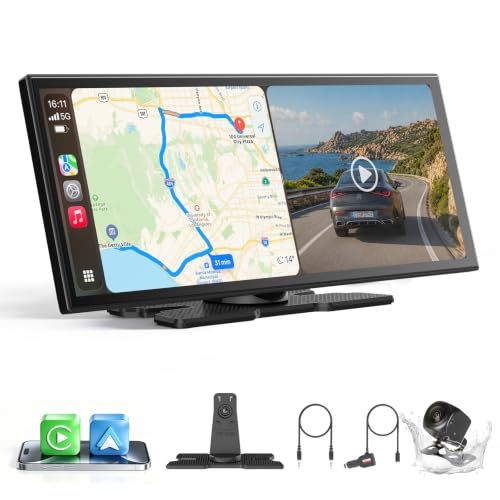
ScreenFlow Review Summary
The OTTOCAST ScreenFlow is a good fit for owners of older cars, trucks, SUVs, and RVs that lack modern infotainment features.
It combines an 11.4-inch touchscreen, wireless phone integration, split-screen multitasking, and a bundled 1080p rear camera in a detachable dashboard-mounted package.
Buy it if you want a relatively simple way to add navigation and media features while keeping the original stereo in place.
It is less compelling for drivers who expect factory-level integration, a clean built-in appearance, or a replacement for every function of an original infotainment system.
The listing describes the unit’s capabilities, but no hands-on notes were supplied, so the installation time, wake behavior, and real-world streaming performance should be treated as manufacturer claims rather than independently tested results.
Review Scorecard
| Category | Editorial score | Buyer assessment |
|---|---|---|
| Display and usability | 9/10 | Large 11.4-inch 1920×720 IPS touchscreen with wide viewing angles and claimed 60fps performance. |
| Phone connectivity | 9/10 | Wireless Apple CarPlay and Android Auto with automatic reconnection are central strengths. |
| Media flexibility | 8/10 | Pre-installed Netflix, YouTube, Disney+, and Prime Video expand passenger entertainment options. |
| Audio integration | 8/10 | Dual Bluetooth is designed to keep the phone connection and factory speakers working together. |
| Parking assistance | 8/10 | Included IP67 1080p camera, night vision, adjustable guidelines, and a 19.69-foot cable add useful coverage. |
| Installation flexibility | 9/10 | Adhesive mounting, detachable design, and claimed compatibility with many vehicle types reduce commitment. |
| Support and longevity | 8/10 | OTA updates, 24-hour support, and a one-year warranty provide useful ownership safeguards. |
Key Features and Specifications of ScreenFlow
The product’s defining feature is its combination of a large portable display and smartphone-style connectivity.
The 11.4-inch IPS panel has a listed 1920×720 resolution, and the manufacturer claims wide viewing angles, readable text, and a 60fps refresh experience.
That combination should suit navigation particularly well: maps and turn instructions have more physical space than they would on a small phone screen.
Wireless Apple CarPlay and Android Auto are intended to make daily use more convenient.
After the first pairing, the listing says the screen automatically reconnects each time the vehicle starts.
That is a meaningful advantage for commuters who do not want to plug in a phone before every drive, although actual connection consistency can vary by phone, vehicle environment, and firmware.
The ScreenFlow also supports split-screen multitasking.
A typical use case is keeping Google Maps visible for the driver while a passenger uses YouTube or Spotify.
This is more useful on a wide display than on a conventional narrow phone, but buyers should remember the safety distinction: video entertainment is intended for passengers, not for the person driving.
For streaming, the unit includes Netflix, YouTube, Disney+, and Prime Video according to the listing.
It uses a curated Android operating system and connects through a phone hotspot for direct streaming; it is not described as a simple mirror of every phone app.
Additional applications are limited to the built-in app store, so users who expect unrestricted Android customization may find the software environment more controlled than a standard tablet.
Connectivity is another emphasized feature.
Dual-band Wi-Fi supports both 2.4GHz and 5GHz networks, while dual Bluetooth is listed as BT4.2 plus BT5.0.
The intended benefit is avoiding the common compromise in which wireless CarPlay occupies the phone connection while the car’s original audio system becomes difficult to use.
According to the product information, the ScreenFlow can keep CarPlay active while the factory speakers remain connected.
The package includes a 1080p rear camera with IP67 waterproofing, a 19.69-foot, or 6-meter, cable, night vision, and dynamic parking guidelines.
Horizontal and vertical flip options help accommodate different mounting positions.
Those features make the bundle more than a navigation screen, especially for an older vehicle without a factory reversing camera.
The camera still requires routing and connecting its cable, so “tool-free” installation should not be confused with a completely cable-free setup.
The screen mounts with a supplied 3M adhesive bracket and is detachable when the vehicle is parked.
The listing claims a two-second instant wake, automatic resumption of the last navigation route and playlist, and a three-minute installation.
It also says the unit fits cars, SUVs, pickups, RVs, and trucks of any make or year.
These broad compatibility and speed claims are attractive, but dashboard shape, power access, audio routing, and camera-cable placement remain practical considerations.
Pros and Cons of ScreenFlow
Pros
- Adds modern phone features to older vehicles: Wireless Apple CarPlay and Android Auto can provide a familiar navigation and communication interface without replacing the factory stereo.
- Large, information-friendly display: The 11.4-inch 1920×720 IPS panel should make maps and split-screen content easier to see than a phone mounted on the dashboard.
- Useful passenger entertainment options: Direct access to Netflix, YouTube, Disney+, and Prime Video is a strong road-trip feature when used by passengers.
- Flexible audio design: Dual Bluetooth is intended to preserve the original speaker connection while the phone uses wireless CarPlay.
- Camera included: The 1080p night-vision backup camera, adjustable orientation, and long cable add value for vehicles without factory parking assistance.
- Portable installation: An adhesive bracket and detachable screen avoid the permanence and complexity of a full dash replacement.
Cons
- Not a factory-integrated head unit: A dashboard-mounted add-on may look less seamless than an installed replacement screen and may not control every original vehicle function.
- Streaming depends on connectivity: Direct video playback requires a phone hotspot, and performance will depend on the available cellular connection and Wi-Fi conditions.
- Curated Android limits flexibility: The listing says extra apps come through the built-in app store, which may not suit users wanting unrestricted app installation.
- Camera installation still involves wiring: The long cable helps with vehicle fit but must be routed and connected safely.
- No independent testing supplied: The claimed two-second wake, three-minute installation, and automatic reconnection should be verified against your vehicle and phone combination.
Who Should Buy ScreenFlow?
The best buyer is someone with an older or basic vehicle that lacks CarPlay, Android Auto, a large navigation screen, or a reversing camera.
It is also a sensible option for owners who do not want to remove the factory stereo, alter the dashboard, or commit to a vehicle-specific replacement unit.
Families and long-distance travelers may appreciate the split-screen layout and passenger streaming support, while pickup, RV, and truck owners benefit from the stated wide compatibility.
The detachable design also suits drivers who want to remove the display when leaving the vehicle.
The included camera makes the package especially interesting for cars where adding a standalone reversing solution would otherwise require another purchase.
Skip it if your priority is an invisible factory-style installation, deep integration with steering-wheel controls and vehicle settings, or unrestricted Android tablet functionality.
It may also be the wrong choice for anyone unwilling to route a rear-camera cable or rely on a phone hotspot for streaming.
In short, the OTTOCAST ScreenFlow pros and cons favor convenience and retrofit flexibility over seamless original-equipment integration.
How the ScreenFlow Fits an Older Vehicle Upgrade
Portable versus built-in installation
The adhesive bracket and detachable screen make the upgrade reversible and broadly compatible.
That is valuable for leased vehicles, shared vehicles, and older cars whose dashboards do not have a standard replacement opening, although a portable screen will remain more visible than an integrated display.
Navigation and entertainment in one view
The wide panel is designed around multitasking.
Keeping maps on one side while a passenger uses media on the other can reduce device juggling, but the driver should keep attention on navigation and road conditions rather than video playback.
The practical value of dual Bluetooth
The dual-Bluetooth design addresses a real retrofit problem: adding wireless phone features without abandoning the factory sound system.
Its value depends on how well the ScreenFlow, phone, and particular vehicle stereo cooperate, so buyers should confirm the intended audio path before installation.
The bundled camera as a deciding factor
The rear camera changes the value proposition from “larger CarPlay screen” to a broader safety and convenience upgrade.
Its IP67 rating, night vision, orientation controls, and 6-meter cable are useful on paper, but cable routing is still part of the installation job.
Alternatives to ScreenFlow
If you want a similar portable retrofit, compare the RoverBeats portable CarPlay screen, which may appeal to buyers focused mainly on wireless phone integration and dashboard convenience.
The Carpuride portable wireless CarPlay and Android Auto display is another recognizable category alternative for shoppers comparing screen sizes, mounting approaches, and audio connection methods.
For buyers who prefer a traditional replacement stereo, the ATOTO double-DIN CarPlay receiver is worth considering.
A built-in receiver can look cleaner and may offer deeper vehicle integration, but installation is more involved and compatibility is less universal.
Those who mainly need reversing assistance can compare a LeeKooLuu wireless backup camera system instead.
That route may be simpler when navigation and entertainment are already handled by an existing stereo or phone, though it does not provide the ScreenFlow’s large CarPlay display and split-screen functions.
Is ScreenFlow Worth It?
The OTTOCAST ScreenFlow is worth considering when the goal is a broad, portable infotainment upgrade rather than a factory-style stereo replacement.
Its best advantages are the large 11.4-inch display, wireless Apple CarPlay and Android Auto, split-screen support, dual Bluetooth concept, and included 1080p backup camera.
The buying decision comes down to installation expectations.
If you can accept a visible dashboard screen, hotspot-dependent streaming, and some camera wiring, the feature set is well matched to older cars, trucks, SUVs, and RVs.
If you need deep vehicle integration or unrestricted Android software, look toward a vehicle-specific head unit instead.
For retrofit-minded buyers who value flexibility and want several upgrades in one package, the ScreenFlow is a practical shortlist candidate.