Choosing among glider RC airplanes is easier when you match the aircraft to your experience, launch space, and willingness to assemble or configure electronics. The right model can provide stable training flights, relaxing thermaling, or more demanding aerobatic performance.
This roundup covers compact ready-to-fly trainers, gyro-assisted foam aircraft, larger PNP gliders, and a build-it-yourself balsa option. Use the guide below to compare setup requirements, flight assistance, durability, and overall value before buying.
Best 10 Glider Rc Airplanes Picks for 2026
Best Performance Glider

- Brushless system supports 2S and 3S batteries
- Removable reinforced wing for easier transport
- Supports soaring, sport flying, and aerobatics
Best For: Experienced pilots wanting a compact, versatile glider
Best Beginner Glider
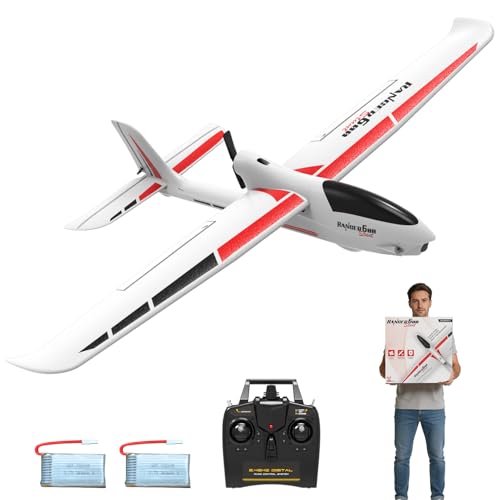
- Three flight modes ease the learning curve
- Xpilot stabilization supports stable flying
- Ready-to-fly package includes batteries and spares
Best For: New pilots and adults learning outdoor RC flight
Best Lightweight Soarer

- Supports up to 10–20-plus-minute mixed flights
- Removable wing simplifies storage and transport
- Includes AS3X and SAFE Select assistance
Best For: Pilots seeking relaxed, efficient soaring
Best Ready-to-Fly Package

- Includes three batteries and a five-port charger
- Three modes suit beginners through experts
- Offers one-key stunts and 656-foot control range
Best For: Pilots wanting a complete, flexible RC plane kit
Long-Range Builder
Swift 2100 82.7-Inch RC Glider

- Carbon-fiber reinforced airframe
- 3S/4S brushless power system
- PNP setup; radio and battery sold separately
Best For: Hobbyists wanting a large, efficient outdoor glider platform
Confidence Starter
VOLANTEXRC Ranger600 RC Glider

- Three flight modes with 6-axis gyro
- Fully assembled ready-to-fly package
- Three batteries and charger included
Best For: Beginners seeking guided, low-setup outdoor flying
Performance Upgrade
E-flite Conscendo Evolution 1.5m

- Strong EPO airframe for aerobatics
- Telemetry-capable 30A ESC
- BNF Basic; Spektrum transmitter and battery required
Best For: Spektrum pilots wanting soaring and higher-energy aerobatics
Night-Flying Beginner Pick

- Six-axis gyro stabilization for steadier flight
- LED lighting for night flying
- Includes two rechargeable flight batteries
Best For: New pilots seeking an easy-to-control outdoor RC plane
Advanced DIY Choice

- 1200mm wingspan for discus-launch soaring
- Lightweight balsa and plywood construction
- Supports thermal hunting and aerobatics
Best For: Adult hobbyists who want a challenging build and manual-launch glider
First-Time Flyer Value

- Self-stabilization supports beginner practice
- Durable lightweight foam structure
- Includes two batteries and spare propellers
Best For: Kids and beginners learning to fly an RC airplane outdoors
Best Performance Glider – E-flite UMX Conscendo
For pilots seeking glider RC airplanes with more sporting capability, the E-flite UMX Conscendo combines soaring with aerobatic potential. Its brushless power system supports both 2S and 3S batteries, while the compact removable-wing design makes transport easier.
Best For: Experienced hobbyists who want a portable glider for soaring, sport flying, and high-energy aerobatics.
Pros:
- 2S- and 3S-compatible brushless motor with folding propeller
- Composite-reinforced airframe and ball-link-equipped control linkages
- Removable wing supports convenient storage and transport
- Optional flaperons and spoilerons add flight-control flexibility
Cons:
- BNF Basic configuration does not indicate a transmitter, battery, or charger is included
- Its aerobatic-focused features may be more than a first-time pilot needs
The UMX Conscendo is a strong choice when soaring is only part of the plan. It offers a broader performance envelope than a basic trainer, but buyers should confirm compatible radio and battery equipment before flying.
Best Beginner Glider – VOLANTEXRC 4CH RC Glider
This VOLANTEXRC model is among the more approachable glider RC airplanes for new pilots. Its Xpilot stabilization system and three flight-control levels let beginners start with assistance and gradually move toward manual control.
Best For: Beginners and adults learning RC flight outdoors with a ready-to-fly setup.
Pros:
- Three flight modes support progression from assisted to expert control
- Xpilot stabilization helps maintain stable flight in a breeze
- Pusher glider design can extend flight time during power-off gliding
- Includes the plane, transmitter, batteries, and spare parts
Cons:
- The transmitter requires four AA batteries
- The 656-foot control range may limit larger flying areas
With its included equipment and adjustable assistance, this is a practical entry point for learning. The pusher layout also helps protect the propeller while supporting longer gliding periods.
Best Lightweight Soarer – E-flite UMX Radian
The E-flite UMX Radian is a lightweight option for pilots comparing glider RC airplanes focused on efficient soaring. It offers claimed 10–20-plus-minute mixed power-on and power-off flights with compatible 1S 150–200mAh batteries, plus a removable one-piece wing for transport.
Best For: Pilots who prioritize long, relaxed flights and a compact, factory-finished airframe.
Pros:
- Designed for extended mixed power-on and power-off flight times
- Removable one-piece wing includes a composite spar
- AS3X and SAFE Select assist flight control
- Under-250-gram weight means no FAA registration is required according to the supplied notes
Cons:
- BNF Basic version does not include a transmitter, battery, or charger
- Requires compatible 1S 150–200mAh batteries for the stated flight-time range
The UMX Radian is best suited to simple soaring sessions rather than aggressive aerobatics. Its low weight, folding propeller, and compact removable wing make it especially convenient for casual outdoor flying.
Best Ready-to-Fly Package – VOLANTEXRC Ranger600
For shoppers wanting glider RC airplanes with a broad accessory package, the VOLANTEXRC Ranger600 provides a ready-to-fly setup with three flight modes and one-key stunts. Its foam construction and rear-mounted propeller are designed for approachable outdoor flying and added propeller protection.
Best For: Beginners through advanced hobbyists who want a complete kit with extra batteries and stunt-focused controls.
Pros:
- Three flight modes support gradual skill development
- Four-channel control handles ascents, descents, turns, and aerobatic maneuvers
- Includes three LiPo batteries, four AA batteries, spare propellers, and a five-port charger
- 656-foot stated control distance and one-key stunt function
Cons:
- Foam airframe may require care despite its durable-design claims
- Its larger 23.6-by-18.1-inch footprint needs more storage space than a micro glider
The Ranger600 stands out for convenience: the included charging and battery accessories reduce the need for immediate add-on purchases. Its adjustable modes also let the same aircraft serve as a trainer and a more playful stunt platform.
Long-Range Builder – Swift 2100 82.7-Inch RC Glider
The Swift 2100 is a large-format choice for enthusiasts comparing glider rc airplanes with efficient power systems and longer flight potential. Its carbon-fiber reinforcement, folding propeller, functional flaps, and compatibility with 3S or 4S LiPo batteries make it suited to outdoor flying, though this PNP model requires separate radio equipment and a battery.
Best For: Experienced beginners and hobbyists who want a reinforced, efficient glider platform and are comfortable supplying their own transmitter, receiver, and battery.
Pros:
- Carbon-fiber reinforcement throughout the model supports a strong airframe.
- Folding propeller, metal spinner, and functional flaps add practical flight features.
- Brushless power system supports both 3S and 4S LiPo batteries.
- Fast, glue-free assembly and claimed 10–30-minute flight times.
Cons:
- Transmitter, receiver, and battery are not included.
- Its large 82.7-inch wingspan requires suitable outdoor space for transport and flying.
This Swift 2100 is a strong option when durability, efficiency, and a larger soaring presence matter more than an all-inclusive package. Factor the additional electronics and battery into the total setup cost.
Confidence Starter – VOLANTEXRC Ranger600 RC Glider
The VOLANTEXRC Ranger600 is a convenient entry point among glider rc airplanes because it arrives fully assembled and combines 4-channel control with a 6-axis Xpilot gyro. Three flight modes let beginners progress gradually, while the included batteries, charger, and low-battery warnings reduce the setup work before an outdoor flight.
Best For: Beginners and families who want a ready-to-fly glider with adjustable assistance, included power accessories, and a compact 23.6-inch wingspan.
Pros:
- Three flight modes support progression from beginner to expert control.
- Built-in gyro stabilizer and 4-channel controls help provide a guided learning experience.
- Includes three LiPo batteries, a five-port charger, and four AA remote batteries.
- Rear-mounted pusher propeller helps protect the propeller and electronics.
Cons:
- The smaller foam airframe may offer less presence than larger glider models.
- It is designed for outdoor use, so indoor flying is not the intended setting.
With a 656-foot control range and ready-to-fly configuration, the Ranger600 emphasizes accessibility and practice. It is especially practical if you want multiple batteries and selectable assistance without assembling a model first.
Performance Upgrade – E-flite Conscendo Evolution 1.5m
The E-flite Conscendo Evolution is a performance-focused option for pilots comparing glider rc airplanes for soaring, sport flying, speed, and aerobatics. Its stronger EPO airframe, brushless system, Safe Select support, and telemetry-capable ESC provide a capable platform, but this BNF Basic model requires a compatible Spektrum transmitter and separate battery.
Best For: Spektrum pilots who want a versatile Bind-N-Fly glider for soaring, aerobatics, and higher-speed outdoor flight.
Pros:
- Higher-density EPO construction creates a stronger, stiffer airframe.
- Brushless power supports soaring, sport flying, high speeds, and aerobatics.
- Telemetry-capable ESC can provide battery voltage, current, and motor RPM data with compatible equipment.
- Claimed flight times reach 15–20-plus minutes with mixed power-on and power-off flying.
Cons:
- Transmitter, battery, and charger are not included.
- The BNF Basic format is intended for use with a compatible Spektrum transmitter.
The Conscendo Evolution is a good fit when you already use Spektrum gear and want more capability than a basic trainer. Its installed receiver and servos simplify completion, while the reinforced airframe supports more energetic flying.
Night-Flying Beginner Pick – SU27 RC Glider
For shoppers comparing glider rc airplanes, the Gravity Gliders SU27 is a beginner-friendly foam model with two-channel control, built-in stabilization, and LED lighting for evening flights. It can launch by hand or from the ground and requires only limited assembly before flying.
Best For: New pilots who want a durable, easy-to-control RC airplane with night-flying lights.
Pros:
- Built-in six-axis gyro stabilization helps make flight more stable.
- Two-channel, four-direction control is approachable for beginners.
- LED light bar supports colorful night flights.
- Includes two 3.7V 250mAh batteries and supports hand or ground takeoff.
Cons:
- Approximately 15 minutes of flight time after a full charge.
- Recommended for outdoor use in relatively calm conditions, below level 4 wind.
- Some setup is still required for the battery, wheels, and tail.
The SU27 emphasizes accessible handling and visual appeal rather than advanced aerobatics. Its stabilization, foam construction, and included batteries make it a practical starter option, provided you have an open flying area and allow time for charging.
Advanced DIY Choice – FD12 Windrunner DLG Glider
The FD12 Windrunner is a specialized choice among glider rc airplanes for experienced hobbyists who enjoy building as much as flying. Its 1200mm balsa-and-plywood design is built for discus launching, thermal soaring, and aerobatic control without a motor.
Best For: Adult modelers and advanced pilots seeking a hands-on DLG construction and soaring project.
Pros:
- 1200mm wingspan and optimized airfoil are designed for efficient discus launching.
- Lightweight balsa and plywood construction supports lift, agility, and extended flights.
- Suitable for silent thermal hunting, loops, rolls, and other aerobatic maneuvers.
- Kit-plus-servos option is available for a more complete build package.
Cons:
- Requires modeling tools, glue, and covering film, which are not included.
- Assembly is intended for experienced hobbyists rather than beginners.
- It has no motor or power source, so launching is manual.
This is a project-oriented glider rather than a ready-to-fly toy. Choose it if you value woodworking, aeronautical learning, and the distinctive challenge of discus launching; plan for additional materials and careful assembly.
First-Time Flyer Value – Hawk's Work Cessna RC Glider
Among glider rc airplanes for kids and beginners, the HAWK’S WORK Cessna stands out as a ready-to-fly foam model with self-stabilization and straightforward two-channel control. Its lightweight structure is designed to handle some slight crashes while new pilots practice.
Best For: Children ages eight and up, beginners, and families looking for a supported first RC airplane.
Pros:
- Built-in self-stabilization helps beginners learn flight control.
- Lightweight foam construction can survive some slight crashes.
- 2.4GHz system allows two or more planes to fly without mutual confusion.
- Package includes two flight batteries, spare propellers, controller batteries, and a USB charging cable.
Cons:
- Designed for outdoor use and requires practice before confident flying.
- Four-direction, two-channel control is simple but offers limited control complexity.
- Charging and battery handling are still part of the flying routine.
The Cessna is a sensible entry point when ease of use, included accessories, and manufacturer support matter most. Its warranty and technical-support information add reassurance for first-time buyers, while the foam airframe helps reduce the impact of beginner mistakes.
How We Picked the Best Glider Rc Airplanes
We focused on the factors that most affect ownership: stability, control layout, included equipment, construction, wingspan, repairability, and the level of assembly required. The selection includes ready-to-fly models for newcomers, bind-and-fly aircraft for pilots who already own compatible transmitters, PNP models for customized setups, and a balsa kit for builders.
We also considered whether each aircraft offers beginner aids such as a 6-axis gyro, AS3X stabilization, SAFE Select, multiple flight modes, or one-key recovery. These features can make early flights less intimidating, but they do not replace a suitable flying area and basic instruction.
Quick Comparison
- Best compact trainer options: The UMX Conscendo, UMX Radian, and smaller VOLANTEXRC models are easier to transport and operate in limited spaces.
- Best for a larger presence: The Swift 2100 and Conscendo Evolution offer larger airframes suited to pilots seeking longer glides and more visible flight characteristics.
- Best for simple setup: Ready-to-fly packages such as the HAWK’S WORK and Gravity Gliders models typically require less additional equipment.
- Best for customization: PNP aircraft and the Windrunner balsa kit leave more decisions to the buyer, including the transmitter, receiver, battery, and power setup.
Key Buying Factors for Glider Rc Airplanes
Aircraft Type and Required Equipment
Check the package designation before ordering. RTF usually includes the primary flight equipment, while BNF requires a compatible transmitter and PNP generally requires a transmitter, receiver, battery, and charger. Product listings can vary, so verify the exact contents and connector compatibility.
Stability and Flight Assistance
Gyros and computer-assisted systems can smooth gusts, limit excessive control inputs, and provide recovery modes. They are especially helpful for beginners, but experienced pilots may prefer systems that can be reduced or switched off as skills improve. A four-channel layout typically provides more control than a two-channel trainer.
Wingspan, Space, and Durability
Larger wingspans often improve visibility and glide efficiency but need more room for launching, landing, and transport. Foam aircraft are generally forgiving and easier to repair after minor mishaps. Balsa models can deliver a rewarding lightweight flying experience, but they demand more careful building and handling.
Battery and Launch Requirements
Confirm the recommended battery type, charge rate, flight time, and whether the battery and charger are included. Also consider how the aircraft launches: hand-launch gliders need a clear area and a reliable launch technique, while larger models may benefit from an experienced helper.
Who Should Buy Which Glider Rc Airplanes?
New pilots and families should prioritize an RTF aircraft with durable foam construction, beginner modes, and stabilization. Developing pilots may prefer a four-channel model with selectable assistance so they can progress beyond basic turns and climbs. Experienced pilots should look at larger BNF or PNP gliders with more efficient airframes and room for upgraded electronics. Hands-on builders will get the most from the Windrunner-style balsa kit, provided they are comfortable with assembly, setup, and repairs.
Before flying, inspect control surfaces, balance the aircraft according to the manual, perform a range check, and follow local model-aircraft rules. A calm day and an open field remain the best conditions for learning.