Indoor RC flying calls for more than a small airframe. The best models combine low weight, predictable handling, durable foam construction, and enough control authority for tight spaces.
We compared 10 RC airplanes for indoor use across beginner toys, slow flyers, stunt models, and hobby-grade aircraft to help you choose the right fit for your space, skill level, and budget.
Best 10 Rc Airplanes for Indoor Use Picks for 2026
Best Value LED Starter

- One-key controls and altitude hold ease learning
- 13 RGB lighting modes and aerial stunts
- Impact-resistant PC body with dual batteries
Best For: Beginners seeking an easy outdoor RC plane with colorful lights
Best Dedicated Indoor Flyer

- Designed for large rooms, garages, and gyms
- Reinforced slow-flyer airframe
- Ready-to-fly with LEDs and included batteries
Best For: Teens and adults flying in spacious indoor areas
Best Family-Friendly Compact Pick

- Six-axis gyro supports beginner-friendly flight
- Foldable, impact-resistant wings handle crashes
- Compact 24cm wingspan for easy transport
Best For: Families learning to fly in open indoor or outdoor spaces
Best Hobbyist Aerobatics Kit

- Ultralight design for indoor 3D aerobatics
- 800mm wingspan for responsive low-speed control
- Includes motor, ESC, propeller, and servos
Best For: Adult hobbyists comfortable assembling a custom indoor aircraft
Best All-Around Starter

- Beginner controls with altitude hold and headless mode
- Durable EPP foam with propeller guards
- Two batteries and multiple stunt modes
Best For: Kids and beginners wanting a feature-rich foam plane
Best Compact Indoor Pick
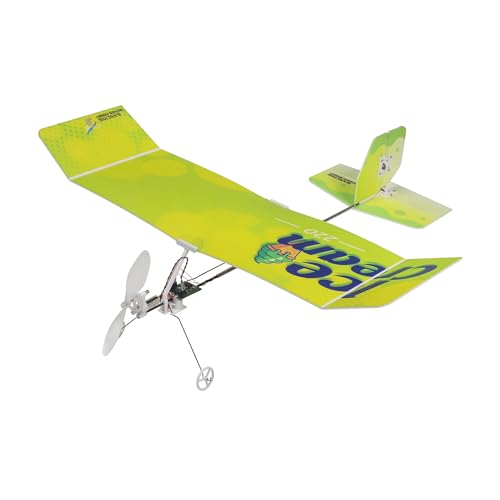
- Small 220mm wingspan for indoor areas
- Durable, lightweight foam construction
- 3-channel control with included lithium battery
Best For: Compact indoor practice and basic flight skills
Best LED Stunt Option

- Multi-color LEDs for eye-catching flights
- One-touch flips and beginner controls
- Three batteries with up to 45 minutes claimed flight
Best For: Family play focused on lights and simple stunts
Best Indoor Slow Flyer
E43 Mosquito Micro RC Airplane

- Lightweight, durable PP foam body
- Slow, stable 3-channel flight
- Partially assembled for quicker setup
Best For: Beginners and hobbyists flying in calm indoor spaces
Best for Indoor Stunts

- 360° flips and aerobatic rolls
- Protected propellers and durable EPP foam
- One-key takeoff, landing, and altitude hold
Best For: Families seeking easy stunt flying indoors
Best 2-in-1 Indoor Flyer

- Converts between flying and ground driving
- One-key takeoff, landing, and hovering
- Two rechargeable batteries included
Best For: Kids wanting both aerial stunts and ground racing
Best Value LED Starter – F8 RGB RC Airplane
For shoppers comparing rc airplanes for indoor use, the F8 is an accessible, feature-rich option for beginners. Its one-key takeoff and landing, altitude hold, headless mode, hand-toss launch, and impact-resistant PC body simplify learning, though its supplied specifications identify it for outdoor use rather than indoor flying.
Best For: Beginners and families wanting an easy-to-operate, stunt-capable RC plane for outdoor flights.
Pros:
- Beginner-friendly controls include altitude hold, headless mode, and one-key takeoff and landing.
- Offers 360-degree flips, auto-rotation, circle flight, and three speed modes.
- RGB lighting provides 13 color-changing modes for evening or night flights.
- Impact-resistant PC construction and dual included rechargeable batteries support durable, longer sessions.
Cons:
- The product details specify outdoor use, so it is not a dedicated indoor model.
- The listed age recommendation is 8 years and up, requiring adult judgment for younger children.
This is a practical pick when easy controls, flashy lighting, and crash resistance matter more than true indoor capability. Choose a dedicated indoor flyer if you primarily plan to use a living room, gym, or other enclosed space.
Best Dedicated Indoor Flyer – E-flite UMX Night Vapor
E-flite RC Airplane UMX Night Vapor RTF to Fly is Included with AS3X and Safe Select EFLU1300
Check Price On AmazonThe E-flite UMX Night Vapor is one of the strongest matches for rc airplanes for indoor use because it is designed for large rooms, garages, and gyms, as well as calm outdoor conditions. Its reinforced airframe, slow-flyer design, built-in LEDs, and ready-to-fly package make setup straightforward.
Best For: Adult and teen hobbyists who want a ready-to-fly slow flyer for spacious indoor areas and calm outdoor conditions.
Pros:
- Specifically supports indoor flying in large rooms, garages, gyms, and similar spaces.
- Reinforced airframe is designed to better handle collisions indoors and in low wind.
- Factory-installed color-changing LED lights support day or night flying.
- Ready-to-fly package includes the aircraft, transmitter, battery, receiver, electronics, and controller batteries.
Cons:
- Indoor use requires a suitably large open space because the aircraft has a 20.5-inch wingspan.
- It is intended for ages 14 and up, making it less suitable as a young-child toy.
- Its slow-flyer design is better suited to controlled flight than high-speed action.
Among the supplied options, this is the clearest choice for genuine indoor flying. The ready-to-fly format also avoids the extra assembly and electronics decisions required by a hobby kit.
Best Family-Friendly Compact Pick – KF801 RC Biplane
The KF801 biplane is a compact option for shoppers considering rc airplanes for indoor use and occasional outdoor flights. Its auto-balancing six-axis gyro, flexible bend-proof construction, foldable wings, and 24cm wingspan are aimed at beginners and family flying, although the supplied notes do not specify a dedicated indoor rating.
Best For: Families and new pilots who want a small, portable plane for learning and shared flying.
Pros:
- Six-axis gyroscope helps correct the aircraft during takeoffs and landings.
- Flexible, impact-resistant materials and 180-degree folding wings are designed to withstand crashes.
- Compact foldable design is easy to carry in a backpack or take on trips.
- Included remote, battery, and charger provide the core components for flying.
Cons:
- The notes describe indoor/outdoor use but do not identify it as a purpose-built indoor aircraft.
- The listed 164-foot control range may be more than needed in confined indoor spaces.
- Its foam construction is lightweight and durable for crashes, but still requires reasonable clearance indoors.
This biplane offers a sensible balance of portability, beginner assistance, and durability. It can work in an appropriately open indoor area, but buyers wanting a purpose-designed gym or large-room flyer may prefer the Night Vapor.
Best Hobbyist Aerobatics Kit – Devil Ray F3P Indoor RC Kit
The Devil Ray F3P is the specialist choice among these rc airplanes for indoor use. Its ultralight foam airframe, 800mm wingspan, reinforced structure, and slow-fly 3D aerobatic design target experienced hobbyists who want precise indoor maneuvers and are comfortable completing a more involved setup.
Best For: Adult RC hobbyists seeking an indoor aerobatic model and hands-on assembly project.
Pros:
- Purpose-built for lightweight indoor flight, slow-fly performance, and 3D aerobatics.
- 800mm wingspan combines responsive handling with stable low-speed characteristics.
- Reinforced foam structure aims to add rigidity without sacrificing low flying weight.
- The listed configuration includes a motor, 4D ESC, propeller, and servos for a flexible build.
Cons:
- Transmitter, receiver, battery, and charger are not included.
- This is a hobby kit rather than a ready-to-fly aircraft, so assembly and component setup are required.
- Its adult-oriented aerobatic design is less appropriate for beginners or children.
The Devil Ray makes the most sense for pilots who value indoor aerobatic control and customization over convenience. Factor in the missing radio, battery, and charger before choosing it as your build.
Best All-Around Starter – F12 Foam Fighter Jet
For shoppers comparing rc airplanes for indoor use, the F12 stands out for its beginner-friendly controls and durable EPP foam construction. Altitude hold, headless mode, and one-key takeoff and landing make it easier to manage, while its compact feature set supports stunt-focused play in suitable indoor spaces.
Best For: Kids and beginners who want an easy-to-fly foam plane with stunts, lights, and two batteries.
Pros:
- Altitude hold, headless mode, and one-key takeoff and landing simplify control.
- EPP foam body and full-side propeller guards help handle bumps and rough landings.
- Offers 360° flips, auto rotation, circle fly, LED lights, and three speed modes.
- Two rechargeable batteries provide up to 16 minutes of flight, according to the supplied notes.
Cons:
- Its stunt functions and three speed modes may need more open space than very small rooms provide.
- The listed dimensions are shown as 1 x 1 x 1 inches, so the supplied specifications do not clearly indicate the aircraft’s actual size.
The F12 is a versatile choice when ease of control and crash resistance matter most. Its safety-oriented design and extended battery setup make it appealing for family flying, provided the indoor area has enough clearance for its maneuvers.
Best Compact Indoor Pick – E23 Ice Cream Foam Airplane
The E23 is purpose-built for shoppers seeking rc airplanes for indoor use. Its small, lightweight foam design and 220mm wingspan suit indoor and small flying areas, while the 3-channel control system offers a straightforward way to practice basic flight skills.
Best For: Beginners and hobbyists who prioritize a compact, dedicated indoor aircraft.
Pros:
- Small, lightweight format is designed for indoor and small flying areas.
- High-strength construction is intended to be durable and less prone to damage.
- 3-channel electromagnetic servo receiver and built-in ESC support controlled operation.
- Includes a 3.7V lithium battery and uses a 412 brushed motor gearbox.
Cons:
- The supplied notes describe a single included battery, so spare-flight capacity may be limited.
- It does not list stunt features, altitude hold, or LED lighting.
- The manufacturer-recommended age is 16 years and up.
With its compact dimensions and indoor designation, the E23 is the most specifically targeted option here for tight flying spaces. It is better suited to basic practice than spectacle-focused flying, making room size and flight simplicity its main advantages.
Best LED Stunt Option – Foam RC Plane with Lights
This foam RC plane is a lively choice for shoppers exploring rc airplanes for indoor use, especially if visual effects and simple stunt controls are priorities. Multi-color LEDs, one-touch 360° flips, headless mode, and one-key takeoff and landing make it engaging for kids and adults in suitable indoor spaces.
Best For: Families wanting an eye-catching foam flying toy with straightforward controls and extended included battery capacity.
Pros:
- Multi-color LED lighting adds visibility and visual appeal during evening or indoor play.
- One-touch 360° flips, headless mode, and one-key takeoff and landing support accessible operation.
- Includes three modular batteries, with up to 45 minutes of flight claimed in the supplied notes.
- Offers low and high speed modes plus dual-joystick control.
Cons:
- The notes advise indoor or outdoor use in calm weather, so windier conditions are unsuitable.
- Its stunt functions may require more open indoor clearance than basic cruising.
- The supplied details do not specify a dedicated indoor-only size or wingspan.
This model emphasizes fun presentation and quick-access controls rather than detailed aircraft specifications. Its foam body and battery bundle are useful for casual play, while indoor pilots should still choose a clear area for flips and turning.
Best Indoor Slow Flyer – E43 Mosquito Micro RC Airplane
If you want rc airplanes for indoor use that are light, slow, and forgiving, the E43 Mosquito is a practical option. Its 3-channel control, lightweight foam construction, and zero-wind design make it suited to indoor spaces where precise, gentle handling matters.
Best For: Beginners and hobbyists flying in living rooms, gyms, or other calm indoor spaces.
Pros:
- Lightweight 6.2–6.8g PP foam construction helps it withstand minor crashes.
- Slow flight speed and stable handling are approachable for beginners.
- 2.4GHz 3-channel control supports responsive, steady flying.
- Partially assembled design helps reduce setup time.
Cons:
- Designed for zero-wind conditions, so it is less suitable for breezy outdoor flights.
- The supplied instructions may be less detailed than some beginners expect.
The E43 Mosquito stands out as a compact, hobby-oriented slow flyer for controlled indoor sessions. Choose it if easy handling and crash-resistant foam matter more than high-speed stunts.
Best for Indoor Stunts – 4DRC V32 Foam RC Fighter Jet
Among rc airplanes for indoor use, the 4DRC V32 is geared toward active play rather than gentle cruising. Its protected propellers, soft EPP construction, one-key controls, and stunt features make it a fun choice for kids and adults who want an easy-to-operate aircraft.
Best For: Families and beginners who want flips, rolls, lights, and simple takeoff and landing controls.
Pros:
- Supports 360° flips, aerobatic rolls, circling, and three speed settings.
- One-key takeoff and landing plus altitude hold simplify operation.
- Four protected propellers and soft EPP foam help handle tumbles.
- Built-in LED lighting adds visibility and evening play appeal.
Cons:
- Its stunt-focused design may be less suited to quiet, precision flying.
- The product is recommended for ages 8 and up, so younger children may need another option.
The V32 is a versatile foam stunt flyer with beginner-friendly controls and extra visual appeal from its LEDs. It is a stronger match for indoor play areas where flips and fast takeoffs are more important than scale-style flight.
Best 2-in-1 Indoor Flyer – CZ04 RC Plane and Drift Car
If versatility is a priority when comparing rc airplanes for indoor use, the CZ04 combines an RC plane with a drift car. It can drive on the ground, take off, hover, and perform aerial flips, giving kids multiple ways to play in indoor or outdoor settings.
Best For: Children ages 8 and up who want both ground racing and basic aerial stunts from one rechargeable vehicle.
Pros:
- Switches between ground driving and flight with one button.
- Offers one-key takeoff and landing, hovering, and 360° aerial flips.
- Protected propellers and tough EPP foam help absorb impacts.
- Includes two rechargeable batteries for extended play sessions.
Cons:
- Reported flight time is approximately 7 minutes per battery, shorter than ground drift time.
- Its 32.8-foot control range may limit larger indoor or outdoor play areas.
- Recommended for ages 8 and up.
The CZ04 offers the broadest play format in this group, particularly for children who may lose interest in a plane-only toy. Its dual-mode design adds value, though aerial sessions are shorter than its ground-driving sessions.
How We Picked the Best Rc Airplanes for Indoor Use
We focused on the traits that matter most inside a gym, living room, warehouse, or other confined area: compact wingspans, lightweight foam construction, slow and stable flight characteristics, responsive controls, and durability after inevitable bumps. We also considered whether each model is ready-to-fly, how approachable it is for beginners, and whether its features—such as gyroscopic stabilization, headless mode, LED lighting, or stunt functions—add practical value.
Because indoor flying conditions vary widely, this list includes both simple ready-to-fly toys and more specialized aircraft for experienced pilots. Always verify the aircraft’s dimensions and recommended flight area before ordering.
Quick Comparison
| Best For | Look For | Typical Advantage |
|---|---|---|
| Young beginners | Auto-balance, headless mode, durable foam | Easier control and recovery |
| Adults learning indoors | Slow flyer, 3-channel controls, gyro assistance | Predictable handling |
| Stunt flying | 360-degree flips, aerobatic control, bright LEDs | More entertaining maneuverability |
| Experienced hobbyists | Ultralight airframe, 4-channel control, 3D capability | Greater precision and performance |
Key Buying Factors for Indoor RC Airplanes
Size, Weight, and Flight Speed
Small, lightweight aircraft generally need less room to turn and create less damage when they contact a wall or ceiling. Slow flyers are usually better than fast fighter-style models for first-time indoor pilots. A larger wingspan can improve stability, but it also requires more open space.
Stability and Controls
Gyro stabilization, auto-balance systems, and beginner modes help reduce overcorrection. Three-channel aircraft are typically simpler to fly, while four-channel models add more control for banked turns and aerobatics. Headless mode can help children orient the plane, though it is not a substitute for learning basic directional control.
Construction and Replacement Parts
Look for flexible EPP or similar foam, protected propellers, and airframes designed to absorb minor crashes. Check whether spare propellers, batteries, and wings are readily available. A model that is easy to repair often offers better long-term value than a cheaper aircraft with limited support.
Battery, Lighting, and Flight Area
Confirm the battery type, charging method, and expected flight time. Extra batteries can make practice sessions more productive. LED lighting is useful in dim gyms or for orientation, but it should not outweigh flight stability. Avoid flying near fans, fragile objects, people, or pets.
Who Should Buy Which Rc Airplanes for Indoor Use?
For children and complete beginners: Choose a durable foam model with auto-balance, headless mode, or one-button stunt controls. These features make short indoor flights more approachable.
For adults who want relaxed practice: A micro slow flyer or stabilized three-channel aircraft is the safest starting point. Prioritize smooth throttle response and easy battery access over top speed.
For pilots who enjoy tricks: Look for flip functions, responsive controls, and bright orientation lights. Make sure the room is large enough for recovery maneuvers.
For experienced hobbyists: An ultralight aerobatic kit or four-channel aircraft offers more precision and progression, but it demands better piloting technique and a larger unobstructed indoor venue.