The best advanced engineering building sets turn complex ideas into hands-on projects. This roundup compares 10 options covering structures, engines, hydraulics, robotics, gears, solar power, and motorized construction.
Whether you are shopping for a curious child, a teen ready for a deeper challenge, or an adult hobbyist, use the guide below to match the set’s complexity, materials, and engineering focus to the builder.
Best 10 Advanced Engineering Building Sets Picks for 2026
Motorized Construction Pick
Meccano Super Construction Set

- 638 parts and 25 vehicle designs
- 6V motorized working crane
- Includes three real tools
Best For: Ages 10+ who enjoy mechanical construction and motorized vehicles
Structural Engineering Pick

- Builds 20 structural models
- Explores load, tension, and compression
- Includes a 36-page illustrated manual
Best For: Ages 8–14 interested in bridges, skyscrapers, and physics
Hydraulics Challenge Pick

- Builds a working hydraulic robotic arm
- Six axes and up to 270-degree rotation
- No batteries required
Best For: Ages 12+ exploring robotics, mechanics, and fluid power
Physics Experiment Pick
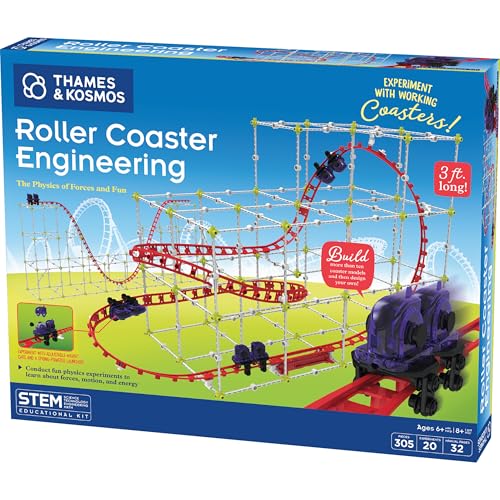
- Builds working roller coaster models
- Explores force, motion, and energy
- Includes a 32-page full-color manual
Best For: Ages 6+ who enjoy physics challenges and reusable track building
Hands-On Turbofan Challenge

- 2,216-piece mechanical engine model
- Crank drives linked gears and shafts
- Semi-exposed, metallic-look display design
Best For: Teens and adults who enjoy intricate, operable engine models
Metal Multi-Model Builder
Erector Set Robot or Excavator

- 389-piece metal construction kit
- Build a robot or an excavator
- Supports guided or custom designs
Best For: Advanced kids, teens, and adults seeking a flexible metal build
Detailed V8 Display Project
Nifeliz V8 Engine Building Set

- 2,725-piece V8 engine replica
- Moving pistons, valves, and fan
- STEM-oriented home or office display
Best For: Adults and builders 16+ interested in realistic engine mechanics
Best for Hands-On Mechanics
Real Wood Engineering Maker Set

- Working hydraulics, gears, levers, and pulleys
- 10 guided builds plus 15 challenge cards
- Durable wood components for repeated experimentation
Best For: Hands-on learners ages 8 and up who enjoy mechanical problem-solving
Best for Programmable Robot Play
5-in-1 Remote-Control Robot Kit
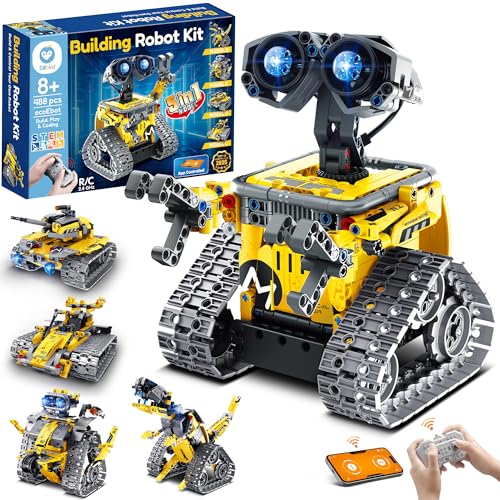
- Build five models with 488 pieces
- Control builds by app or remote
- Includes basic programming and path functions
Best For: Kids ages 8 to 16 interested in robotics and interactive STEM play
Best for Solar Engineering Basics

- Build 12 models from 190 parts
- Powered by sunlight or strong artificial light
- Introduces renewable energy through hands-on play
Best For: Children ages 10 and up exploring solar power and robotics
Motorized Construction Pick – Meccano Super Construction Set
For older kids seeking advanced engineering building sets, the Meccano Super Construction Set combines metal construction with a working motorized vehicle. Its 638 parts support 25 vehicle designs, including construction-themed builds and original creations.
Best For: Ages 10+ who enjoy hands-on mechanical building, construction vehicles, and motorized projects.
Pros:
- Supports 25 different construction vehicle models.
- Includes a 6V motor for a working crane with a rotary body and extendable hook.
- Provides 638 parts and three real tools for an in-depth building experience.
Cons:
- Models can be built one at a time.
- Requires four AA batteries for operation.
- The detailed assembly may be better suited to patient builders.
This is a strong choice when the goal is mechanical construction rather than simple block assembly. The motorized crane adds play value after the build, while the metal parts and multiple vehicle options encourage repeat projects.
Structural Engineering Pick – Bridges & Skyscrapers
Thames & Kosmos Structural Engineering is one of the more academic advanced engineering building sets for exploring how structures handle force. Builders can create 20 models while investigating load, compression, tension, and related mechanical principles.
Best For: Ages 8–14 who prefer guided STEM experiments involving bridges, skyscrapers, and structural physics.
Pros:
- Offers 20 different structural models.
- Includes more than 285 interchangeable building pieces.
- Comes with a 36-page illustrated experiment and assembly manual.
Cons:
- Has an intermediate skill level.
- The set uses plastic building pieces rather than metal components.
- Its focus is structural experimentation, so it may be less appealing for open-ended vehicle building.
This set is particularly useful for children who learn best through testing and comparison. The manual provides a clear path from assembly to experimentation, making it a practical introduction to structural engineering concepts.
Hydraulics Challenge Pick – Teach Tech Hydrobot Arm
The Teach Tech Hydrobot Arm stands out among advanced engineering building sets because the finished project is a working hydraulic robot. Builders assemble the arm, fill the system with water, and use its controls to move, rotate, and operate the gripper without batteries.
Best For: Ages 12+ who want a multi-hour project focused on robotics, fluid power, mechanics, and problem solving.
Pros:
- Uses water-powered hydraulics with no batteries required.
- Features six axes and rotation up to 270 degrees.
- Includes a controllable gripper that can be replaced with suction components.
- Provides detailed step-by-step assembly instructions.
Cons:
- Assembly requires time and careful attention.
- The plastic construction may require precise assembly for proper operation.
- Its recommended age of 12+ makes it less suitable for younger children.
This is a compelling project for learners who want to understand how a robot works rather than simply operate a finished toy. Its water-powered controls make fluid mechanics tangible, while the long build time supports a deeper STEM experience.
Physics Experiment Pick – Roller Coaster Engineering
Thames & Kosmos Roller Coaster Engineering makes advanced engineering building sets approachable through moving models and repeatable experiments. Builders design working roller coasters while exploring force, motion, energy, and the effects of different track layouts.
Best For: Ages 6+ who enjoy creative construction paired with hands-on physics challenges.
Pros:
- Builds working roller coaster models in varied shapes and sizes.
- Includes challenges focused on force, motion, and energy.
- Uses a durable, reusable, easy-to-assemble plastic building system.
- Includes a 32-page full-color manual with scientific explanations.
Cons:
- The set is centered specifically on roller coaster designs.
- It includes plastic pieces and a roller coaster car, but no motorized operation.
- Some experiments may require repeated rebuilding to compare results.
This set is a good fit when children are motivated by seeing physics in action. The reusable track system supports experimentation, and the challenges give the building process more direction than an entirely open-ended construction kit.
Hands-On Turbofan Challenge – Nifeliz Turbofan Building Set
For shoppers seeking advanced engineering building sets, this 2,216-piece turbofan model offers a substantial mechanical build with visible moving parts. Its crank drives linked gears, shafts, and joints, creating a hands-on display that demonstrates motion after assembly.
Best For: Teens and adults who enjoy detailed engine models, mechanical challenges, and interactive science displays.
Pros:
- 2,216 numbered parts provide a demanding, immersive build.
- Crank-operated gears move linked components in different directions and speeds.
- Semi-exposed mechanics and metallic-painted parts create an authentic display appearance.
Cons:
- The large part count makes this better suited to patient builders than casual hobbyists.
- Its engine-focused design may appeal less to builders seeking multiple finished models.
This is a strong choice when the building process matters as much as the finished object. The operable crank and exposed mechanism give it an educational, display-ready quality beyond a static model.
Metal Multi-Model Builder – Erector Set Robot or Excavator
This 389-piece metal kit is a practical entry in advanced engineering building sets for older children, teens, and adults. Builders can follow the instructions to create either a robot or an excavator, or use the components for their own vehicle and craft designs.
Best For: Advanced kids, teens, and adults who want a hands-on metal construction project with more than one model option.
Pros:
- Includes components for building either a robot or an excavator.
- Metal parts provide a distinct 3D-puzzle-style construction experience.
- Instructions support structured building while leaving room for custom creations.
Cons:
- Builders should sort similar pieces before starting for easier assembly.
- With 389 pieces, it offers less complexity than the larger engine-focused sets in this roundup.
The choice between two models makes this kit flexible for families or builders who like variety. It is a good fit for collaborative projects, creative experimentation, and displaying a completed metal machine.
Detailed V8 Display Project – Nifeliz V8 Engine Building Set
Among advanced engineering building sets, this 2,725-piece V8 model is designed for builders who want a detailed mechanical replica and a finished display piece. Manual operation brings the pistons, valves, and central fan into motion, helping illustrate the engine’s working parts.
Best For: Adult mechanical enthusiasts and STEM-minded builders aged 16 and up who value realism and display potential.
Pros:
- Large 2,725-piece build recreates the intricate look of a V8 engine.
- Moving pistons and valves demonstrate engine mechanics after assembly.
- Rotating central fan adds a turbocharged-style visual effect.
- Designed to function as both a learning project and home or office décor.
Cons:
- The advanced part count and 16-plus recommendation make it unsuitable for younger builders.
- Its specialized engine subject may be less appealing to those who prefer general-purpose construction.
This model suits buyers who want the deepest engine-building experience of the three. Its moving internal components make the completed V8 more informative and engaging than a purely static replica.
Best for Hands-On Mechanics – Real Wood Engineering Maker Set
For advanced engineering building sets that prioritize real mechanical principles, the PATHFINDERS Engineering Maker Set offers hydraulics, gears, levers, and pulleys in a reusable wood-based kit. Its guided builds and open-ended challenges make it a practical choice for children ready to move beyond simple assembly.
Best For: Curious builders ages 8 and up who enjoy hands-on machines, troubleshooting, and repeated experimentation.
Pros:
- Includes 10 guided challenges plus 15 open-ended Challenge Cards.
- Uses working hydraulics, gears, levers, and pulleys to demonstrate engineering concepts.
- Solid hardwood and MDF components are designed for repeated builds and rebuilds.
- Supports both structured learning and free-form tinkering.
Cons:
- Manual operation means it does not offer app or remote-control play.
- The mechanical builds may require more patience and troubleshooting than simpler kits.
With 156 pieces and a focus on functional mechanisms, this set is especially strong for families, classrooms, or maker spaces seeking a durable project that remains useful after the initial models are complete.
Best for Programmable Robot Play – 5-in-1 Remote-Control Robot Kit
Among advanced engineering building sets, the Sillbird 5-in-1 Robot Building Kit adds programming and control features to the construction process. Children can assemble different models, then operate them through a remote or Bluetooth app for a more interactive STEM experience.
Best For: Kids and teens ages 8 to 16 who want a buildable robot kit with progressive models and hands-on controls.
Pros:
- Offers five buildable models, including robots, a dinosaur, a car, and a tank.
- Provides dual control through a remote and Bluetooth app.
- Includes basic programming, path, and precise-movement functions.
- 488 pieces and step-by-step instructions support progressive building.
Cons:
- Requires charging, with up to approximately 40 minutes of play per charge.
- App-based features may add setup requirements beyond the physical build.
This kit is a good fit when the goal is to combine construction with interactive robotics. Its five models and control options can provide more variety than a single-build robot, while the detailed instructions help keep assembly approachable.
Best for Solar Engineering Basics – 12-in-1 Solar Robot Kit
The Sillbird 12-in-1 Solar Robot Kit is one of the more accessible advanced engineering building sets for introducing renewable energy concepts. Its 190 parts can be assembled into 12 models, and the solar panel lets children explore how light can power a moving build.
Best For: Children ages 10 and up who want a screen-free introduction to solar power, robotics, and increasingly challenging builds.
Pros:
- Provides 12 buildable models with increasing difficulty.
- Uses sunlight or a strong artificial light source instead of batteries.
- Features a larger solar panel designed to capture more light.
- Clear instructions support independent or family building.
Cons:
- Performance depends on sufficient sunlight or a strong artificial light source.
- With 190 parts, it offers fewer components than some larger robotics kits.
This is a practical choice for buyers who want engineering play connected to renewable energy. The 12 model options add variety, while the solar-powered operation gives the building process a clear science lesson without requiring batteries.
How We Picked These Advanced Engineering Building Sets
We selected sets that emphasize genuine hands-on engineering rather than simple assembly alone. The lineup includes mechanical linkages, structural design, hydraulic systems, engines, robotics, renewable energy, and motorized models. We also considered age guidance, part counts, the variety of possible builds, reusability, and how well each kit supports experimentation after the first project is complete.
Because “advanced” varies by age and experience, the selection spans guided beginner-to-intermediate kits for younger builders and more detailed metal, engine, and structural sets for experienced teens and adults.
Quick Comparison
| Best for | Look for |
|---|---|
| Mechanical fundamentals | Gears, levers, pulleys, linkages, and moving assemblies |
| Structures | Bridge, skyscraper, and roller-coaster design challenges |
| Hydraulics | Fluid-powered arms and working mechanical actuators |
| Robotics | Motors, remote control, sensors, and programmable features |
| Engine modeling | Visible pistons, fans, turbines, and realistic mechanical motion |
| Open-ended building | Reusable parts, multiple models, and challenge prompts |
Key Buying Factors for Advanced Engineering Building Sets
Age, Difficulty, and Patience
Check the recommended age, but also consider reading ability, fine-motor skills, and tolerance for troubleshooting. A kit with hundreds of parts can be rewarding for an experienced builder but frustrating as a first project.
Engineering Concept
Choose the topic that best matches the learner’s interests. Structural kits teach load distribution and stability, while engine sets focus on reciprocating or rotary motion. Hydraulic kits demonstrate pressure and control, and robot kits add motors, power systems, and sometimes remote operation.
Build Flexibility
Multiple models and challenge cards extend play value. Sets with reusable components are generally better for experimentation than kits designed around one display model. Confirm whether alternate builds require online instructions or additional parts.
Materials and Tools
Metal construction sets can offer a more realistic workshop experience but may require careful assembly and occasional tools. Plastic, wood, and brick-style components are often easier for younger builders. Review what is included, especially batteries, motors, controllers, and specialty tools.
Space and Finished Size
Large cranes, roller coasters, and structural models need a stable work area and storage. If the builder will regularly dismantle and rebuild projects, prioritize organized parts storage and compact designs.
Who Should Buy Which Advanced Engineering Building Sets?
Choose a construction or structural engineering set for builders who enjoy testing stability, scale, and load-bearing designs. Hydraulic arm and maker kits suit hands-on learners interested in real mechanical force, while engine-themed sets are strong choices for anyone fascinated by turbines, pistons, or automotive systems.
Robot kits are the best fit for children who want visible movement, remote control, or solar-powered experiments. For older beginners and advanced hobbyists, metal Erector-style kits and high-part-count motorized sets provide more demanding assembly and greater opportunities to modify designs. When in doubt, match the set to the learner’s preferred subject first; sustained curiosity usually matters more than the highest stated difficulty level.