The best engineering building sets for science fairs turn abstract ideas into working models students can test, measure, explain, and improve. This lineup covers structures, mechanics, electricity, robotics, and physics-based builds for a range of ages and project goals.
Use the guide below to match each kit’s complexity, materials, and demonstration potential with your student’s experience, timeline, and science-fair requirements.
Best 10 Engineering Building Sets for Science Fairs Picks for 2026
Architectural Design Lab

- Builds 26 structure and building models
- Explores trusses, arches, domes, and steel frames
- Includes a 44-page illustrated manual
Best For: Young builders developing architecture and structural-design projects
Motion & Force Workshop
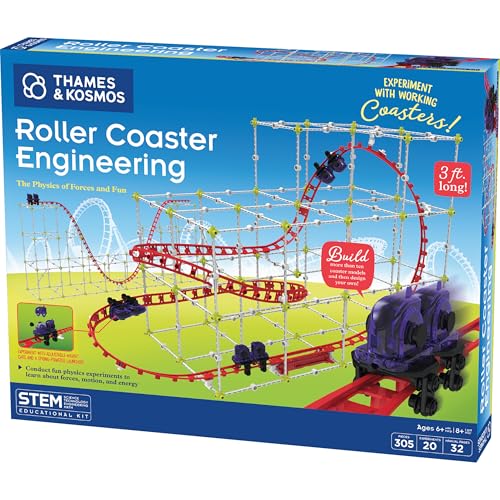
- Creates working roller coaster models
- Explores force, motion, and energy
- Includes reusable pieces and a 32-page manual
Best For: Interactive physics demonstrations involving motion
Mechanical Systems Build

- Assembles a detailed 703-piece V8 model
- USB motor shows simulated piston movement
- Designed for builders ages 14 and up
Best For: Mechanics and engine-focused STEM demonstrations
Structural Forces Studio

- Builds 20 bridge and skyscraper models
- Explores load, compression, tension, and force
- Includes 287 pieces and a 36-page manual
Best For: Intermediate structural-engineering science projects
Best Visual Engine Build
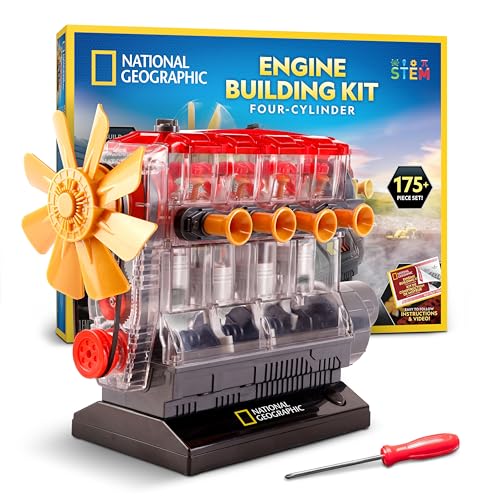
- 175+ pieces with tools and instructions
- Moving pistons, valves, and gears
- Clear model supports visible demonstrations
Best For: Ages 10+ exploring engine mechanics
Best Reusable Maker Kit
Hydraulics and Mechanical Machines

- 156 durable wood components
- 10 guided builds plus 15 challenge cards
- Working water-powered hydraulic system
Best For: Ages 8+ developing mechanical science-fair projects
Best Electrical Project Kit
Circuit and Fruit Battery Experiments

- Eight experiments in seven packs
- Includes series and parallel circuits
- Explores saltwater and fruit batteries
Best For: Ages 8–12 building introductory electrical projects
Best Structural Engineering Set
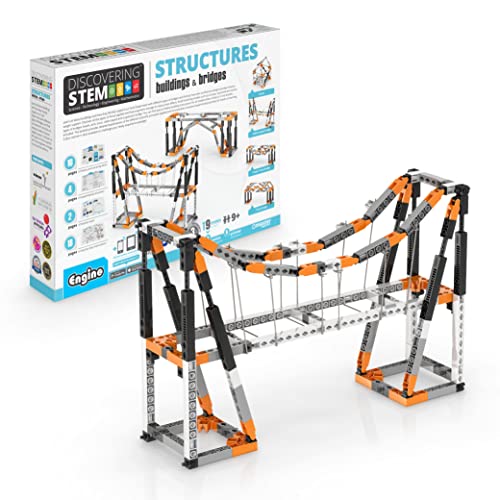
- Build nine architecture and bridge models
- Includes theory, experiments, and a quiz
- Designed for ages 9 and up
Best For: Structural engineering and bridge-focused science-fair projects
Best Robotics Project Kit

- Combines woodworking and basic circuitry
- Includes motors, wiring, and a PCB board
- No soldering required
Best For: Robotics and mechanical-motion science-fair demonstrations
Best Physics Engineering Set

- Build eight working physics models
- Covers motion, energy, and Newton’s laws
- Includes experiments, theory, and a quiz
Best For: Motion, force, and energy science-fair demonstrations
Architectural Design Lab – Architectural Engineering
For shoppers comparing engineering building sets for science fairs, this architectural kit offers a hands-on way to explore how structures are designed. Builders can create 26 models, starting with trusses, arches, and domes before progressing to scaled-down real-world buildings.
Best For: Kids ages 8–14 interested in architecture, structural design, and open-ended STEM projects.
Pros:
- Includes projects covering trusses, arches, domes, and real-world buildings.
- Flexible pieces mimic steel frames for a more realistic building experience.
- Includes a 44-page, full-color manual with guided exercises and design prompts.
- Parts are compatible with other Thames & Kosmos engineering and physics kits.
Cons:
- The manufacturer recommends it for ages 8–14, so it may be less suitable for older students seeking advanced modeling.
- The set focuses on plastic structural models rather than powered or moving mechanisms.
Its guided activities and invitation to create original designs make this a strong choice for a science-fair display centered on architecture or structural concepts.
Motion & Force Workshop – Roller Coaster Engineering
Among engineering building sets for science fairs, this roller coaster kit stands out for its working models and direct focus on physics. Students design tracks, complete building challenges, and observe how force, motion, and energy affect a moving roller coaster car.
Best For: Children ages 6 and up who want an interactive project involving motion and basic physics.
Pros:
- Builds working roller coaster models in different shapes and sizes.
- Connects construction activities with force, motion, and energy experiments.
- Reusable plastic building system is designed for repeated assembly.
- Includes a 32-page, full-color manual with instructions and explanations.
Cons:
- The project theme is focused specifically on roller coasters rather than broad structural engineering.
- Its emphasis on hands-on motion may require more space than a static model kit.
This is a practical pick when the science-fair project needs visible movement and an easy-to-demonstrate connection between a model and core physics ideas.
Mechanical Systems Build – V8 Engine Model Kit
For older students and hobbyists evaluating engineering building sets for science fairs, this 703-piece V8 engine model provides a detailed mechanical build. Its transparent cylinder heads and USB-powered motor let builders observe simulated piston movement and discuss how an engine works.
Best For: Teens 14 and up, adults, and car enthusiasts preparing a mechanics or engine-focused STEM project.
Pros:
- Features realistic details including a transparent cylinder head, pistons, and turbocharger.
- USB charging motor drives the model without requiring batteries.
- Transparent sides allow viewers to observe the simulated internal movement.
- 703 pieces support a substantial building and mechanical-engineering activity.
Cons:
- The manufacturer recommends the kit for ages 14 and up, making it less appropriate for younger children.
- Its car-engine theme may be too specialized for a general structural science-fair project.
- The supplied notes list an instruction manual but do not specify its page count.
This kit is best suited to a display where the moving model itself is part of the presentation, especially when the project focuses on engines, mechanics, or visible machine operation.
Structural Forces Studio – Bridges & Skyscrapers
This bridge-and-skyscraper kit is a strong option for engineering building sets for science fairs when the project needs to explain how structures handle loads. Its 20 models and 287 interchangeable pieces support experiments with force, compression, tension, and building materials.
Best For: Intermediate builders ages 8–14 studying structural engineering through bridge and skyscraper models.
Pros:
- Builds 20 different structural models.
- Directly explores force, load, compression, and tension.
- Includes 287 interchangeable plastic building pieces.
- Comes with a 36-page illustrated experiment manual and assembly guide.
Cons:
- The listed skill level is intermediate, so younger or first-time builders may need assistance.
- The focus is on static structural models rather than powered or motorized builds.
With its emphasis on loads and forces, this set can help students turn a bridge or skyscraper model into a clear, experiment-based science-fair presentation.
Best Visual Engine Build – Working 4-Cylinder Model
For engineering building sets for science fairs, this National Geographic kit offers a visually engaging way to demonstrate basic engine mechanics. Builders assemble a clear 4-cylinder model with moving pistons, valves, and gears, then use three AA batteries to operate it.
Best For: Young builders ages 10 and up who want a hands-on, working model for exploring mechanical engineering.
Pros:
- Includes more than 175 pieces, tools, instructions, and a Learning Guide.
- Clear housing makes the pistons, valves, and gears easy to observe in motion.
- Supports construction skills, problem-solving, and curiosity about engines.
Cons:
- Three AA batteries are required but not included.
- Its focus is specifically on a 4-cylinder engine rather than multiple engineering systems.
This is a strong choice when a science-fair display benefits from visible motion and a recognizable real-world machine. The age recommendation and included tools make it a structured build, while the operating model adds demonstration value.
Best Reusable Maker Kit – Hydraulics and Mechanical Machines
For engineering building sets for science fairs, the PATHFINDERS Engineering Maker Set stands out for its reusable wood components and open-ended challenges. It combines hydraulics, gears, levers, and pulleys across guided builds and invention-focused activities.
Best For: Kids ages 8 and up, school projects, maker spaces, and science-fair work involving mechanical advantage or hydraulic systems.
Pros:
- Includes 10 step-by-step challenges and 15 Challenge Cards.
- Working water-powered hydraulics provide hands-on experience with pressure and motion.
- 156 wooden parts are designed for repeated builds, rebuilds, and experiments.
- Supports concepts such as gear ratios, levers, pulleys, and the Engineering Design Process.
Cons:
- The hydraulic system requires water and may need troubleshooting for air bubbles.
- The open-ended format may require more planning than a single guided project.
This kit is particularly useful when students need to iterate on a design rather than complete one fixed model. Its combination of structured challenges and free invention gives it strong potential for prototypes, demonstrations, and follow-up experiments.
Best Electrical Project Kit – Circuit and Fruit Battery Experiments
For engineering building sets for science fairs, this circuit kit provides eight approachable experiments covering electricity, conductivity, and energy. The projects include series and parallel circuits, saltwater power generation, and a fruit battery, with a circuit book to guide learners.
Best For: Students ages 8 to 12 who need accessible electrical engineering experiments for school projects, classroom work, or a science fair.
Pros:
- Offers eight experiments across seven packs.
- Includes series, parallel, saltwater, and fruit-battery activities.
- Detailed Circuit Book supports guided learning for ages 8 and up.
- Encourages problem-solving and exploration of conductivity and energy.
Cons:
- AA batteries are required but not included.
- The kit focuses on introductory circuits rather than mechanical engineering builds.
This is a practical pick for a science-fair project that needs multiple small, demonstrable electrical investigations. Its variety lets students compare how different circuit arrangements and power sources affect whether a bulb lights.
Best Structural Engineering Set – Buildings & Bridges
For shoppers seeking engineering building sets for science fairs, this Engino kit offers a practical way to demonstrate how structures handle different design challenges. Children ages 9 and up can build nine models, including houses, pyramids, beam bridges, arch bridges, truss bridges, cable-stayed bridges, and suspension bridges.
Best For: Young builders preparing hands-on architecture, bridge, or structural engineering demonstrations for science fairs.
Pros:
- Includes nine real-world building and bridge models.
- Instruction materials cover structural theory, facts, experiments, and a quiz.
- Snap-fit components support more complex three-dimensional models.
- Includes a free app and is designed for ages 9 and up.
Cons:
- The kit focuses primarily on structures and bridges rather than electronics or powered experiments.
- AA batteries are listed as required, which may add a separate purchase.
Choose this set when the science-fair project centers on comparing bridge types or explaining structural principles. Its multiple model options provide more presentation flexibility than a single-build kit.
Best Robotics Project Kit – DIY Mechanical Arm
This wooden robot-arm kit is a strong choice for engineering building sets for science fairs when the project needs both mechanical construction and basic circuitry. Intended for ages 8 and up, it combines assembly, motors, a PCB microcontroller board, and wiring without requiring soldering.
Best For: Students who want to demonstrate mechanical movement, simple circuits, and robotic control in a hands-on science-fair project.
Pros:
- Combines a wooden mechanical build with motors, wiring, and a circuit board.
- Introduces how electronic circuits control mechanical movement.
- No soldering is required during assembly.
- Suitable for children, teens, adults, classrooms, and family projects.
Cons:
- Requires six AA batteries, which are not included.
- The more challenging assembly may require patience and careful following of the tutorial.
- It provides one robot-arm project rather than multiple model options.
This kit works best when the presentation can show a finished mechanism in operation. It is more electronics-oriented than a conventional construction set, making it useful for explaining the relationship between circuits and motion.
Best Physics Engineering Set – Newton’s Laws Models
For science-fair entries focused on motion and physics, this Engino set turns Newton’s laws into working demonstrations. Kids ages 9 and up can build eight models, including a ballistic catapult, crash-test car, and balloon-powered plane while exploring inertia, momentum, and kinetic and potential energy.
Best For: Students creating demonstrations about forces, motion, energy, collisions, or Newton’s laws.
Pros:
- Offers eight working models connected to everyday physics.
- Explains inertia, momentum, kinetic energy, and potential energy.
- Includes theory, experiments, instructions, and a three-page quiz.
- Free interactive 3D app supports virtual building.
Cons:
- The set is aimed at ages 9 and up, so younger children may need assistance.
- AA batteries are listed as required, creating an additional preparation step.
- Its emphasis is physics and transportation models rather than architectural construction.
This is a particularly good fit when the science-fair display needs repeatable demonstrations rather than a static model. The variety of working builds also makes it easier to connect a project to a specific physics concept.
How We Picked These Engineering Building Sets for Science Fairs
We prioritized kits that support a clear engineering process: build a model, change one variable, observe the result, and communicate the findings. The selection includes structural sets for bridges and towers, mechanical systems such as gears and pulleys, working engine models, electrical experiments, and robotics projects.
We also considered age suitability, the likelihood of producing a reliable demonstration, opportunities for repeated testing, and whether the finished project can be explained with measurable evidence rather than serving only as a decorative model.
Quick Comparison
| Project focus | Best kit types | Good science-fair questions |
|---|---|---|
| Structures | Bridges, skyscrapers, architectural models | Which design supports the most weight? How does shape affect stability? |
| Mechanics | Roller coasters, gears, levers, pulleys | How do slope, friction, or mechanical advantage change performance? |
| Energy and motion | Newton’s laws and engine models | How are force, inertia, energy, and motion transferred? |
| Electricity | Circuits and light-bulb experiments | How do circuit arrangements affect brightness or conductivity? |
| Robotics | Robot arms and programmable or manually operated mechanisms | How does changing a joint, load, or control method affect accuracy? |
Key Buying Factors for Engineering Building Sets
Age, Complexity, and Supervision
Choose a kit that is challenging without creating unnecessary frustration. Younger builders may benefit from guided challenges and larger components, while teens and adults can handle multi-step assemblies, miniature engines, and more open-ended testing. Check small-part, tool, and battery requirements before buying.
Experiment Potential
A strong science-fair kit offers more than one correct build. Look for adjustable variables such as load, angle, track layout, gear ratio, circuit configuration, or material choice. These features make it easier to form a hypothesis and collect repeatable results.
Build Quality and Completeness
Reliable connectors, clear instructions, and included accessories reduce setup problems. Confirm whether batteries, measuring tools, glue, or household materials are required. A working model is more useful when it can be repaired or rebuilt during testing.
Presentation Value
Consider how easily the project demonstrates its principle to visitors and judges. Moving parts, visible mechanisms, lights, and testable structures can attract attention, but the underlying explanation and data should remain the focus.
Who Should Buy Which Engineering Building Sets for Science Fairs?
Choose a bridge, skyscraper, or architectural engineering set for students interested in structural design and load testing. Roller-coaster and Newton’s-laws kits suit projects about motion, force, energy, and friction. Engine models are a good fit for learners who want to explain combustion-related mechanisms or mechanical power through a visible working assembly.
Select a hydraulics, gears, levers, and pulleys maker set for hands-on mechanical challenges. Circuit kits work well for straightforward electricity investigations, especially when students need several configurations to compare. A robot-arm kit is best for students drawn to robotics, movement, precision, and mechanical control.
For the strongest final project, buy the set that matches the student’s question—not simply the most elaborate model. Leave enough time for multiple trials, record measurements carefully, and verify that the kit’s activities can be adapted to the rules and judging criteria of the science fair.