If you’re looking to enhance your photography skills in 2026, choosing the right mirrorless camera is essential. The market’s filled with impressive options that cater to different needs and preferences, from beginners to seasoned pros. Each model offers unique features like high megapixel counts and advanced autofocus systems. But which ones truly stand out? Let’s explore the top picks that can help you capture stunning images effortlessly.
Canon EOS R50 Mirrorless Camera (24.2 Megapixel, 4K Video)

The Canon EOS R50 Mirrorless Camera is perfect for aspiring photographers who crave high-quality images without the bulk of traditional DSLRs. With a 24.2 Megapixel APS-C sensor and DIGIC X processor, you’ll capture stunning clarity and detail. Its advanced low-light performance and continuous shooting capabilities of up to 12 fps guarantee you won’t miss a moment. The Dual Pixel CMOS AF II features 651 autofocus zones for precise tracking of subjects, from people to pets. Plus, with 4K video recording and a versatile touchscreen, this camera enhances your creative experience, making it an ideal choice for any photography enthusiast.
Best For: The Canon EOS R50 Mirrorless Camera is best for aspiring photographers and videographers who seek a compact yet powerful camera that delivers high-quality images and advanced features.
Pros:
- High image quality with a 24.2 Megapixel APS-C sensor and DIGIC X processor.
- Exceptional autofocus performance with 651 AF zones for accurate subject tracking.
- Versatile video capabilities, including 4K recording and high-frame rate Full-HD options.
Cons:
- Limited low-light performance compared to full-frame cameras.
- The lens kit may not cover all photography needs; additional lenses might be required.
- Battery life may be shorter due to high-resolution video recording and continuous shooting features.
Sony Alpha a6400 Mirrorless Camera (ILCE-6400L/B)
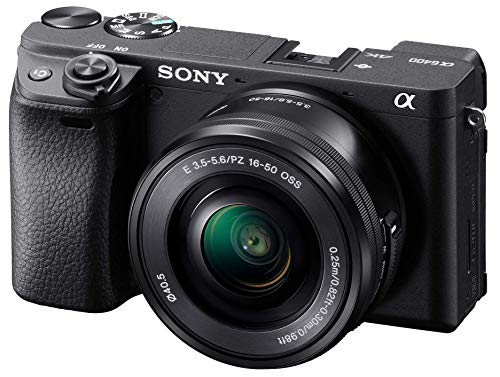
For those seeking a versatile camera that excels in both photography and videography, the Sony Alpha a6400 (ILCE-6400L/B) stands out with its impressive 4K video resolution and 25 MP still images. This mirrorless camera features a 20.1MP stacked back-illuminated sensor and a fast autofocus system with 425 phase and contrast detection points. You can shoot continuously at 11 FPS, making it great for action shots. The 3-inch tilting touchscreen makes framing shots easy, while its lightweight design (just 10.3 ounces) allows for portability. With a sturdy build and excellent image quality, it’s a fantastic choice for any photographer.
Best For: The Sony Alpha a6400 is best for photographers and videographers looking for a compact, high-performance mirrorless camera with advanced features and excellent image quality.
Pros:
- High-resolution 25 MP still images and 4K video capability for stunning visuals.
- Fast and accurate autofocus system with 425 phase and contrast detection points.
- Lightweight and portable design, making it easy to carry for on-the-go shooting.
Cons:
- Limited battery life, which may require extra batteries for extended shooting sessions.
- The kit lens (16-50mm) may not be suitable for all photography styles and could require additional lens investments.
- No in-body image stabilization, which may affect handheld shooting in low-light conditions.
Canon EOS R100 Mirrorless Camera with RF-S18-45mm Lens Kit

Looking for a user-friendly camera that’s perfect for beginner photographers? The Canon EOS R100 Mirrorless Camera with RF-S18-45mm Lens Kit is your ideal choice. With its 24.1 Megapixel CMOS sensor and DIGIC 8 image processor, it captures stunning images effortlessly. The Dual Pixel CMOS AF guarantees sharp focus, while the continuous shooting speed of 6.5 fps keeps up with fast action. Its compact design makes it lightweight, and the 3-inch LCD display simplifies navigation. You’ll appreciate the 4K video capability and optical image stabilization, making every shot crisp and clear. Plus, it’s highly rated, assuring a great investment.
Best For: Beginner photographers looking for a compact and user-friendly camera to capture high-quality images and videos.
Pros:
- High Image Quality: 24.1 Megapixel CMOS sensor and DIGIC 8 image processor for stunning photos.
- User-Friendly Interface: Compact design and 3-inch LCD display make navigation easy for newcomers.
- Versatile Shooting Options: Multiple shooting modes and 4K video capability cater to various creative needs.
Cons:
- Limited Maximum Aperture: The lens has a maximum aperture of F4.5, which may restrict low-light performance.
- Continuous Shooting Speed: At 6.5 fps, it may not be fast enough for all action photography situations.
- Weight Specification Confusion: The weight listed (2.5 grams) appears to be an error, as it is likely heavier than that, which can affect portability.
Sony Alpha 7 IV Full-Frame Mirrorless Camera with 28-70mm Lens Kit

With its impressive 33MP full-frame Exmor R back-illuminated CMOS sensor, the Sony Alpha 7 IV Full-Frame Mirrorless Camera is a standout choice for serious photographers and videographers alike. You’ll appreciate the next-generation BIONZ XR image processing engine, delivering stunning image quality. Its video capabilities are exceptional, allowing you to shoot up to 4K 60p with 10-bit 4:2:2. The advanced autofocus features, including Real-time Eye-AF for humans and animals, guarantee you’ll never miss a moment. Plus, the included 28-70mm zoom lens kit offers versatility for all your shooting needs, making it a fantastic value bundle.
Best For: The Sony Alpha 7 IV Full-Frame Mirrorless Camera is best for serious photographers and videographers seeking high-quality performance and advanced features.
Pros:
- Exceptional 33MP full-frame sensor for stunning image quality.
- Advanced video capabilities with 4K 60p recording and 10-bit 4:2:2 support.
- Versatile 28-70mm lens kit included, catering to various shooting scenarios.
Cons:
- Higher price point may be prohibitive for beginner photographers.
- The camera’s advanced features may have a steeper learning curve for new users.
- Limited battery life during extended video recording sessions.
Canon EOS R6 Mark II Mirrorless Camera (Body Only)

The Canon EOS R6 Mark II Mirrorless Camera excels for photographers seeking high-speed performance and advanced autofocus capabilities. With a full-frame 24.2-megapixel sensor and a DIGIC X image processor, it captures stunning images in various conditions. You can shoot continuously at 40 fps, perfect for action shots. The advanced autofocus detects faces, animals, and vehicles, ensuring you never miss a moment. Enjoy impressive video features, including 6K recording up to 60 fps. Its compact design and connectivity options, like built-in Wi-Fi and Bluetooth, make sharing your work effortless. This camera is a fantastic choice for serious photographers.
Best For: The Canon EOS R6 Mark II is best for serious photographers seeking high-speed performance and advanced autofocus capabilities for capturing dynamic action shots and stunning images in various conditions.
Pros:
- Exceptional high-speed continuous shooting at 40 fps for capturing fast-moving subjects.
- Advanced autofocus system with head, face, and eye detection for both people and animals.
- Impressive video capabilities with 6K recording up to 60 fps and built-in connectivity options for easy sharing.
Cons:
- Relatively high price point for those on a budget.
- Limited battery life with a maximum recording capacity of 29 minutes for video.
- Weighs 1.3 pounds, which may feel bulky for some users compared to lighter options.
Canon EOS R100 Mirrorless Camera with RF-S 18-45mm Lens

For those stepping into the world of photography, the Canon EOS R100 Mirrorless Camera with RF-S 18-45mm Lens stands out as an ideal companion. With its 24.1MP APS-C CMOS sensor and DIGIC 8 image processor, you’ll capture stunning images effortlessly. The 143-point Dual Pixel AF guarantees sharp focus, while the 6.5 fps electronic shutter allows you to shoot action-packed moments. Its versatile lens is perfect for portraits and landscapes, featuring built-in image stabilization for smooth shots. Plus, with 4K video capabilities and user-friendly auto scene modes, you’ll find it easy to explore your creativity right away.
Best For: The Canon EOS R100 Mirrorless Camera is best for beginners and first-time DSLR users looking to explore photography and videography with ease.
Pros:
- Excellent image quality with a 24.1MP APS-C CMOS sensor and DIGIC 8 processor.
- User-friendly features, including auto scene modes and easy menu navigation.
- Versatile RF-S 18-45mm lens with built-in image stabilization for smooth shooting.
Cons:
- Limited 4K video capabilities with a crop factor.
- Electronic shutter may not be ideal for all types of photography due to potential rolling shutter effect.
- May lack advanced features that more experienced photographers seek.
Canon EOS RP Full-Frame Mirrorless Camera with RF24-105mm Lens Kit

Travel enthusiasts and vloggers will find the Canon EOS RP Full-Frame Mirrorless Camera with RF24-105mm Lens Kit an excellent choice thanks to its compact and lightweight design. With a versatile zoom range of 24-105mm, you can effortlessly capture stunning landscapes and close-up details. The optical image stabilization guarantees your shots are sharp, even in challenging conditions. Featuring a 26.2 MP full-frame sensor and 4K UHD video capability, you’ll enjoy high-quality results. Plus, with Bluetooth and Wi-Fi connectivity, sharing your work is a breeze. Rated 4.6 out of 5 stars, this camera is a fantastic tool for creative expression.
Best For: Travel enthusiasts and vloggers looking for a compact and versatile camera to capture high-quality images and videos on the go.
Pros:
- Compact and lightweight design, making it easy to carry for travel.
- Versatile zoom range of 24-105mm allows for a wide variety of shooting scenarios.
- High-quality 26.2 MP full-frame sensor and 4K UHD video capability for stunning results.
Cons:
- Continuous shooting speed of 5 fps may not be ideal for fast-moving subjects.
- Single memory card slot limits storage options during extended shoots.
- Aperture range of F4-7.1 may not provide enough light in low-light conditions for some users.
Nikon Z50 II Compact Mirrorless Camera with Two Lenses

Looking for a compact mirrorless camera that delivers impressive image quality without overwhelming complexity? The Nikon Z50 II is your answer. With a 20.9-megapixel DX format sensor, you’ll capture stunning photos and 4K videos effortlessly. Its included NIKKOR Z DX 16-50mm and 50-250mm lenses offer versatile shooting options, perfect for everything from landscapes to wildlife. Weighing just 2.4 pounds, it’s easy to carry around. Plus, built-in Bluetooth and Wi-Fi allow for seamless sharing with your devices. With a 4.6-star rating, the Z50 II is a reliable choice for both new and seasoned photographers alike.
Best For: The Nikon Z50 II is best for photographers seeking a compact, user-friendly camera that offers high-quality images and versatile shooting options.
Pros:
- Outstanding image quality with a 20.9-megapixel sensor and 4K video capabilities.
- Lightweight design at just 2.4 pounds, making it easy to carry for on-the-go shooting.
- Versatile lens options included, allowing for a wide range of photography from landscapes to wildlife.
Cons:
- Limited continuous shooting speed at 5 FPS, which may not satisfy fast-action photography needs.
- Maximum aperture of f/4.5-6.3 may limit performance in low-light situations.
- No external microphone input, which can be a drawback for videographers seeking improved audio quality.
Sony a7 III Full-Frame Mirrorless Camera with 28-70mm Lens

The Sony a7 III Full-Frame Mirrorless Camera is an ideal choice for photography enthusiasts who crave high-quality images without the bulk of traditional DSLRs. With its 24.2MP back-illuminated sensor and impressive 15-stop dynamic range, you’ll capture stunning details in any lighting. The camera’s 693 phase-detection autofocus guarantees sharp images, while continuous shooting at 10fps lets you catch fast action. The included 28-70mm lens offers versatility for various scenes. Plus, with 4K UHD video capabilities and seamless connectivity options, you’ll be ready to share your creativity instantly. It’s a reliable companion for both budding photographers and seasoned pros alike.
Best For: Photography enthusiasts and professionals looking for a lightweight, high-performance mirrorless camera that delivers exceptional image quality.
Pros:
- Versatile Lens: The included 28-70mm lens covers a wide range of shooting scenarios, from landscapes to portraits.
- Fast Autofocus: With 693 phase-detection points, the camera ensures quick and accurate focusing for sharp images.
- 4K Video Capability: The ability to shoot 4K UHD video makes it suitable for both photography and videography projects.
Cons:
- Weight: At 1.8 pounds, it may still feel heavy for some users compared to smaller mirrorless options.
- Limited Lens Options: The kit lens may not meet the needs of advanced photographers seeking specific focal lengths or apertures.
- Price Point: As a high-end model, it may be out of budget for casual photographers.
Canon EOS R100 Double Zoom Lens Kit, Black
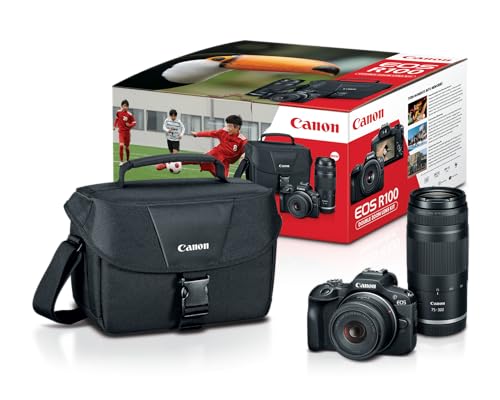
For aspiring photographers and enthusiasts seeking versatility, the Canon EOS R100 Double Zoom Lens Kit stands out as an excellent choice. This compact mirrorless camera features a 24.1MP APS-C sensor and the DIGIC 8 image processor, ensuring stunning image quality. You’ll appreciate the included RF-S 18-45mm standard zoom lens for everyday shots and the RF75-300mm telephoto lens for capturing distant subjects. With digital image stabilization and 4K video capabilities, you can create professional-quality content easily. Plus, the included shoulder bag makes transport a breeze. With a solid 4.6-star rating, it’s a reliable option to elevate your photography game.
Best For: Aspiring photographers and enthusiasts seeking a versatile and compact camera system for a range of photography needs.
Pros:
- High-quality 24.1MP APS-C sensor for stunning image resolution.
- Includes two versatile lenses for both close-range and distant photography.
- Compact design with a shoulder bag for easy transport and protection.
Cons:
- Maximum aperture of f/5.6 may limit low-light performance.
- Limited advanced features compared to higher-end mirrorless cameras.
- Relatively small zoom range on the standard lens may not suit all shooting scenarios.
Factors to Consider When Choosing a Mirrorless Camera for Photography
When choosing a mirrorless camera for photography, you’ll want to take into account several key factors. Sensor size can impact image quality, while autofocus performance affects how quickly you can capture that perfect shot. Don’t forget to evaluate lens compatibility, video capabilities, and battery life to guarantee the camera meets your needs.
Sensor Size Importance
Choosing the right sensor size for your mirrorless camera can make a significant difference in your photography experience. Larger sensors, like full-frame (35mm), capture more light, offering better low-light performance and dynamic range. This means you’ll enjoy higher resolutions and more detail in your images, with full-frame cameras reaching up to 33MP compared to the typical 24MP of APS-C sensors. The wider field of view and greater depth of field control on full-frame sensors can enhance your creative options. However, keep in mind that larger sensors also mean bulkier and heavier cameras, which might affect portability. Additionally, lens selection is essential, as full-frame cameras need specific lenses to avoid vignetting, while APS-C models have more flexibility.
Autofocus System Performance
Autofocus system performance plays a pivotal role in your photography, especially if you often shoot fast-moving subjects. A camera with a higher number of autofocus points, particularly those utilizing phase detection and contrast detection, can greatly enhance your tracking capabilities, ensuring sharp images in varying lighting conditions. Look for advanced features like eye detection, which can be a game-changer for portrait and wildlife photography by keeping your subject’s eyes in sharp focus. Continuous autofocus (AF-C) modes are essential for effectively tracking moving subjects, allowing you to maintain focus during action shots. Remember, the effectiveness of the autofocus system also depends on factors like sensor technology and the camera’s image processor, so consider these when making your choice.
Lens Compatibility Options
Selecting a mirrorless camera requires careful consideration of lens compatibility options, as the variety of available lenses can greatly shape your photography experience. First, pay attention to the lens mount options, since different brands use unique mounts that dictate which lenses you can use. Look for a camera system that offers a diverse range of lenses, including primes, zooms, and specialty options to match your style. Also, check if the system supports third-party manufacturers, as they often provide more affordable alternatives. Consider the maximum aperture of available lenses, impacting low-light performance and depth of field. Finally, see if the camera supports adapters for older lenses, expanding your creative possibilities and enhancing your photography journey.
Video Capabilities Consideration
As you explore mirrorless cameras, don’t overlook the importance of video capabilities, especially if you plan to incorporate video into your photography. Pay attention to video resolution; options like 4K recording at various frame rates are essential for high-quality production. Look for features like high-frame rate recording for slow-motion capture, which can enhance your creative projects. Advanced functionalities, such as 10-bit 4:2:2 recording, offer greater color depth and flexibility in post-production. Make sure the camera has effective heat management for extended recording times, allowing for hours of continuous video without overheating. Finally, evaluate connectivity options, including HDMI output and wireless capabilities, to facilitate easy sharing and streaming of your video content.
Battery Life Evaluation
When you’re considering a mirrorless camera, battery life plays a significant role in your shooting experience, especially if you’re planning to capture both photos and videos. Start by evaluating the number of shots you can take per charge, as this varies across models. If you enjoy continuous shooting modes, be aware that battery consumption increases during high-speed sessions. The type of battery matters too; larger capacity batteries often provide longer shooting times. Additionally, power-hungry features like electronic viewfinders and high-resolution screens can drain your battery faster. Finally, don’t forget to check video recording times, since they typically consume more power than still photography. Understanding these aspects will help you choose a camera that meets your needs.
Weight and Portability
Many photographers find that weight and portability are essential factors when choosing a mirrorless camera. The weight of these cameras can vary considerably, from as light as 10.3 ounces to heavier options around 1.8 pounds. If you prioritize portability, compact designs make handling and transport easier, especially during long outings or travel. However, remember that lighter models might sacrifice some advanced functionalities compared to their heavier counterparts. Many mirrorless cameras feature ergonomic grips and lightweight materials, enhancing usability without bulk—perfect for street or travel photography. Also, consider lens weight; pairing a lightweight camera body with bulky lenses can affect overall handling and ease of use, so choose wisely for your photography needs.
Image Stabilization Features
Choosing a mirrorless camera with effective image stabilization features can greatly enhance your photography experience, especially in challenging shooting conditions. Image stabilization (IS) reduces blurriness caused by camera shake, which is vital for handheld shooting or low-light environments. You’ll find two main types: Optical Image Stabilization (OIS) built into the lens, and Sensor-Shift Image Stabilization, which adjusts the sensor position to compensate for movement. Many modern cameras offer advanced IS systems providing stabilization up to 5 stops or more, markedly improving image clarity. If you plan to shoot videos, look for electronic stabilization options that enhance footage smoothness during motion shots. Pay attention to the specific IS technology, as it can impact both your stills and videography performance.
Connectivity and Sharing Options
As you explore the world of mirrorless cameras, connectivity and sharing options play an essential role in enhancing your photography experience. Many modern models come with built-in Wi-Fi and Bluetooth, making it easy to pair with your smart devices for quick photo and video transfers. Some even support mobile apps, allowing you to control your camera remotely from your smartphone or tablet. Look for USB ports, especially USB Type-C, for fast file transfers and charging. HDMI outputs let you connect to external monitors for better video recording visibility. Plus, cloud services integration allows you to back up and share images directly from your camera to online storage or social media, making it simpler to showcase your work.