Long-exposure astrophotography demands consistent timing, minimal camera shake, and dependable control throughout the night. The right intervalometer can automate exposures, simplify time-lapse sequences, and help you work without repeatedly touching the camera.
This roundup compares wired and wireless options for Sony, Canon, Nikon, Panasonic, and other compatible cameras, with attention to connection type, rechargeable power, LCD controls, and interval flexibility.
Best 10 Camera Intervalometers for Astrophotography Picks for 2026
Professional Astro Control
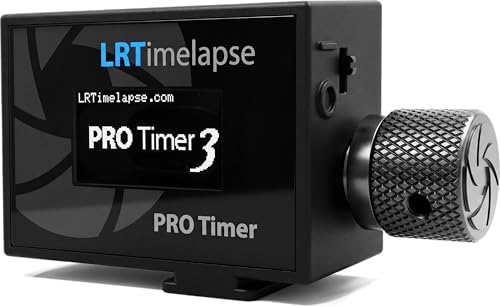
- 0.1-second interval adjustments and interval ramping
- Glove-friendly OLED control with rechargeable battery
- Supports two cameras; release cable sold separately
Best For: Advanced astrophotography and time-lapse workflows
Sony Wired Timing Pick
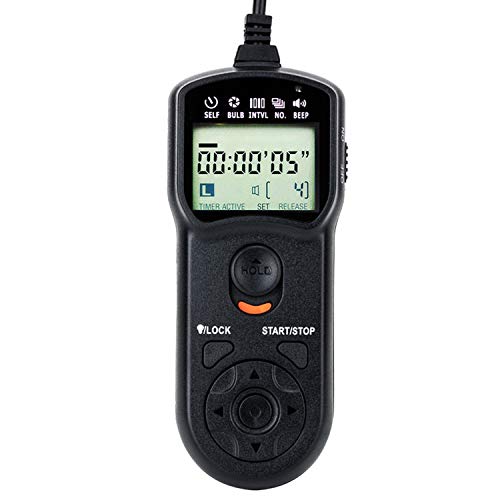
- Interval, long-exposure, and exposure-count modes
- Timer range from 1 second to 99 hours
- Backlit LCD and 90cm wired connection
Best For: Sony users shooting long exposures and time-lapses
Wireless Sony Flexibility

- Wireless range up to 60 meters
- Interval, bulb, long-exposure, and delay modes
- Supports bracketed long-exposure sequences
Best For: Remote Sony and compatible camera setups
Canon Wired Essential
- Interval, self-timer, and long-exposure modes
- Timer range from 1 second to 99 hours
- Compact wired design with backlit display
Best For: Canon tripod-based astrophotography and time-lapse
Best Wireless Nikon Pick

- Wireless range up to 60 meters
- One-second timing with bulb and interval modes
- Rechargeable USB-C power with LCD
Best For: Nikon astrophotography and star-trail sessions
Best Simple Wired Option
- Timing from one second to nearly 100 hours
- Backlit LCD for dark conditions
- Wired 90cm remote with long-exposure mode
Best For: Panasonic users wanting simple wired control
Best Wireless Canon Pick
Canon-Compatible Rechargeable Timer

- Wireless range up to 60 meters
- Programmable bulb, interval, and shot-count modes
- Rechargeable USB-C transmitter with LCD
Best For: Canon long-exposure and astrophotography setups
Reliable Nikon Control
- Wired Nikon remote with LCD backlight
- Supports long exposures and interval shooting
- Timer range from 1 second to nearly 100 hours
Best For: Nikon photographers shooting star trails and time-lapses
Versatile Sony Timer
AODELAN Rechargeable Intervalometer

- USB-C rechargeable wired remote
- Supports bulb, interval, delay, and shot-count modes
- LCD shows settings and battery level
Best For: Sony users capturing star trails and long exposures
Best Simple Pick
AODELAN WTR-2 II Intervalometer

- Wireless range up to 60 meters
- Supports wired and wireless shutter control
- Rechargeable LCD timer with one-second precision
Best For: Sony astrophotographers wanting remote star-trail control
Professional Astro Control – PRO Timer 3.5
LRTimelapse PRO Timer 3.5 Camera Interval Timer for Time-Lapse and Astrophotography
Check Price On AmazonFor photographers seeking advanced camera intervalometers for astrophotography, the LRT PRO 3.5 offers precise, highly configurable control. It supports 0.1-second interval adjustments, interval ramping, time-controlled shooting, and a dedicated mirrorless-camera setting. Its rechargeable battery, glove-friendly rotary control, and high-contrast OLED are practical for demanding outdoor sessions.
Best For: Advanced astrophotographers and time-lapse shooters who want precise interval control and interval ramping.
Pros:
- Intervals adjust in 0.1-second steps, with ramping for smoother transitions.
- Operates two cameras at once and removes unwanted autofocus-related delays.
- Rechargeable USB Li-Ion battery, readable OLED display, and glove-friendly controls.
Cons:
- The required camera release cable is not included.
- Its advanced feature set may be more than casual users need.
The PRO Timer 3.5 is a strong choice when timing precision and flexible programming matter most. Budget separately for the compatible release cable before heading into the field.
Sony Wired Timing Pick – JJC TM-F2 Intervalometer
The JJC TM-F2 is a compact wired option for Sony users comparing camera intervalometers for astrophotography. It combines self-timer, interval, long-exposure, and exposure-count settings, with timing from 1 second to 99 hours, 59 minutes, and 59 seconds. Its backlit LCD is useful when setting up in dark conditions.
Best For: Sony camera owners who want an affordable wired controller for long exposures and time-lapse sequences.
Pros:
- Supports self-timer, interval, long-exposure, and exposure-count settings.
- Wide timer range from 1 second to nearly 100 hours.
- Backlit LCD, lock function, and two-stage release button help with night operation.
Cons:
- Compatibility is limited to supported Sony models.
- The 90cm wired connection offers less placement freedom than a wireless system.
This is a practical, straightforward choice for Sony astrophotography setups that do not require wireless control. Confirm your exact camera model before purchasing.
Wireless Sony Flexibility – AODELAN WTR-2
The AODELAN WTR-2 adds wireless freedom to a camera intervalometer for astrophotography, with a stated range of up to 60 meters. Its timer includes delay, long-exposure, interval, exposure-count, and bracketed long-exposure functions, while the receiver also supports single, continuous, bulb, and two-second-delay shooting modes.
Best For: Sony and compatible Konica Minolta users who need remote positioning and multiple exposure-control options.
Pros:
- 2.4GHz wireless transmission reaches up to 60 meters.
- Includes delay, long-exposure, interval, and exposure-count timers.
- Bracketed Long Exposure mode can automate changing exposure times for low-light HDR-style captures.
Cons:
- Requires two AAA batteries.
- Compatibility must be checked carefully across the extensive supported-camera list.
For setups where you want to trigger the camera from a distance, the WTR-2 is more flexible than a basic wired timer. Its broad feature set is especially useful for experimental low-light and bracketed sequences.
Canon Wired Essential – JJC TM-C Intervalometer
The JJC TM-C is a simple wired choice for Canon owners shopping for camera intervalometers for astrophotography. It offers self-timer, interval, long-exposure, and exposure-count functions, with settings from 1 second to 99 hours, 59 minutes, and 59 seconds. The backlit display helps when programming the controller after dark.
Best For: Canon photographers who need a compact wired timer for star trails, long exposures, and time-lapse work.
Pros:
- Provides interval, self-timer, long-exposure, and exposure-count settings.
- Wide timing range supports short delays through extended exposures.
- Compact 90cm wired remote with a backlit display and ergonomic design.
Cons:
- It is a wired controller with a 90cm cable.
- Camera compatibility varies, so the exact Canon model should be verified.
The TM-C covers the core timing features most Canon users need without adding wireless complexity. It is a sensible pick for stationary tripod-based astrophotography and time-lapse sessions.
Best Wireless Nikon Pick – Rechargeable Interval Remote
For Nikon photographers comparing camera intervalometers for astrophotography, this AODELAN remote combines wireless operation, a programmable interval timer, and rechargeable power. It supports timing down to one second, bulb exposure, continuous shooting, and multiple-shot settings for long-exposure work and star trails.
Best For: Nikon users who want wireless control for astrophotography, star trails, time-lapse, and other long-exposure sessions.
Pros:
- 2.4GHz wireless range reaches up to 60 meters, with wired operation also available.
- Supports delay, long exposure, interval, shot-count, single-shot, continuous, bulb, and two-second delay modes.
- Rechargeable battery, USB-C charging, and LCD display eliminate disposable batteries and simplify setup.
Cons:
- Designed for one supported camera device at a time.
- Its extensive Nikon compatibility list still requires checking your exact camera and cable.
This is a versatile choice for Nikon astrophotography setups where distance from the camera and reduced camera shake matter. The LCD and rechargeable design are especially useful during extended outdoor shoots.
Best Simple Wired Option – JJC TM-D Intervalometer
The JJC TM-D is a compact wired option for photographers seeking camera intervalometers for astrophotography without wireless complexity. It offers self-timer, interval, long-exposure, and exposure-count functions, with settings from one second to 99 hours, 59 minutes, and 59 seconds.
Best For: Panasonic camera owners who prefer a straightforward wired controller for long exposures and time-lapse photography.
Pros:
- Supports self-timer, interval timer, long-exposure timer, and exposure-count settings.
- Very broad timing range, from one second to nearly 100 hours.
- Backlit LCD helps with viewing settings in the dark, and the 90cm cable supports remote operation.
Cons:
- Wired control limits the operating distance to the 90cm cable.
- Uses two AAA alkaline batteries rather than a rechargeable internal battery.
- Compatibility is centered on listed Panasonic models, so the camera connection should be verified.
Choose this model when dependable wired control and long timing flexibility are more important than wireless range. Its backlight and long-exposure timer suit dark-sky sessions, while the compact design is easy to pack.
Best Wireless Canon Pick – Canon-Compatible Rechargeable Timer
This AODELAN remote is a strong option for Canon photographers evaluating camera intervalometers for astrophotography. Its programmable timer supports one-second precision, bulb exposure, interval shooting, shot counts, and wireless or wired control, making it suitable for star trails, night photography, and time-lapse work.
Best For: Canon users who need wireless long-exposure and interval control across a broad range of compatible camera models.
Pros:
- 2.4GHz wireless control extends up to 60 meters and can also work as a wired shutter release.
- Offers delay, long, interval, shot-count, single, continuous, bulb, and two-second delay modes.
- Rechargeable transmitter with USB-C charging and an LCD showing battery level and timer settings.
Cons:
- Compatibility depends on the appropriate included connection cable and exact camera model.
- The supplied package description is abbreviated, so buyers should confirm included accessories before ordering.
For Canon astrophotography, this model balances flexible programming with the convenience of wireless positioning. It is particularly appealing for star trails and long exposures where touching the camera could introduce shake.
Reliable Nikon Control – JJC TM-F2 Intervalometer
For Nikon users looking at camera intervalometers for astrophotography, the JJC TM-F2 provides wired control for timed exposures, interval shooting, and time-lapse work. Its timer can be programmed from 1 second to 99 hours, 59 minutes, and 59 seconds, while the backlit LCD helps with nighttime adjustments.
Best For: Nikon photographers who want a compact wired intervalometer for long exposures, star trails, and time-lapse sequences.
Pros:
- Supports self-timer, interval timer, long-exposure timer, and exposure-count settings.
- Wide timing range with one-second increments.
- Backlit display is useful for operating the controller in the dark.
- Compact 76-gram design with a 90-centimeter cable.
Cons:
- Wired operation limits placement to the 0.9-meter cable range.
- Uses two AAA alkaline batteries rather than a rechargeable battery.
- Designed for compatible Nikon cameras only.
The JJC TM-F2 is a straightforward choice for Nikon owners who prioritize dependable timer functions and simple controls over wireless operation. Confirm camera compatibility before buying.
Versatile Sony Timer – AODELAN Rechargeable Intervalometer
The AODELAN rechargeable remote is a flexible option among camera intervalometers for astrophotography, offering wired control for Sony cameras and precise settings for bulb exposures, intervals, delays, and shot counts. Its LCD displays the timer settings and battery level, and USB-C charging avoids disposable batteries.
Best For: Sony photographers who need a rechargeable wired intervalometer for star trails, night-sky work, long exposures, and time-lapse projects.
Pros:
- Supports delay, long exposure, interval, and exposure-count programming.
- Timing can be set in one-second increments from 0 seconds to 99 hours, 59 minutes, and 59 seconds.
- Rechargeable battery charges through USB-C and offers up to 60 days of standby time.
- Compatible with a broad range of Sony cameras and includes two connecting cables.
Cons:
- Wired design does not provide the listed 60-meter wireless range.
- Compatibility depends on using the correct included connection cable for the camera.
- Requires periodic USB-C charging.
With its broad Sony compatibility, clear display, and rechargeable power system, this AODELAN model is a practical wired controller for extended astrophotography sessions. Verify your exact Sony model and cable connection before ordering.
Best Simple Pick – AODELAN WTR-2 II Intervalometer
For Sony photographers comparing camera intervalometers for astrophotography, the AODELAN WTR-2 II adds wireless convenience to programmable timer control. It supports bulb exposure, interval shooting, delayed starts, and shot counts, while also functioning as a wired shutter release when needed.
Best For: Sony photographers who want wireless freedom for night photography, star trails, long exposures, and time-lapse work.
Pros:
- 2.4GHz wireless operation reaches up to 60 meters.
- Also works as a wired shutter release for a direct connection.
- Offers one-second timing precision with bulb, continuous, single-shot, and two-second-delay modes.
- USB-C rechargeable transmitter and receiver system includes an LCD display.
Cons:
- Wireless setup requires both a transmitter and receiver.
- Standby ratings differ between the transmitter and receiver, at up to 15 and 8 days respectively.
- Designed for compatible Sony cameras only.
The WTR-2 II is the strongest fit here for photographers who want to position themselves away from the camera while retaining programmable exposure control. Its wired fallback adds useful flexibility for situations where wireless operation is unnecessary.
How We Picked the Best Camera Intervalometers for Astrophotography
We focused on intervalometers that support the core controls needed for night-sky photography: delayed starts, exposure duration, interval spacing, exposure counts, and repeat or time-lapse operation. We also considered camera compatibility, trigger connection, wireless convenience, power design, display readability, and ease of setup in dark conditions.
Compatibility comes first. A remote with the wrong connector or an incomplete camera list may not work, even if its timing features look impressive. The selections include dedicated Sony, Canon, Nikon, and Panasonic models alongside more broadly marketed wireless remotes.
Quick Comparison
| Type | Best for | Main advantage | Watch for |
|---|---|---|---|
| Wired intervalometer | Stable fixed-position shooting | Simple operation and dependable triggering | Cable length and camera port compatibility |
| Wireless intervalometer | Remote control and reduced camera contact | Convenience and fewer disturbances | Battery life, range, and receiver setup |
| Rechargeable model | Frequent outdoor sessions | Less reliance on disposable batteries | Charging before a long night |
| LCD timer remote | Detailed exposure programming | Clearer control of delays and intervals | Screen visibility and button layout |
Key Buying Factors for Camera Intervalometers for Astrophotography
Camera and Connector Compatibility
Check the exact camera model and remote socket before buying. Camera families can use different connectors, and compatibility claims may vary between regional versions. For mirrorless and DSLR bodies, confirm whether the remote supports your camera’s shutter, bulb, and interval functions.
Timing Controls
Look for independent settings for delay, exposure length, interval, and number of shots. For star trails or deep-sky sequences, the interval should allow enough time for the exposure to finish and the camera to write each file. Bulb support is especially useful when exposures exceed the camera’s standard shutter range.
Wired Versus Wireless Operation
A wired unit is often the simplest choice for a tripod-mounted camera and avoids wireless pairing or receiver batteries. Wireless models are useful when you want to step away from the setup, reduce cable clutter, or avoid touching the camera during a critical exposure. Verify the stated range and remember that walls, terrain, and weather can reduce performance.
Power, Screen, and Outdoor Usability
Rechargeable models can be convenient for regular use, while replaceable batteries may be easier to maintain on extended trips. A backlit or readable LCD helps when programming in darkness, but illuminated screens can affect night vision. Favor tactile controls and a secure cable connection for cold-weather sessions.
Who Should Buy Which Camera Intervalometers for Astrophotography?
- Choose a wired timer if you want reliable, straightforward control for a stationary tripod setup.
- Choose a wireless model if remote triggering, reduced camera vibration, or flexible positioning matters most.
- Choose a rechargeable remote if you shoot frequently and prefer built-in power over carrying spare cells.
- Choose an LCD-equipped timer if you regularly program long sequences and want settings visible at a glance.
- Choose a dedicated brand-compatible model when you want the clearest fit for a specific Sony, Canon, Nikon, or Panasonic camera.
Before ordering, compare the listed camera models, connector type, operating range, and timer limits with your planned astrophotography workflow. The best intervalometer is the one that matches your camera exactly and can run the sequence without unnecessary adjustments.