Camera intervalometers for mirrorless cameras make it easier to capture consistent timelapses, extended exposures, and hands-off self-portraits without touching the camera. The right remote can also reduce camera shake and simplify repeatable shooting setups.
This roundup compares 10 wired and wireless timer remotes across Canon, Sony, and Nikon compatibility lists. Check your exact camera model and connector before buying, then prioritize the timing controls and operating range that match your shooting style.
Best 10 Camera Intervalometers for Mirrorless Cameras Picks for 2026
Best Multi-Camera Wireless Pick

- Wireless control up to 300 feet
- Interval and long-exposure timers
- 30 channels for interference reduction
Best For: Long-range shooting across compatible Canon, Fujifilm, Olympus, and Pentax cameras
Best Sony Wired Option
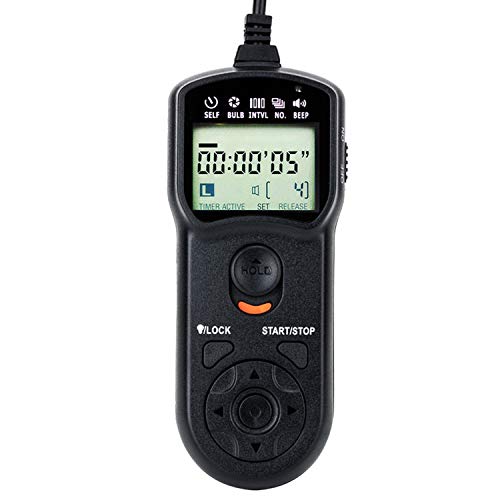
- Supports Sony cameras including A7 and A6000 models
- Backlit LCD timer display
- Interval and long-exposure modes
Best For: Sony photographers wanting a compact wired time-lapse controller
Best Wireless Timer Versatility
AODELAN Wireless Shutter Remote

- Wireless range up to 60 meters
- 0.1-second timing adjustment
- Multiple timer and shutter modes
Best For: Multi-brand users needing wireless interval and long-exposure control
Sony Wireless Intervalometer

- Wireless range up to 196 feet
- Interval, bulb, delay, and bracketing timers
- LCD display with backlight
Best For: Sony mirrorless timelapse and long-exposure shooting
Canon Wired Intervalometer
- Timer range from 1 second to 99 hours
- Interval, long-exposure, and self-timer modes
- Backlit LCD and 90 cm cable
Best For: Canon users wanting simple wired timelapse control
Nikon Wireless Intervalometer

- Wireless range up to 60 metres
- Interval, bulb, long-exposure, and bracketing modes
- Programmable or unlimited frame shooting
Best For: Nikon timelapse, HDR, and long-exposure photography
Nikon Wired Precision
- Timed exposures from 1 second to nearly 100 hours
- Backlit LCD with interval and exposure-count modes
- Compact wired controller for supported Nikon cameras
Best For: Nikon photographers needing wired control for time-lapse and long exposures
Canon Multi-Mode Control

- Supports up to 399 shots or unlimited shooting
- Long-exposure timing up to 99 hours, 59 minutes, 59 seconds
- Includes clip holder and lockable buttons
Best For: Canon users planning time-lapse, macro, landscape, or star photography
Sony Wireless Freedom
Rechargeable Sony Timer Remote

- Wireless range of approximately 60 meters
- USB-C rechargeable battery for extended sessions
- Supports bulb, delay, interval, and count settings
Best For: Sony shooters needing wireless control for time-lapse and long-exposure work
Best Multi-Camera Wireless Pick – Pixel TW-283 E3
For shoppers comparing camera intervalometers for mirrorless cameras, the Pixel TW-283 E3 stands out when wireless control and broad camera compatibility matter. It supports interval, long-exposure, delay, and repeat timer functions, with settings adjustable in one-second increments up to 99 hours, 59 minutes, and 59 seconds.
Best For: Mirrorless-camera owners who want long-range wireless interval shooting across compatible Canon, Fujifilm, Olympus, and Pentax models.
Pros:
- Wireless range is listed at more than 80 meters, with a maximum range of 300 feet.
- Supports interval, long-exposure, delay, and repeat timer schedules.
- Offers 30 channels to help reduce interference from similar devices.
- Supports up to 99 shots and 99 repeat times.
Cons:
- Compatibility depends on the correct camera connection and remote interface.
- Requires two AAA batteries.
- Its extensive camera list should be checked carefully before ordering.
The TW-283 E3 is a versatile option for time-lapse, sunrise, sunset, and other unattended sequences. Its wireless design is especially useful when a 90-centimeter wired connection would be limiting.
Best Sony Wired Option – JJC TM-F2 Intervalometer
The JJC TM-F2 is a practical wired choice for Sony users seeking camera intervalometers for mirrorless cameras. It combines self-timer, interval, long-exposure, and exposure-count settings in a compact controller with a backlit LCD display.
Best For: Sony mirrorless photographers who prefer a straightforward wired timer for time-lapse work and shake-free shutter release.
Pros:
- Timer settings span from one second to 99 hours, 59 minutes, and 59 seconds.
- Includes interval, self-timer, long-exposure, and exposure-count functions.
- Backlit LCD helps with viewing settings in dark conditions.
- The 90-centimeter cable supports remote operation without relying on wireless range.
Cons:
- It is limited by its 90-centimeter wired cable.
- Supports one compatible device at a time.
- Requires two AAA batteries.
With its focused Sony compatibility and simple wired operation, the TM-F2 is well suited to photographers who want dependable interval control without adding a wireless transmitter to the setup.
Best Wireless Timer Versatility – AODELAN Wireless Shutter Remote
The AODELAN wireless remote is a flexible option for camera intervalometers for mirrorless cameras, especially for compatible Canon, Fujifilm, and Olympus bodies. Its LCD display provides access to delay, long-exposure, interval, and exposure-count settings, while timing can be adjusted to 0.1-second accuracy.
Best For: Photographers who want wireless timer control, multiple shutter modes, and support for several compatible camera brands.
Pros:
- Offers single, continuous, bulb, and two-second-delay shutter modes.
- Provides delay, long-exposure, interval, and exposure-count timer settings.
- Wireless range is listed at up to 60 meters.
- Can work with different camera brands by changing the connecting cable.
Cons:
- Compatibility requires the appropriate camera connecting cable.
- Requires four AAA batteries.
- The supplied details identify this listing as the Canon version, so model matching is important.
The AODELAN is appealing when you want more than a basic remote release. Its combination of wireless operation, bulb control, and fine timing makes it useful for time-lapse and long-exposure setups, provided the correct cable and camera version are selected.
Best Nikon Wired Option – JJC TM-MN Intervalometer
The JJC TM-MN is a compact wired timer for Nikon users comparing camera intervalometers for mirrorless cameras. It provides interval, self-timer, long-exposure, and exposure-count functions, along with a backlit LCD for easier setup in low light.
Best For: Nikon mirrorless and DSLR photographers who want a simple wired controller for time-lapse and long-exposure photography.
Pros:
- Works with listed Nikon models including Z5, Z6, Z7, and several D-series cameras.
- Timer range extends from one second to 99 hours, 59 minutes, and 59 seconds.
- Includes interval, self-timer, long-exposure, and exposure-count settings.
- The 90-centimeter cable enables remote shooting without camera shake.
Cons:
- Wired operation limits the controller to its 90-centimeter cable length.
- Supports one compatible device at a time.
- Requires two AAA batteries.
For Nikon owners who do not need wireless range, the TM-MN offers the core timer functions needed for scheduled sequences and long exposures in a small, easy-to-carry controller.
Sony Wireless Intervalometer – Long-Range Timelapse Remote
For photographers comparing camera intervalometers for mirrorless cameras, the AODELAN WTR-2 combines wireless triggering with a wired option for compatible Sony models. Its timer controls cover interval shooting, long exposures, delays, exposure counts, and auto bracketing.
Best For: Sony mirrorless users who want flexible wireless control for timelapse, bulb exposures, and low-shake shooting from up to 196 feet away.
Pros:
- Offers wireless and wired shutter-release operation.
- Supports delay, long-exposure, interval, exposure-count, and auto-bracketing timers.
- LCD display with backlight is useful in bright or low-light conditions.
- Supports a wide range of Sony cameras, including many Alpha, RX, and ZV models.
Cons:
- Compatibility is limited to supported Sony models and the specified RM-SPR1-style cable connection.
- Requires four AAA batteries.
With its long wireless range and broad timer selection, this is a practical choice for Sony shooters who need more than a basic remote release. Verify your exact camera model before purchasing.
Canon Wired Intervalometer – Compact Timer Remote
The JJC TM-F2 is a compact wired option for photographers seeking camera intervalometers for mirrorless cameras and compatible Canon bodies. It provides self-timer, interval, long-exposure, and exposure-count controls, with settings ranging from one second to 99 hours, 59 minutes, and 59 seconds.
Best For: Canon users who prefer a simple wired intervalometer for timelapse work, long exposures, and shake-free triggering.
Pros:
- Supports self-timer, interval, long-exposure, and exposure-count settings.
- Offers a broad programmable time range from one second to nearly 100 hours.
- Backlit LCD improves visibility in dark conditions.
- Compact 90 cm wired design weighs approximately 76 g.
Cons:
- Wired operation limits working distance to the 90 cm cable length.
- Requires two AAA alkaline batteries.
- Compatibility depends on the specific Canon camera and connector.
This remote favors straightforward, dependable wired operation over wireless convenience. It is a sensible fit for a tripod-based Canon setup when the camera remains close to the photographer.
Nikon Wireless Intervalometer – Multi-Mode Timer Release
The AODELAN WTR-2-NI2 gives Nikon photographers a wireless option when comparing camera intervalometers for mirrorless cameras. It combines single, continuous, bulb, and delayed shutter modes with interval, long-exposure, frame-count, and timed bracketing functions.
Best For: Nikon users shooting timelapses, HDR sequences, bulb exposures, or remote wildlife and landscape images from up to 60 metres away.
Pros:
- Wireless triggering works at distances up to 60 metres.
- Provides four shutter-release modes and five timer-control settings.
- Supports programmable frame counts from 1 to 199 and unlimited shots in timer mode.
- Backlit LCD is easier to read in low light.
Cons:
- Requires four AAA alkaline batteries.
- Nikon D3400 is specifically not supported.
- Compatibility varies by camera and listed connection type, so model checking is important.
Its combination of wireless range and advanced timing options makes it more versatile than a basic shutter remote. It is especially well suited to Nikon photographers planning extended or programmed shooting sequences.
Nikon Wired Precision – JJC TM-F2 Intervalometer
For photographers seeking camera intervalometers for mirrorless cameras, the JJC TM-F2 provides wired control for supported Nikon bodies, helping reduce camera shake during timed exposures and time-lapse sessions. Its timer covers settings from 1 second to 99 hours, 59 minutes, and 59 seconds.
Best For: Nikon users who want a compact wired intervalometer for time-lapse photography, long exposures, and hands-free shutter control.
Pros:
- Supports self-timer, interval timer, long-exposure timer, and exposure-count settings.
- Offers timing adjustments from 1 second to nearly 100 hours.
- Backlit LCD supports operation in dark conditions.
- Compact 90 cm wired design and two-AAA battery power are practical for travel.
Cons:
- Wired operation limits the controller’s range to about 0.9 meters.
- Requires two AAA alkaline batteries.
- Compatibility is focused on supported Nikon cameras.
This is a straightforward choice for Nikon photographers who prioritize dependable timed shooting over wireless freedom. Confirm your camera’s compatibility before ordering.
Canon Multi-Mode Control – JJC RS-60E3 Replacement
This JJC replacement is a practical option among camera intervalometers for mirrorless cameras when you need wired timing control for compatible Canon bodies. It combines self-timer, long-exposure, interval, and shot-count functions in a compact controller with a clip holder.
Best For: Canon photographers capturing time-lapses, landscapes, starry skies, macro subjects, or group photos with supported cameras.
Pros:
- Supports exposures up to 99 hours, 59 minutes, and 59 seconds.
- Allows up to 399 shots or unlimited shooting.
- Includes a clip holder and backlit display for convenient operation.
- Lockable buttons help prevent accidental interruption of a timer schedule.
Cons:
- Its 90 cm cable is less flexible than a wireless remote.
- Requires AAA battery power.
- Compatibility should be checked carefully because the listed supported models vary by camera system.
With broad listed Canon compatibility and useful intervalometer modes, this model suits planned shooting sessions where a wired connection is acceptable. The clip holder is a helpful extra for keeping the remote accessible.
Sony Wireless Freedom – Rechargeable Sony Timer Remote
For photographers comparing camera intervalometers for mirrorless cameras, this Sony-compatible remote stands out for wireless 2.4GHz operation and rechargeable power. It supports bulb, delay, long-exposure, interval, and count settings, making it useful when the camera must be triggered from a distance.
Best For: Sony photographers working on time-lapse, astrophotography, long exposures, group photos, and other situations requiring remote triggering.
Pros:
- Provides wireless operation from approximately 60 meters or 200 feet.
- Built-in rechargeable battery charges through USB-C.
- Supports bulb, delay, long-exposure, interval, and count modes.
- Package includes a receiver, two connecting cables, lanyards, and a USB-C cable.
Cons:
- Requires the included receiver and a compatible connecting cable.
- Listed compatibility is centered on Sony cameras, despite interchangeable cable support claims.
- Remote and receiver add more components than a simple wired controller.
This is the most flexible option here for photographers who need distance and freedom from a camera cable. Its rechargeable design and extensive listed Sony compatibility make it well suited to extended outdoor sessions.
How We Picked These Camera Intervalometers for Mirrorless Cameras
We selected remotes based on stated compatibility, intervalometer functions, connection type, timer flexibility, and suitability for common mirrorless workflows. The list includes brand-specific JJC and replacement-style remotes, plus wireless options designed for broader Canon, Sony, or Nikon lineups.
Compatibility was treated as the first filter. A remote with excellent timing controls is not useful if its plug, receiver, or communication protocol does not match your camera. Because product listings can vary by revision, verify the exact model and connector before ordering.
Quick Comparison
| Best For | Recommended Type | What to Look For |
|---|---|---|
| Simple remote release | Basic wired shutter remote | Correct connector and lockable shutter button |
| Timelapse shooting | Programmable intervalometer | Interval, exposure, and shot-count controls |
| Low-vibration long exposures | Wired timer remote | Delay, bulb, and long-exposure settings |
| Positioned-away shooting | Wireless timer remote | Reliable range, receiver pairing, and battery life |
| Frequent field use | Dedicated branded remote | Clear display, durable buttons, and replacement support |
Key Buying Factors for Camera Intervalometers for Mirrorless Cameras
Compatibility and Connector Type
Start with the camera body, not just the brand. Canon, Sony, and Nikon use different remote sockets, and compatibility can change between generations. Confirm the exact model number, included cable, and whether the listing refers to a native or replacement connection.
Timing Controls
For timelapses, look for adjustable interval, start delay, exposure duration, and number of shots. A repeat or unlimited mode is useful for long sequences, while a clear display makes setup easier in low light. For bulb exposures, confirm that the remote supports the duration your camera requires.
Wired Versus Wireless Operation
Wired models are generally straightforward and avoid wireless pairing issues, making them dependable for tripod-based work. Wireless models are more convenient when the camera is distant or positioned in a difficult-to-reach location, but range, obstructions, battery condition, and receiver compatibility matter.
Power and Handling
Check the remote’s battery type, expected runtime, and whether it has an automatic shutoff. Useful physical features include a backlit or readable screen, lockable shutter control, tactile buttons, and a cable long enough to avoid pulling on the camera port.
Who Should Buy Which Camera Intervalometers for Mirrorless Cameras?
Choose a JJC model if you want a camera-specific timer remote with clearly targeted compatibility for a Canon, Sony, or Nikon body. These are sensible choices for photographers who prefer a dedicated fit.
Choose a wireless option if you regularly shoot wildlife, self-portraits, interiors, or timelapses where standing beside the camera is inconvenient. Prioritize verified range and dependable power over headline distance claims.
Choose a replacement-style remote if you mainly need shutter release, bulb control, or basic interval timing at a lower cost. Confirm that the included cable matches your camera before purchasing.
For most users, the best choice is the compatible model with the timing features you will actually use. A reliable connection and easy controls matter more than extra settings that complicate setup.