Launching and recovering a drone on a beach can expose it to loose sand, salt spray, uneven ground, and shifting wind. The right landing pad creates a cleaner, more visible surface and helps keep grit away from motors, gimbals, and battery connections.
These 10 options cover weighted, foldable, waterproof, reflective, and larger-format designs for different drone sizes and flying conditions. Use the guide below to match pad construction and portability to your beach routine.
Best 10 Drone Landing Pad for Beach Picks for 2026
Weighted Sand-Ready Pick
Hoodman LP21 Trifold Landing Pad

- 1.9-pound weighted design needs no stakes
- Helps block sand, pebbles, and tall grass
- Wipe-clean vinyl construction
Best For: Beach pilots seeking a stable, no-stakes pad
Large Lightweight Option
Fotodiox 32-Inch Collapsible Pad
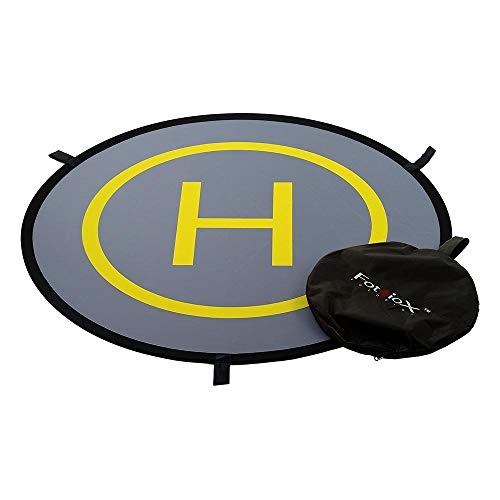
- Large 32-inch landing surface
- Works on beach, grass, and concrete
- Folds to about one-third size
Best For: Portable beach flying and landing practice
Complete Windproof Kit
STARTRC 22-Inch Waterproof Pad
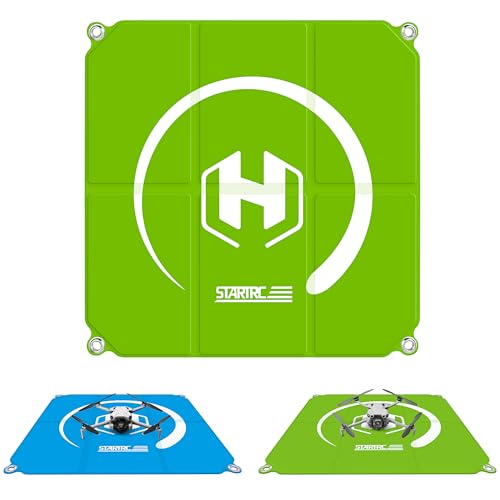
- Waterproof, wipe-clean nylon surface
- Includes four stakes and safety buckles
- Folds quickly for backpack transport
Best For: Windy or damp beach outings with compatible drones
Heavy-Duty Reflective Pick
26-Inch Weighted PU Landing Pad

- Weighted design helps hold position on sand
- Waterproof PU surface rinses clean
- Reflective dual-color design aids low-light visibility
Best For: Windy beaches and pilots flying in lower light
Classic Weatherproof Pick
30-Inch Reflective Landing Pad
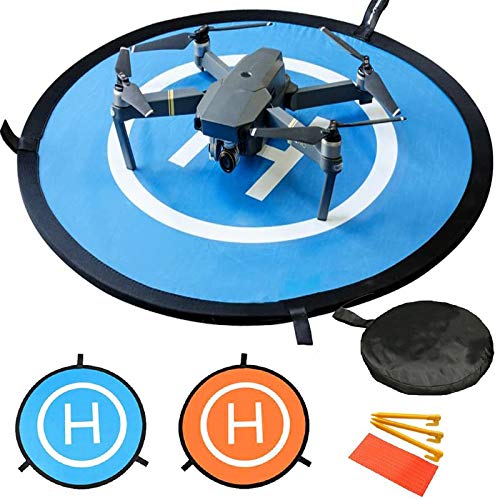
- Waterproof, sun-resistant nylon
- Three nails help anchor it outdoors
- Reflective strips support nighttime visibility
Best For: Pilots wanting a large, portable pad for breezy beach flights
Weighted Beach-Ready Choice

- Weighted to help resist wind movement
- Waterproof surface rinses clean
- Folds for backpacks and hard cases
Best For: Compact-drone pilots launching on sand or uneven outdoor surfaces
Night Visibility Pick
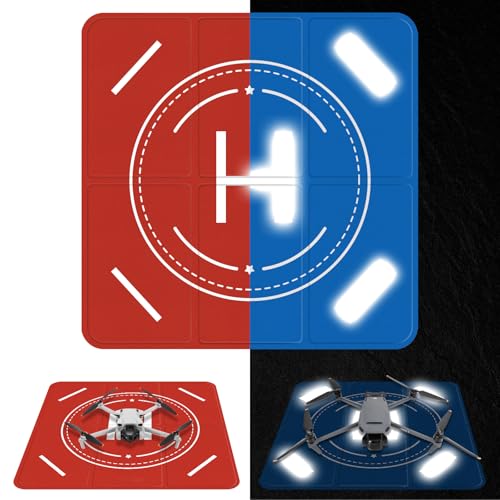
- 490-gram weighted design supports stability
- Waterproof PU leather rinses clean
- Blue and red sides improve contrast
Best For: FPV and DJI pilots needing a compact, stable outdoor pad
Best All-Around Beach Pick
Foldable Drone Landing Pad Kit

- Waterproof PU PVC surface
- Reflective details for night visibility
- Integrated steel counterweight and storage bag
Best For: Sandy takeoffs, easy cleanup, and dusk or night flights
Best Compact Value
CQT 17-Inch Weighted Landing Pad

- 16.9-inch foldable landing surface
- Bright reversible yellow-and-orange design
- Waterproof material with carrying bag
Best For: Beginner pilots seeking a portable beach pad
Best Large Landing Area

- Large 21.65-inch landing surface
- Includes four ground nails and storage bag
- Waterproof, wear-resistant PU material
Best For: Pilots wanting extra landing room on sand or uneven ground
Weighted Sand-Ready Pick – Hoodman LP21 Trifold Landing Pad
For a drone landing pad for beach use, the Hoodman LP21 is designed to stay put without stakes. Its 1.9-pound weighted construction conforms to the surface, while the vinyl material helps shield your drone from sand, pebbles, and tall grass during takeoff and landing.
Best For: Beach and outdoor pilots who want a no-stakes landing pad with a weighted design.
Pros:
- Springs into shape for quick “throw and go” setup
- Weighted design requires no stakes
- Helps protect rotors, camera lenses, and motor bearings from sand and debris
- Vinyl-coated bottom can be wiped clean and seals out morning dew
Cons:
- At 22.8 inches square, it offers less landing area than some 32-inch pads
- Its 1.9-pound weight is less packable than lighter alternatives
The LP21 stands out when beach conditions make loose stakes inconvenient. It is a practical choice for pilots who prioritize stability and cleanup over the lightest possible carry weight.
Large Lightweight Option – Fotodiox 32-Inch Collapsible Pad
The Fotodiox 32-inch pad gives beach flyers a broad, easy-to-see landing target for grass, sand, and concrete. It springs open automatically, folds to roughly one-third of its deployed size, and includes a storage bag for transport.
Best For: Pilots who want a large landing surface while keeping the pad lightweight and portable.
Pros:
- 32-inch size provides a generous landing target
- Suitable for grass, beach, and concrete surfaces
- Automatically springs into shape and folds for storage
- Three stake loops can improve stability and landing practice
Cons:
- Stakes are not listed among the included components
- Its lightweight 10.4-ounce construction may need staking in windy beach conditions
With its large footprint and low weight, the Fotodiox is easy to carry to the shore and useful for practicing accurate landings. Plan to use suitable ground stakes when beach winds are strong.
Complete Windproof Kit – STARTRC 22-Inch Waterproof Pad
The STARTRC 22-inch pad is a practical drone landing pad for beach flights where sand, moisture, and wind are concerns. Its waterproof nylon surface is wipe-clean, and the included four stakes and safety buckles help secure it on sand, grass, or concrete.
Best For: Beach pilots who want a compact, waterproof pad with included anchoring hardware.
Pros:
- Waterproof, dust-resistant surface helps keep the drone clean
- Includes four ground stakes and two safety buckles
- Folds in about three seconds and installs within 30 seconds
- High-contrast green-and-blue design supports visible positioning
Cons:
- Its 22-inch surface is smaller than the 32-inch Fotodiox option
- For DJI Air 3S and Mavic 4 Pro, the notes recommend the separate 65-inch STARTRC pad
This is a well-rounded choice for shore trips because the pad combines weather-resistant material, portability, and included stakes. Check your drone’s size before choosing it, particularly for larger models.
Heavy-Duty Reflective Pick – 26-Inch Weighted PU Landing Pad
For pilots who need a heavier drone landing pad for beach use, this 26-inch PU model combines an 800-gram maximum weighted design with waterproof and dustproof construction. Its dual-color reflective surface is intended to make positioning easier in fog, low light, or nighttime conditions.
Best For: Beach and outdoor pilots who value wind stability, easy cleaning, and reflective visibility.
Pros:
- Weighted construction helps resist shifting and curling on sand
- Waterproof PU material can be rinsed clean
- Dual-sided reflective design supports low-light positioning
- Folds in about three seconds and includes a carrying bag
Cons:
- At 1.9 pounds, it is relatively heavy for backpack travel
- The 26-inch format may be bulkier than smaller pads when packed
This pad is a strong fit for exposed beaches where wind and cleanup are recurring problems. Its weight favors stability, while the reflective two-color surface adds visibility beyond ordinary daytime use.
Classic Weatherproof Pick – 30-Inch Reflective Landing Pad
If you need a drone landing pad for beach use, this 30-inch nylon mat offers a broad, waterproof surface for takeoff and landing. Its reflective strips and included ground nails also make it useful for evening flights and breezy outdoor conditions.
Best For: Pilots who want a large, lightweight pad with nighttime visibility and basic wind anchoring.
Pros:
- Waterproof, sun-resistant nylon with double-sided printing
- Large 30-inch surface fits many DJI and other RC drones
- Includes three ABS land nails for securing it outdoors
- Eight reflective strips help mark the pad in darkness
Cons:
- Requires placing the included nails to improve stability in wind
- The larger size may take more storage space than compact pads
This is a practical choice for beach outings when visibility, coverage, and portability matter. The included carrying bag helps with transport, while the nylon construction can be rinsed or wiped after outdoor use.
Weighted Beach-Ready Choice – 22-Inch Double-Sided Pad
This weighted 22-inch drone landing pad for beach use is designed to stay in place on sand, mud, snow, and uneven ground. Its waterproof PU PVC surface is easy to rinse clean, making it convenient for pilots who frequently launch outdoors.
Best For: DJI Mini and other compact-drone pilots who prioritize stability and easy cleanup on varied terrain.
Pros:
- Weighted design helps resist movement in wind
- Waterproof, stain-resistant surface can be rinsed with water
- Double-sided blue-green colors provide visibility options
- Folds compactly and includes a waterproof storage bag
Cons:
- At 22 inches, it provides less landing area than a 30-inch pad
- The weighted construction may be less lightweight than simple fabric mats
For beach pilots dealing with shifting sand or gusts, the weighted construction is the main advantage. It balances a stable launch surface with foldable storage for backpacks and many hard cases.
Night Visibility Pick – Weighted Blue-and-Red FPV Pad
This weighted drone landing pad for beach flights combines a waterproof PU leather surface with a fast-fold design. The blue-and-red sides provide high contrast outdoors, while the stable construction is intended for mud, gravel, sand, and other uneven launch areas.
Best For: FPV and DJI pilots who want a compact, weighted pad with contrasting colors for easier positioning.
Pros:
- Weighted 490-gram design helps keep the mat stable in strong wind
- Double-sided PU leather is waterproof and easy to rinse clean
- Blue and red sides improve visual contrast in outdoor conditions
- Folds to fit many drone cases or backpacks
Cons:
- Its listed folded dimensions indicate a smaller packed format than the full landing surface
- Unlike the first pad, it does not list ground nails or reflective tape
This pad is a strong fit when stability and quick cleanup are more important than the lightest possible carry weight. Its contrasting sides also give pilots a simple way to choose a more visible landing surface.
Best All-Around Beach Pick – Foldable Drone Landing Pad Kit
DiriFoy Foldable Drone Landing Pad Kit w/Bag | for DJI mini 4/5 pro & Mavic FPV
Check Price On AmazonIf you need a drone landing pad for beach takeoffs, this DiriFoy kit combines a portable 17-inch landing surface with a storage bag. Its waterproof PU PVC construction is designed to shed sand, mud, and dust, while the integrated steel counterweight helps keep the pad in place on firm outdoor surfaces.
Best For: Beach users who want easy cleanup, compact storage, and reflective visibility for dusk or night flights.
Pros:
- Waterproof, textured, and easy to rinse clean
- Folds to 5.7 by 8.5 inches and includes a storage bag
- Reflective edge strips and center logo improve visibility at night
- Integrated steel counterweight supports use on gravel and uneven ground
Cons:
- Optional adhesive counterweight blocks are not included
- The 17-inch surface may be smaller than the 55 cm alternative
This is the most feature-rich option in the group, especially if you often fly near sunset or want a landing pad that can be rinsed after a sandy session. Its built-in weight module is useful where ground pegs are inconvenient.
Best Compact Value – CQT 17-Inch Weighted Landing Pad
This CQT model is a practical drone landing pad for beach outings, with a 16.9-inch waterproof surface that folds for transport. Its yellow-and-orange design provides a high-contrast target, and the washable PU PVC material is suited to sand, grass, dirt, and snow.
Best For: Beginner pilots who want a lightweight, foldable pad with a visible double-sided design and carrying bag.
Pros:
- High-contrast yellow-and-orange reversible design
- Waterproof, lightweight, stain-resistant, and washable material
- Folds easily for outdoor transport
- Suitable for sand, overgrown grass, uneven dirt, and snow
Cons:
- Smaller than the 55 cm CQT version
- The supplied notes do not specify included ground nails
Choose this version when portability matters more than maximum landing area. It offers a straightforward setup for casual beach flying and includes the basic storage support most beginners need.
Best Large Landing Area – CQT 55 cm Beach Pad
For pilots who prefer more room around the aircraft, this 55 cm CQT is a large drone landing pad for beach use. The yellow-and-dark-gray reversible surface is designed to stand out against sand, and the waterproof, wear-resistant PU material folds into the included storage bag.
Best For: Pilots who want a larger target for takeoffs and landings on sand, grass, dirt, or snow.
Pros:
- Large 21.65-inch landing surface
- Bright yellow-and-dark-gray reversible design
- Waterproof, wear-resistant, stain-resistant, and wind-resistant
- Includes a storage bag and four ground nails
Cons:
- Larger landing area may be less compact to deploy than the 17-inch models
- The supplied details do not describe reflective night-flight markings
This is the strongest fit when a generous landing zone is your priority. The included ground nails add useful securing options for sandy or exposed locations, while the foldable construction keeps the pad transportable.
How We Picked the Best Drone Landing Pad for Beach
We focused on features that matter in coastal environments: resistance to wind, water-repellent or wipe-clean surfaces, reliable visibility, useful landing-area size, and compact storage. Weighted designs received particular attention because beach sand may not hold stakes securely. We also considered whether each pad folds quickly and includes a carrying bag for transport.
Compatibility was assessed broadly across compact DJI models, larger camera drones, FPV aircraft, and general-purpose quadcopters. A pad should provide enough clearance for the drone’s footprint without becoming unnecessarily bulky in a beach bag or vehicle.
Quick Comparison
| Best for | Look for | Why it matters |
|---|---|---|
| Windy beaches | Weighted or reinforced construction | Helps prevent movement during launch and recovery |
| Small drones | 22-inch class pad | Balances landing space with portability |
| Large drones | 26- to 32-inch surface | Provides more margin for inaccurate approaches |
| Low-light flying | Reflective or high-contrast markings | Makes the landing zone easier to identify |
| Frequent travel | Fast-fold design and storage bag | Simplifies carrying and setup |
Key Buying Factors for a Drone Landing Pad for Beach
Weight and Wind Resistance
Prioritize a weighted pad when flying beside the ocean or on exposed dunes. A lightweight mat can shift from rotor wash or gusts, especially when the sand is loose. If the model uses stakes, check whether they are practical for the terrain and permitted at your destination.
Waterproofing and Sand Control
A waterproof, wipe-clean surface is easier to maintain after contact with damp sand. Look for sealed or durable fabric and avoid leaving the pad wet and folded for long periods, since trapped moisture can cause odors or mildew. Shake off loose sand before packing it away.
Size and Drone Clearance
Choose a landing area larger than the drone’s propeller span when possible. Compact pads suit Mini-class aircraft, while a 26- to 32-inch option offers extra tolerance for larger drones, FPV approaches, or uneven beach conditions.
Visibility and Portability
Bright colors, contrasting graphics, and reflective details help define the landing target against sand and changing light. Fast-fold construction matters if you hike to the launch point, but confirm the packed diameter and whether the included bag is large enough for easy storage.
Who Should Buy Which Drone Landing Pad for Beach?
Choose a compact 22-inch weighted or foldable pad if you fly a DJI Mini, Neo, or similarly small drone and value light travel. Pick a larger 26- to 32-inch design if your aircraft is bigger, you land manually, or you want more room for imperfect approaches. Wind-exposed locations favor weighted models, while sunrise, sunset, or low-light users should consider reflective markings. For frequent beach trips, prioritize waterproof materials, quick folding, and a durable carry bag over the absolute lightest design.