The right receiver can make an RC vehicle easier to control, more dependable, and better suited to upgrades. But compatibility, channel count, range, and signal protocol matter just as much as price.
We’ve gathered 10 practical options for hobbyists, covering FlySky, Spektrum, RadioLink, Radiomaster, and MEUS Racing systems for cars, boats, crawlers, and fixed-wing aircraft.
Best 10 Rc Receivers for Hobbyists Picks for 2026
Versatile Starter Set
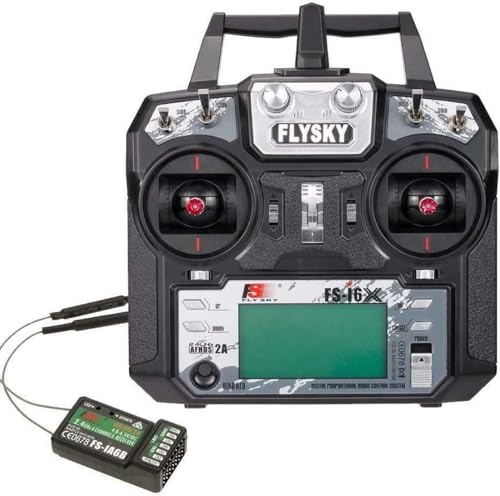
- Six default channels, expandable to ten
- Bidirectional telemetry and sensor support
- PWM, PPM, i-BUS, and S-BUS compatibility
Best For: Flexible multi-channel RC setups
Compact Aircraft Pick

- Four-channel full-range DSMX receiver
- Built-in voltage telemetry and flight log
- Antenna-less lightweight hard-case design
Best For: Spektrum-equipped indoor and park-flyer aircraft
Surface Control Specialist

- 400-meter stated control range
- Built-in adjustable gyro for surface models
- Telemetry, mixing, ABS, and fail-safe features
Best For: Crawlers, drift cars, boats, tanks, and buggies
Modern ELRS Upgrade

- ExpressLRS 3.3.0 with low-latency response
- Six PWM outputs plus CRSF and SBus
- Automatic voltage telemetry up to 35V
Best For: ExpressLRS fixed-wing and multi-servo projects
Best Value Spare Receiver
DUMBORC P6F 6-Channel Receiver 2-Pack

- Two receivers included
- Works with DUMBORC X4/X5/X6 transmitters
- 3.3–10V range with 400m+ stated distance
Best For: DUMBORC users needing replacements or spares
Best Full Control Upgrade
MEUS RACING ME-8B 8-Channel System

- Eight channels with knobs and buttons
- Color screen, failsafe, and low-voltage warning
- Stores up to four models
Best For: Compatible crawlers, boats, and scale models
Best Compact FlySky-Compatible Option

- AFHDS 2A compatibility
- 11 × 25 mm micro format
- Four-channel PWM output with failsafe setup
Best For: Compact FlySky transmitter-based builds and repairs
Long-Range 6-Channel Pick

- Up to 984 ft ground range
- Telemetry for battery voltage and RSSI
- Six channels with splash protection
Best For: MEUS transmitter owners needing long-range control and telemetry
Simple Flysky Replacement

- 2.4GHz AFHDS operation
- Three channels for basic models
- Works with select Flysky transmitters
Best For: Compatible Flysky car and boat setups needing a compact replacement
Compact Lighting-Control Option

- Four-channel MEUS receiver
- Dedicated channel for LED control
- Telemetry and up to 984 ft ground range
Best For: MEUS vehicle builds combining servo control with receiver-managed lights
Versatile Starter Set – Flysky FS-i6X with FS-iA6B
Flysky FS-i6X 6-10(Default 6)CH 2.4GHz AFHDS RC Transmitter w/ FS-iA6B Receiver
Check Price On AmazonFor hobbyists comparing RC receivers for hobbyists, this Flysky set is a practical transmitter-and-receiver package with six default channels, bidirectional communication, and support for PWM, PPM, i-BUS, and compatible S-BUS devices.
Best For: Hobbyists who want a flexible multi-channel setup for aircraft, simulators, and other compatible RC projects.
Pros:
- Supports sensor data such as temperature and altitude through bidirectional communication.
- Unique transmitter-receiver pairing helps prevent accidental connection to other systems.
- Supports servo calibration and i-BUS connectivity.
- Designed for strong sensitivity with comparatively low power consumption.
Cons:
- Default configuration provides six channels, although the transmitter supports up to ten.
- The enclosure is plastic and is not water resistant.
This is a well-rounded option when you want one package that can grow with different compatible models and telemetry accessories. Confirm protocol and channel compatibility before buying.
Compact Aircraft Pick – Spektrum AR410 DSMX Receiver
The Spektrum AR410 is a compact choice among RC receivers for hobbyists building or upgrading compatible aircraft. It provides four channels, full-range DSMX performance, telemetry features, and an antenna-less design in a lightweight hard case.
Best For: RC aircraft owners using compatible Spektrum DSM2 or DSMX transmitters, especially for indoor and park-flyer models.
Pros:
- Compact, lightweight design suited to park-flyer-size aircraft.
- Integrated receiver-voltage telemetry and flight-log support.
- Antenna-less construction can simplify installation and improve durability.
- Large bind button eliminates the need for an older bind plug.
Cons:
- Four channels may limit more complex aircraft setups.
- Compatibility is centered on Spektrum DSM2/DSMX systems.
- It is not water resistant.
Choose this receiver when low weight, straightforward binding, and Spektrum telemetry matter more than a high channel count. Verify that your transmitter supports DSM2 or DSMX before ordering.
Surface Control Specialist – Radiolink RC4GS V3 with R6FG
For surface-model enthusiasts shopping for RC receivers for hobbyists, the Radiolink RC4GS V3 combines a five-channel transmitter with an R6FG gyro receiver. Its long-range link, adjustable gyro, telemetry, and programmable controls make it suited to varied vehicle projects.
Best For: Crawlers, drift cars, boats, tanks, buggies, and other surface models needing adjustable control functions.
Pros:
- Specified control range reaches up to 400 meters, or about 1,300 feet.
- Built-in gyro can help keep a vehicle traveling straight, with sensitivity adjustment from the transmitter.
- Includes voltage telemetry, fail-safe, ABS, dual-rate, timer, and cruise-control functions.
- Programmable mixing supports dual-ESC vehicles, tanks, and other specialized builds.
Cons:
- Telemetry requires a compatible telemetry receiver such as the R7FG, R8FG, or R8FGH.
- The five-channel layout may not suit projects requiring more outputs.
- The system uses a rechargeable lithium-polymer battery that is not included in the supplied package details.
This is a feature-rich surface radio for hobbyists who want more than basic steering and throttle. Its strongest advantages are the adjustable gyro, programmable mixing, and vehicle telemetry support.
Modern ELRS Upgrade – Radiomaster ER6 6CH Receiver
The Radiomaster ER6 is a forward-looking option among RC receivers for hobbyists using the open-source ExpressLRS ecosystem. It offers six PWM outputs, CRSF and SBus serial output, dual antennas, Wi-Fi updates, and automatic voltage telemetry for compatible fixed-wing projects.
Best For: Experienced hobbyists building fixed-wing aircraft or other projects around 2.4GHz ExpressLRS transmitters and modules.
Pros:
- Pre-installed ExpressLRS 3.3.0 provides low-latency response and link-quality features.
- Six PWM channels can drive up to six servos.
- Automatically detects internal or external battery voltage from 4.0 to 35V.
- Supports Wi-Fi firmware updates, WebUI configuration, CRSF, and SBus output.
Cons:
- Requires a compatible 2.4GHz ExpressLRS transmitter or module.
- Its stated power-supply range is 4.5 to 8.4V, so system voltage must be checked carefully.
- The advanced configuration features may be more than beginners need.
Consider the ER6 if you already use ExpressLRS and need a compact receiver with six servo outputs and flexible telemetry. Its dual antennas and update options add installation and maintenance flexibility, while protocol compatibility remains essential.
Best Value Spare Receiver – DUMBORC P6F 6-Channel Receiver 2-Pack
For hobbyists who need dependable replacements, the DUMBORC P6F 2-pack provides two compact 6-channel receivers for compatible DUMBORC transmitters. Its broad voltage range and stated control distance make it a practical option among RC receivers for hobbyists.
Best For: DUMBORC X4, X5, and X6 transmitter users who want spare receivers or a two-model setup.
Pros:
- Includes two P6F receivers.
- Compatible with X4, X5, and X6 DUMBORC transmitters.
- Supports 3.3–10V input and high-voltage steering gear.
- Advertised control distance exceeds 400 meters, depending on conditions.
Cons:
- Compatibility is centered on specified DUMBORC transmitters.
- Binding requires a specific two-press button sequence.
This is a sensible pick when you already use the DUMBORC ecosystem and value having a spare on hand. Verify transmitter compatibility before ordering.
Best Full Control Upgrade – MEUS RACING ME-8B 8-Channel System
The MEUS RACING ME-8B combines an 8-channel transmitter with a receiver, making it a more complete control upgrade than a receiver-only purchase. Its screen, model storage, rechargeable design, and multiple auxiliary controls give RC receivers for hobbyists a broader role in customized builds.
Best For: Hobbyists operating compatible crawlers, boats, and scale models who want up to eight channels and configurable controls.
Pros:
- Provides eight channels, including a three-position channel, knobs, and buttons.
- Color screen displays channel parameters clearly.
- Includes failsafe and low-voltage warning functions.
- Stores up to four models and offers a rechargeable transmitter with auto-off.
Cons:
- The system works only with MEUS RACING 2.4GHz receivers.
- Changing models requires rebinding each time.
- Its extensive controls may be more than a basic setup needs.
Choose this kit when you want a transmitter-and-receiver upgrade with room for auxiliary functions. It is especially appealing for scale models, but its brand-specific receiver compatibility should be confirmed first.
Best Compact FlySky-Compatible Option – FS2A 4-Channel Mini Receiver
The FS2A is a micro 4-channel receiver designed for transmitters using the AFHDS 2A protocol. Its small 11 × 25 mm format makes it a practical candidate for compact builds and replacement projects when selecting RC receivers for hobbyists.
Best For: FlySky transmitter owners building or repairing models where a miniature PWM receiver is useful.
Pros:
- Compatible with listed FlySky transmitters including the FS-I6, FS-I6X, and FS-I6S.
- Compact 11 × 25 mm receiver design.
- Provides four-channel PWM output.
- Supports failsafe setup through the receiver and transmitter controls.
Cons:
- Limited to four channels.
- Requires an AFHDS 2A-compatible transmitter.
- Its miniature format may be less convenient for larger installations.
This receiver suits hobbyists who already have a compatible FlySky radio and need a small, straightforward replacement. Check the transmitter protocol and available installation space before buying.
Long-Range 6-Channel Pick – MEUS RACING M-06A Receiver
For hobbyists comparing RC receivers for hobbyists, the MEUS RACING M-06A is a capable choice when long range, telemetry, and six-channel control matter. Its FHSS and GFSK technologies are designed for interference resistance, with a stated range of up to 984 feet on the ground.
Best For: MEUS Racing transmitter owners running crawlers, trucks, boats, tanks, buggies, or drift cars.
Pros:
- Six channels with 4096-resolution signal output for responsive control.
- Reports battery voltage and RSSI telemetry to the transmitter.
- Bind button, splash resistance, and anti-polarity protection add convenience.
Cons:
- Only compatible with MEUS RC transmitters.
- The EXT-V port polarity requires careful attention during wiring.
Choose this receiver if your setup already uses the MEUS ME-10B transmitter and you want extra channels plus telemetry. It is less suitable for users seeking a broadly compatible receiver.
Simple Flysky Replacement – FS-GR3E 3-Channel Receiver
Among RC receivers for hobbyists, the Flysky FS-GR3E is a straightforward three-channel option for compatible Flysky systems. It uses 2.4GHz AFHDS operation and is designed for quick binding and stable performance in RC cars, trucks, buggies, and boats.
Best For: Flysky transmitter owners using compatible FS-GT2, FS-GT2B, FS-GT3B, FS-GT3C, or FS-IT4S models.
Pros:
- Reliable 2.4GHz AFHDS signal operation.
- Three channels suit basic RC car and boat setups.
- Compact receiver with quick binding and link-up.
Cons:
- Compatibility is limited to supported Flysky transmitters.
- The transmitter must use AFHDS rather than AFHDS 2A unless adjusted.
- Input voltage is limited to 4.0–6.5V DC.
This is a practical replacement for a compatible Flysky radio system, especially when three channels are enough. Verify the transmitter protocol before buying, since AFHDS compatibility is essential for pairing.
Compact Lighting-Control Option – MEUS RACING M-04B Receiver
For RC receivers for hobbyists who need four channels and integrated lighting control, the MEUS RACING M-04B offers a focused setup. It combines FHSS and GFSK signal technology with a stated control distance of up to 984 feet on the ground and useful battery and RSSI telemetry.
Best For: MEUS Racing transmitter owners running vehicles with servos and receiver-controlled LED lighting.
Pros:
- Four-channel layout supports three servo channels plus lighting control.
- Telemetry provides battery-voltage and RSSI information.
- Bind button, splash resistance, and anti-polarity protection simplify installation.
Cons:
- Only compatible with MEUS RC transmitters.
- Channel 4 is intended for lights and does not require its signal pin.
- Its four-channel design offers less expansion than a six-channel receiver.
The M-04B is a good fit when lighting is part of the vehicle build and four channels are sufficient. Its channel-specific LED arrangement should be understood before wiring, particularly if you plan to add more servos later.
How We Picked the Best Rc Receivers for Hobbyists
We evaluated these receivers by looking at transmitter compatibility, channel count, signal protocol, intended vehicle type, installation flexibility, and useful features such as telemetry, gyro stabilization, and long-range performance. We also considered whether each model is best suited to a new build, a replacement installation, or an upgrade.
Before buying, verify the exact transmitter model and protocol. A receiver generally cannot pair with a transmitter from another ecosystem, even when both operate on 2.4GHz. Also check connector layout, power requirements, antenna clearance, and whether your vehicle needs PWM, PPM, iBUS, SBUS, or CRSF output.
Quick Comparison
| Best For | Recommended Type | What to Prioritize |
|---|---|---|
| Budget starter systems | FlySky FS-i6X bundle or FS2A | Included transmitter compatibility and channel count |
| Sport aircraft | Spektrum AR410 | Simple setup and dependable four-channel operation |
| Crawlers and RC cars | RadioLink R6FG or compatible MEUS Racing model | Vehicle fit, range, and gyro functionality |
| Fixed-wing and advanced builds | Radiomaster ER6 | ELRS support, telemetry, and output options |
| Replacement receivers | DUMBORC, FlySky, or MEUS Racing receivers | Exact protocol and matching transmitter |
Key Buying Factors for Rc Receivers for Hobbyists
Compatibility Comes First
Match the receiver to the transmitter’s brand and protocol. FlySky AFHDS and AFHDS 2A products are not automatically interchangeable, while ELRS receivers require an ELRS-compatible radio. Confirm the pairing procedure before ordering.
Channel Count and Outputs
Four channels can handle basic steering, throttle, and common aircraft controls. Choose six or more channels if you need lights, winches, auxiliary functions, flaps, landing gear, or other accessories. For flight controllers and advanced radios, check whether the receiver provides the serial output your electronics require.
Range, Antennas, and Installation
Advertised range varies with power, interference, antenna placement, terrain, and local regulations. Dual-antenna designs can improve signal consistency, but correct routing and physical protection remain essential. Small receivers are convenient for compact models, while larger units may offer easier connections and more features.
Telemetry and Gyro Features
Telemetry can report battery voltage or other data back to a compatible transmitter. A built-in gyro may help stabilize a crawler or vehicle, but it needs proper calibration and adjustment. These features are valuable only when both the receiver and transmitter support them.
Who Should Buy Which Rc Receivers for Hobbyists?
New hobbyists who want an affordable radio-and-receiver setup should consider the FlySky FS-i6X bundle. Owners of compatible FlySky transmitters may prefer the compact FS2A or a replacement FS-GR3E. Spektrum users seeking a straightforward aircraft receiver should look at the AR410.
Crawler and car builders should prioritize the RadioLink or MEUS Racing options that match their existing radio, especially when gyro assistance or extra channels are useful. Fixed-wing pilots and advanced users who already operate an ELRS transmitter should consider the Radiomaster ER6 for telemetry and flexible outputs.
For replacement parts, buy by exact transmitter compatibility rather than channel count alone. The safest choice is the receiver designed for your radio system, with enough channels and mounting space for the vehicle you are building.