Micro FPV drones make first-person flight more approachable without giving up the speed, agility, and immersive view that make FPV so engaging. The best option depends on whether you want an indoor trainer, a racing-focused whoop, a freestyle-ready build, or a more polished camera platform.
We selected 10 standout models and kits across those use cases, emphasizing included gear, flight hardware, control systems, durability, and overall value for beginners and experienced pilots.
Best 10 Micro Fpv Drones Picks for 2026
Beginner Ready-to-Fly Pick
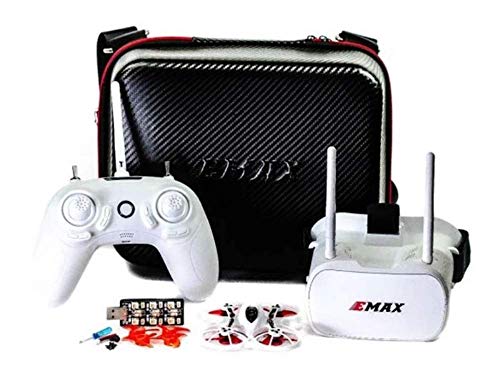
- Complete kit with goggles and controller
- Real FPV radio video connection
- Up to 200 feet of stated range
Best For: First-time pilots wanting an all-in-one setup
Ultralight Freestyle Pick
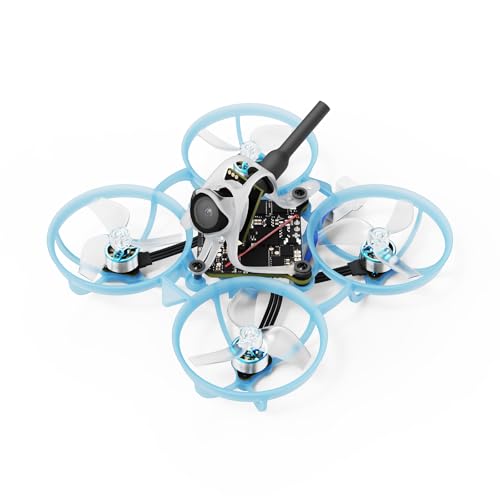
- Ultralight 1S freestyle platform
- 25,000KV motors with three-blade props
- Reinforced frame and crash-resistant canopy
Best For: Pilots focused on agile freestyle flying
Powerful 1S Racing Pick

- Larger 1S whoop for responsive flying
- Adjustable 25–400mW onboard VTX
- Includes two batteries and a charger
Best For: Racing and freestyle pilots using compatible ELRS gear
Immersive 4K FPV Pick

- 4K/60fps camera with a 155° field of view
- Includes Goggles N3 and RC Motion 3
- Built-in propeller guards and easy acrobatics
Best For: Accessible FPV video and immersive content creation
Ultralight HD Whoop

- 32 g protected frame for indoor practice
- 1080p up to 120fps with 147° FOV
- ELRS BNF platform with six-channel charger
Best For: Existing ELRS pilots practicing tight indoor lines
Immersive FPV Camera Kit

- VR goggles and controller included
- Optical-flow positioning with one-key takeoff
- Dual cameras and adjustable camera angle
Best For: Beginners wanting an accessible FPV camera bundle
Performance Micro FPV Trainer

- 26g frame with 20000KV brushless motors
- Betaflight settings are open for tuning
- Two batteries and six-port charger included
Best For: Experienced pilots practicing indoor racing and freestyle
Best Simple Pick
Tinyhawk Lite Adventure FPV Kit
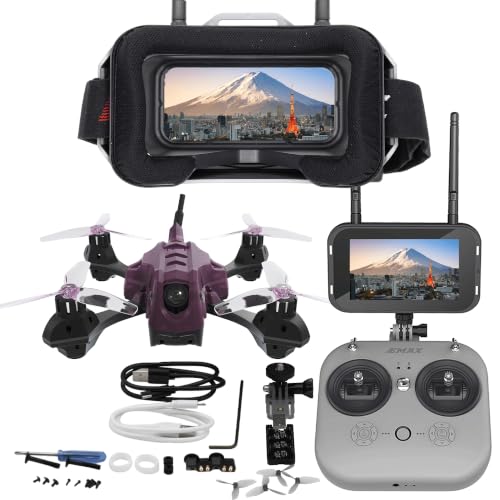
- Goggles and controller included
- Lightweight 23g design
- Replaceable brushed motors
Best For: New pilots wanting a simple ready-to-fly FPV kit
Beginner Ready-to-Fly Pick – Tiny Hawk RTF Micro FPV Drone
Tiny Hawk RTF Micro Indoor Racing Drone with FPV Goggles and Controller for Beginners
Check Price On AmazonFor shoppers comparing micro FPV drones, this Tiny Hawk RTF kit is a straightforward entry point because it includes the drone, controller, and FPV goggles. Its real-FPV radio link avoids relying on Wi-Fi, while the lightweight design and stated 200-foot range suit beginner practice.
Best For: Beginners who want a complete indoor or short-range FPV setup without buying extra gear.
Pros:
- Complete ready-to-fly package with goggles and controller
- Real FPV video rather than Wi-Fi streaming
- Lightweight, durable design with speeds listed up to 35 mph
- Includes a carrying case for easier transport
Cons:
- The listed 200-foot range is limited compared with longer-range FPV systems
- The kit weighs 2.7 pounds, which is less ultralight than some newer whoops
This is the most approachable choice here for someone starting from scratch. Experienced pilots may prefer a more advanced brushless platform, but the included equipment keeps the initial setup simple.
Ultralight Freestyle Pick – BETAFPV Air65 II
The BETAFPV Air65 II is a compelling option among micro FPV drones for pilots who prioritize low weight, crash resistance, and smooth freestyle control. Its 1S setup pairs 25,000KV motors with three-blade props, while the reinforced frame and canopy are designed for repeated impacts.
Best For: Experienced pilots seeking an ultralight whoop for indoor flying, outdoor freestyle, and cinematic control.
Pros:
- Ultralight 1S design built around freestyle performance
- 0702 25,000KV motors and 12A continuous ESC support strong propulsion
- Reinforced frame, canopy, and cushioned flight-controller mounting improve crash resilience
- Optimized ducts and three-blade props support smooth low-throttle handling
Cons:
- The supplied notes identify it as a quadcopter rather than a complete RTF kit
- Its advanced performance focus may be less suitable for absolute beginners
The Air65 II stands out as a performance-focused micro whoop rather than a ready-to-fly package. Choose it when durability and agile freestyle handling matter more than included goggles or a transmitter.
Upgradeable Starter Kit – Tinyhawk Lite FPV Drone
This Tinyhawk Lite is one of the more accessible micro FPV drones for beginners who want a complete kit but also plan to develop their skills. It includes goggles and a controller, provides a low-latency real-FPV feed, and adds Betaflight configuration for adjusting flight modes, rates, and responsiveness.
Best For: New pilots who want ready-to-fly convenience with room to tune and progress.
Pros:
- Ready-to-fly package with goggles and remote control
- Real FPV video is designed for responsive, low-latency flying
- Betaflight configuration supports future tuning and skill development
- Approximately 37 grams without the battery and built for crash resistance
Cons:
- The supplied notes do not specify a flight range or expected flight time
- Its beginner-oriented setup may not satisfy pilots seeking a larger, higher-power platform
The Tinyhawk Lite offers a useful balance between simplicity and adjustability. Its larger 750mAh 1S battery is intended to extend sessions, while the configurable software gives beginners a path beyond basic flying.
Powerful 1S Racing Pick – BETAFPV Meteor75 Pro
The BETAFPV Meteor75 Pro targets pilots who want a faster, more responsive option among micro FPV drones. It is built around a larger 1S whoop format, 1102 motors, an upgraded Matrix flight controller, and an adjustable 25–400mW VTX for racing or acrobatic flying indoors and outdoors.
Best For: FPV racers and freestyle pilots who want a powerful 1S platform with practical maintenance features.
Pros:
- Larger 1S whoop design is intended to deliver speed and longer flight time
- Matrix controller includes an onboard adjustable 25–400mW VTX
- Solder-free motor plugs simplify motor replacement and installation
- Package includes two 580mAh batteries, charger, tester, and accessories
Cons:
- Requires compatible ELRS controller or module with matching firmware and protocol
- Higher VTX power can increase heat and reduce flight time
- Calibration and rebinding may be needed after use
The Meteor75 Pro is the strongest fit for buyers who already understand FPV equipment or are ready to manage protocol and calibration details. Its included batteries and solder-free motor connections make ongoing practice and maintenance more convenient.
Beginner Analog FPV Kit – Ready-to-Fly FPV Drone
This ready-to-fly kit is a practical entry point for anyone exploring micro FPV drones without assembling or tuning a racing setup. It includes wide-view goggles, a calibrated drone, and three batteries, while its selectable flight modes let new pilots progress from stabilized practice to manual freestyle.
Best For: First-time FPV pilots who want an all-in-one analog kit for learning and basic freestyle.
Pros:
- Comes pre-tuned and ready to fly without soldering or complex setup.
- Includes 120° FPV goggles with low-latency analog transmission.
- Beginner, Horizon, and manual flight modes support skill progression.
- Three batteries provide approximately 15–18 minutes of total flight time.
Cons:
- Analog video is standard definition and may show snow or scan lines.
- Additional 5.8G goggles can be used, but the included system is not HD.
- The package is aimed at beginners rather than advanced digital-video pilots.
Choose this model if straightforward setup and forgiving controls matter more than high-resolution video. Its included goggles and multiple flight modes make it a convenient learning bundle for indoor practice and introductory freestyle.
Immersive 4K FPV Pick – DJI Avata 2 Fly Smart Combo
The DJI Avata 2 is a premium option among micro FPV drones for pilots who prioritize immersive flying and polished aerial footage. This Fly Smart Combo pairs the drone with DJI Goggles N3 and the RC Motion 3, adding motion-based control, automated acrobatics, stabilization, and a 4K camera.
Best For: Beginners and content creators who want an easy-to-control FPV system with stabilized 4K video.
Pros:
- Captures 4K/60fps video through a 1/1.3-inch sensor.
- Included goggles provide an immersive cockpit-style view.
- RC Motion 3 enables intuitive hand-based control and easy acrobatics.
- Built-in propeller guards improve durability for varied flying environments.
Cons:
- The 377 g drone is substantially heavier than ultralight whoop-style models.
- This combo includes a single intelligent flight battery.
- Its advanced camera and DJI ecosystem may be more than casual practice pilots need.
Avata 2 is the strongest fit when the priority is accessible immersive flight paired with high-quality footage. It is less focused on ultralight indoor agility, but the guarded design, motion control, and stabilization make it a capable content-oriented choice.
Ultralight HD Whoop – CADDXFPV Curve Micro 16
The CADDXFPV Curve Micro 16 is a compact BNF choice for pilots building a lightweight HD setup around compatible ELRS equipment. At 32 g, it combines a protected one-piece frame with 1080p video at up to 120fps, making it suited to indoor practice, tight lines, and repeated learning crashes.
Best For: ELRS pilots who want an ultralight HD whoop for indoor flying, gate practice, and freestyle training.
Pros:
- 32 g frame keeps inertia low for quick indoor handling and recovery.
- 1080p video supports up to 120fps with a 147° field of view.
- Full propeller protection and a molded frame help withstand wall taps and hard landings.
- Built-in ELRS 2.4GHz and included six-channel USB-C charger support repeated practice sessions.
Cons:
- Radio and goggles are not included.
- Flight time is about six minutes per compatible 1S battery.
- It requires compatible ELRS radio and Ascent video equipment for full use.
This model makes sense for pilots who already own compatible gear or are intentionally assembling a modular micro FPV setup. Its low weight and protected frame favor indoor training, while the HD high-frame-rate video adds clarity without giving up the agility of a small whoop.
Immersive FPV Camera Kit – VR Goggles Brushless Drone
This camera-equipped option brings an accessible, all-in-one approach to micro FPV drones. It includes VR goggles, a controller, optical-flow positioning, and one-key takeoff and landing, making it a practical choice for beginners who want to try first-person flying without assembling a separate setup.
Best For: Beginners seeking a feature-packed FPV camera drone with goggles and multiple flight-assistance modes.
Pros:
- Includes VR goggles, remote controller, two modular batteries, and charging cables.
- Optical-flow positioning and one-key takeoff/landing can simplify basic flight control.
- Dual cameras, an electrically adjustable camera angle, and an included 8GB microSD card support varied shooting.
- Propeller guards help protect the motors and propellers during everyday flying.
Cons:
- The supplied notes do not specify the camera resolution or video transmission range.
- Its broad feature set may be more than a casual indoor flyer needs.
Choose this kit when convenience and included accessories matter most. Its guided controls and protective guards favor approachable flying, while the dual-camera setup adds flexibility for basic aerial recording.
Performance Micro FPV Trainer – R8 ELRS 1S Whoop Drone
The R8 is a performance-focused pick among micro FPV drones, built for pilots who already have FPV experience. Its 80mm, 26g frame, 1S brushless motors, duct guards, and Betaflight-based flight controller emphasize precise indoor freestyle, racing, and skill practice rather than beginner automation.
Best For: Experienced FPV pilots who want a lightweight indoor trainer with ELRS control and adjustable Betaflight settings.
Pros:
- Lightweight 80mm frame and low aerodynamic center are designed for stable, precise handling.
- 0802 20000KV brushless motors provide a stated 1:4 thrust-to-weight ratio.
- Open Betaflight platform allows pilots to adjust PIDs, filters, and rates.
- Includes two 450mAh batteries, a six-port charger, spare propellers, and a tool kit.
Cons:
- This BNF package requires a compatible ELRS 2.4GHz transmitter and 5.8GHz FPV goggles, which are not included.
- Advertised flight time is approximately 3–6 minutes per battery.
- The performance-oriented setup is less suitable for someone learning FPV basics.
The R8 stands out for tunability and punchy 1S performance in a compact whoop format. It makes the most sense for pilots who already own the required transmitter and goggles and want a maintainable platform for repeated indoor practice.
Best Simple Pick – Tinyhawk Lite Adventure FPV Kit
The Tinyhawk Lite Adventure is a straightforward ready-to-fly choice for shoppers comparing micro FPV drones. The kit includes goggles and a controller, while its 23g lightweight design and durable, replaceable brushed motors keep the setup approachable for beginners and easier to maintain.
Best For: New FPV pilots who want a lightweight outdoor quadcopter kit with the main flight accessories included.
Pros:
- Ready-to-fly kit includes the drone, goggles, and controller.
- Lightweight 23g construction supports a compact, beginner-friendly setup.
- Brushed motors are described as reliable and easy to replace.
- Lightweight and durable design is suited to practice flying.
Cons:
- The supplied notes do not list flight time, camera specifications, or charging details.
- Brushed motors may appeal less to pilots specifically seeking brushless performance.
This kit is a sensible starting point when ease of entry matters more than advanced tuning. Its included goggles and controller reduce the need to source compatible gear, while the replaceable motors can simplify basic upkeep.
How We Picked the Best Micro Fpv Drones
We compared these Micro Fpv Drones by looking at the complete ownership experience rather than a single specification. Key considerations included whether each option was ready to fly or bind-and-fly, the included controller and goggles, motor type, battery format, FPV camera and video system, control protocol, weight, and intended flying environment.
We also separated beginner-friendly bundles from enthusiast models. A ready-to-fly kit can be easier for a first flight, while an ELRS-equipped whoop may offer better range, responsiveness, and upgrade potential for pilots who already own compatible equipment.
Quick Comparison
- Best for first-time pilots: Choose a complete RTF kit with goggles, transmitter, batteries, and built-in safety features.
- Best for indoor practice: Look for a lightweight ducted whoop with protected propellers and modest power.
- Best for racing: Prioritize low weight, brushless motors, responsive controls, and low-latency video.
- Best for freestyle: Consider a durable brushless model with enough thrust for quick direction changes.
- Best for premium video: A larger, stabilized platform such as the DJI Avata 2 offers a different experience from tiny analog or lightweight digital whoops.
Key Buying Factors for Micro Fpv Drones
Ready-To-Fly Versus Bind-And-Fly
RTF packages are usually the simplest choice because they include the core equipment needed to start. BNF models can be a better value for pilots who already have compatible goggles, a radio transmitter, and batteries, but they require more setup knowledge.
Weight, Protection, and Flight Location
For indoor use, a light ducted whoop is generally safer and easier to control around furniture and people. Outdoor flying benefits from more power, but wind affects small aircraft quickly. Check local rules and use an appropriate open area.
Control and Video Systems
ELRS is widely valued for reliable control and upgrade flexibility. Analog FPV systems can keep weight and cost down, while digital systems may provide a clearer image at a higher price and with additional equipment requirements.
Battery and Replacement Costs
Confirm the battery connector, cell count, charging method, and whether batteries are included. Also check the availability of spare propellers, motors, frames, and cameras. Affordable replacement parts can matter more than a small difference in purchase price.
Who Should Buy Which Micro Fpv Drones?
New pilots should start with a durable RTF whoop and use a simulator before flying. Indoor learners should favor the lightest protected model that fits their space. Racers should choose a responsive brushless 1S platform with low-latency video and compatible radio gear. Freestyle pilots will generally prefer a stronger brushless model with extra thrust and replaceable components. Travelers and camera-focused buyers may prefer a more complete digital system, provided they accept its greater size, cost, and battery demands.