Choosing among the best resin printers for schools requires more than comparing resolution. Classroom buyers also need dependable operation, manageable post-processing, straightforward maintenance, and a safe plan for handling uncured resin.
This roundup covers compact starter machines, high-resolution models, larger-format printers, and bundles that include washing and curing equipment. Use the guide below to match printer capacity and workflow requirements to your school’s budget and facilities.
Best 10 Resin Printers for Schools Picks for 2026
High-Detail Pick

- 7-inch 10K LCD with 17 × 17μm XY pixels
- Beginner-friendly four-point leveling
- Power-resume and adhesion-focused platform
Best For: Detailed classroom models and student projects
Easy-Setup Pick
- One-click automatic leveling
- Self-check and resin monitoring features
- 4K LCD with overheat protection
Best For: Beginners and school labs needing guided operation
Complete Workflow Bundle

- 10K Photon Mono 4 printer included
- 4L Wash & Cure cleaning bucket
- Flexible gooseneck curing light
Best For: Classrooms wanting printing and post-processing together
Large-Format Advanced Pick

- 16K resolution with a larger build area
- Automatic heated resin tank
- AI camera and smart monitoring system
Best For: Advanced makerspaces and larger high-detail models
High-Volume Pick

- 18.3L build volume for batch production
- 14-inch 12K screen for fine detail
- Auto-leveling and heated resin tank
Best For: Schools producing large or multiple resin models at once
Best for Everyday Use

- 16K printing for detailed models
- 30°C smart tank heating
- Includes 7.5L wash and cure station
Best For: Schools wanting printing and post-processing in one package
Flexible Materials Pick

- Dual-color and dual-material printing
- AI monitoring for print checks
- Handles resins up to 8,000 cps
Best For: Schools exploring creative and specialized resin projects
Industrial Lab Power
F14 Industrial Photocuring Resin Printer
- Large 302 × 162 × 400 mm build volume
- 0.02 mm Z-axis repeatability
- Wi-Fi, USB, and CHITUBOX compatibility
Best For: University labs and high-volume school programs
Easy Precision Learning
UniFormation GK3T 16K Resin Printer

- 16K detail with 14 × 19 μm pixels
- Factory pre-leveling and guided workflow features
- Remote monitoring and built-in resin heating
Best For: Classrooms prioritizing ease of use and fine detail
High-Detail Pick – ANYCUBIC Photon Mono 4
For schools looking for resin printers for schools that can produce finely detailed models, the ANYCUBIC Photon Mono 4 combines a 7-inch 10K monochrome LCD with a manageable desktop footprint. Its straightforward leveling system and power-loss recovery also make it practical for classroom projects.
Best For: Detailed classroom models, student projects, and users who want a simple first setup.
Pros:
- 10K resolution with 17 × 17μm XY pixels for highly detailed prints.
- Uniform LighTurbo illumination helps reduce layer lines and rasterization.
- 4-point leveling requires no repeat leveling after the initial setup.
- Power-resume functionality can reduce wasted resin and print time after an outage.
Cons:
- The supplied notes state that Anycubic APP service is not supported.
- Its build volume is suited to desktop-scale models rather than especially large prints.
The Photon Mono 4 is a strong fit when print detail and beginner-friendly setup matter most. Its laser-engraved platform is designed to improve adhesion while keeping model removal relatively simple.
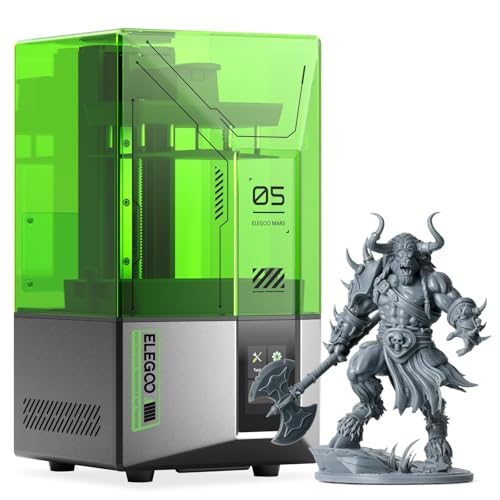
Easy-Setup Pick – ELEGOO Mars 5
The ELEGOO Mars 5 is one of the more approachable resin printers for schools, thanks to one-click automatic leveling and a built-in self-check. Its monitoring and protection features can help reduce setup errors and interruptions during shared classroom use.
Best For: Beginners, school labs, and classrooms prioritizing guided setup and operational safeguards.
Pros:
- One-click automatic leveling simplifies initial preparation.
- Self-check verifies key components before printing.
- Residue detection, resin-shortage alerts, and leveling-failure alarms help limit waste.
- 4K monochrome LCD and COB light source support detailed prints.
Cons:
- Its 4K resolution is lower than the 10K and 16K options in this roundup.
- The supplied notes do not specify its build volume.
With automatic leveling, self-checks, and overheat protection that stops printing above the stated temperature threshold, the Mars 5 emphasizes ease of use and predictable operation for new users.
Complete Workflow Bundle – ANYCUBIC Photon Mono 4 Bundle
For schools that want resin printers for schools with post-processing equipment included, this bundle pairs the detailed Photon Mono 4 with the Wash & Cure 3.0. The combination supports printing, washing, and curing in one coordinated setup.
Best For: Classrooms seeking an all-in-one resin-printing workflow for detailed models.
Pros:
- 10K printing resolution and 17 × 17μm XY pixels support fine detail.
- LighTurbo matrix lighting is designed to provide balanced, uniform exposure.
- Wash & Cure 3.0 has a larger basket and 4L cleaning bucket.
- Gooseneck lighting strengthens curing around subtle model areas.
Cons:
- The bundle requires space for both the printer and wash-and-cure equipment.
- The supplied notes do not state that Anycubic APP service is supported.
This is the most workflow-oriented option in the group. Its expanded cleaning capacity and flexible curing light can be particularly useful when students are processing multiple or more intricate models.
Large-Format Advanced Pick – ELEGOO Saturn 4 Ultra 16K
The ELEGOO Saturn 4 Ultra 16K is designed for schools that need resin printers for schools capable of producing larger, highly detailed models. Automatic leveling, heated resin, AI monitoring, and Wi-Fi transfer add convenience for demanding projects and shared lab use.
Best For: Advanced school makerspaces, larger models, and high-detail production work.
Pros:
- 16K LCD delivers 14 × 19μm XY resolution.
- 8.33 × 4.66 × 8.66-inch printing volume accommodates larger models.
- Heated resin tank helps maintain suitable resin temperature below 25°C.
- AI camera, sensors, automatic leveling, Wi-Fi transfer, and power resume support monitoring and reliability.
Cons:
- At 35.4 pounds, it is substantially heavier than the smaller printers listed.
- Its larger dimensions require more dedicated workspace.
- The advanced feature set may be more than a beginner classroom needs.
The Saturn 4 Ultra 16K stands out for capacity and automation. Its stated 150mm/h speed, heated tank, and smart monitoring make it a compelling choice when a school has the space and wants a more capable production platform.
High-Volume Pick – ANYCUBIC Photon P1 Max
For schools that need resin printers for schools capable of handling class projects, oversized prototypes, or batch production, the ANYCUBIC Photon P1 Max stands out for its 18.3L build volume. Its heated resin tank and automated leveling also make it better suited to consistent use in a workshop environment.
Best For: Schools with room for a large-format printer and a need to produce multiple or oversized models in one cycle.
Pros:
- Large 285.5 × 214 × 300mm build volume supports batch runs and bigger prototypes.
- 14-inch 12K monochrome screen provides fine detail and smooth surfaces.
- Auto-Leveling 3.0 checks and adjusts the build plate before printing.
- Heated 1900ml resin tank helps maintain resin flow in cooler workshops.
Cons:
- Its 68.9-pound weight and large footprint require substantial space and a sturdy setup.
- The large resin capacity and format may be more than small classes need.
The P1 Max is a strong option when throughput and print size matter more than compactness. Schools should plan its workspace carefully, but the combination of automated setup, temperature control, and high resolution can support repeatable project production.
Best for Everyday Use – ELEGOO Saturn 4 Ultra 16K
ELEGOO Saturn 4 Ultra 16K Resin 3D Printer and ELEGOO Mercury Plus V3.0 Wash and Cure Station
Check Price On AmazonFor schools evaluating resin printers for schools, this ELEGOO bundle pairs a high-resolution Saturn 4 Ultra printer with a Mercury Plus V3.0 wash and cure station. That combination gives classrooms both the printing hardware and a dedicated post-processing setup for handling finished models.
Best For: Classrooms or makerspaces that want a printer-and-post-processing package rather than a printer alone.
Pros:
- 16K resin printing supports detailed model production.
- Smart tank heating to 30°C helps maintain a controlled printing environment.
- Printing speeds reach up to 150mm/h.
- Included Mercury Plus V3.0 offers a 7.5L wash and cure capacity.
Cons:
- The 8.33 × 4.66 × 8.66-inch print area is smaller than a large-format resin printer.
- The bundle’s wash-and-cure station requires additional workspace and workflow planning.
This is a practical choice for schools seeking a more complete resin-printing workflow. Its print volume suits classroom-scale models, while the included wash and cure station can simplify the transition from printed part to finished project.
Flexible Materials Pick – ANYCUBIC Photon P1
The ANYCUBIC Photon P1 is a versatile option for schools comparing resin printers for schools, especially where students may work with different colors or materials. Dual-material printing, automatic leveling, AI monitoring, and support for high-viscosity resins give it flexibility for creative and more advanced projects.
Best For: Schools teaching design or fabrication that want dual-color or dual-material capability and automated print checks.
Pros:
- Dual-color or dual-material printing expands creative project options.
- Factory-calibrated auto-leveling reduces manual setup.
- AI monitoring checks plate installation, layer separation, resin level, and vat residue.
- Supports ultra-high-viscosity resins up to 8,000 cps.
Cons:
- Its 28 × 14 × 13-inch dimensions still require dedicated workspace.
- Dual-material capability may add workflow complexity for beginner classes.
The Photon P1 offers useful classroom flexibility without relying solely on manual calibration. Its monitoring features can help identify issues early, while dual-material printing gives students more room for experimentation with colors and specialized resins.
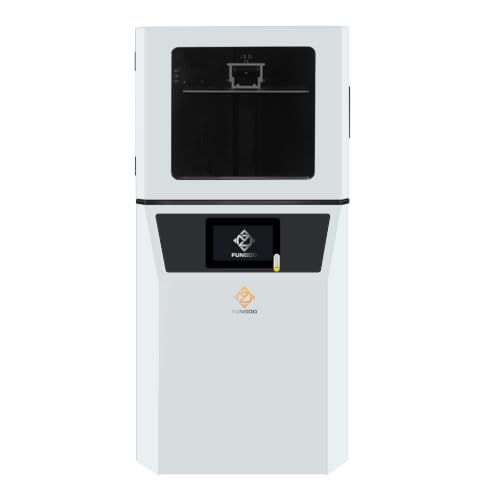
Industrial Lab Power – F14 Industrial Photocuring Resin Printer
For schools seeking resin printers for schools that can handle demanding lab workloads, the F14 emphasizes repeatable motion, a large build area, and high-resolution output. Its industrial-oriented design is particularly suited to university labs and enterprise-style teaching environments.
Best For: Schools, university labs, and professional programs needing large, repeatable batch prints.
Pros:
- Large 302 × 162 × 400 mm build volume supports tall models and batch production.
- Ball screw, linear guide, and dual-slider Z-axis design is rated for 0.02 mm repeatability.
- 6K resolution, adjustable 0.01–0.15 mm layer thickness, and Wi-Fi/USB connectivity offer flexible workflow options.
Cons:
- At 68 pounds, it requires a sturdy, dedicated setup.
- The 14.2 × 16.9 × 25.6-inch footprint may be substantial for smaller classrooms.
The F14 stands out when a school values capacity and long-run stability over a compact desktop format. Linux and CHITUBOX compatibility also make it practical for shared lab use and wireless task management.
Easy Precision Learning – UniFormation GK3T 16K Resin Printer
The UniFormation GK3T is a compelling option for resin printers for schools where ease of use and detailed output matter. Factory pre-leveling, resin-handling features, temperature management, and remote monitoring can help simplify operation for students and instructors.
Best For: Classrooms and programs that want high-detail prints with a beginner-friendly workflow.
Pros:
- 16K resolution with 14 × 19 μm pixel size is designed for highly detailed models.
- Factory pre-leveling, quick-release build plate, anti-drip platform, and side-mounted resin draining streamline setup and cleanup.
- Built-in heating supports resin fluidity down to 0°C/32°F, while app-based monitoring enables remote print management.
Cons:
- Its 12.99 × 15.75 × 20.47-inch footprint still needs dedicated classroom space.
- At 52.8 pounds, it is not especially portable between rooms.
With its combination of automation, monitoring, and 16K detail, the GK3T can reduce the learning curve without limiting project complexity. It is a strong classroom fit when staff want a more controlled print-to-post-processing workflow.
Large-Format Classroom Workhorse – ELEGOO Jupiter 2 16K Resin Printer
For schools comparing resin printers for schools with a focus on large models and batch production, the ELEGOO Jupiter 2 offers a substantial build volume and a broad set of monitoring and safety features. Its automated systems are designed to make recurring classroom or lab jobs easier to manage.
Best For: Schools needing large prints, multi-model batches, and networked oversight of print jobs.
Pros:
- 302.4 × 161.98 × 300 mm build volume accommodates large objects or multiple smaller models.
- 16K resolution, 20 × 26 μm XY resolution, and an enclosed light source support detailed, consistent exposure.
- Auto leveling, smart tank heating to 30°C, automated resin feeding, alarms, camera monitoring, and Wi-Fi cluster management support shared labs.
Cons:
- The 27.95 × 20.08 × 19.29-inch dimensions require considerable bench or floor space.
- At 63.8 pounds, moving it between classrooms is impractical.
- The extensive feature set may be more than small introductory classes need.
The Jupiter 2 is best suited to a dedicated makerspace or fabrication lab rather than a compact classroom desk. Its large capacity, automated resin and heating features, and cluster-management support make it especially appealing for coordinated school production.
How We Picked These Resin Printers for Schools
We focused on factors that matter in real classroom and lab environments: print consistency, detail quality, build volume, setup simplicity, operating workflow, and the availability of useful accessories. The selection includes entry-level models for supervised instruction, larger printers for shared programs, and bundles with wash-and-cure stations to reduce equipment gaps.
Specifications can vary by seller and firmware version, so confirm the current build volume, included accessories, warranty, and replacement-part availability before purchasing. No resin printer should be treated as self-contained classroom equipment: schools need ventilation, protective equipment, spill procedures, and age-appropriate supervision.
Quick Comparison
| Best For | What to Prioritize | Recommended Type |
|---|---|---|
| First classroom printer | Simple setup, modest footprint, low material use | Compact entry-level printer |
| Detailed models and miniatures | High LCD resolution and reliable exposure control | High-resolution mid-size printer |
| Multiple student projects | Large build area and faster throughput | Large-format resin printer |
| Complete workflow | Consistent washing and curing | Printer-and-station bundle |
| Advanced technical programs | Capacity, automation, and process control | Premium or industrial-grade model |
Key Buying Factors for Resin Printers for Schools
Safety and Room Setup
Resin printing involves liquid photopolymer, fumes, contaminated waste, and UV exposure during curing. Place the printer in a controlled, well-ventilated area, use nitrile gloves and eye protection, and establish procedures for storage, spills, washing, curing, and disposal. Wash-and-cure equipment can simplify the process but does not remove the need for ventilation and supervision.
Print Volume and Student Demand
A small printer may suit demonstrations and individual projects, while a larger build platform can reduce queues for group assignments. Estimate how many parts students will print each week, then consider whether simultaneous batch printing matters more than maximum single-object size.
Resolution, Reliability, and Ease of Use
Higher-resolution screens can produce finer details, but they do not guarantee better results without accurate exposure settings, a level build platform, suitable resin, and stable temperature. Features such as automatic leveling, dependable release mechanisms, monitoring, and clear software workflows can be especially valuable when many users share one machine.
Total Ownership Cost
Budget for resin, replacement films, vats, build plates, gloves, cleaning supplies, curing equipment, ventilation, and failed prints. A lower-priced printer may be a good fit for a small program, while a bundle can offer better value if the school would otherwise need to buy a wash-and-cure station separately.
Who Should Buy Which Resin Printers for Schools?
Choose a compact entry-level model for a classroom introducing resin printing, especially when projects are small and staff want a simpler starting point. Choose a high-resolution mid-size printer for engineering details, miniatures, prototypes, and design work where surface quality matters.
Choose a printer-and-wash-and-cure bundle when the school wants a more complete workflow and has adequate space for the additional equipment. Choose a large-format model for makerspaces, technical education, or shared facilities that need larger parts or higher batch capacity.
Choose an advanced or industrial-grade option only when the school has trained operators, suitable facilities, a maintenance plan, and a clear need for greater capacity or process control. For most programs, the best Resin Printers for Schools are the ones staff can operate safely and students can use within a documented, repeatable workflow.