The right starter kit can turn a microcontroller from an intimidating circuit board into a practical learning platform. These 10 picks cover Arduino, Raspberry Pi Pico, micro:bit, and ESP32 projects for beginners and experienced hobbyists.
We focused on project variety, included components, programming support, board capability, and the quality of learning materials so you can choose a kit that matches your goals and experience.
Best 10 Microcontroller Starter Kits for Hobbyists Picks for 2026
Most Complete Wi-Fi Kit
Freenove Cortex-M4 Starter Kit

- 343 components and 90 projects
- Onboard ESP32-S3 Wi-Fi and Bluetooth
- 474-page downloadable tutorial
Best For: Long-term wireless and advanced hobby projects
Easiest Coding Entry
KEYESTUDIO micro:bit V2 Go Kit

- Official BBC micro:bit V2.2 board
- Built-in sensors, LEDs, speaker, and wireless features
- Supports blocks, JavaScript, and Python
Best For: Beginners and young learners
Best for IoT Learning
SunFounder Raspberry Pi Pico W Kit

- 450+ components and 117 projects
- 27 guided video tutorials
- Supports MicroPython, C/C++, and Piper Make
Best For: Wireless IoT learning and varied prototyping
Best for Large Builds

- 54 digital I/O pins and 256 KB flash
- 200+ components for 35+ projects
- Includes sensors, displays, RFID, and motors
Best For: Large wired Arduino-compatible projects
Best Raspberry Pi Pico Learning Bundle
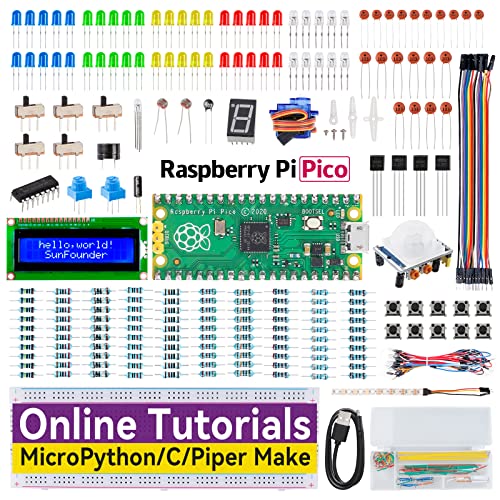
- Pre-soldered Raspberry Pi Pico included
- 40 guided projects across three languages
- More than 280 components for varied builds
Best For: Pico learners who want extensive projects and programming flexibility
Best No-Solder Arduino Project Kit
ELEGOO UNO R3 Super Starter Kit

- 22-plus guided Arduino projects
- Solderless breadboard setup
- Includes sensors, motors, LCD, and input modules
Best For: First-time Arduino learners and classroom or family builds
Best Official Arduino Curriculum Kit
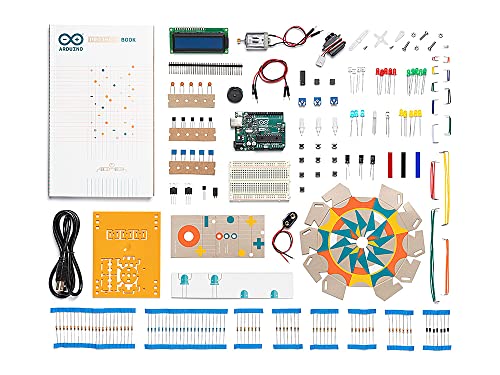
- Original Arduino kit with genuine components
- Step-by-step English project book
- Hands-on projects for foundational electronics
Best For: Beginners and educators seeking an official guided Arduino curriculum
Best Value Arduino Kit
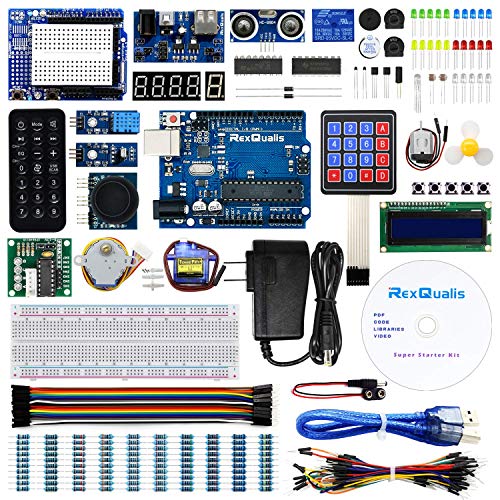
- 120 labeled components for Arduino projects
- Includes a 9V 1A power adapter
- Downloadable tutorial and datasheets
Best For: Budget-minded beginners learning Arduino basics
Most Versatile Arduino Kit
LAFVIN Project Super Starter Kit
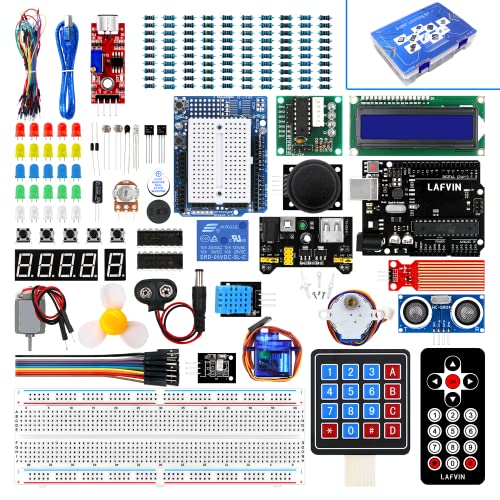
- Tutorial includes 20+ guided lessons
- Supports several Arduino-compatible boards
- Adds motors, displays, and sensors
Best For: Learners wanting structured Arduino project practice
Best for IoT Projects
ELEGOO ESP-32 Super Starter Kit

- Dual-core ESP-32 with Wi-Fi and Bluetooth
- 35+ modules and components included
- 30+ guided projects with code and diagrams
Best For: Makers exploring wireless and IoT projects
Most Complete Wi-Fi Kit – Freenove Cortex-M4 Starter Kit
For hobbyists seeking microcontroller starter kits for hobbyists that cover both fundamentals and advanced builds, this Freenove kit offers an unusually broad project path. Its Cortex-M4 board includes onboard ESP32-S3 connectivity, while the 343 included items and 90 projects support everything from basic electronics to virtual instruments and game consoles.
Best For: Hobbyists who want a large component collection, Wi-Fi and Bluetooth projects, and a structured progression from beginner to advanced experiments.
Pros:
- Includes 343 components, modules, and sensors.
- Offers 90 projects with schematics, wiring diagrams, code, and explanations.
- Combines an Arm Cortex-M4 microcontroller with onboard ESP32-S3 Wi-Fi and Bluetooth.
- Includes a detailed 474-page downloadable tutorial.
Cons:
- The tutorial is downloadable rather than printed.
- Some code and libraries may not be compatible with the Blue Rev3 board.
This is a strong choice when project variety and wireless capability matter more than a minimal learning setup. The extensive tutorial and component selection can support long-term experimentation, though beginners should expect a larger kit to require more organization.
Easiest Coding Entry – KEYESTUDIO micro:bit V2 Go Kit
This micro:bit kit is a straightforward starting point for hobbyists comparing microcontroller starter kits for hobbyists, especially those new to coding. The official BBC micro:bit V2.2 includes built-in sensors, a speaker, LED matrix, buttons, radio, and Bluetooth, with support for block coding, JavaScript, and Python.
Best For: Beginners, younger learners, and hobbyists who want an accessible board with built-in features and minimal setup.
Pros:
- Includes the official BBC micro:bit V2.2.
- Built-in 25-LED display, buttons, motion, light, temperature, compass, radio, and Bluetooth features.
- Supports block-based coding, JavaScript, and Python.
- Includes a USB cable, battery holder, two AAA batteries, and user guide.
Cons:
- Includes one main board and a basic accessory set rather than a large component assortment.
- Its project scope is more centered on the micro:bit’s built-in features.
Choose this kit for a quick, approachable introduction to programming and physical computing. It is less suited to broad electronics prototyping than larger component-heavy bundles, but its integrated sensors and simple coding workflow reduce the initial learning curve.
Best for IoT Learning – SunFounder Raspberry Pi Pico W Kit
For hobbyists who want microcontroller starter kits for hobbyists with an IoT focus, this SunFounder bundle pairs a Raspberry Pi Pico W with more than 450 components and 117 projects. It supports MicroPython, C/C++, and Piper Make, while online tutorials and video lessons provide guided instruction.
Best For: Beginners and makers interested in wireless IoT projects, broad component experiments, and learning multiple programming languages.
Pros:
- Includes 450+ components and 117 projects.
- Provides 27 video tutorials led by educator Paul McWhorter.
- Supports MicroPython, C/C++, and Piper Make.
- Includes sensors, actuators, LEDs, LCDs, and other hardware for varied builds.
Cons:
- The large number of components may be more than needed for a first simple project.
- The kit’s wireless specification is listed as Wi-Fi 802.11n rather than Bluetooth on the product details.
This kit stands out for structured IoT learning and instructional support. Its combination of wireless hardware, substantial parts inventory, and multiple programming options gives hobbyists room to expand, although the breadth may require a more organized approach.
Best for Large Builds – ELEGOO Mega 2560 R3 Kit
This ELEGOO bundle is a practical option for hobbyists evaluating microcontroller starter kits for hobbyists who need substantial I/O and a broad selection of classic Arduino-compatible parts. The Mega 2560 R3 provides 54 digital pins, 16 analog inputs, and 256 KB of flash, while the kit includes more than 200 components for guided electronics projects.
Best For: Makers building sensor-rich Arduino projects involving displays, motors, RFID, environmental monitoring, and multiple controls.
Pros:
- Provides 54 digital I/O pins, 15 PWM outputs, 16 analog inputs, and four hardware serial ports.
- Includes 200+ components such as RFID, RTC, DHT11, motion, ultrasonic, motor, display, and keypad modules.
- Offers 35+ guided projects with example code.
- Includes a breadboard, pre-soldered modules, storage case, and small-parts box.
Cons:
- Its wired USB setup does not provide built-in Wi-Fi or Bluetooth.
- The extensive parts list may feel excessive for simple introductory circuits.
The Mega 2560’s extra pins and memory make this kit well suited to projects that combine many sensors, displays, and actuators. It is a particularly practical choice for structured Arduino learning and larger builds, rather than wireless-first projects.
Best Raspberry Pi Pico Learning Bundle – SunFounder Pico Starter Kit
For hobbyists comparing microcontroller starter kits for hobbyists, this SunFounder bundle stands out for its broad component selection and structured learning path. It includes a pre-soldered Raspberry Pi Pico, more than 280 components, and 40 projects covering MicroPython, C/C++, and Piper Make.
Best For: Beginners and experienced makers who want a Raspberry Pi Pico kit with multiple programming options, sensors, motors, and guided projects.
Pros:
- Includes a pre-soldered Raspberry Pi Pico and more than 280 components.
- Offers 40 projects with circuit diagrams, operating explanations, and example code.
- Supports MicroPython, C/C++, and Piper Make for different learning levels.
- Includes varied parts such as an I2C LCD, RGB LED strip, servo, sensors, motors, and Bluetooth module.
Cons:
- The large number of components may feel overwhelming for absolute beginners.
- Project support is provided online, so access to the tutorials is important.
Choose this kit if you want the widest project variety and a clear route from block-style programming to Python and C/C++. Its Pico-focused design makes it less suitable if your priority is an Arduino UNO ecosystem.
Best No-Solder Arduino Project Kit – ELEGOO UNO R3 Super Starter Kit
This ELEGOO kit is a practical choice among microcontroller starter kits for hobbyists who want to begin building without soldering. Its UNO R3 board, solderless breadboard, pre-soldered LCD header, sensors, motors, and 22-plus guided lessons support hands-on Arduino IDE learning.
Best For: First-time Arduino builders, homeschool projects, coding clubs, family builds, and STEM classrooms.
Pros:
- Includes 22-plus lessons covering LEDs, sensors, displays, motors, and input devices.
- Solderless setup helps beginners focus on wiring, code, and testing.
- Provides a broad mix of parts, including an LCD, joystick, IR remote, servo, stepper motor, relay, and DC motor.
- Includes setup guidance for the Arduino IDE, board selection, ports, polarity, and breadboard layout.
Cons:
- The power module should not be used with input above 9V.
- Some projects require careful checking of component polarity and breadboard rows.
- The included controller is based on the classic UNO R3 platform rather than a newer microcontroller board.
This is a strong value-oriented introduction to Arduino-style electronics, particularly when several people need a guided, no-solder learning experience. It is a better fit for structured basics than for advanced wireless or high-performance projects.
Best Official Arduino Curriculum Kit – Arduino Starter Kit K000007
The official Arduino Starter Kit is a focused option for hobbyists who prefer an original Arduino package with a structured English project book. It includes the components and instructions for hands-on projects involving LEDs, a DC motor, servo motor, tilt sensor, and other foundational electronics.
Best For: Beginners, educators, and hobbyists who want an official Arduino learning experience with printed English project guidance.
Pros:
- Uses genuine Arduino components sourced from Italy.
- Includes a detailed English projects book with step-by-step guidance.
- Introduces coding and circuit design through 12 listed DIY projects.
- Suitable for learning and teaching STEM concepts through hands-on experimentation.
Cons:
- Offers fewer projects and components than the larger SunFounder and ELEGOO bundles.
- The project book is in English, which may not suit every learner.
- The listed manufacturer defect warranty is 30 days.
Select this kit when authenticity, official documentation, and a curated curriculum matter more than maximum component count. It provides a straightforward foundation, though more advanced hobbyists may want a larger parts selection.
Best Value Arduino Kit – REXQualis Super Starter Kit
For hobbyists seeking economical microcontroller starter kits for hobbyists, the REXQualis Super Starter Kit provides an Arduino UNO R3-compatible board and a broad mix of components for learning programming, electronics, and basic robotics. The included 9V 1A power adapter, preassembled LCD header, labeled parts, and downloadable tutorials make it convenient for beginners to start building.
Best For: Beginners who want a budget-friendly Arduino-compatible kit with many components and organized storage.
Pros:
- Includes 120 items, including sensors, a servo, motor components, LCDs, and a ULN2003 driver board.
- Arduino UNO R3-compatible controller board works with the Arduino IDE.
- Includes a 9V 1A power adapter instead of relying on a 9V battery.
- Components are individually packaged and labeled in a plastic storage box.
Cons:
- The kit is centered on Arduino UNO R3-compatible projects rather than wireless or IoT development.
- The manufacturer-recommended age information is listed as 0–3 years, which may not be useful as a practical learning-age guide.
This is a strong entry-level choice when value, component variety, and straightforward Arduino compatibility matter most. It is less suited to makers specifically looking for built-in Wi-Fi or Bluetooth.
Most Versatile Arduino Kit – LAFVIN Project Super Starter Kit
The LAFVIN Project Super Starter Kit is a versatile option among microcontroller starter kits for hobbyists, especially for learners who want structured lessons and a broad selection of Arduino-compatible boards and devices. Its tutorial covers more than 20 projects, while the included displays, motors, and sensors support hands-on experimentation.
Best For: Beginners who want guided Arduino lessons and the flexibility to experiment with motors, displays, sensors, and multiple compatible boards.
Pros:
- Includes a tutorial manual with more than 20 lessons, code, libraries, and datasheets.
- Supports Arduino-compatible R3, Mega2560, Mega328, and Nano boards as described by the product.
- Includes servo, stepper, and DC motors plus LCD, seven-segment, and other display components.
- The LCD 1602 module has a pin header already installed, so it does not require soldering.
Cons:
- The supplied notes do not specify a complete item count or detailed storage arrangement.
- Its focus is Arduino-compatible hardware rather than integrated Wi-Fi or Bluetooth connectivity.
Choose this kit if the included lessons and range of motion and display projects are more important than having a wireless microcontroller. It offers a practical path from guided exercises to broader Arduino experimentation.
Best for IoT Projects – ELEGOO ESP-32 Super Starter Kit
For hobbyists ready to move beyond basic circuits, the ELEGOO ESP-32 Super Starter Kit is one of the more capable microcontroller starter kits for hobbyists. Its dual-core ESP-32 board includes Wi-Fi and Bluetooth 4.2, and the kit combines more than 35 modules and components with 30-plus guided projects for connected-device development.
Best For: Makers, students, and hobbyists exploring IoT, wireless projects, and more advanced Arduino IDE programming.
Pros:
- ESP-32 board provides dual-core processing with integrated Wi-Fi and Bluetooth 4.2.
- Includes more than 35 modules and components, including sensors, displays, motors, input devices, an OLED screen, and a keypad.
- Online tutorial offers 30-plus projects with code, circuit diagrams, and step-by-step instructions.
- Supports Arduino IDE and includes USB-C, GPIO, I2C, and USB connectivity.
Cons:
- Its wireless and IoT capabilities may be more than a complete beginner needs for simple LED or button exercises.
- The supplied notes describe more than 35 modules and components but do not provide a full item-by-item count.
This is the best fit of the three for connected projects such as smart-home controllers, weather stations, and remote devices. Beginners can start with basic circuits, while experienced hobbyists have room to explore the ESP-32’s wireless features.
How We Picked These Microcontroller Starter Kits for Hobbyists
We compared each kit’s included board, component selection, project count, documentation, programming options, and expansion potential. Kits with clear tutorials and broadly supported development environments earned priority because reliable guidance matters when you are learning electronics. We also considered whether a kit is best suited to simple LED and sensor experiments, connected projects, robotics, or more advanced embedded work.
Quick Comparison
Best for classic beginner lessons: The official Arduino Starter Kit offers structured projects and an English project book. Best value for Arduino-compatible experiments: ELEGOO UNO R3 and REXQualis bundles include many common components and tutorials. Best for larger builds: ELEGOO Mega 2560 and LAFVIN Mega-based kits provide more pins and room for complex projects. Best for wireless projects: The Freenove ESP32-S3, Raspberry Pi Pico W, and ELEGOO ESP-32 kits add Wi-Fi-capable platforms. Best for younger or first-time learners: The micro:bit V2 kit uses a friendly board and simple programming path.
Key Buying Factors for Microcontroller Starter Kits for Hobbyists
Board and Programming Environment
Choose a board based on what you want to build. Arduino UNO boards are easy to learn and have extensive community support. Mega boards offer more input/output pins for larger projects. Raspberry Pi Pico kits are strong choices for MicroPython and compact embedded builds, while ESP32 boards are useful when Wi-Fi or Bluetooth connectivity is important. Micro:bit is particularly approachable for visual programming and education.
Components and Project Coverage
Look for a useful mix of resistors, LEDs, buttons, sensors, displays, motors, jumper wires, and a breadboard. A high item count is not automatically better; components are most valuable when the tutorials explain how to use them. Check whether motor drivers, power supplies, and connection cables are included if your planned projects require them.
Tutorial Quality and Compatibility
Confirm that the instructions match the exact board revision and software tools. PDF manuals, online project libraries, MicroPython examples, C/C++ support, and Arduino IDE compatibility can make troubleshooting much easier. Official documentation is often polished, while large third-party kits may offer more hardware for the price.
Who Should Buy Which Microcontroller Starter Kits for Hobbyists?
Buy the official Arduino kit if you want a carefully sequenced introduction with guided projects. Choose an UNO-compatible bundle for broad beginner experimentation at a lower cost. Pick a Mega kit for robotics, displays, or builds needing many connections. Select a Raspberry Pi Pico kit if you prefer MicroPython or want a modern low-cost board, and choose the Pico W or an ESP32 kit for connected projects. The Freenove kit suits hobbyists seeking a more capable Wi-Fi board and varied projects. Finally, choose the micro:bit kit for accessible learning, classroom-style activities, or a young maker who may benefit from a simpler starting point.